
Translated material
Apology of doubt
Maxim Kantor answers the patriots who accused Dmitry Bykov of sympathy for General Vlasov and the justification of fascism
As this is characteristic of Dmitry Bykov’s restless talent, he once again managed to pose such painful questions to society that it is unpleasant to answer.
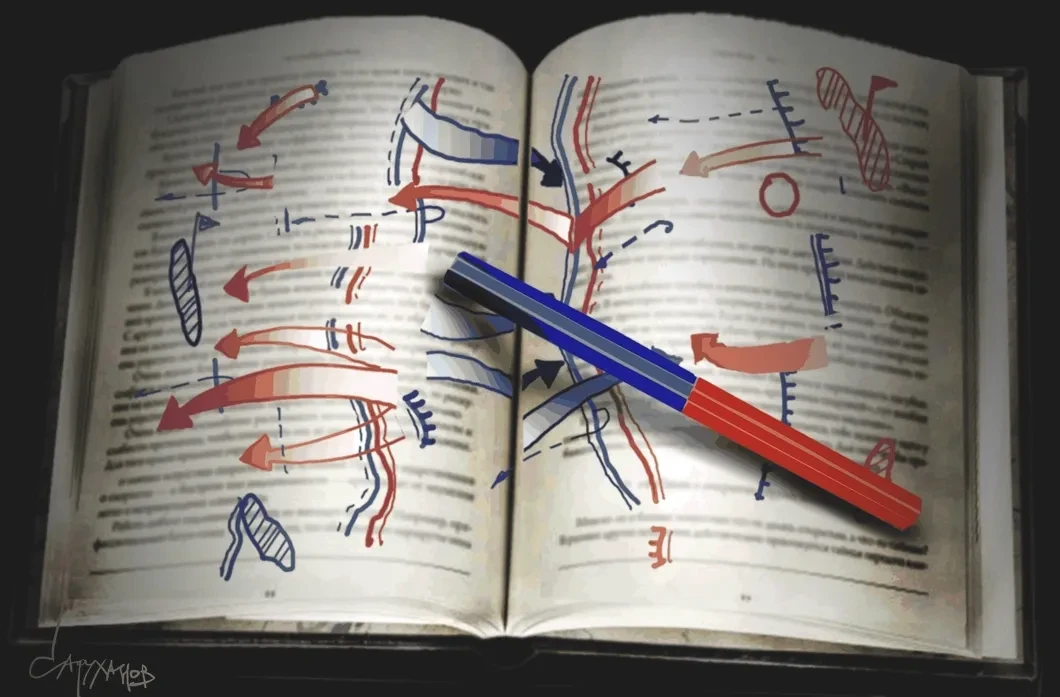
It is more convenient to shift the one who asks is easier to declare the question unacceptable; After all, the writer touched the most sacred - war!
Since I believe that the most holy for society is not a war, but on the contrary - the world, I believe that it is the issues of war that they need a detailed study. Generally speaking, the saints for any organism is health, and war is, by definition, social illness, absolute trouble and misfortune. And the war, like any illness, is required to analyze comprehensively in order to know the methods of treatment.
Dmitry Bykov in a recent speech said that the war that we call the Patriotic War can be considered as a continuation of the civil war,
And this turn of thought caused a shock in society.
The indignation, experienced by public stands from this statement, is expressed somewhat late - since the theories of a protracted civil war for nearly fifty years. Why is it indignant right now, a mystery. However, many strong feelings hide for a long time, and only after a while allow them to escape to the surface.
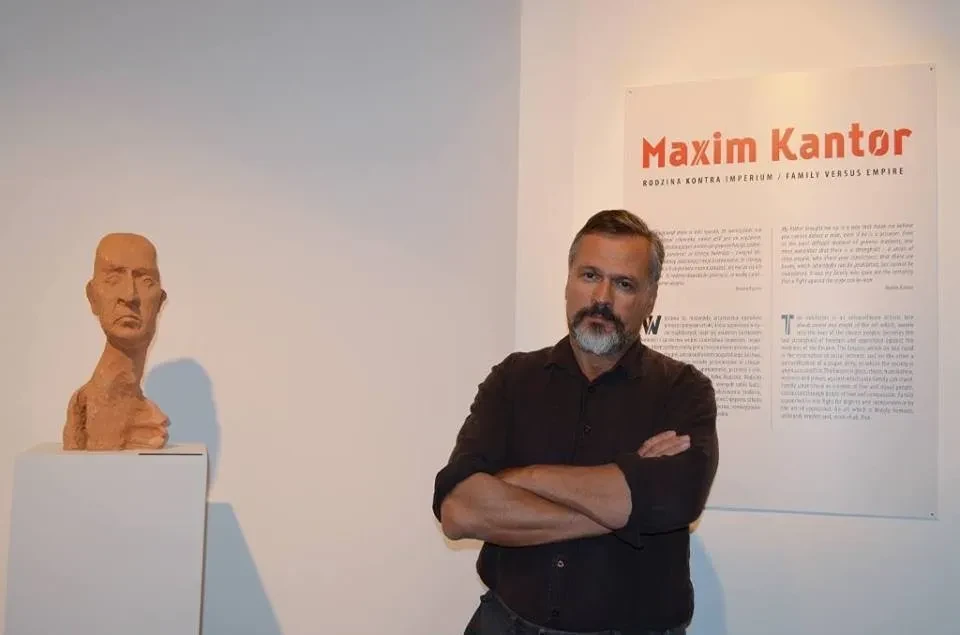
The concept of the “European Civil War” exists in addition to Dmitry Bykov - it arose long before its performance and has long been an indisputable property of historiography.
The German historian Ernst Nolte introduced this term in relation to the hostilities of 1914-1945. There is a book “European Civil War” written by him, translated into Russian, in particular.
Ernst Nolte came to this term as a result of the following events.
Nolte published his volumetric work “Fascism in his era” (it seems to me, more interesting than the final book), which caused complaints and even the subsequent injury of the historian (this work is also translated into Russian). They poisoned Nolte seriously - more seriously than today Bykov is sheltered - if only because not TV presenters, but serious philosophers of the Frankfurt school - Adorno and Horkheimer acted as his exposure. The discussion was conducted on the pages of Frankfurter Algemain - and the Frankfurt opponents accused Nolte almost of revanchism, but it is certainly of pro -fascist sentiments.
The fundamental work of Nolte is indeed (if you read the text in a row and impartially) objectifies the appearance of fascism. That is, to a certain extent removes Supervin from fascism, turns it into an ordinary “historical phenomenon”. In those post -war years, it was necessary to have a special talent (or a tendency to revengeism, which the opponents saw) in order to move away like this immediately after events, to distance himself. Nolte did just that - and was convicted.
I must say, Frankfurter Algemine made it possible not only to expose and expose, but allowed to answer the accused. There was an exchange of articles. Nolte objected and objected reasonably. He argued that he does not protect fascism, but only shows the objective inevitability of the emergence of such. Devil's difference. Public opinion - and after the war in Germany it was electrified - it turned out to be not ready to accept a calm argument; Socium was not on the side of Nolte - and it was deprived of the opportunity to teach at universities. Until his death (the scientist died at the age of 95), Nolte did not teach in Germany, did not conduct seminars and was not published - although he taught, conducted seminars and was published in Italy.
For the sake of truth, it should be noted that he was supported by his right circles in Italy, and Nolte (alas) accepted this circumstance. And what could he do? Nolte was a real scientist, discriminated in his homeland - and undeservedly, from a misunderstanding of the problem that he set - and a scientist needs a certain return. He accepted the proposal of Italians.
As an example, I recall the fate of Alexander Zinoviev, whom the rejection of the “liberal” intelligentsia literally pushed into the arms of the right -wing patriotic circles. Zinoviev opposed compradorism, and he was understood (more precisely, they wanted to understand) as if he opposed liberalism. (I note that neoliberalism has nothing to do with Montesquieu liberalism, but it is not customary to go into such subtleties.) And this way Zinoviev was almost the Black Hundreds in the camp. I want to believe that live Alexander Alexandrovich longer, he would have managed to free himself from this trouble, as he always did, walking over the current. Of course, he would have pushed the “right”, as he once managed to push away the communists and neoliberals consistently. However, he died, not having time to carry out this important movement of thought, and now, on behalf of Zinoviev, a MPE -PERSHAL geopolitical propaganda is being conducted (Zinoviev’s Club, etc.), which is not distinguished by a good taste. Needless to say, Zinoviev hated imperialism and despised the imperial?
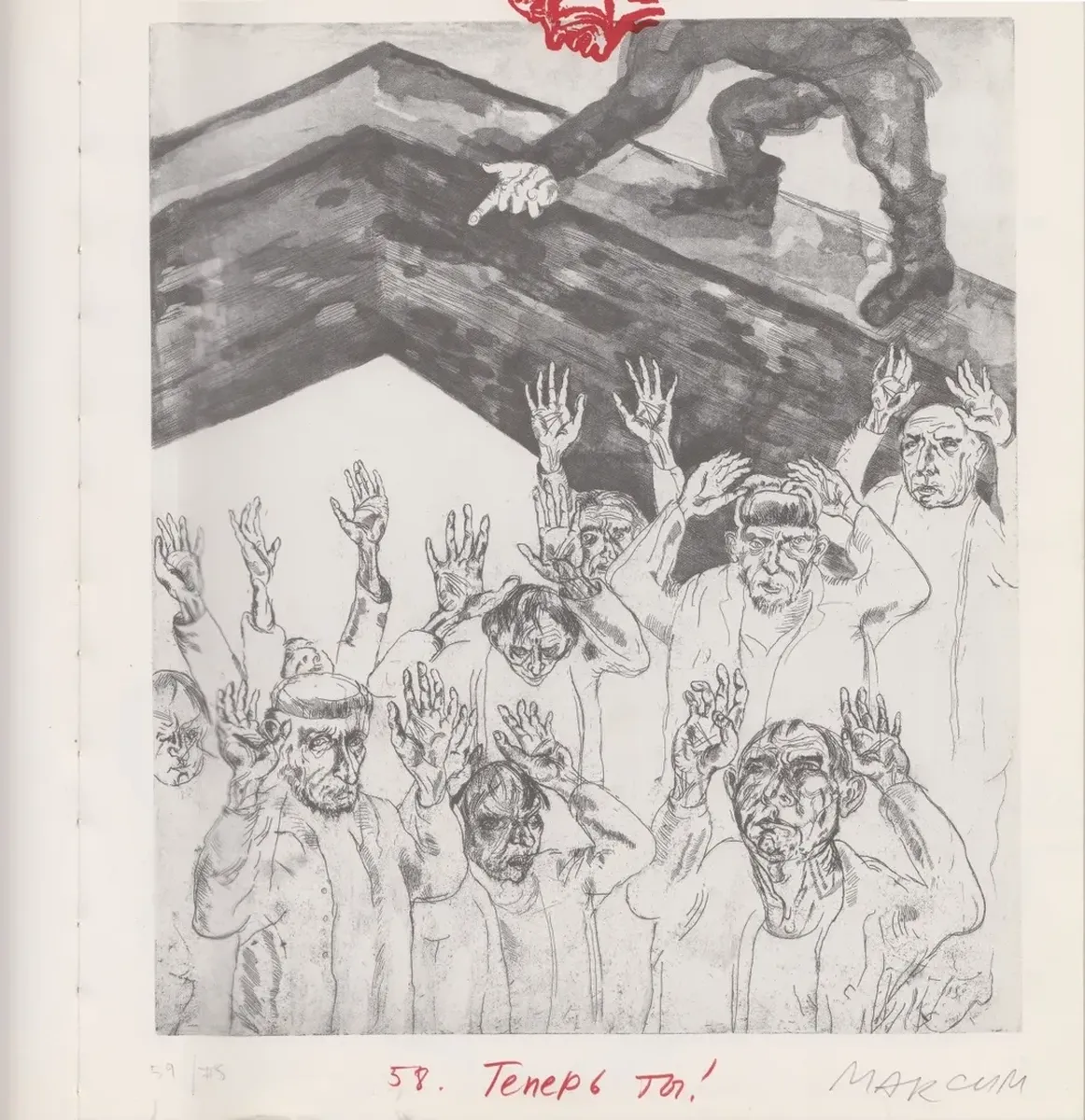
A similar story happened with Ernst Nolte. He was accused of revanchism, of a circumvention of fascism. The fact that Ernst Nolte was a student of Heidegger added convincing. I happened to get acquainted with Ernst Nolte in the last years, and I listened to his stories about the student - from the firsthand. Nolte really was under the charm of Heidegger (like many liberals, and many left -wing, and many left radicals - to recall at least Sartre).
In the situation around him, Ernst Nolte did not find any other answer on how to write the Fundic labor “European Civil War” and offer an objective (as he believed) view of the events of the two world wars, which he considered as one - and civilian.
Nolte's concept consists in that (and I must say that since then this concept has been introduced into many minds and has become the property of many who are not suspected of its authorship) that fascism has become a response to communism.
In other words, the genocide on the class basis caused a response in the form of a genocide on a national basis.
Nolte described how the communist doctrine and the fascist doctrine recruited supporters and how mutual hatred incinerated the hearts.
I will make a reservation right away, this concept of the “civil war” does not seem convincing.
The fact that this concept in history exists is no coincidence - but I do not think that the class nature of discrimination (often unfair) can be compared with national discrimination. It seems to me this is a substitution at the species level: after all, everyone can easily be a banker if it bursts, but it is impossible to stop being a Jew. Actually, in this case, I share the point of view Adorno.
However, to consider this basis for discrimination of the scientist would be extremely wild. Nolte thought differently, and his concept of “civil war” exists.
By the way, it was said that the Heidegger’s position, nor the fog that his stay in the Reich is impressive: unlike his student Nolte, Heidegger was a member of the NSDAP, was seen in anti -Semitism (despite the long connection with Hannah Arendt) and performed a number of domestic non -imminent acts. Heidegger's philosophy seems moral relativism - but this is still not a reason to consider Heidegger a fascist. But it is one thing - Heidegger, he is an exclusively cunning casuist, equalibrist and juggler with meaning; As for Nolte, he was just a historian - moreover, a letterwall.
It will be appropriate to say that today the point of view of Nolte de facto has become the generally accepted - no matter how unpleasant it is Soviet/Russian historiography and the followers of the Frankfurt school. In particular, the Konspirologist Suvorov in the book “The Ice Construction” sets out about the same version of events, extremely vulgar, but intelligibly. Not so far from this interpretation and the version of Solzhenitsyn’s events, and so many Western historians - to varying degrees of directive, they affirm the parity of evils - communism and fascism.
The task of this publication is not to dispute this statement, but only to inform the reader that this is a very common judgment.
When Dmitry Bykov decided to use the term “European Civil War”, he did (I am sure) without knowledge of the works of Nolte and the entire background of the issue, otherwise he would have escaped some annoying traps.
However, nothing reprehensible was said by Bykovov! Moreover, the pathos of his speech was different.
The thought expressed by Bykovo regarding the Holocaust, who prevented the Russian intelligentsia to solidarize with Hitler, does not seem blasphemous to me - this is a curious thought - but I just find this thought inaccurate. The French intelligentsia, for example, the death camp, in which the French gave out Jews, did not interfere; The Holocaust did not stop collaboration, and mass. Artists went to Berlin, bow to Goebbels: Deren, Vlamink, and Dunuye de Newsac and a hundred more names, including the sculptor Belmondo, the father of a famous actor. Collaborationism bloomed everywhere - and not so far in time defended the process of drifus - and the lonely voices of Zola and Hugo drowned in the cries of hatred. Degas, as you know, stopped communicating with Pissarro, because he was a Jew.
And did the pain for Jewish lives once interfered with a big European policy?
Hesse goals in England are still classified, and it is quite acceptable to assume that the project of the world, which was driving Rudolf Hess to the British, was relieved by the issue of the Holocaust. Perhaps the rejection of that proposal and the refusal to restore Britain with Germany was to a certain extent a fatal step in relation to mass genocide. This is a kind of “conspiracy”, of course, and I share this consideration (I wrote about it ten years ago in the book “Slow Jaws of Democracy”) only to say that this course of thought is possible. And how to avoid such suspicions? Citizens are not forbidden to build hypotheses and guess, since for a long time the winning countries-both Britain and Russia-hold military archives classified. If the authorities want to avoid curvature, you can open the archives and show how it really was, and otherwise you should not blame possible assumptions.
And if the Holocaust did not interfere with the European intelligentsia (I am not talking about certain cases of heroism and the sacrificial actions of the righteous), then why should he interfere in Russia? Did the Holocaust interfere with the Russian intelligentsia?
After all, the business of doctors did not prevent intellectuals. Both the destruction of the notorious “Jewish committee”, and the processes of cosmopolitans did not concern anyone.
The Russian intelligentsia (like French, like English) easily accepts other people's victims. Today, when barges with African refugees are discharged from the shores, it would be strange to raise the question of the question of the expulsion of Jews to Madagascar (as planned before the Vanzei Conference) or not. Well, let's say the Holocaust would be canceled and all the Jews were “humane” to Madagascar - and what's next?
But the question of Bykov does not put it entirely - the writer puts stress on the anti -communist pathos of the invasion; Could an anti -Soviet intelligentsia take this anti -communist pathos, not overshadowed by gas chambers?
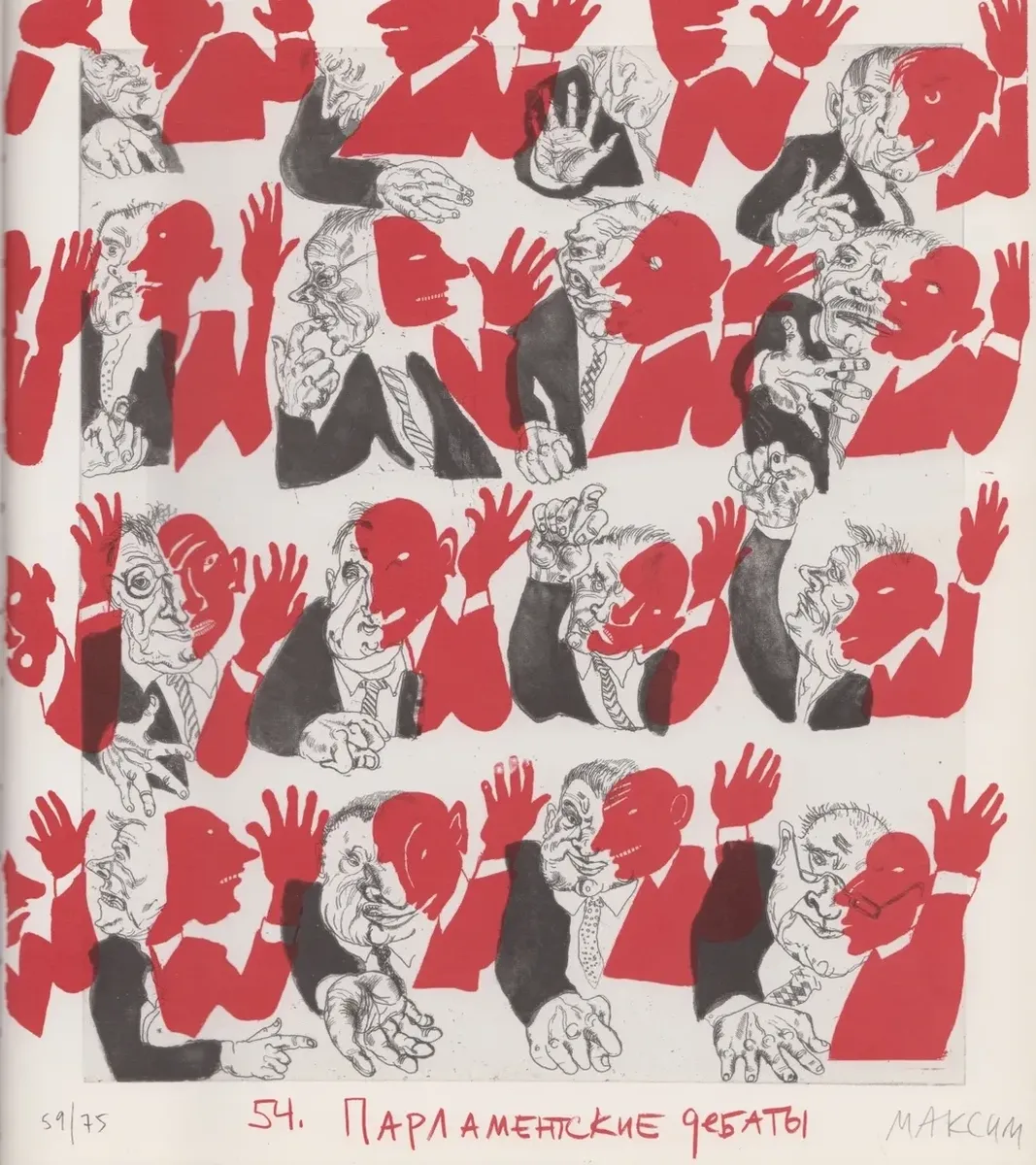
Would the Russian intelligentsia of Hitler without the Holocaust accept? Could anti -communist pathos in the “European Civil War” (if we accept the presence of one) force to forget about violence against the borders of the Fatherland?
I doubt this, since even Napoleon, a much more pretty master than Hitler, the Russian intelligentsia did not adopt. And not Jews were the reason. The Russian intelligentsia was never seen in the crash, neither Rozanov, nor Dostoevsky, nor Florensky were examples of subtle, quite the opposite (see Rozanov’s well -known correspondence with Florensky on this issue) - but are they alone in their antipathy? It's not about foreigners, not in the line of sedimentary. The point is the fate of the Russian ethnic group itself.
The fighter policy of the Third Reich concerned not only Jews, but also Russians; And in the very first months of the war, this became obvious. It was a war aimed at the destruction and enslavement of the nation - there are many documents showing this. To think that the intelligentsia (to the extent that it represents the people, and this mission always - with the exception of recent years - was the ambition of the Russian intelligentsia) will be able to accept this fighter, humiliating policy - in my opinion, erroneously.
Another thing is that some emigrant circles adopted the policy of the Third Reich; This is a special conversation. And the fate of General Vlasov, who developed as it developed. Vlasov was not only red and Shkuro, he was neither Kurbsky, nor Raskolnikov, nor Coriolan. They, as Coriolan and Kurbsky, were led by a resentment of power and hatred of a communist dictatorship, and a thirst for glory, a thirst for great step and feat for any military leader - but a fundamental difference occurs further. Kurbsky, having accepted the proposal of the European coalition (Poland - Litov - Shvesty), led the army of the Lyakhov, and Coriolan in the fight against Rome headed the army of the Volskov tribe and wanted to be called the "leader of the Volskov." The other thing is Vlasov.
General Vlasov is guilty not just in personal military treason (which is by all norms of a crime), but
He was guilty primarily in the fact that he seduced hundreds of thousands of Russian soldiers to break the oath and fight against his fatherland.
This is not at all the case of Krasnov, a Cossack general who continued his campaign from the time of the Civil War - however, in the forties already in alliance with a destructive dictatorship, and nevertheless, these are the old army and old scores. No, in the case of Vlasov, everything is different - there was a literal temptation of young souls, the Soviet soldiers who were captured were recruited. There was a recruitment of frightened and confused, and this temptation led the soldier who believed the general, to a painful and humiliating execution or long camps, and their families to a brutal and humiliating life. Moreover, the general himself tried to escape, leaving him seduced to pieces. “And who will seduce one of the small ones,” as stated in the Scripture, and further in the text.
But the question is not to expose Vlasov; The verdict in this regard has been uttered for a long time. The question is different - how did it happen that hundreds of thousands of Russian people believed him, while a cruel enemy was going on to their country, how did they - young Russian boys - go along with this enemy? The fact that Solzhenitsyn, who sequentially exposed Stalin, drew attention to the bitter fate of Vlasov and Vlasovites is natural. The fact that the bright talent of Bykov inevitably led the writer to the fact that the fate of Vlasov (a general who fought against his country, since the country rules the hated regime) must be rethought is understandable. Neither sin nor guilt in this course of thought.
On the contrary, this question is like any uncomfortable and painful question must be welcomed. How did it happen that a huge number of Russian people sent a weapon against their own country, stood under the banners of the enemy, and an inhuman enemy? Not one and two traitors - hundreds of thousands. How to shut up? What cynical power should be in its own country, so that this becomes possible. What should be done with his own people so that he betrayed his homeland - yes, there are many times more honest and devoted to the Motherland; But there are a lot of these traitors.
The course of the thought of a talented, inquisitive, restless person who leads us to such issues - we must appreciate. The question arose on time - it is difficult to deny it.
Our Motherland is now living at all the best times, wage bad wars, sometimes even with itself - how else to regard the fighting between Ukrainians and Russians, that is, between those fraternal peoples that they fought together with Nazism yesterday? And it would be strange not to think about the fact that and where in the history of our country it is fled, shed, curved - it is impossible not to think about it. There are no ready -made schemes, there are no immutable textbooks - but every person is obliged to answer this question independently: to what limit to endure the wrong power? Once such a limit is crossed - historians must state the sad fact that hundreds of thousands of Russian boys believed the temptor. They were drawn into an evil business, into a dirty business - but they managed to draw! It is easy to portray in the movie a traitor, a single scoundrel. It is easy to shift one writer for an uncomfortable question. But when it comes to hundreds of thousands of seduced and paid for the temptation, how can you not ask a painful question here:
Why did they believe the villain? What - all the timely excited, all up to one turned out to be rotten, all hundreds of thousands? Or is the answer more difficult?
Dmitry Bykov, in his thoughts about the Second World War, simply fulfills the duty of the Russian writer - to raise questions about the existence of such limits.
And he is right or wrong, this will judge our descendant, which will appreciate our sore time, and in turn will raise painful questions.
From the editorial office
The editors may not share the point of view of the author, but considers it necessary to invite you to the discussion