
Translated material
Battle of Shiite arc
Iran attacks Israel from the territory of Syria. Israel meets with crushing fire. Syria promises to take revenge, hitting Tel Aviv
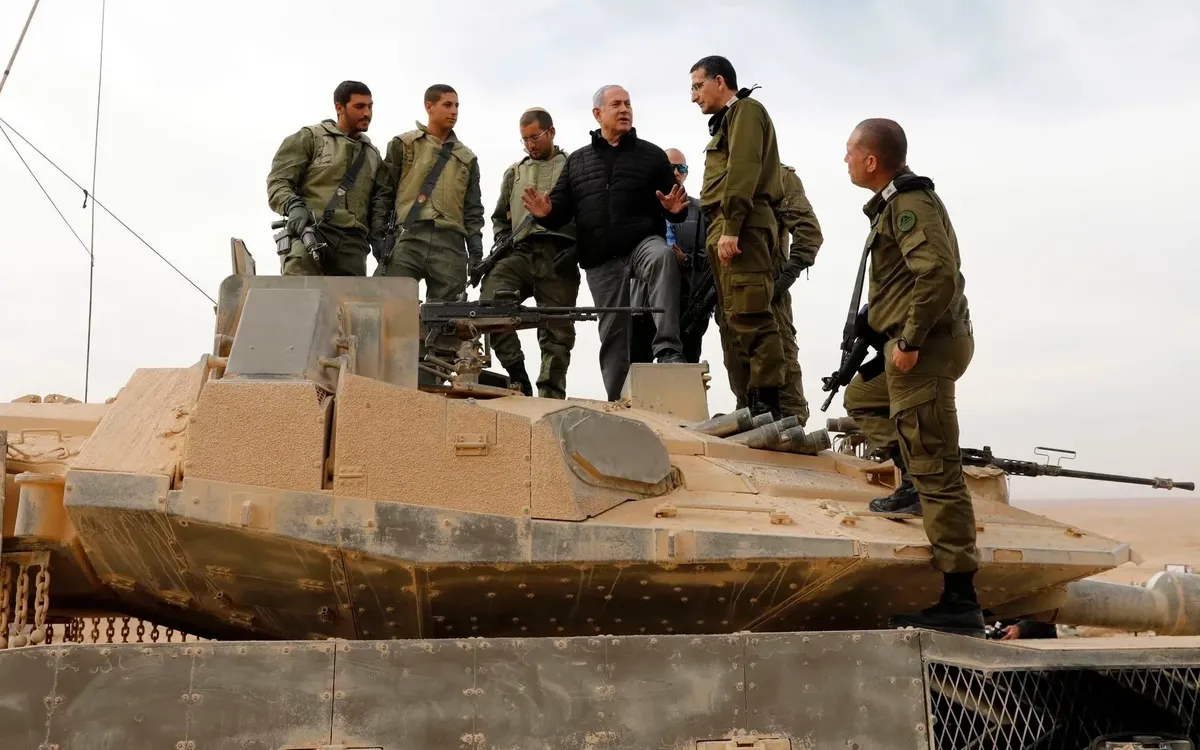
The elite special forces "El-KudS" of the Iranian Revolutionary Guard, deployed in the area of the Syrian airport of Damascus, again became the goal of the Israeli air attack. According to the Israeli Defense Army (IDF), air strikes were applied on January 21 in response to the launch of the Earth-Earth missile from the territory of Syria in the direction of Israel; The rocket was intercepted and destroyed thanks to the Israeli system about Iron Dome. The statement of the press secretary of the IDF, Lieutenant Colonel Jonathan Konricus, says that the rocket launched from the territory of Syria threatened the life of thousands of Israeli civilians at a ski resort on Mount Hermon in the Golan Heights. The Israeli Prime Minister Benjamin Netanyahu made a sharp statement: “We act both against Iran and the Syrian forces that contribute to Iranian aggression. We will hit anyone who will try to harm us. ”
Meanwhile, the Syrian side in television circulation officially denied a message about the result of missile volleys from Israel. “Our means of air defense, continuing the heroic resistance of aggression, coped with the situation and intercepted enemy missiles, knocking down most of them before they achieved their goals.” Syrian ambassador to the UN Bashar Jaafari called on the international community to take measures against Israel,
Having promised to answer the attack of the airport in Damascus "in the same way, at Tel Aviv Airport."
And yet there were losses. The Israeli military published video and satellite photographs confirming that the bombing was successful and several Syrian air defense batteries were destroyed as a result, including several Russian-production missile defense systems. Also, during the air raid, the warehouse of Iranian ammunition, the Iranian reconnaissance base, and the training camp were defeated.
Soon, the Syrian Observatory based in the UK (an independent initiative to observe events in the region) confirmed that during the Israeli bombardment, 11 fighters were killed at Damascus Airport. (However, on the official page of the Khmeimim airbase on Facebook - only about four killed and six wounded.)
The last attack from the Iranian side towards Israel indicates that Iran seems to be enthusiastic about the withdrawal of American troops from Syria and is trying to raise bets in the confrontation with Israel. On the other hand, an attempt is being made in the international arena in a diplomatic siege. So, Iran is not invited to the global February conference in the Middle East organized by the United States and Poland. (The conference will be held in Warsaw on February 13-14, Russia rejected the invitation, and Iran has already called the upcoming event “hostile.”) Moreover, on the eve of this large -scale event, the United States announced new sanctions against Iran.
Over the past two years, hundreds of Iranian objects in Syria were divided by thousands of Israeli missiles, and it does not seem at all that Israel intends to calmly observe Iranian attempts to root in the border regions in the future.
The war is waged not only from the air. In December last year, Israel announced the detection and destruction of six military tunnels on its borders with Lebanon. The Israelis stated that these tunnels with a depth of 60 meters passing right under the border were dug from the Lebanese Shiite villages in order to send militants of the pro -Jeet Shiite Party of Hezbollah to the northern Israeli settlements for the guerrilla warfare on the orders of the Iranian leaders.
Syria and Lebanon are the only country bordering on Israel, from whose territories military operations continue against Israel. Iran’s positions in Syria are traditionally strong: the Iranian Shiite leadership for a long time provides serious financial and military support to the Alawit regime in Syria. For Iran, Syria is strategically important.
Firstly, she connects Iranian lands with Lebanon, including him in the so-called The Shiite arc, stretching from Iran through Iraq and Syria. And the deployment of Iranian forces in Syria and Lebanon provides a double threat to Israel - both on his border with Lebanon and on his border with Syria. In addition, the military presence in Syria allows Tehran to freely supply weapons and ammunition “Hezbollah” in Lebanon. Iran invested millions of dollars, lost thousands of fighters during the Syrian war, providing Assad's regime with the opportunity to survive. This is a high fee, and it is obvious that Damascus repays the debt.