
Translated material
The pipe calls in different directions
Why Russia and Ukraine do not agree on a new contract for gas transit to Europe
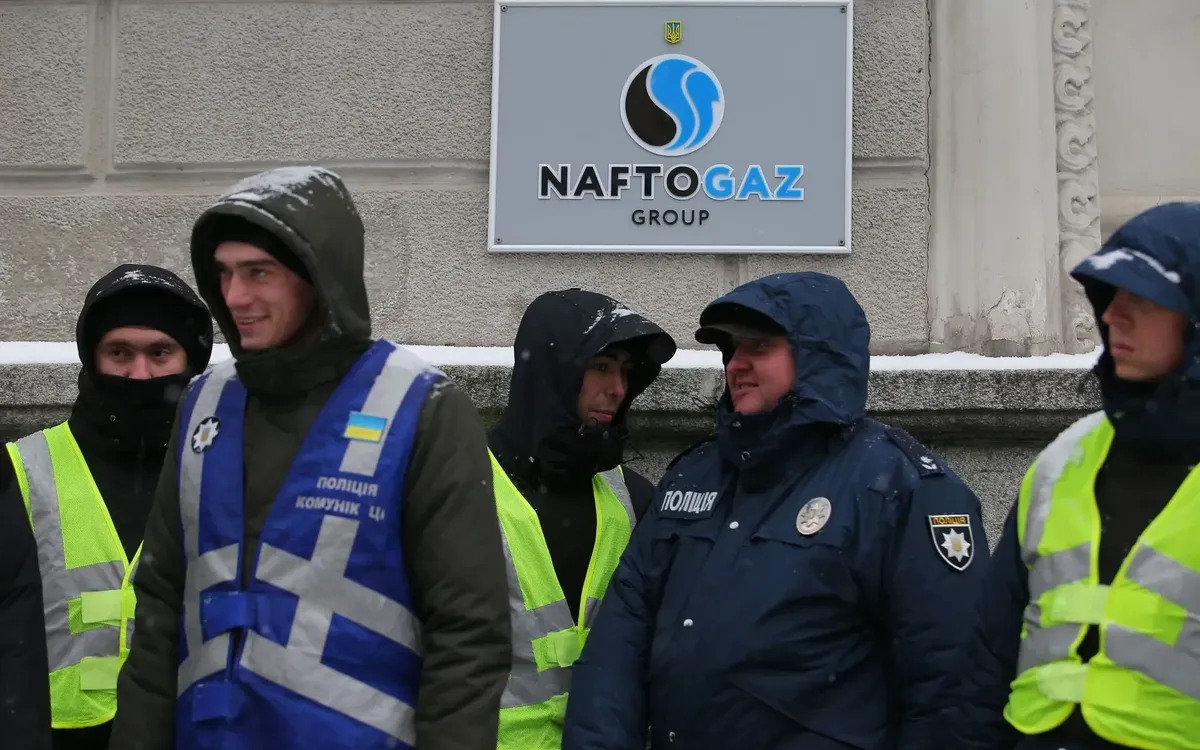
Last Monday in Brussels, tripartite negotiations with the participation of Russia, Ukraine and the European Commission on the transit of Russian gas through Ukraine were held in Brussels. The current contract that regulates transit expires on December 31 of this year - you need a new one. The interests of three sides are understandable, but do not coincide. Russia, intending to complete the North Stream-2 by 2020 and immediately load it, does not want to connect itself with long-term promises before Ukraine. Ukraine as a transit, on the contrary, is interested in as many Russian gas as possible through it. The European Union fears that if the contract is not ready by the end of the year, in January of the next year there will be confusion: “Northern Stream-2” will not yet be commissioned, and European countries at the height of winter colds risk facing interruptions in supplies. However, the deputy chairman of the European Commission Marosh Shefchovich, who oversees tripartite negotiations, said that during this meeting it was possible to agree on a proposal that suits everyone.
Negotiations will continue in May
With the proposal that Shefchovich says, he himself made on behalf of the European Commission. Shefchovich does not disclose the details of this proposal - so that, according to him, not to interfere with the achievement of the result. The European Commissioner only noted that it concerns the three most important points of the future agreement - the minimum volumes of transit, tariffs and validity periods. That is, what causes the greatest disagreements in the Russian and Ukrainian sides.
At the same time, Russia and Ukraine are in no hurry to talk about some breakthrough in negotiations. “The transit contract will be discussed,” Russian Minister of Energy Alexander Novak said in an interview with Russia 24. - The basic condition is its commercial attractiveness, that is, the creation of such economic conditions that would be competitive in relation to other areas - the same “northern stream”, “Turkish stream”.
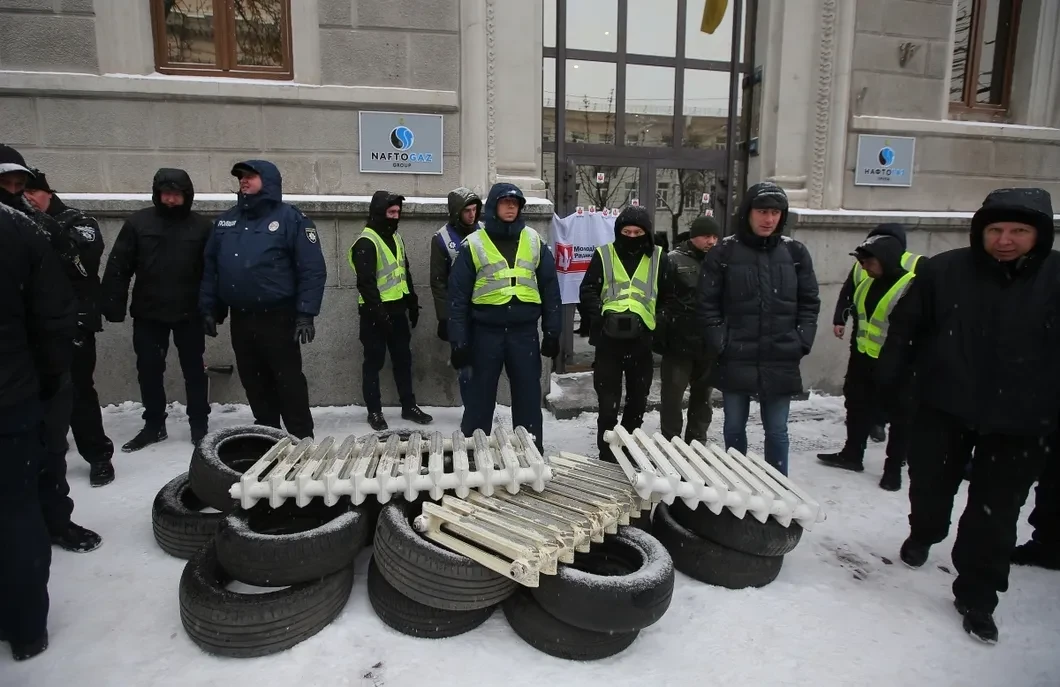
The commercial director of Naftogaz, Yuri Vitrenko, based on the results of negotiations, wrote a post on Facebook, in which he called the position of Gazprom “blackmail”.
The next round of negotiations is scheduled only for May - and this is not very good, taking into account the fact that less than a year remains to conclude a contract. In addition, in the spring, Marosh Shefchovich will run for the presidency of Slovakia: if he wins, then tripartite negotiations will be supervised by a new person.
According to most experts, the terms of negotiations are intentionally delayed by Russia.
Gas relations between Russia and Ukraine have long left the economic plane to the political - and Russia, obviously, is waiting for the results of the March elections of the President of Ukraine: Moscow, most likely, will adjust its position depending on changes in the Ukrainian political situation.
Arbitration disputes
The negotiations and mutual claims of Gazprom and Naftogaz in court do not contribute to the success of negotiations. According to the previous agreement concluded in 2009, Russia was supposed to supply 110 billion cubic meters of gas through Ukraine through Ukraine. At the same time, Ukraine pledged to buy 52 billion cubic meters for itself, with the possibility of reducing these volumes by 20%. In fact, the volumes of Russian transit were regularly lower, and Ukraine since 2016 completely stopped buying gas from Russia for its own needs, by switching to internal production and deliveries from Europe.
As a result, Gazprom and Naftogaz began to clarify relations in the Stockholm arbitration, filed claims against each other. The trials lasted four years, and at the end of last February, having examined the oncoming claims, the court ruled that Gazprom is obliged to compensate for Naftogaz 2.6 billion euros, and allowed to begin the procedure for mandatory recovery.
Gazprom, of course, does not agree with this decision - and is trying to challenge it. At the same time actively playing this card during transit negotiations. Commenting on Brussels negotiations, Novak noted that, "in order to discuss specific details of the contract, it is necessary to resolve those problems and trials that are today." Russia has already invited Ukraine to conclude a settlement agreement and abandon mutual claims.
But this, of course, is not ready to go for this. The position of Naftogaz is as follows: they are ready to decrease the amount of compensation, but not to refuse claims at all. In addition, according to Naftogaz, an arbitration dispute regarding the supply of previous years is not related to a future agreement. Actually, this is exactly what Vitrenko had in mind by “blackmail” from Gazprom.
Dates and volumes
But even without taking into account the current trial, the positions of Russia and Ukraine are largely contrary to each other.
Firstly, Ukraine, like the European Union, insists on a long-term contract-and the European Union by long-term implies a ten-year term. Secondly, Ukraine insists that transit tariffs are calculated according to the European methodology, which should replace the current complex calculated formula, which also takes into account the price at which Ukraine buys Russian gas for itself. Thirdly, the leadership of Naftogaz has repeatedly repeated that he considers the volume of transit, recorded at at least 40 billion cubic meters per year “economically appropriate”.
For Russia, it is just economically impractical to subscribe to such volumes. The employee of the Oxford Institute for Energy Research Simon Pirani in his work devoted to the prospects of transit, notes: in 2020, when Northern Stream-2 is unlikely to function, Russia is most likely to put 50–52 billion cubic meters through Ukraine. If the winter is out of the cold, then the volumes can even increase.
But since 2021, the Nord Stream-2 should earn, and Russia will let part on it. In addition, by 2025 it is planned to complete the construction of the second thread of the Turkish Stream, which will supply the Turkey and the countries of Southern Europe - again, bypassing Ukraine by Russian gas. And this will reduce transit volumes even more.
Actually, from the very beginning of negotiations on a new agreement that started in July last year, the head of Gazprom Alexei Miller said that Russia is ready to guarantee supplies in the amount of 10-15 billion cubic meters of gas annually. And the Russian side continues to adhere to this figure.
“Ukraine will fight for a long -term contract with the minimum guaranteed supplies of 40 billion cubic meters,” Tierry Bros, another researcher at the University of Energy Oxford University, describes this. -However, if you create some infrastructure, then not to use the infrastructure of your competitors later. And in the case of fulfilling the requirements of Ukraine, Gazprom will not be able to use the second thread of Northern Stream-2.
The word of the European Union
In addition, you need to keep a few more factors in the head. The European market is now highly dependent on Russian gas. But diversification of suppliers is one of the main points of European energy security, and the number of these suppliers is increasing. Including at the expense of liquefied natural gas, the terminals for the reception of which are erected in more and more countries. Catar is more and more mastered by the European market, American suppliers are actively looking at it. So ten years of obligations for Russia are too long, too much can change during this time.
On the other hand, the completion of the construction of Nord Stream-2 does not yet guarantee high volumes of supplies on it: for this you need a buyer. And here many European countries - in particular, Germany - are about the possibility of using it as a lever of political pressure: that is, to buy gas from a new pipeline only if transit through Ukraine in sufficient volumes.