
Translated material
Blockage frosts
The project of the new blockade museum was frozen. Smolny does not disclose details until the anniversary salute is freezing. The dedicated area can move under commercial development
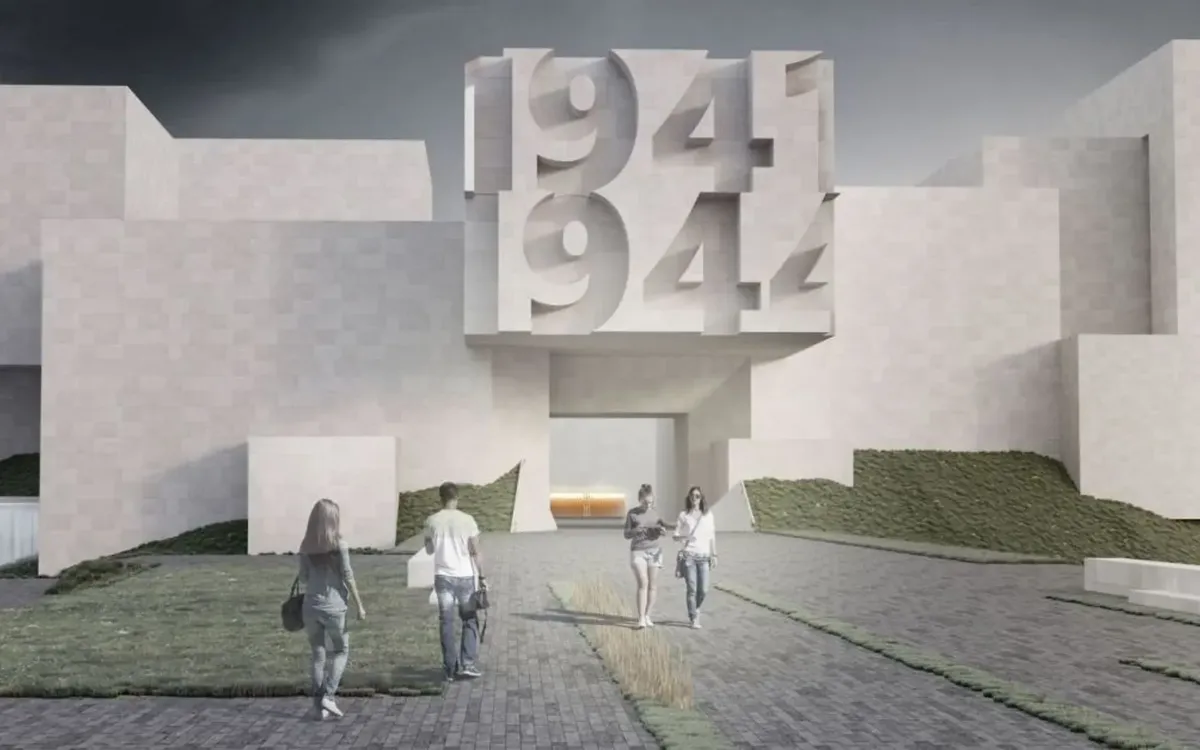
The St. Petersburg authorities insisted on the need to build a modern museum and exhibition complex “Defense and blockade of Leningrad”. The Blockade Museum in Solyani Lane, which opened its first exposition by the spring of 1944, was in sharp need for new squares. Initially, he occupied three interconnected buildings - about 40 thousand square meters. m. Having got into the millstone of Leningrad, he was defeated and closed in 1949. Three years later, by the Council of Ministers by resolution, all museum premises were transferred to the military department, some of the exhibits were distributed to other museums, a significant share of the funds was simply destroyed.
The museum will be revived in its old walls by 1989, but in negligible small squares-800 square meters. m. Attempts to return the premises that historically belonged to him invariably crashed on the strict counter requirements of the Ministry of Defense - the city should build new buildings in return.
This is not a pity for the fun of the Patriot Park by the department of Sergei Shoigu, but there is no money for the preservation of genuine blockade memory, they will not pass for free for free.
In the year of the 70th anniversary of the removal of the blockade, coincided with the re-election of the governor, Georgy Poltavchenko at a meeting with Vladimir Putin was hiring about the construction of a new building. The president supported, saying: "A good idea."
The city picked up a plot near the Victory Park, which seemed quite logical. But then this territory was given to the exhibition complex "Russia - my story". The choice of a new place - at the bend of the Neva, on the Smolny embankment, was initially stiffly criticized by experts.
This territory with useless transport accessibility, inside the planned loop of the interchange of the Oryol tunnel, and the new construction near the Smolny Cathedral poses a threat to historical panoramas. The city defenders insisted that it was wiser to use the existing genuine objects-the constructivist Levashovsky bakery, where blockage bread was baked, and the traction substation on the fountain, which ensured the resumption of the movement of the tram in March 1942.
But all these arguments were ignored. The role of the project operator was assigned to the Center for Exhibition and Museum Projects JSC (100% of the shares belongs to the founder-the Government of St. Petersburg in the person of the property relations committee), also responsible for the embodiment of the St. Petersburg project “Russia-My History”. The Chairman of the Board of Directors of the Center was set by the head of the Committee on Culture Konstantin Sukhenko, the general director-a graduate of the Military Institute of Physical Education Sergey Vazhenin, ex-chairman of the Committee on Physical Education and Sports.
BY THE WAY
Only a competition of architectural concepts cost the budget of 15 million rubles, about 3 million more were worth the search for archival materials for the future museum and exhibition complex.
Despite the requirements of experts who insisted on the need to first develop a museum concept, and already to declare an open architectural international competition for it, they acted exactly the opposite. At first they held a competition, and the closed one (the studio-44 won), then they undertook to justify than and how to fill the new walls. In addition to the museum itself with a stock storage facility and the “Institute of Memory”, many square meters were allocated under the VIP zone and a restaurant, which was also met by the public.
The cost of the project was estimated at six billion, it was planned to complete the construction by the end of 2019. But in June 2018, Konstantin Sukhenko admitted that he could not keep up with the anniversary year. In September, Smolny allocated the Earth (more than 17 thousand square meters) to the center and took up the change in the functional purpose of one of the allotments: according to the general plan there, the zone of the street network was proposed to change it to the business development zone. This initiative of the administration was accompanied by the spread of rumors that they would not build any museum here, they are prepared for an influential construction corporation. Among the potential interests was called the LSR group Andrei Molchanov, whose general director in November was the former head of the Ministry of Transport Maxim Sokolov. But the solemn ceremony of the mortgage stone of the future museum held in the fall seemed to demonstrate the baselessness of such rumors. In response to the request of the “New” in the press service of the LSR group, they assured: “The company did not show interest in the plots, negotiations were not held on them.”
In a parallel course, the media resumed a discussion about the advisability of creating a new complex, publications appeared on behalf of the blockade - who called out not to spend billions in our difficult time, but to return to the idea of creating new blockade exhibitions in historical buildings associated with the exploit of Leningrad.
In December, the center announced a competition for design and survey work on the museum, but the Ufas received a complaint from a little -known architectural bureau, and antitrusters recognized his claims reasonable. The management concluded that the revealed violation did not affect the procurement procedure, and the order did not begin to send.
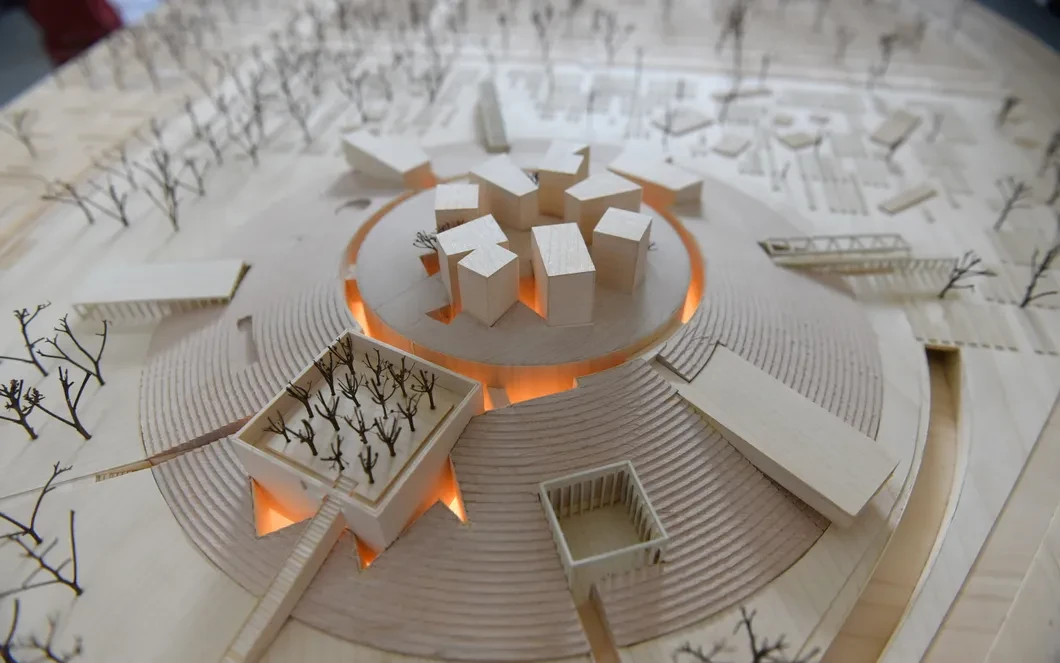
However, the acting governor Alexander Beglov quickly convened a meeting at which he announced the need to listen to the opinions of the townspeople and prevent a cell decision of the fate of the new museum. At the meeting, all those objections that the public expressed before, mainly pushed for an unsuccessful choice of a place, recalled.
We agreed to extend the term of consideration and evaluation of applications for ten days. A week later, Sergey Vazhenin said that the competition was canceled at the request of the State Financial Control Committee, which indicated the need to amend the documentation.
Meanwhile, it became known that the presidential adviser to culture, Vladimir Tolstoy, sent letters to the famous Petersburgers with a request to express his opinion on the creation of a new blockade museum. And the press flashed the comments of experts in support of the wise decision of Beglov with the general trend “The Museum of the Blockade - strategic for St. Petersburg, it cannot be built, ignoring the opinion of the townspeople.”
On January 22, at a meeting of deputies of the Legislative Assembly of St. Petersburg with Lyubov Prezheva, preceding its approval as the vice-governor, the parliamentarian Alexei Kovalev expressed a request to support the project of a new blockade complex: “It cannot be allowed to be used for commercial facilities instead of building a museum and the city is lost to the city.”
“I don’t know whose commercial interests are there, but I know for sure that political parties took this topic as a pole and began to play it,” Ms. Preshcheeva retorted. “This is a bad story that we are trying to pull the blockade on one side or the other.”
Lyubov Preshkaeva again focused on the high cost of the project, as well as an unfavorable location of the site: “Do we want people to sit in the findings, or do we need transport accessibility?” Having given a rebuke to those who “try to speculate on the holy theme,” Mrs. Prekasheva completed the discussion with a statement that the project was frozen on behalf of the acting governor.
Sergei Vazhenin in a conversation with Novaya said that so far no one has officially informed him of freezing or canceling the project, adding: “But you understand that such statements are not made from scratch. I’ll return from Paris - I’m flying there to congratulate the blockade there - and half the employees of [the center] will dismiss. And what to do if there is no work? "
Mr. Vazhenin advised the press “Wait for Mondays”-according to his assumption, the decision to cancel the project can be expected after the completion of official celebrations on the occasion of the 75th anniversary of the full relief of the blockade.
The vice-governor Vladimir Kirillov was a supervisor to the culture of culture: "So far I will not comment on anything."
Those who opposed the construction of a new blockade complex could enjoy the abolition of the project. If it were not for the bitter feeling that publicly once again, cynically manipulates - this time in the interests of the construction business, which played on the holy topic for pushing the gold land plot. How substantiated these suspicions are, we learn only with the time when the fate of the territory is determined: whether the opinion of the townspeople who advocate the improvement of the green zone here will be taken into account, or will be given under commercial development.
All materials of the St. Petersburg edition | Archive of publications | PDF