
Translated material
Energy comes out
The government decided not to introduce raising tariffs for electricity consumption
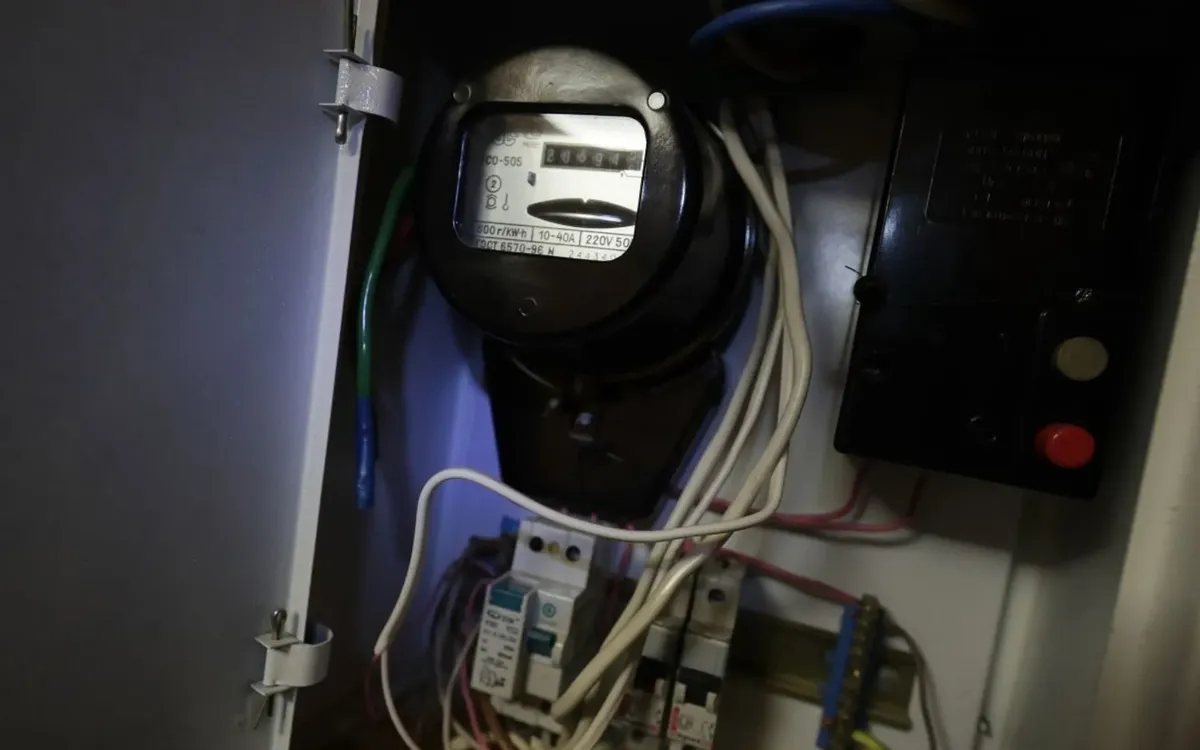
The authorities postponed the reform of energy tariffs for an indefinite period-such a decision was made at a meeting with the Deputy Prime Minister Dmitry Kozak. On the eve of Kommersant, information on the socialist in the consumption of electricity for the population, which the Ministry of Economy suggests. In particular, according to the proposal of the ministry, the tariff rate should be set on the personal account (that is, to the apartment), and not for every person. It was also proposed to smoothly reduce benefits for the rural population and citizens using electric stoves.
Experts interviewed by the "New" came to the conclusion that the proposal of the Ministry of Economy will provoke an increase in the debts of Russians. Nevertheless, at the meeting, Kozak said that “the issue of a more fair distribution of tariff load” will be considered again, but later, when the government will evaluate the financial consequences for the population.
The discussion about electricity prices began with the performance of the head of the Rusnano State Corporation Anatoly Chubais at the Gaidar forum - there he called Russia one of the most energy -mating countries in the world:
“It is correct to create a situation in which the rich pay more, and the poor remain at the same level,” said Chubais.
A week later, it turned out that the statement was made in anticipation of the government meeting, which was going to once again consider the introduction of tariffs for electricity. However, at the meeting, the question was again postponed.
“They canceled because they were frightened,” the economist Natalya Zubarevich is sure. - Imagine this background: inflation has grown, VAT was raised, they raised tariffs for housing and communal services, retirement age, parking fees - money is pumped out of the population. It is necessary to get away from the wrong economic scheme, and this reform is needed. But another thing is when and at what a pace to do it. As a story with pensions - “Forward and with a song” or neatly in steps.
The government argues the need to reform the fight against cross -subsidies in the energy sector, the Zubarevich agrees with this argument: “We pay for the population for the population, although in normal economic countries they try to reduce tariffs for business, and the population pays full. Because it is a conscious consumption when you understand that how much it costs. Although we have a share of the population in energy consumption, of course, less than three times than the share of industry, but still this is a wasteful story. Cross subsidies must be left. But to leave when the population has fallen by 11%is, of course, an interesting time. ”
The government has been trying to introduce a social tariff for the energy tariffs for several years. In 2013, it was introduced in six pilot regions, but in January 2014 it was postponed for two years. As reported, the head of government Dmitry Medvedev listened to the position of governors who were afraid of the growth of tariffs and social tension. They returned to the idea again in October last year, but, as it turned out, not for long.
“In 2014, we had a poor dynamics of the population’s income, in connection with the beginning of the economic crisis,” recalls Alexander Burdyak, senior researcher at the InSAP RANEPA. - And this reform would become an additional drop in a barrel of negativity. But now, it seems to me, there is stability. She is bad, but still stability. We do not expect in the near future sharp decline in income of the population. An increase in VAT has already passed - half of January is behind, and it seems that nothing globally bad happens. In 2014, it was a clearly bad moment, now the moment is already better, and it is not clear how much it will be better in a year or two. Another point - we do not have good electronic accounting, and, it seems to me, it is technically early to introduce such a system.
By “electronic accounting”, Burdyak has in mind a system that would calculate the tariff, taking into account the number of people living in the apartment. Because one of the proposals of the Ministry of Economy was to record energy consumption on the personal account of housing, and not for one person. It was assumed that citizens consuming up to 300 kW per month will pay for electricity at the current basic tariffs, those who consume electricity from 300 to 500 kW per month will be paid for increased.
“It is clear that if five people live in the apartment, they will quickly go out for the norm,” the expert believes. - But on the other hand, I also can’t imagine how to technically organize consumption for people in every apartment.
Burdyak is of the opinion that you need to wait with the reform for a couple of years, when a single electronic system appears, where tenants (which are perhaps not spelled out in a particular apartment) will be able to note what norm they need on the personal account, depending on the number of people in the apartment:
“True, this is a very large administrative work, and the savings from such a measure will be completely eaten by the payment of employees who will keep this accounting.”
“If we take apartment buildings (and one person rarely lives in apartments, suppose 3-4 people), they can’t fit into the allocated norm,” said Alexander Pasechnik, head of the National Energy Security Fund. “And it will be simply unfair.” In conditions when we have income, to put it mildly, do not grow at the same pace with which tariffs are indexed up, gaps in the money will grow. And when the growth of income does not keep up with the indexation of tariffs, debts will go up - this will become one of the consequences of such innovations.