
Translated material
"Venezuela is a new US victim!"
Russia supported Maduro, whom Trump and Latin America were called an illegitimate president. The country has massive protests
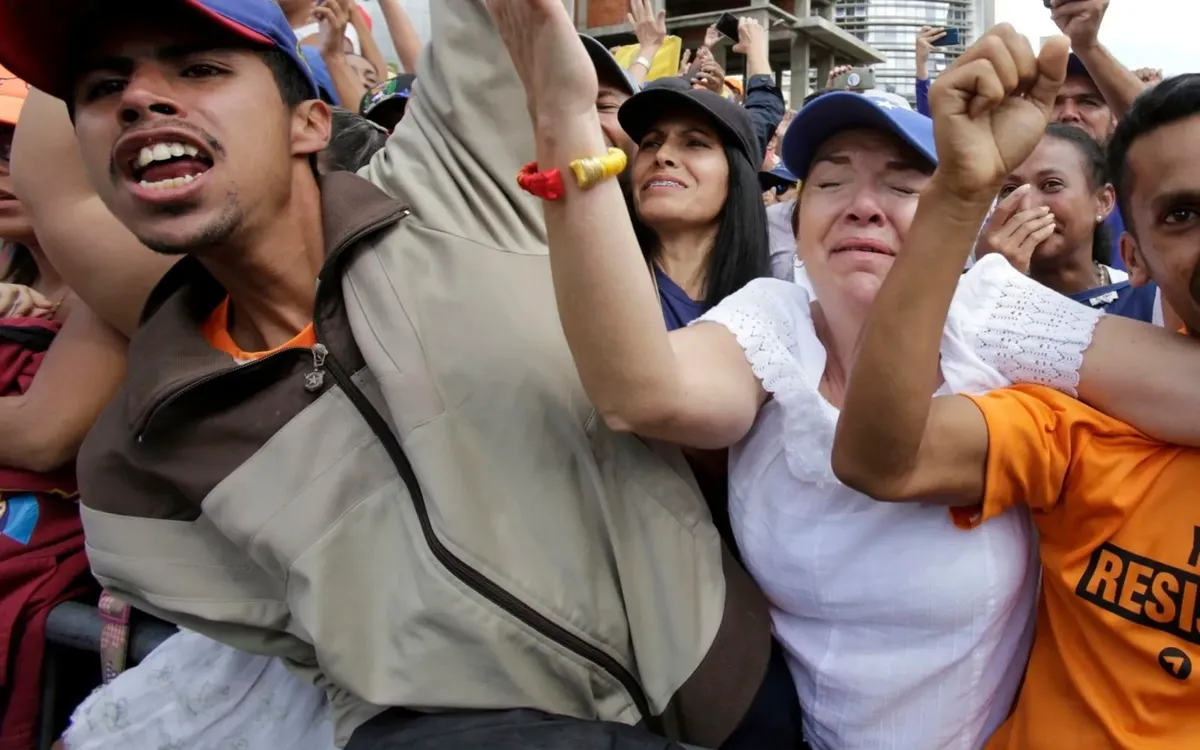
On January 23, the opposition politician Juan Guydo, speaking at a rally of supporters in one of the districts of Karakas, declared himself the acting president, and the head of state Nicholas Maduro, “dictator and tyrant”. The 35-year-old speaker of the parliament called on Venezuela’s armed forces to support him and help hold free elections in the country, which has been living in fact in the conditions of dual power for six months. The head of state, who has just re -elected for a second term, is opposed by the National Assembly, which has a wide circle of authority.
“The time has come to protect the Constitution and the future of your families, we ask not to shoot at us, you saw that there are millions on the streets,” the politician said. A crowd of supporters greeted his words.
In less than an hour, Donald Trump said that he recognizes Guido as a temporary president, and from Maduro demanded not to allow strength actions against the opposition.
Who is Juan Guydo
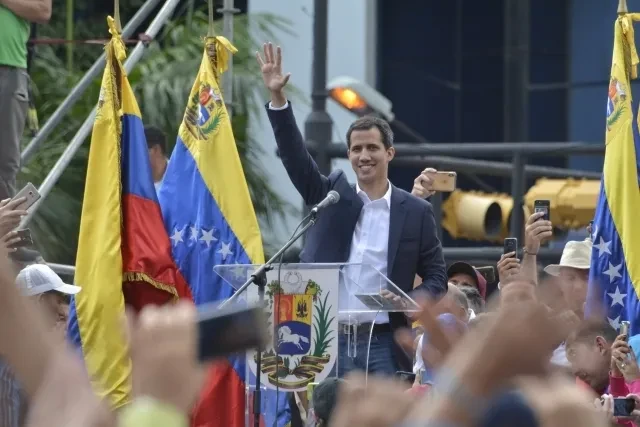
Juan Guydo was born in 1983 in a large family of a civil aviation pilot and teacher.
The family lost a house and a small business after a series of landslides in the coastal territories of the state of Vargas in December 1999. The natural disaster left thousands of people homeless, several tens of thousands of thousands were killed. Guydo put guilt for the insufficient actions of the authorities during the elimination of the disaster.
He graduated from the Catholic University of Andres Bello (specialty "Industrial Engineering"), then trained at the University of George Washington in the United States ("Public Administration").
Guydo entered the student movement opposing the then president of Venezuela Hugo Chavez.
In 2009, Guydo joined the Levocentric Party "People's Volya" and until 2015 was deputy deputy of the parliament. Then he was elected a deputy from the state of Vargas, where he initiated an investigation into a number of corruption cases already related to the administration of Maduro.
In 2018, he was appointed head of the Venezuelan opposition coalition “Round table of democratic unity” (MUD), and on January 5, 2019 he took the position of chairman of the parliament (National Assembly) of Venezuela.
After the political statement of Guydo in Karakas, clashes began between demonstrators and security forces. The police used tear gas and rubber bullets. In these clashes, from 70 to 220 people were detained, according to various sources. There are also dead. Only identified - 13 people, in reality the number of victims is greater.
Maduro tactics
Several thousand people supporting Maduro entered the streets of the capital of Venezuela.
Maduro himself spoke to the supporters from the balcony of the Presidential Palace and announced the breakdown of diplomatic relations with the United States. He provided 72 hours to American diplomats to leave the country, but in Washington they refused to recall the ambassadors.
The USA said that they maintain diplomatic relations with Venezuela and would build them through the Government of the Provisional President Guidido.
Venezuela Minister of Defense Vladimir Padrino Lopez supported Maduro and stated that the army would defend the country's constitution and its sovereignty. The Supreme Court of Venezuela ordered the prosecutor to start an investigation against the parliament, and recognize all the actions of the National Assembly illegal.
World reaction
For Guydo
US leader Donald Trump called Guido “transition president” and promised that he would use all economic and diplomatic tools to restore democracy in Venezuela. The fact that Trump can recognize Guido as the legal leader of Venezuela, in mid -January, the American media wrote with reference to sources.
US Secretary of State Michael Pompeo called on the Maduro President of Venezuela in 2013 as a legitimate leader.
The legitimacy of Guidido was also recognized by the authorities of Canada, Brazil, Paraguay, Peru, Colombia, Guatemala, Argentina and Secretary General of the Organization of American states Luis Almagro.
For dialogue
UN Secretary General Antonio Guterrish called both sides of the protest to the dialogue to avoid the escalation of the political crisis.
“We hope that the dialogue is possible and that it will be possible to avoid escalation, which will lead to a disaster for the people of Venezuela and for the region,” he said.
The European Union called for the country's “free and trustworthy” elections in the country.
For Maduro
Bolivia, Mexico and Cuba supported Maduro. Maduro’s support was expressed by Turkish President Recep Tayyip Erdogan, saying: “My brother, Maduro, hold on, we are with you.” Maduro is also legitimate in Russia, which has recently been actively investing in oil projects of Venezuela and even proposed a plan for saving the country's economy, sending a delegation of the Central Bank of the Russian Federation to Karakas.
What does the Venezuela state transport for Russia mean
Russian international politicians believe that an attempt to remove Maduro is illegal from power, and Venezuela is a “new victim” of the United States.
Press Secretary of the President of Russia Dmitry Peskov said that Venezuela was an attempt to usurpation of power, which contradicts the principles of international law.
The official representative of the Russian Foreign Ministry, Maria Zakharova, believes that "on the example of events in Venezuela, you can clearly see how the progressive Western community in reality refers to international law, sovereignty and non -interference in the internal affairs of states, in manual mode, changing power there."
The deputy head of the Foreign Ministry Sergei Ryabkov announced his readiness to stand "on a par with this country guarding the sovereignty."
“We will stand, if you want, on a par with this country on guard of the sovereignty, guarding the inadmissibility of encroachments on the principle of non -interference in internal affairs. Material cooperation, practical cooperation between Russia and Venezuela continues in different fields. We are completely not tuned to turn it, ”he said.
REFERENCE
According to Reuters, from 2006 to November 2018, Russia and, in particular, Rosneft provided Venezuela with loans and loans worth at least $ 17 billion. The State Oil Company of Venezuela PDVSA gradually repays these debts, supplying oil, but the economic crisis in the country prevents it from fulfilling its obligations. Note that Venezuela has the world's largest oil reserves.In December last year, after the meeting of Nicholas Maduro and Vladimir Putin, it became known that Russia invests more than $ 5 billion in the Venezuela oil industry, more than $ 1 billion in the production of the production industry, and also put 600,000 tons of grain to the country.
Maduro reign: Chronicle of Crisis
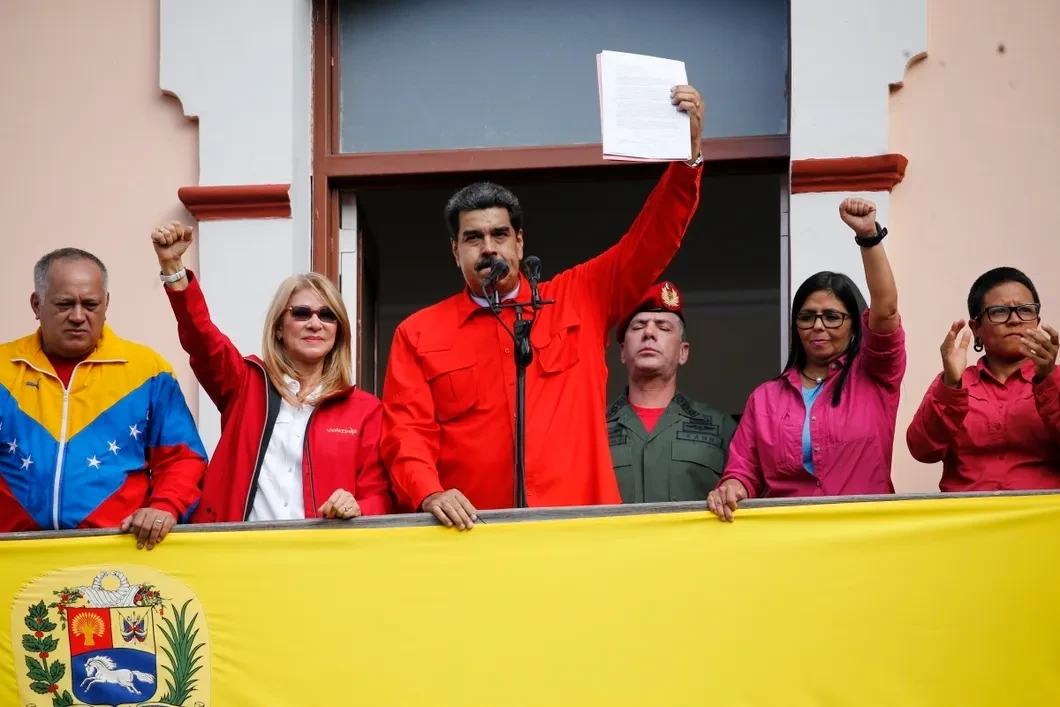
Nicholas Maduro took the position of President Venezuela in 2013 after the death of the former leader of the country Hugo Chavez. He is his successor.
Shortly after Maduro’s took office, the economic crisis intensified in Venezuela, among the reasons for which the world fall in oil prices, the country of contacts with Latin American neighbors and the introduction of American sanctions directed against Maduro's dictatorship. Street protests began in the country demanding the resignation of the president.
The most massive protest in the country happened in 2017, then more than 120 people died. This happened after the Venezuela parliament declared the president of the country as a dictator, which, according to the Constitution, is the basis for the removal of the head of state from the authorities.
The Supreme Court recognized the decision of the parliament illegal, Maduro remained as president, dismissed the Nutzama and convened a constitutional assembly to create a project of a new constitution of the country. It declared itself the supreme authority and actually took on parliamentary powers. The National Assembly did not recognize this decision and continued to work.
In May 2018, Maduro was re -elected President Venezuela. The results of the elections were refused to recognize the majority of Western and America countries. 14 countries, including Argentina, Brazil and Canada, recalled their ambassadors from Venezuela in protest against the election results. At the same time, the Russian government recognized the results of the vote.
In August, Maduro was attempted - during his performance, several drones exploded in front of the guards. The president was not injured, but several soldiers were injured. Maduro said that John Bolton participated in the preparation of the attempt by the US Presidential Advisor.
On January 10, 2019, the inauguration of Maduro was held for the second six -year term.
On January 15, the country's National Assembly called Maduro a “usurpator” and all the actions of the president since his inauguration.
On January 21, in Karakas, the Venezuelan army was sent to suppress the rebellion of a small group of military personnel of the National Guard, who supported the opposition forces. The rebels surrendered without a fight, on the same day the Supreme Court of Venezuela declared the country's parliament by an unconstitutional body - but it was ignored.
Prepared by Anastasia Torop, "New Gazeta"