Date
Author
Вячеслав Половинко, Анастасия Тороп
Source

Preserved copy
Translated material
For IMEI one hundred rubles
The authorities want to force citizens to pay for registration of any devices on mobile networks

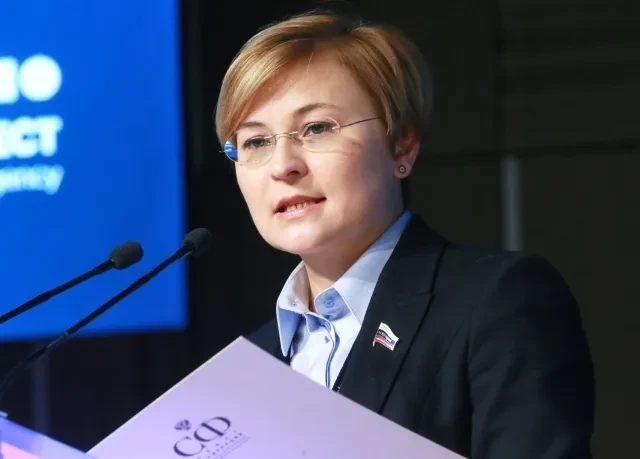
On the morning of Friday, January 25, the Russians massively realized that they wanted to hang another tax on them: Senator Lyudmila Bokova shook off the dust from the periodically emerging initiative about the mandatory registration of all mobile devices in the country. In different variations, we have been discussing subscribers to a particular apparatus for the past 10 years, but from last July we have come about more or less practical steps. The proposal of Lyudmila Bokova (known as a member of the Klishas Group in the bill on the “sovereign Runet”, but actually a completely independent senator from the Saratov region) involves taking into account the devices on a special IMEI code: thereby, it will be possible to fight smuggling and terrorists, turning off the illegitimate apparatus and easily finding attackers by the telephone name registered in their name.
After all, terrorists do exactly that.
Registration of mobile devices exists in a number of Western countries, but in time a new round of the activity of senators coincided with the same campaign for compulsory registration in Kazakhstan. They menacingly promised to turn off all unregistered subscribers from January 1 from January 1, but a few days before the New Year they changed their minds and began to consider that those who use their phone have long been automatically registered: problems would begin only if it would be necessary to rearrange the SIM card to a new device. They did not dare to turn off the connection massively (almost 100% of the registered ones were publicly announced, but in early December, only about two third subscribers were officially passed), and repressions have so far come down to one -time telephone checks on the street when checking documents.
In Kazakhstan, subscribers feared that through the transfer of additional data to special services, they voluntarily agree to join their conversations at any time of Comrade Major. In Russia, the interests of special services in the initiative on the registration of mobile phones are far from being considered as the main motive. “The authorities will have any new information after the adoption of this law. The fact is that modern cellular networks are arranged in such a way that both mobile operators and law enforcement agencies [already] know the IMEI phone of a particular subscriber. This is used, including in order to disclose various crimes, for example, theft - information that is now in the databases of mobile operators, ”says Vladislav Zdolnikov, the“ new ”founder of the TGVPN service. “Even if a person rearranges the SIM card to another phone, then the first device can always be found in the operators' database and determine who he belonged.”
“I am absolutely sure that they want to adopt the law only in order to replenish the budget of the Russian Federation.”
Actually, Bokova does not hide that the authorities have a fiscal interest in this initiative - 100 rubles each for the registration procedure from the nose. “This is not a barrage tariff, but a kind of compensation for the system by analogy with an existing fee for the transfer of a subscriber number,” Bokov’s term “quasi -laws” explains in his own words. True, although she clarifies that it will only be about new devices imported from abroad, the old mobile phones will also have to be registered over time (an amnesty is proposed for three years), and this is also 100 rubles from the phone. Ultimately, this approach has two ways. You can shift the registration procedure completely to suppliers - and then these 100 rubles will be automatically added to the price of the device - or force subscribers - as an option, with the help of a specially created single registration operator (and you can fantasize for a long time what surnames can be in the Benophific line).
Already now it is clear, however, that the bill, when it is introduced, is waiting for a difficult fate. On the afternoon of January 25, Deputy Prime Minister Maxim Akimov, having talked at the same time with the Ministry of Digital Development, said that “the very idea of registration is correct”, but in no case should you take money. It is necessary to read this like this: now “the people have reached the extreme point of irritation, why still nurely nervous,” explains the political strategist Vladimir Perevoschikov. “Pension reform, VAT, garbage reform - all this undermined confidence in power (look at the ratings),” he says “new”. -However, the authorities are still needed. And through different initiatives, the authorities are trying: and maybe we can take something else here? ”
“But the voter has a huge hole in his pocket, and there is a feeling that this is already chaos. Therefore, in some moments, the authorities do not risk. ”
Each initiative, which is supposed to remove money from the population, has to be carefully double -checked through sociological structures (according to Perevoschikov, some of the sociological services close to power were transferred to the emergency mode of operation), and so the story of the introduction of the socialist consumption of electricity has already “flown”. The initiative to register mobile phones and its financial component (it is known that on the import of "gray" devices, Russia is losing about 17 billion rubles annually) can also be temporarily donated to not exactly the people of the people. Or do it even more cunning: now make registration for free, and then, when and if everyone calms down, introduce the tariff for the procedure. Then you can dream about large sums: the initiative of the side and the “group of authors” involves not only registration of phones, but also taking into account tablets, laptops, “smart watches” and even meters of romance services in “smart houses”. There is where to turn around.