
Translated material
Overload
In the grain transportation market, the rule applies: only one who carries overload can survive, violating the law. Drivers answered with a wave of strikes
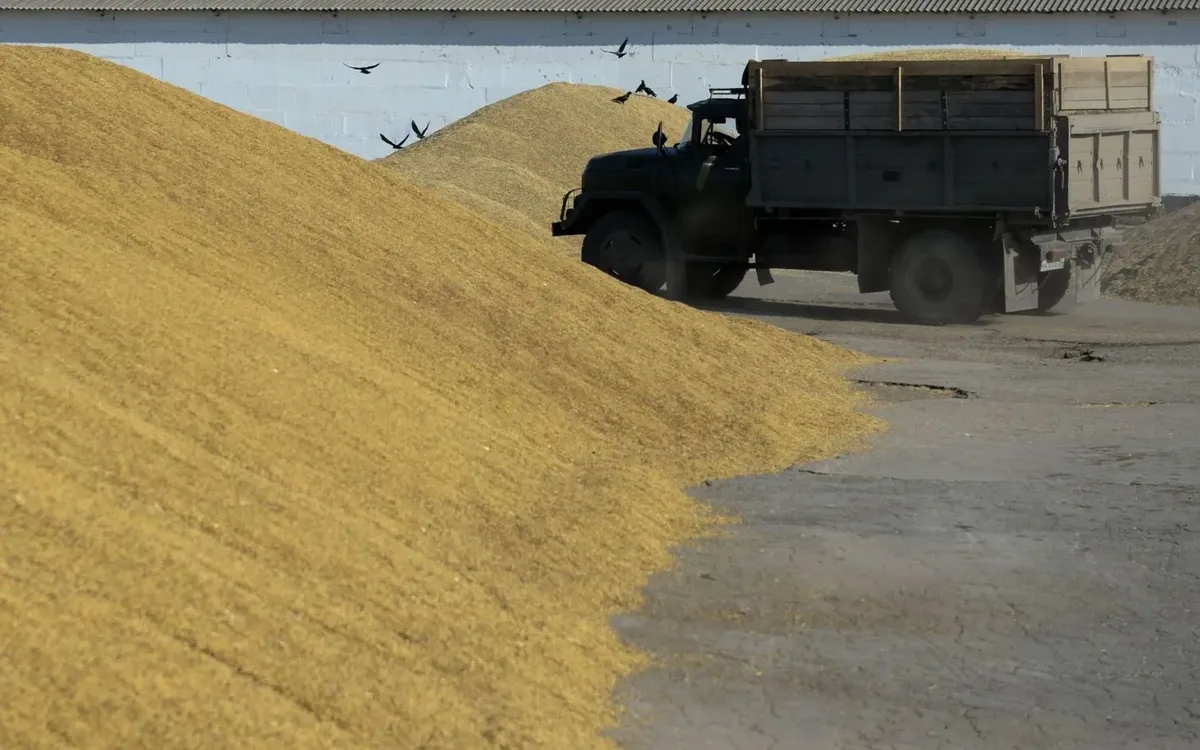
In the grain transportation market, the rule applies: only one who violates the law can survive. The matter came to the stop of the work of grain terminals - drivers refuse to transport at unprofitable tariffs themselves and convince their colleagues to follow their example.
Drivers in the Rostov region, Krasnodar and Stavropol Territories joined the seated strike. On the outskirts - Volgograd, Voronezh, Saratov and Tambov region, where grain carriers also announced their intention to support colleagues. About why grain carriers opposed the “overloads”, “new” was versed in.
Place of collection - car market
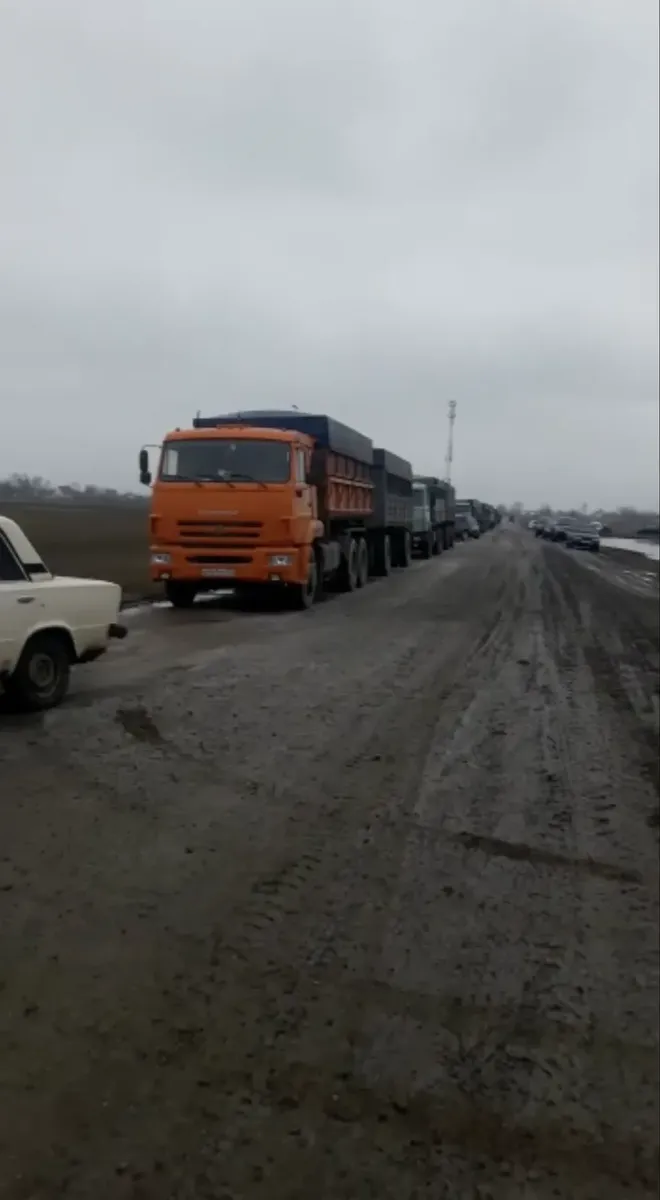
The protest began spontaneously and at the same time in several regions, said Andrei Gruzdenko, one of the organizers of the strike, a member of the strike of agricultural products, a member of the strike of agricultural products. Drivers gathered in Rostov, in the Stavropol Territory - in the village of Krasnogvardeiskoye, in the Kuban - in Krasnodar, Armavir and Kropotkin. The main gathering point is car market.
“On January 20, there was a collection of all the joint carriers of grain,” said Gruzdenko. - People peacefully gathered in groups and began to discuss how we live on.
How to get out of a situation when it is impossible to exist on the market in the market. Only one who carries a overload can survive, violating the law.
The Trade Union of Agricultural Product Carriers is an organization that does not yet exist. “It is not yet,” Gruzdenko notes, adding that the spontaneous movement has several organizers in several regions. “But the creation suggests itself, people realized that one is not a warrior in the field.”
The protest does not have an official leader, like the communication channel - the participants in the movement coordinate their actions in several channels of the messengers.
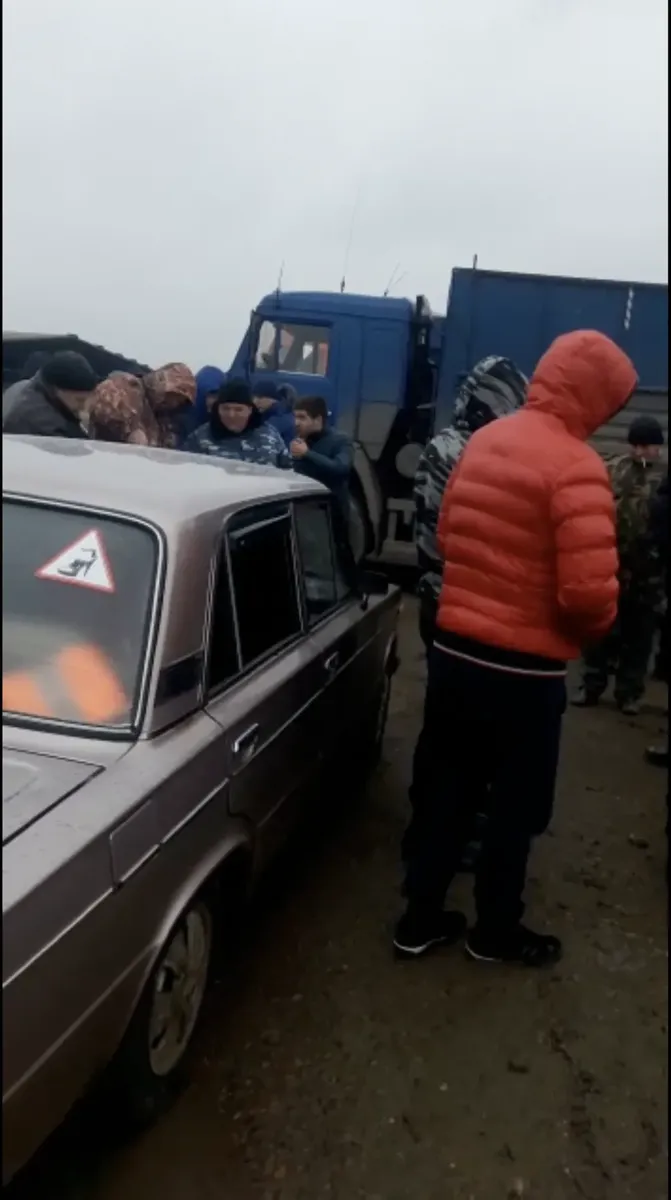
The newborn movement opens against unfair competition and low tariffs in the transportation market. By the first, carriers mean “overloads” - reducing logistics costs, drivers are forced to transport goods, the mass of which is several times higher than the norms established by law. This practice has a corruption component - by recognition of carriers, to carry trucks with overloading is possible due to the fact that employees of weight control points close their eyes to violations. And they do this far from free of charge.
“To power, we have a requirement - let it put in order the points of weight control,” says Gruzdenko. “Our posts are corrupt, it is more profitable for them when a car arrives 70 tons than 20 tons in normal - they will receive a penny more from the overload.”
Violations of the norms are secretly supported by grain exporters and owners of grain terminals, interested in saving on transportation. “It is necessary that the terminals do not accept the overload, but fulfill the legal requirement, which also applies to them,” he notes. “The responsibility is not only of the carrier, but also those who send those who accept the cargo.”
Grain carriers are no longer ready to play according to the rules of overload - this is the main formula for protest. Overload on the road is a risk factor that carriers are aware of. “ But what about the conversations about the roads broken by the overload? - notes Gruzdenko. - And what about the conversations about security?
After all, a car of 80 tons on the road is a suicide bomber. I don’t want some negligent carrier to move my family. ”
"We will not become millionaires, we must feed the family - we are obliged"
But the main argument of carriers is that the overload “broke” the market - only carriers who agree to violate the law and take overload can survive. The participants in the movement see the way out in order to agree and develop a single tariff for the market.
“It is unrealistic to survive the bet that customers of transportation are now given,” Gruzdenko explains. - The mileage of the car is 20 km, and the earnings are three thousand rubles. How to survive it? The only way out is to carry without overload and tie the price tag to the fuel. The fuel rose - the rates rose.
Activists require an increase in the tariff by 35%, Gruzdenko said.
According to Gruzdenko, the main goal of carriers is the unification of people. “We decided to travel on loading and reporting information to carriers,” he said. - As a result, the cars left for the loading and the work stopped. This is a common cause. We will not become millionaires, we are obliged to feed the family. ”
- Of course, the exporter can say that we are interfering, but we do not commit any violence, we just convince our brother. He adds. - We are not the point of stopping the shipment, we want to be understood. Although it turns out that we, as it were, put a bandwell to the exporter.
According to Gruzdenko, the activists managed to stop part of the loads in the port of Azov and at the terminals in Taman and Novorossiysk, and more than a thousand cars are taking part in the protest. “Everyone calls me, trying to find a common language,” he says. “Carriers from Volgograd, Voronezh and Saratov were added.”
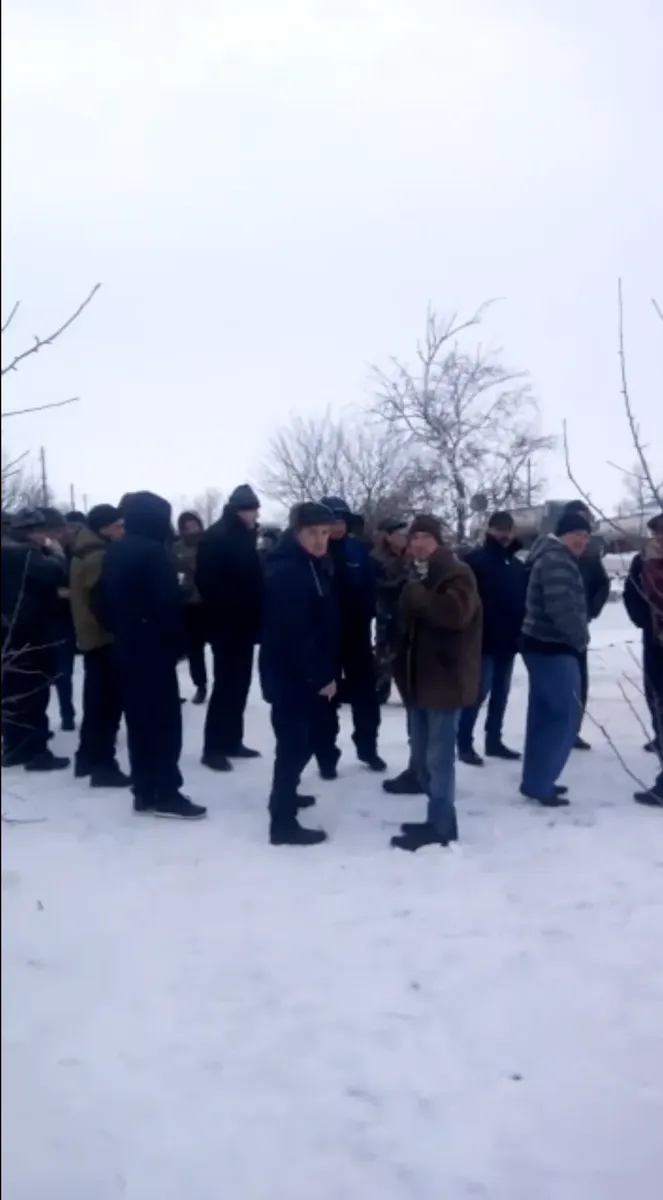
"We just persuade people"
Meanwhile, information appeared in the media that the protest participants in the Krasnodar Territory and the Rostov Region did not let cars to loading terminals. In the commentary, Andrei Gruzdenko noted that the organizers do not support such forms.
“Maybe someone was trying, but I don’t know about it,” he said to “New”. - This is just bending the stick. We just persuade people, we do not want to break the law. Naturally, someone does not like our actions, and they will now catch up with such a wave to make us extreme. I myself am convinced against violence and all my associates that the overload destroys the market.
Nevertheless, a video is available on the network, the author of which demonstrates a car with a cargo scattered on the ground. “All four sides were opened,” says the voice behind the scenes indignantly, which, apparently, belongs to the driver who loaded the car over the norm. “These are not our people, but we can’t answer the whole country,” Gruzdenko commented on the situation, adding that according to activists, the incident took place in the Tambov region.
The story of Andrei Gruzdenko illustrates the problems that most carriers have encountered.
“I'm in the market for the fourth year,” he says. - Last year, the market has already begun to break. And I had already sold half a park, I refused the employees, only I go myself.
"Many came from collective farms and do not know how to count"
A similar situation is from Sergei Popov from the Volgograd region, who recently joined protest. “My cars have been standing for the second month, I will not lie,” he says.
- We occupy the money to survive, we are standing without work. Until the level, prices fell that it is cheaper not to work. ”
“I morally support comrades in the south,” he says. - I do not produce cars.
And adds his requirements for the common agenda. “We would like to drive a car according to the technical data,” says Popov. “If the technical data of the car is 8 tons, and the trailer is 16 tons, then so much the car should be taken.”
Requirements are directed to exporters. “And the state has to do with it?” Says Sergey. “The state is only asked to put things in order at the points of weight control.”
“There are those who pay traffic police officers at weight points and cars calmly pass around the city with overload,” adds Boris Khaidarov, who joined the protests in the Krasnodar Territory.
In the Krasnodar Territory, 50-70% of carriers participate in the action, says Khaidarov. “It all started with a meeting in cities,” he says. - In our Slavinsk, we explained to people that the overload is squeezing out of the market. Many came from collective farms and do not know how to count. We are all standing, but they drive, as we call them, “rats” - those who directly say “drove an overload and I will carry”.
"There will always be those who will take a complete body"
The experts surveyed by the New ”note that without creating the general rules of the game, carriers will not be able to solve the problem of overloads and low tariffs - there will always be players who will go to reduce prices.
“There is the concept of“ Tudytka ”and“ return ”in the cargo transportation,” explains Alexander Kotov, head of the interregional trade union of professional drivers. - That is, a person is lucky there at one price, and he can go back for funny pennies, if only to justify the diesel fuel. You can deal with this with the help of protest actions - it was such that they burned strap -bores. This happened to us with Plato in Dagestan.
This is of course not a method, but the authorities and consignors bring carriers to the time when they go to each other with fire and installations.
“There will always be those who will pick up a complete body,” agrees Sergey Grachev, vice president of the National Association of Rosavt transport freight road transport. - Now those who want to work legally are striking. But there are private traders who will carry on a full body and drop prices. In my practice, those who ride on overloads are still “drowning”. Only before this, the market also drops, take the market from carriers.
Representatives of trade unions see the solution to the problem in establishing the general rules of the game. According to Sergei Grachev, this practice successfully exists abroad.
“All over the world there is a minimum tariff for transportation, which has a driver’s salary, car costs and fuel,” he notes. - And this is the minimum below which you cannot go down. In Sweden, it is 82 euros per hour, in America - two dollars per mile. And with us!
Alexander Kotov talks about more radical measures. “Carriers conclude agreements and are set tariffs, no one can travel below,” he notes. - And if the senders offer to go at low prices, the trade union warns the administration. If she does not take measures, a truck is put across the gate at the gate. Now this cannot be practiced - they recognize an extremist, ”he remarks.
According to representatives of trade unions, protests among carriers were inevitable.
“The first is a sharp increase in fuel prices, this is the problem of the entire transport industry,” says Sergey Grachev. - She's on the verge of an explosion. The prices remained the same, and fuel prices rose. It was also superimposed that the tax authorities began more closely.
But there are several reasons at once why the protests began precisely among grain carriers.
-Drivers of the so-called dump trucks-collars entered the action. The salaries are low, the work is heavy and dangerous, ”says Alexander Kotov. - They all work with overload. At least 50-60 tons weighs a truck along with grain. So they are transported since Soviet times - roads are breaking, but since regional corrupt officials are roofing, they look at it through fingers at the points.
- Why in the Kuban? It was boiled! - The President of the National Association of Cargo Road Transport “Gruzavtotrans” Vladimir Mityan emotionally answers. - Have you seen grain? They are overloaded to two or three cars. This is a shell of a slow action!
Vladimir Mityan gives numbers. “The last information in the Rostov region,” he notes. - Take a distance - from the Rostov region to the port of Taman, this is 575 km, in both directions over 1150 kilometers. The carrier will spend about 27 thousand on fuel, and carriers at the current rate offer about 35 thousand rubles for such a flight. ”
“There are 8-9 thousand rubles for everything,” he believes. - Here we add Plato - this is another 2 thousand rubles. And the driver needs to eat, pay for parking. And we still do not take taxes and wear of the car! This is a disaster: that is why people are building up sides and traveling on the dead cars.
"Incomprehensible body movements"
In the commentary of the “New”, the president of the Russian grain Union Arkady Leonidovich Zlochevsky said that the protests of the grain carriers have not yet had an influence.
“It's not that this is a strike, but rather incomprehensible body movements,” he remarked. - The carriers want to increase the prices, refused to load the grain, resting on what they are forced to carry with overload. So far this did not affect the industry - but a couple of companies, indeed, is worth it. Raising the prices, we lose competitiveness, ”Zlochevsky outlined the position of grains. - The question rests on the economy - where is even more expensive?
Nevertheless, Zlochevsky noted that the Union is ready to sit down at the table of negotiations with carriers. “The negotiation process will be - the question is that it will become his result,” he said. - Pricing pressure will lead to a decrease in the purchase value. This will not affect the world price, but the pressure on internal purchase prices is quite possible. ”
What next?
The organizers plans to prepare appeals in the leadership of the administrations where the protest has matured. We are talking about the Stavropol and Krasnodar Territory, as well as the Rostov region.
At the same time, on January 16, the Khugavtotrans Association sent a appeal about the problems of the market for the transportation of agricultural products to the presidential administration, the Prosecutor General, the Federal Antimonopoly Service, the Government of the Russian Federation, the Ministry of Transport and the Ministry of Agriculture.
The first reaction begins to come, told the “new” president of Gruzavtotrans Vladimir Mityan. “On the first day, we were called from the presidential administration, today there was a call from the Ministry of the Rostov Region,” he said. - Other officials - the prosecutor’s office, the Ministry of Transport, until they react. We reported this to the Presidential Administration - that they are reluctant to make contact with us. Of the grain traders, only the grain union called and asked for relevant information. ”
However, the leaders of the spontaneous assembly to the initiative of “Gruzavtotrans” are skeptical. “We are tied to“ Gruzavtotrans, ”Glushchenko notes. - They came to Krasnodar, to Rostov. Until some points, we agree, but we did not ask for letters to the president on our behalf. You see, we do not want to politics, but here she is already smacking. We are now a lot of offers from trade unions. They want us under themselves, under the wing. We do not mind working, but we want to create our own. ”
Carriers will protect their right to remain behind the market.
However, there is no other choice - a business exit barrier is too high: it is as difficult to sell equipment as finding a job.
Starting in the 1990s as highly reliable, today the transportation market is set by state regulation-and Plato played an important role in this-the Russian system for charging fees from trucks.
“If you do not fight, the market will get out of another mass of people,” says Gruzdenko. - According to my calculations, about 20 thousand units of equipment are involved in transportation. Here, imagine if even half of the drivers lose their jobs. If you count with families, 30-40 thousand people will suffer. ”