
Translated material
Durov's disappearance
What happened to the revolutionary cryptocurrency based on Telegram
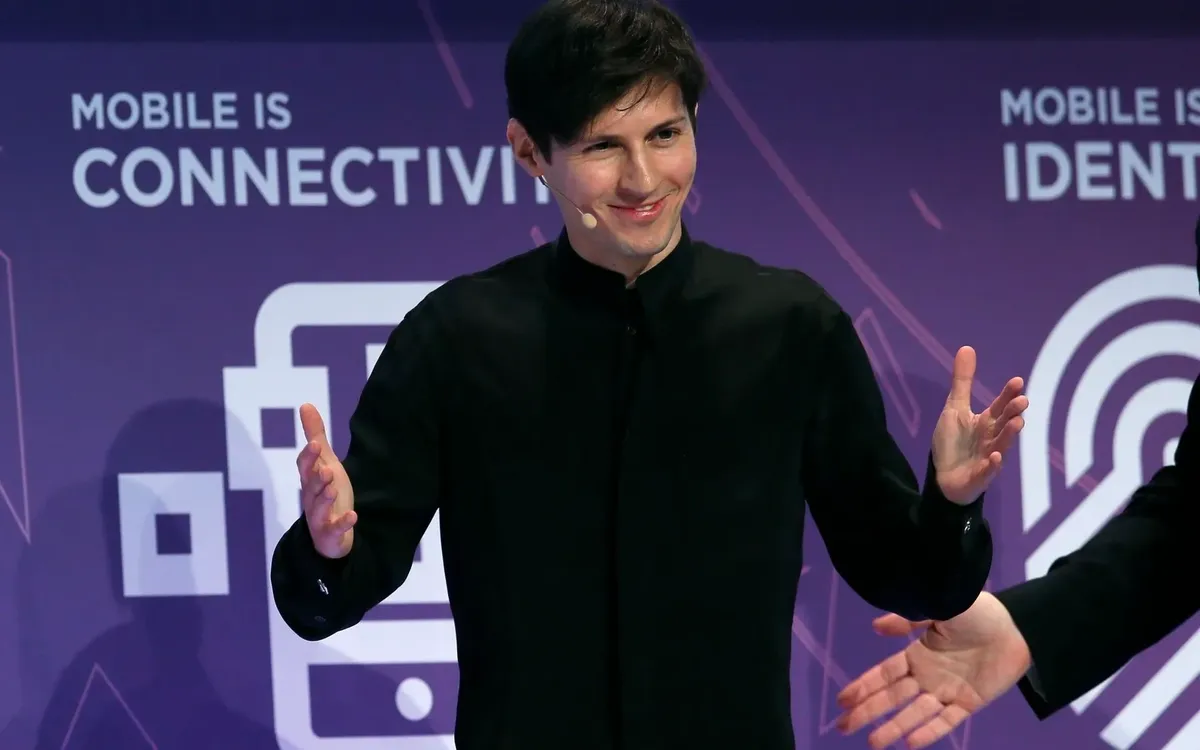
The day before the opening of the International Economic Forum in Davos, the profile channels of the Telegram messenger and portals covering the theme of cryptocurrencies and blockchain technologies hinted at the sensation: Pavel Durov will not be silent on the forum gallery, and triumphantly reveals its Ton (open telegram network, telegram Open Network) in all the splendor of the GRAM cryptocurrency, platforms for creating third -party applications, anonymous domain name system and third -generation blockchain.
This information was submitted in the traditional plumage of the struggle of George the Victorious with the serpent: Roskomnadzor, they say, was so frightened by the upcoming rebirth of Telegram from the banal messenger into the uncontrolled weapon of the financial emancipation of Russians, which was rushed on the eve of Durov’s performance “Like the scalded blocking all the most popular proxy” (I quote the primary chief).
Durov, however, did not perform in Davos. Probably because “personally, I have never confirmed that it is working on this project” (I quote again). The spindlers in an instant suspected something was wrong:
Looks like the things of Ton are bad, if you have to resort to such an shocking way to remind of your existence.
The enthusiastic Telegram fans, on the contrary, were easily justified the logic of non -commissioned: Merkel did not arrive, Macron did not come, even Trump and he did not come to whom you order to throw beads? Not before the reactionary Zhir Bolsanar.
The sediment nevertheless remained, especially in the light of the disaster, which comprehended all cryptocurrencies, ICOs and blockchain technology of the planet in 2018. About this disaster, as well as about the prospects of these technologies in general, and the Ton project in particular, I would like to tell the reader today.
Exactly a year ago, "New" wrote about the first public presentation of the Ton project. Then, a year ago, a project map was published, which tied to the calendar at first the spring ICO (Initial Coin Offering, the primary placement of coins) worth 1 billion 200 million dollars, and then the remaining elements of the platform: the deployment of the stable version of Ton and the Telegram Wallet Cryptocurrency in the fourth The quarter of 2018, the creation of a full-fledged economic system based on a messenger in the first quarter of 2019, the opening of Ton services, cloud storage and proxy servers in the second quarter.
Despite the fact that all the preparation was conducted in closed mode, including the implementation of GRAM tokens to the first investors, the existing information leaks indicate that in general the schedule is withstanding. Test testing Ton has been successfully carried out, and a two-three-month lag in the introduction of services into public operation is compensated by the “overcoming” financing: instead of the desired $ 1.7 billion, it was possible to raise $ 1.7 billion. It is doubtful that someone decided to invest in the technological “bubble”, not backed up by real achievements.
The achievements of the Ton project look especially impressive against the background of the collapse in 2018 of most new initiatives associated with cryptocurrencies, ICOs and blockchain technologies. Already this circumstance suggests that the Ton project is developing in a direction that differs qualitatively from the mainstream.
To understand Ton's otherness , it is necessary to at least briefly describe the mentioned Crypto industry catastrophe.
First about cryptocurrencies.
In December 2017, the Bitcoin exchange rate reached 20 thousand dollars.
In December 2018 - sank below 4 thousand.
The other popular coins supported the five -fold folding of the flagship of cryptocurrencies: Eterium depreciated 12 times, Ripple and Monero - 11 times, neo - 26 times and so on.
Now, ICO. As of October 2018, 86% of coins launched through the ICO since December 2017 are cheaper than their primary placement. 19% of successfully completed ICOs for the same period closed portals on the Internet and their pages on social networks. The level of fees for the ICO in January-February 2018 amounted to $ 2.5 billion monthly, and in November 2018 barely reached 65 million.
Otherwise, you cannot call the industry surrender.
As for blockchain technologies, they are so tired of public opinion that the media shy away from new, even promising announcements, as from leaked ones. What happened to the most promising sphere of the IT industry amazed? The analysis of failures will not be difficult, because miscalculations are on the surface.
Firstly, the unacceptable level of business preparation of implementers of ICO projects. For the most part, these are programmers who can cook the code, but completely devoid of understanding of the needs of investors and the market. The picture is exactly the same repeats the Morok of the Dotkomovsky Bubble of the late 90s, when the Kinder-Surprises hatching from the Internet lifted millions of dollars through the IPO on the only magic of the WEB word, being unable to generate at least the center of profit.
Secondly, cryptocurrencies and projects tied to blockchain technologies showed themselves to the world with a claim to large-scale integration into the existing financial system . The developers of Etherium, Cardano, Neo and EOS believed that the advantages of their platforms of decentralized online services are so obvious that
The banking and business establishment is not today and tomorrow will voluntarily fall under Vitalikov .
Block.one at first deservedly boasted the best implementation of blockchain scalability and the highest number of daily transactions of its EOS cryptocurrency, and then wondered why the planet businessmen were in no hurry to fall into her arms. Even NEO, which secured the support of the state structures of China, has not managed to pull out the concept of a “smart economy” from a utopian sandbox today.
Finally, in my opinion, the most important thing:
The root of the failures of mainstream cryptocurrencies and blockchain technologies lies in the fact that they all come from pure technology, and not from the existing and current infrastructure!
In other words, the guys are trying to sell the idea to the world, and not its practical implementation. Why do you think Bitcoin and Monero are stable popular, albeit not in the establishment, but in the masses? Because both of these cryptocurrencies successfully realize a purely practical function: they satisfy the need for the htonic world (for the mass of their criminal) in an anonymous and not controlled by the state of payments.
The creators of new technologies will not understand in any way that no banks, central banks and transnational corporations for any carpets of alien blockchain platforms with cryptocurrencies will not adapt. The only reason that offices like IBM, Microsoft, Lufthansa, GP Morgan Chase, Bloomberg, and even our birthday VTB and Sberbank “ demonstrate interest ” in projects like Etherium, is the desire to thoroughly study technologies, and then independently create their own platforms on the foreign image and likeness! It is these, their own products of the elite that will be promoted on a planetary scale, using only available channels of influence (through power structures).
I have no doubt that Pavel Durov knows the described conjuncture and rules of the game perfectly, so he does not build illusions. In this knowledge, it lies, at my gaze, the reason for his non -compliance in Davos: why demonstrate the product to those who obviously not buy it?
We need an independent diverse and really functioning infrastructure, which then should be filled with crypto and blockchain-containing.
What, in fact, is Durov, testing Ton on a finished platform with 200+ million existing users.
It is these users in March 2019 (according to the latest rumors) that convenient services for cash transactions, mutual payments, purchase and sale of goods will be brought on a saucer. They will bring the very “smart economy”, uncontrolled by the state and the financial instibeen, which Neo dreams of in theory.
Will Durov be able to bring the Ton project to the victorious end? I would like to hope that it will be possible.
Just because cryptocurrencies and blockchain are, of course, the future of the world economy. Someone likes it or not.
The state can prohibit innovation before the blue and this, by the way, is normal for the state-it acted so much for centuries, strangling everything new and incomprehensible not so much of dislike for everything new as from pragmatic considerations: strangulation allows you to take a timeage, to enter the topic and then slowly put innovations under your control.
What are the prospects of Ton outside the Telegram ecosystem? Due to the mentioned natural rejection by the elites of outsiders - no. And there is no sadness in that: the first Ton will follow the second, behind one finished infrastructure - another.
The state may accept these technologies or not accept it - this is its business. If it accepts, crypto and blockchain will quickly turn into a financial and trade mainstream of mankind.
If it does not accept, the technology will be remarkably developed independently and in parallel with the official banking system, and sooner or later the existing payments of private individuals and commercial structures will drag on themselves. And then the state will still have to be harnessed to the topic, unless, of course, it hopes to save itself as a superstructure over society in principle.