
Translated material
"Pubulate a million circulation"
This year three dates crossed: the 100th anniversary of Daniil Granin, 75 years of complete relief of the blockade and 40 years of the release of the Blockade Book
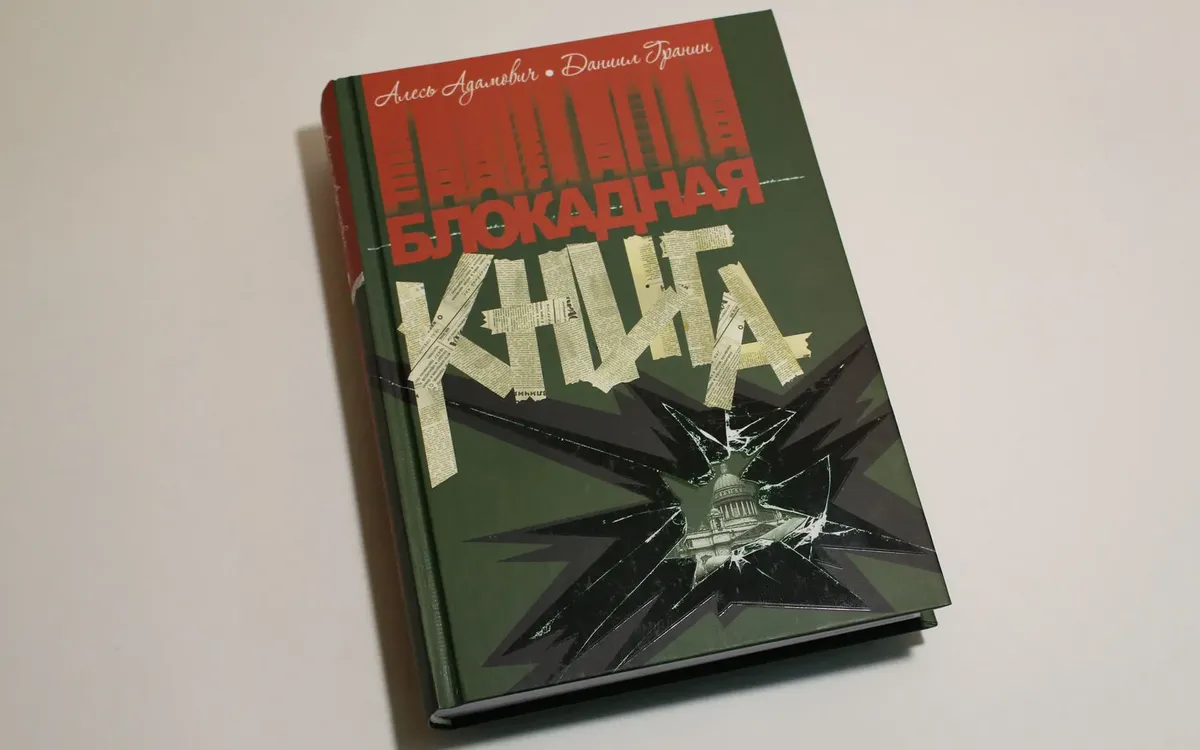
“The time has come”, “people want to know”, “people need” ... These words are crossed out by the censor in the layout of the magazine version of the “Blockade Book”. More than forty years ago, Daniil Granin and Ales Adamovich continued the historians of V.M. Kovalchuk and G.L. Sobolev’s struggle for the right of people to know the truth about the number of victims of hunger and shelling, to know the truth about one of the greatest humanitarian disasters of the twentieth century.
The avalanche of grateful letters fell upon the writers: “... in votes and, most importantly, the blockade Leningrad spoke this with a syllable. You legalized the feat of ordinary people. ” “The memory of this tragedy, into which the Leningraders were introduced, most of all requires guarantee and confidence in the impossibility, inadmissibility to happen to her somewhere and someday.” “It is unfortunate that they were able to read and survive the memories of our parents only after 35 years.” “This book should be published in a million circulation, transferred on the radio, read on television” ...
In letters, people told their besieged history, and these texts would have been enough for more than one “blockade book” ...
The first part of the book was published forty years ago, in 1979. Completely-in 1982. In Leningrad-only in 1984, when the city chief of Romanov was transferred to Moscow.
The first unquestioned edition was published in the mid -nineties.
For some, the “blocking book” still causes irritation. She is now in the antiphase of the tendency to travel on myths, and not on facts.
To keep a society with absolutely definite goals in error is more profitable than telling the truth, though it requires spiritual and civil courage, maturity.
If you forget what happened to the country, what was doing with people, it means to lose conscience. Without memory, the conscience is dead, she lives in memory, annoying, relentless, hopeless ... ”This is a quote from D. Granin’s book“ The Last Notebook ”, which was already out of life after leaving life. We see what the permanently censored memory of the blockade was reborn today: in booths with porridge, songs and dancing on memorable dates, a demonstration of combat power and mummers in the streets.
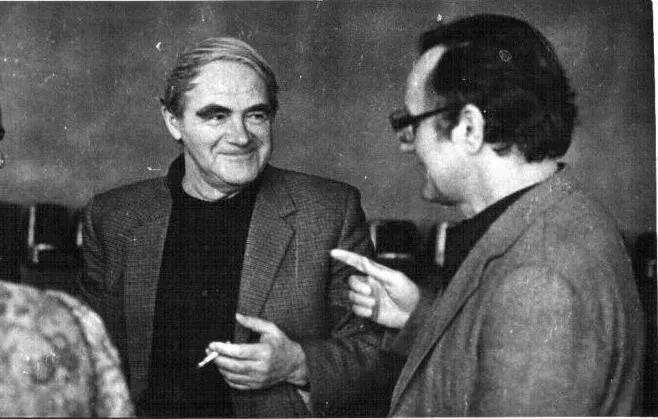
We do not want to comprehend the price of victory. A monstrous, unthinkable price. The truth about the losses is given out in portions, otherwise it would destroy all the ideas about the radiant face of Victory ... In the "Blockade Book", I wrote the figure of those killed in the besieged Leningrad: "About a million people." Censorship crossed out. We were offered 632 thousand - the amount given by Minister Pavlov was announced in the Nuremberg process. We consulted with historians. Valentin Mikhailovich Kovalchuk and his group, having studied documents, determined: 850 thousand. Zhukov in his memoirs believed that "about a million" died. It came to the main ideologist of the party M.A. Suslova. After many showdowns in the regional committee of the party, the city committee was indicated: 632 thousand, "no more." They claimed by people who did not fight, were not blockade, they had their own thoughts. Pavlov took care of his reputation, he “provided” the city in the blockade of products. Suslov wanted to reduce the losses of war in every way, so as not to depress the paintings. ”
The current bosses, it seems, also want to "do not depress the paintings." Revenge in the “Blockade Book”, hear the voice of the people for them overwhelming mental work, while in this book the key to the understanding of our city. It’s easier for taxpayers' money to iron palace combat equipment.
Forty years have passed since the release of the Blockade Book. And now, in the year of the 75th anniversary of the complete removal of the blockade, we must admit: power imposes on us its image of war and blockade.
The memory manipulations, which Granin and in the “History of the Creation of the Block Book” and in the head of Leningrad, have been conducted for decades, led to the fact that society has split: that part of it, which is the bearer of historical family blockade memory, is offended by this approach to understanding the tragic and at the same time heroic blockade epic, in which the townspeople and the army participated.
Daniil Granin was the chairman of the first and only society “Mercy”, which arose in the late eighties. But it seems to me that its origins at the beginning of work on the “Blockade Book”, when, collecting the material, the authors went to the blockade and saw how they lived in the same blockade communal services, without psychological and worthy medical care, they didn’t even give a talk ...
“People who defended the city withstood all the hardships, did not receive any benefits. They continued to huddle in communal apartments, they did not help them with medicines or sanatoriums. However, all this blocks began to complain in the seventies, entering a beggarly pension. "
... Granin, by virtue of the "longitude" of his life, was given the opportunity to consider, explore it in the context of historical time. And he is not always directly, but he did. What we see from the “fear” written at the end of the nineties, in which the writer tries to pay off this feeling, which largely determined (and determining) life in the state. Walking completely contrary to the current attitudes, Granin remained faithful to historical facts, and not to myths. We see this from the novel “My Lieutenant”, where the war is shown through the eyes of one of its last real participants, without any stray and criminal pathos. “War is a shame, the dishonor of people” - this is how Olga Bergholz, with whom Granin was friends and who appreciated it very much in her diary.
The bosses say that the theme of the blockade for them is “holy”. However, they never had a publication of the blockade diaries of Leningraders on the agenda. It is much easier to hold a quest along the road of life. Officials never came to their heads to provide libraries of schools and universities of the city, the regional libraries of the latter, published during the life of Daniil Granin with the editors of the Blockade Book. It’s easier to ride on tanks around the city, which mostly dreamed of a peaceful life. Today, there is something that almost all the post -war, post -blocking time happened: historical memory is washed out of people with crackling phrases and “monumental propaganda”.
“The time has come”, “people want to know”, “people need” ... These forty years ago, the words crossed out by the censor are still relevant.
Natalia Sokolovskaya, writer -
Especially for "new"
All materials of the St. Petersburg edition | Archive of publications | PDF