
Translated material
Blue crabs prevent fishermen of Spain
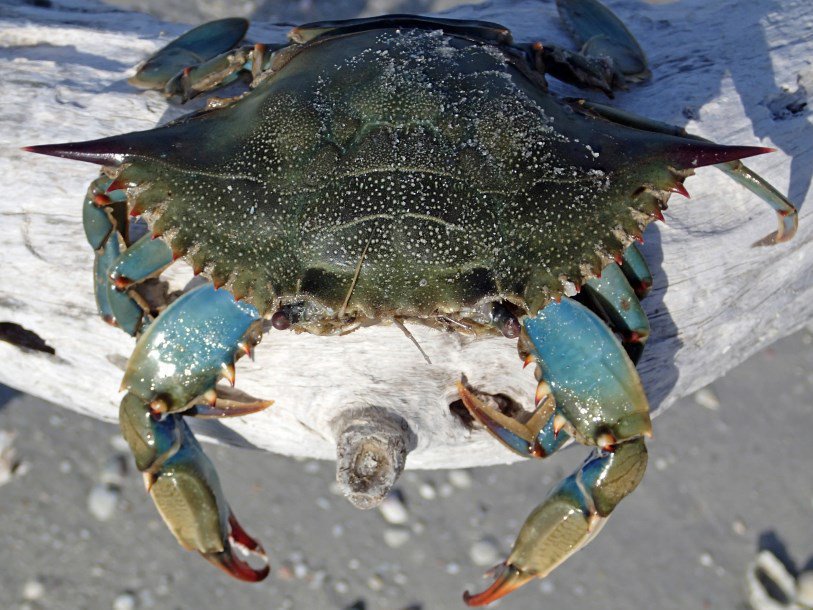
The new review of the biodiversity of the Mediterranean Sea lists 28 new species that penetrated there from other parts of the oceans. Carmen Barberá from the University of Marine, Alikante's Marine Research Center, reports on the ongoing spread of blue crabs off the Spanish coast, which already cause serious damage to fishing.
The birthplace of blue crab ( Callinectes sapidus ) is the Atlantic coast of America, where it meets from Massachusetts to Argentina. Craps prefer to live in the mouths of the rivers, but to lay eggs of the females annually migrate into more salty water, since the larvae of these crabs can only develop there. Already in 1901, the blue crabs were first seen off the coast of France, where the vessels were in the ballast water. In Tunisia and Turkey, they became known in the 1940s. Now blue crabs are found in the Mediterranean, North, Baltic and even the Black Sea. In 2012, they appeared in the Ebro River Delta, and two years later - on the coast of Alikante Province in southern Spain.
The spread of these crabs off the coast of Spain was investigated by the Association of Fishermen of the city of Gaardamar del Segur in the province of Alikante, to which the crab causes serious harm. Blue crabs regularly fall on a network designed to catch shrimp and karakatitz, and damage them. According to Carmen Barber, you can solve this problem by applying another design of traps, like the one that is used on the other side of the Atlantic. Now the researcher, together with the fishermen, is experimenting with different designs of traps, trying to find the best option.
Spanish scientists are now actively exploring blue crabs in local waters to find out what is the ecology of this type in new conditions for it. They determine the main types of production of crabs, predators that feed on crabs, tumor species, find out the connection of the spread of crabs with the temperature of water, its salinity and the content of oxygen in water.