
Translated material
"Children's villages - SOS": "We dream to close"
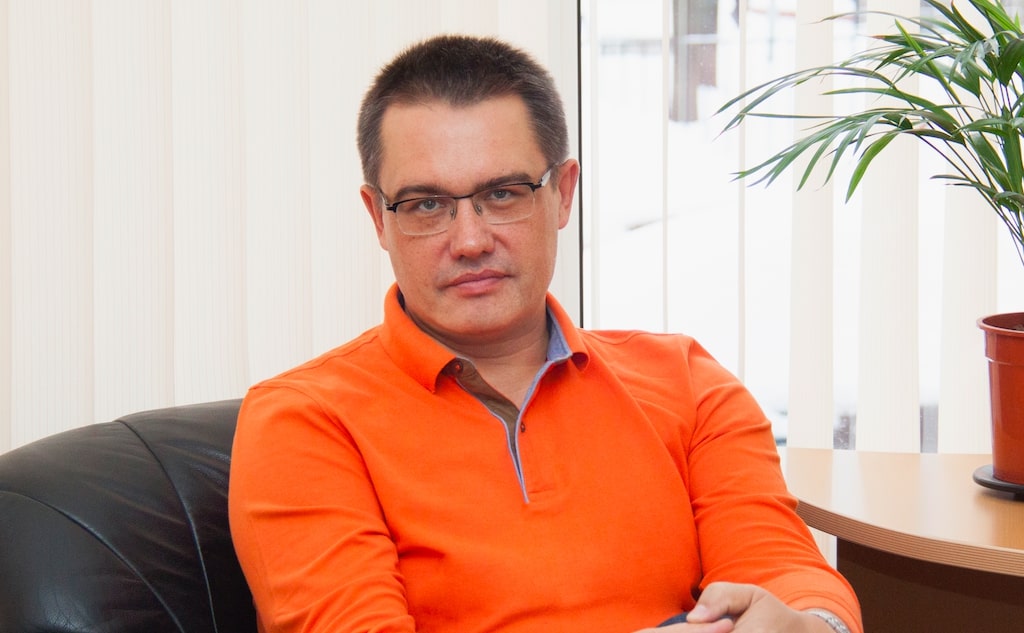
In the work of a non -profit organization that helps a large number of people, there should be no spontaneity. This is sure of the executive director of the Russian Committee "Children's Villages - SOS"Nikolai Blabzhanin . This is a charity organization to support orphans. The specialist shared with the journalist of the greenhouse Ekaterina Ulyanova techniques for the Office of a large NPO.
Describe the standards
“Children's villages - SOS” work in 7 regions, full -time employees in the organization of 300 people and the same number of volunteers. More than 2000 children receive assistance in the project of the prevention of social orphanhood, when specialists help parents get out of difficult life situations and leave the child in the family. 600 children are in the project of alternative guardianship-children live with SOS children or SOS-mother in the "Children's Village", and young people in "Youth-SOS houses" are preparing to enter adulthood with the help of teachers-mentors.
Nikolai Blabzhanin says that their secret management is simple - there is a long -term strategy for five years, there are worked out processes and standards for work for all categories of employees. And even such “little things”, such as decisions made at meetings, should be recorded on paper.
Of course, it is important to consider the size of the organization. There are individual entrepreneurs and corporations in business. Their control systems differ. Also in the third sector there are Grassroots - spontaneous movements “from below” that solve local problems. They can afford spontaneity in management. However, if the organization systematically helps people on a long -term basis, it needs standards, prescribed processes and planning.
Think about the strategy
The strategy should become the basis of the entire work, Nikolai Blizanin is sure. “Children's villages - SOS” make up five -year development plans. When writing a strategy, employees analyze their past achievements and failures, evaluate the risks, required and existing resources, and most importantly, ask well -being and other interested people, which they expect from the organization.
Also on the topic: Strategic session for NPOs: why is it necessary and how to spend yourself
Imagine you are collecting a puzzle. The overall picture consists of five -year strategy and annual planning. The team members once per quarter are checked with an annual plan . The fulfillment of each strategic task is monitored by a person responsible for this. The system successfully works due to constant control of both individual and joint, in which any employee can take part.
Dream of closing
In the center of the global strategy, "children's villages - SOS" are the interests of those who are helped by the organization. Nikolai Blabzhanin believes that it is important, first of all, to hear and understand children and family. Donors and partners will turn away from an organization that will not solve a social problem. And then the whole built control system will simply collapse.
Also on the topic: We think correctly: how to make a fundraising budget for a year
The main dream of the team is to fulfill their mission and close the project so that there are no orphans, and those who, for certain reasons, remains an orphan, still grew up with the family. This task is to be guided when creating a strategy. Each donor has its own motivation. But they are ready to support donors only if they understand that the organization is able to change the world around itself, following its mission and adhering to its values.
Use business techniques
It does not matter what type of organization you have: commercial or non -profit. For all of them, business approaches are suitable. “Children's villages - SOS” use a SWOT analysis - a method that allows you to evaluate risks and competitiveness. The organization also conducts Pest analysis. This is a marketing technique with which the team studies external trends that affect charity.
“The commercial sector differs from the non -profit only by using income. In companies, it is distributed between the owners, and at NGOs it is directed to support the well -being. Therefore, it is worth using in management and planning all standard business approaches, and not act spontaneously. ” Nikolai Blizanin
Delegate correctly
Organizations need to create a culture of personnel management. In a large team, you need to learn how to correctly delegate tasks. “It is not enough to scream the order into the void,” explains Nikolai Blizanin. It is necessary to set a clear task, to monitor whether the employee understood correctly, and control the execution process.
Each team participant should also receive feedback. Employees of "Children's Villages - SOS" twice a year participate in development conversations. The immediate supervisor discusses with his subordinates the execution of the annual plan and finds out what happened or failed to do. As a result, the employee understands whether he was moving in the direction, and receives an individual educational plan. The organization regularly holds training and commanding meetings.
Evaluate the risks
When drawing up plans and strategy, the organization should take into account all the risks, evaluate the economic situation. If NGOs have long -term programs, it is important to understand whether it can help the well -being in the event of a crisis. It is also worth objectively evaluating your own resources and take only feasible tasks to work.
“We are responsible for those we tamed. Our organization cannot tell the children that the village is closed and they need to return to the state children's institution . Therefore, effective management necessarily includes an adequate assessment of risks and available resources. Sometimes we even refused grants or large private donations when we realized that we could not support the work of the project in the future. ” Nikolai Blizanin
Motivate volunteers
All team members must be trained and motivated. Even if a person does not receive a salary, his interests must coincide with the interests of the organization. Therefore, “children's villages - SOS” began to work with volunteers systematically and develop volunteering. The organization launched the project Sosa when married couples who have dealt with a crisis help people who find themselves in trouble.
“The 12-speed program for the rehabilitation of dependent persons was taken as the basis. The first step is the realization that you have a problem. The last step is the willingness to help the needy. It is much easier to hear the one who was already in a difficult situation. Motivating volunteers is another secret of our effective management. ” Nikolai Blizanin