
Translated material
Delayed "euthanasia"
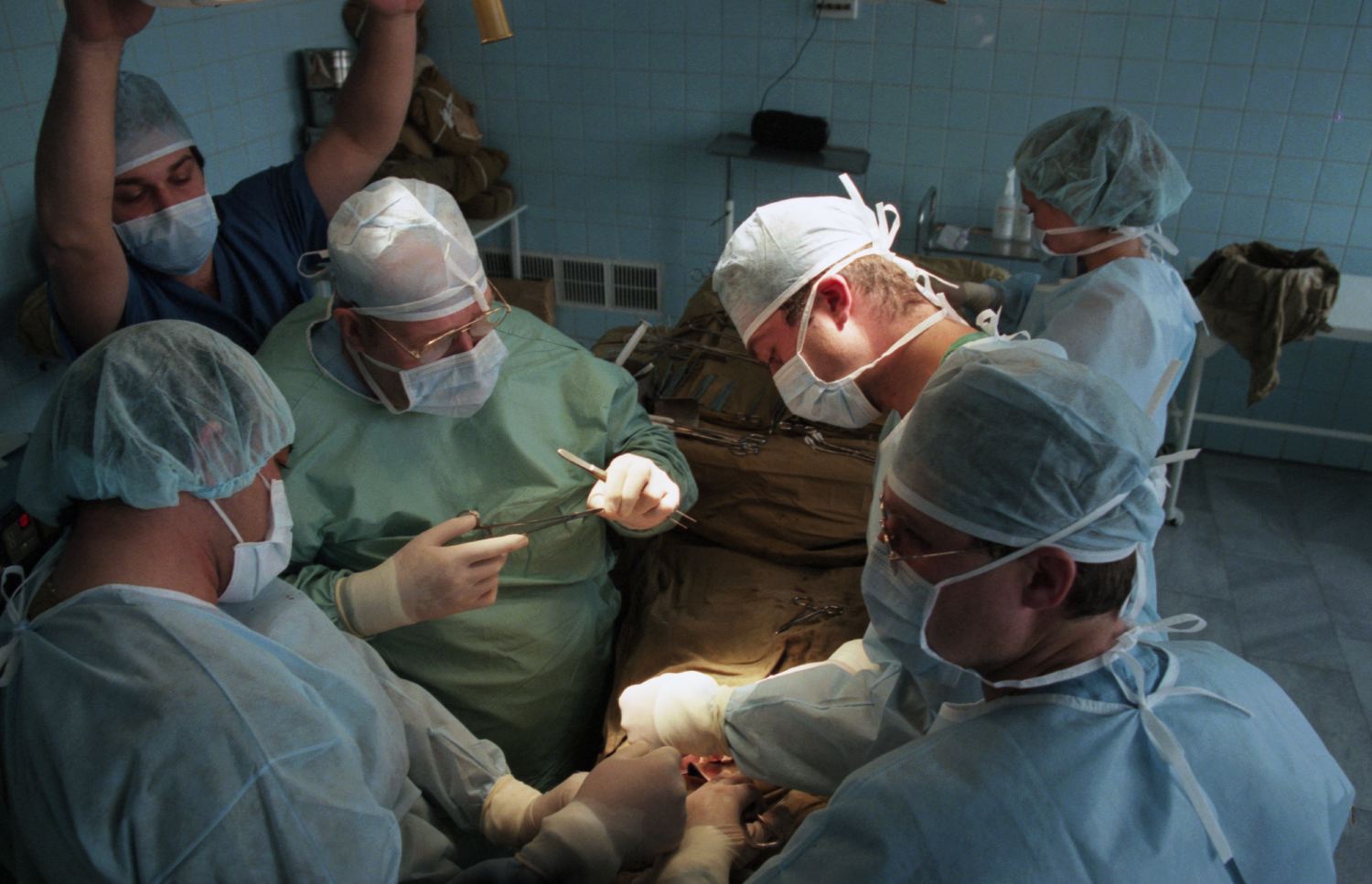
The world is unfair, it has too many deadly ill children. But it is especially scary when children who could help and die. Modern medicine has gone far ahead, but in Russia its achievements reach far from everyone. And often the fault of this is not even the pressingness or slowness of the state, but the human factor
Angelica
Little Angelica Bolgov from Taganrog was written off from accounts at ten months. The first signs of renal failure in the girl manifested themselves after SARS, polycysticism was discovered in the city hospital and transferred to Rostov-on-Don. And here, in the regional hospital, Angelica’s parents explained that she was not a tenant. She does not work for her kidneys, it is impossible to transplant a donor to such a baby, and the best that can be done for an unfortunate girl is to let her die calmly. And in order to facilitate the child to care, they advised to make enemas with saline.
Angelica’s father Alexander rushed to Moscow, to the RDKB, where at first he also did not hear anything comforting: they did not take a child weighing eight kilograms for transplantation. But they advised to contact the transplantology department of the Russian National Center for Surgery named after B.V. Petrovsky (RNCH). “Professor Mikhail Mikhailovich Kaabak had already finished the reception that day, but Sasha had such a desperate look that he returned to the office and said:“ Well, let's lay it out, ”says Angelica Oksana's mother. - The husband began to pull the money out of his pockets, and the doctor grabbed his head: “I don’t need it, but the child’s medical documents.” At first, we were even afraid to believe his conclusion: our girl has a future, and she can even have her own children. The husband returned to Rostov with recommendations for preparing for the operation, in particular, it was necessary to get all the vaccinations. But here these instructions refused to follow. We were simply ridiculed, and the Moscow doctor was called an adventurer and an extortionist. ”
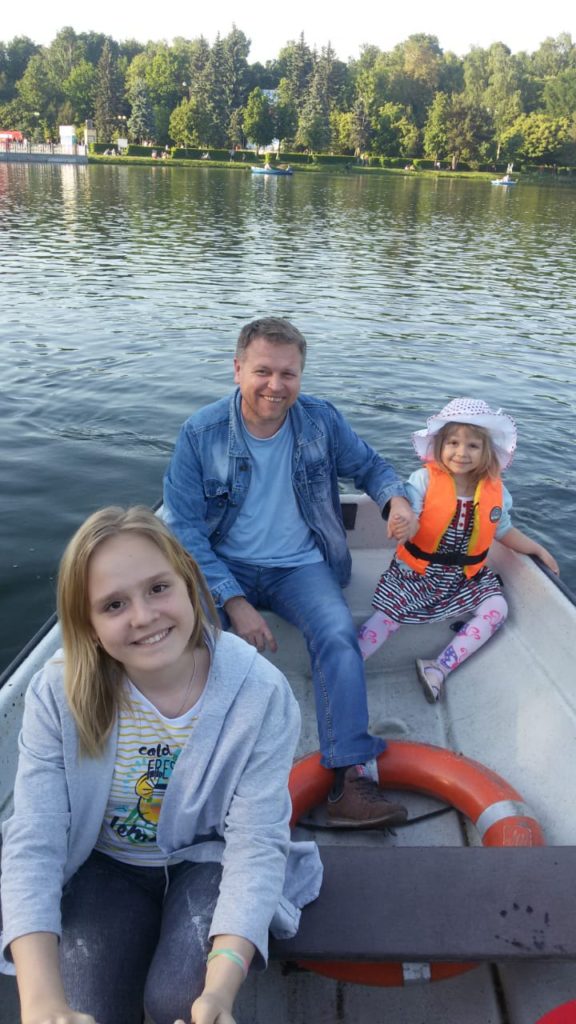 Family of Bulgov photos: from personal archive
Four years have passed since then. Angelica goes to kindergarten, plays sports and is no different from his peers. But first, there was a breakdown of disability and the necessary drugs in Taganrog, moving to a rented apartment to Moscow, vaccinations and dialysis (renal replacement therapy) in the nephrological department of the Hospital of St. Vladimir, the Donora examination of Oksana in the RNTSKH and, finally, the operation itself, during which Angelica transplanted the mother of the kidney. Now all the tests are normal for both. But, of course, the girl observes a diet and takes the drugs necessary for people with a donor organ.
According to Oksana, she was amazed to see that their situation was not unique and there are so many families with a similar misfortune around. “There were children from all over the country, many were brought too late. And all due to the fact that people do not have information, it seems that it is simply closed. At first I wanted to go to Rostov, show everyone the child, prove that they were wrong. But then I realized that it was useless. And more correctly people themselves to unite in social networks and support each other, ”Oksana believes.
A month after the transplantation, she wrote on her page in Odnoklassniki a call to seek information, and then organized several groups of mutual assistance. And this mutual assistance is still very necessary, because over the past four years the situation in the country has not changed and history is constantly repeated.
Alina
With the words “I would have given her to die,” in September to Moscow, their “unpromising” patient and doctors from Omsk in Moscow. Four -year -old Alina Matsinkevich weighed less than 10 kilograms. A year before, when the dangerous indicators in the blood test crawled up sharply, the parents took Alina’s painful from birth to Moscow and here - in the Filatov hospital - they first heard about the possibility of transplantation. Moreover, that it must be carried out as soon as possible.
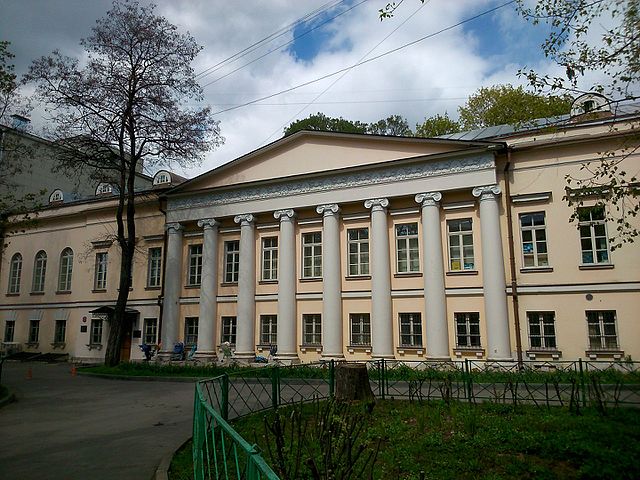 Territory of the Children's Filatov Hospital Photo: Stanislav Kozlovskiy/Commons.wikimedia.org
By the time the kids returned home, the girls were completely refused. For three months she lived on peritoneal dialysis (purification of blood from life products by filtering the necessary substances through the peritoneum). And when in February last year she was changed the catheter, it was no longer possible to establish this dialysis again, and Alina tried to transfer hemodialysis that was not used in such young children (blood filtering with the help of the “artificial kidney” apparatus). Alina spent the next eight months in intensive care. Parents asked for transfer to Moscow, but everyone only dismissed them. Desperate, they turned to the federal Ministry of Health, from where they received a replication that the child was observed in the Omsk region, and sort it out there.
And then the Matsinkevichs decided to fly to Moscow. Rusfond helped the family with organizational issues. With medical - Filatov hospital and RNCH, where on November 12 Alina transplanted the kidney from his grandfather. Since the operation, the girl has grown by six centimeters. “She began to smile, play, draw, it’s just a miracle for us,” says Alina Christina's mother. She does not want to communicate with Omsk doctors: “God is a judge, but I can never forget what was said to us goodbye,” says Christina.
Dima
Dima Lebedev from St. Petersburg was diagnosed with renal failure per year. Dima spent the next five years of his life in the hospital, of which 107 days in intensive care. Due to the overwhelming pressure, the capillaries on the arms and legs burst. Edema did not allow to lie, the child could only breathe in an upright position in his parents. He had already been sentenced to death. “To the question of what awaits us, the doctors answered:“ Eye edema, hemorrhage in the brain or cardiac arrest, ”says Dima Andrei's father.
From this script, Dima saved peritonial dialysis. But he was complicated by six peritonitis and hospital sepsis. The possibility of transplanting Lebedev’s kidney, like many other families of sick children, learned from the doctors of the RNCH who came to the clinic where Dima was lying. “Before meeting them, we were all in isolation, they didn’t explain anything to us, they did not give directions to Moscow,” says Andrei. - Nadezhda Nikolaevna (Babenko, deputy factory department of the kidney of the RNCH. - Approx. TD ) explained that we could not pull, and wrote Dima for the operation. " However, this operation took place only two years later.
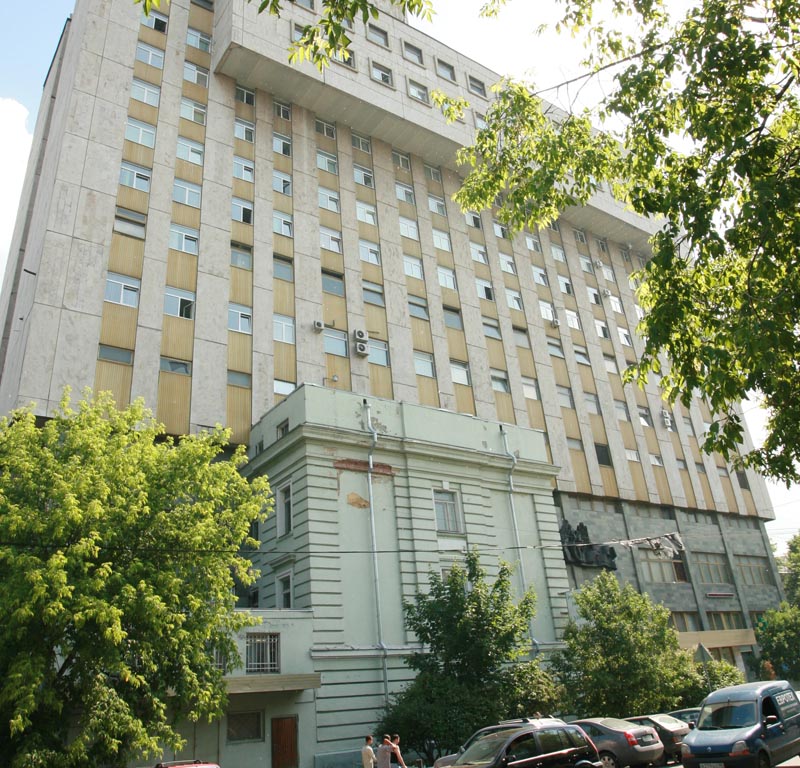 Russian Scientific Center for Surgery named after Academician B.V. Petrovsky photo: Vladimir Bakharev/Gazeta "Hospital" /commons.wikimedia.org/
Andrei regularly went to Moscow - to take tests, communicate with doctors. At the same time, Moscow experts said one thing, and St. Petersburg - completely different. “I listened to both others and could not understand who is right,” says Andrei. - We trusted our doctors, who offered to do one or the other, said that it was better to prepare for transplantation. But there was no training, we only lost time. Making a decision made a sharp deterioration in the condition of the child. I called Nadezhda Nikolaevna, she said: “Take a train and come.” The operation was almost emergency. ”
Dima transplanted the kidney from his grandmother. Since May, he recovered from 12 to 19 kilograms, grew by eight centimeters. He rides a three -wheeled bicycle, runs and jumps. Although he can’t get involved in this: long -term renal failure did not pass without a trace, Dima suffered bone tissue, and now he needs prolonged rehabilitation, classes in the exoskeleton. The boy is happy to study, so far, of course, remotely, but his parents hope that in a year he will be able to go to a regular school. “In the first grade, there was no talk of normal training, the child was not allowed to walk,” says Andrey. “But now Dima makes up for the missed - the first half of the year has finished for one five.”
Deadly cycle
According to the head of the program of transplantation of the RNCC organs of Professor Mikhail Kaabak, about 75 children who need renal transplantation in the first years of life due to congenital diseases or malformations are born annually, but such assistance is no more than ten of them. For comparison: in Europe, approximately 150 children under the age of five are held in Europe annually, about 200 in the USA.
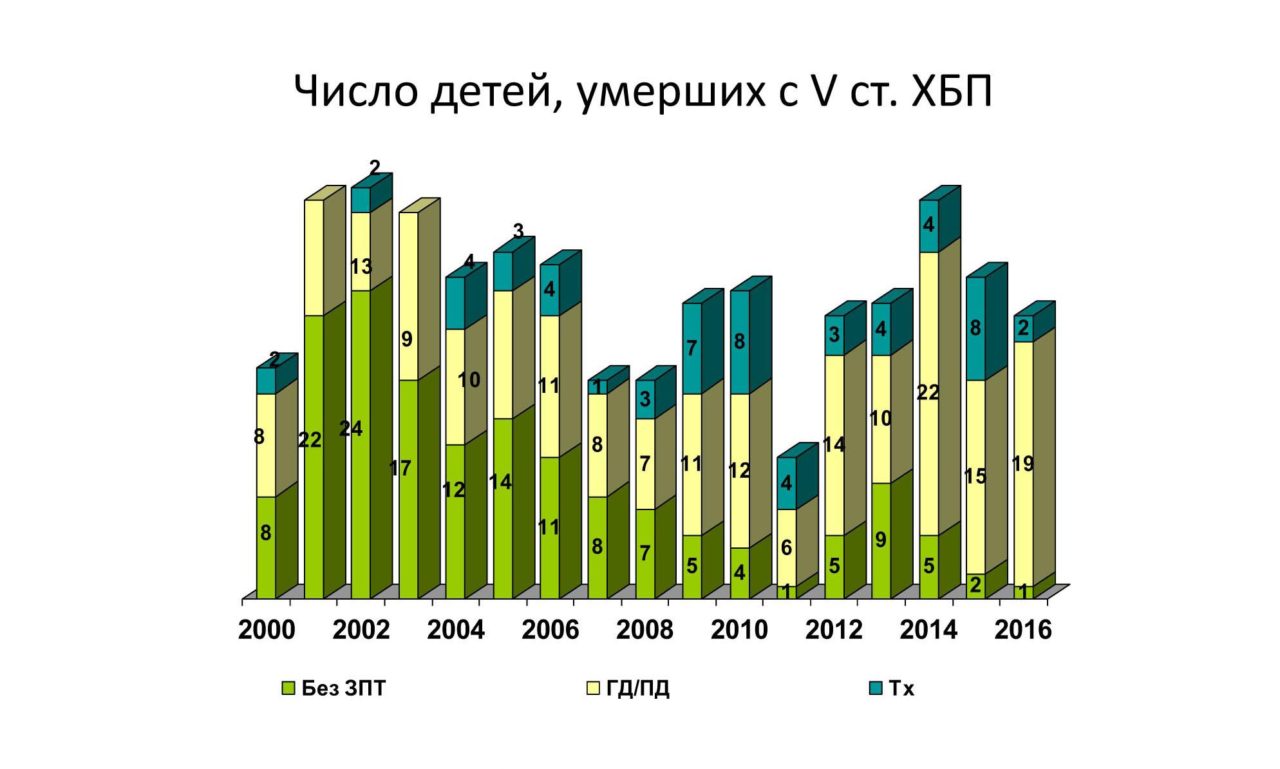 Author of infographics: Molchanova E.A. v st. HBP - the fifth (terminal) stage of chronic kidney disease; ZPT - replacement renal therapy, this includes dialysis and transplantation; GD - hemodialysis; PD - peritoneal dialysis; TX - kidney transplantation photo: Molchanova E.A.
In his opinion, there are two main reasons for this. Firstly, transplantation of young children is carried out only in Moscow. And secondly, economic incentives work against children. The fact is that it is profitable for the hospitals to dialy dialyize the child: the tariffs of the compulsory medical insurance not only completely cover the costs of this type of assistance, but also leave some profit. And it is not at all profitable to direct them to transplantation.
Our country began to conduct dialysis to children of the first year of life one of the first in the world-back in the 1980s. And at the beginning of the 2000s, a network of children's dialysis centers was created in Russia, covering almost all regions of the country. The development program of these centers was a serious breakthrough, but in the end, instead of supporting sick children in anticipation of kidney transplantation, it turned into its alternative, destructive for babies.
Today, children's dialysis is about 100 clinics throughout Russia, but none of them do transplantation. And the transplantation center in the RNC - the only one where successful kidney transplants are carried out for young children - has no possibilities for dialysis. “Such a technological gap leads to the fact that children are dialysis to death,” says Kaabak. -They live on dialysis for two or three years and die, freeing up the next. And this cycle is repeated again and again. ”
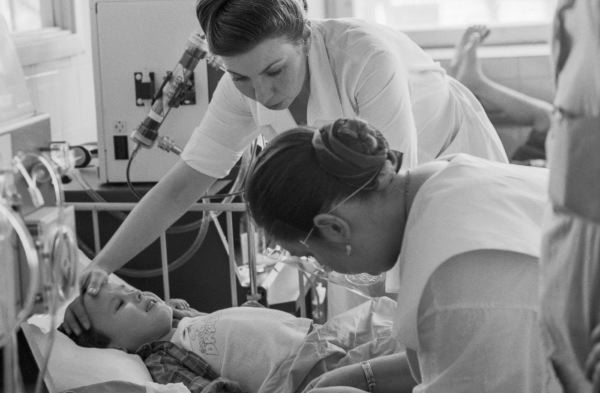 1992 Moscow Children's City Clinical Hospital No. 13 named after N.F. Filatov. Branch of an artificial kidney photo: Valery Khristoforov/Photokhronika TASS
Of course, no one will admit this directly. And the argument against the direction to transplantation and for the continuation of dialysis can be very different. For example, small weight. But the child who has been on dialysis from birth has no chance to get ten or sometimes even seven kilograms, Kaabak says. At the same time, international recommendations and experience say that the weight and growth of the child in this case do not matter. Among the patients of the transplantologists of the RNCH there was a three -year -old child weighing six and a half kilograms, the patient was 10 months old at the time of transplantation.
And the parents of Angelica Bolgova simply deceived, explaining that for such a small child it is impossible to choose a donor kidney, since there is no children's donation in our country. In fact, such a problem simply does not exist, Kaabak explains: a child of any age can transplant the kidney from an adult.
"This is not simple illiteracy"
It turns out that children are not done for reasons that cannot be called medical. If 100 babies in different regions of the country are on dialysis, they are disabled and not sent for transplantation, moreover, parents do not even talk about such an opportunity, then this is not simple illiteracy, according to Nadezhda Babenko. “This is a lack of economic and professional motivation,” the doctor is sure. - Our work also consists in communication with the heads and doctors of the dialysis departments and with the parents of patients. Ideally, transplantation should occur in the region, but, unfortunately, in such a delicate age group this will not happen soon. But to increase the competence of regional medicine so that children are sent to Moscow on time and maximally prepared, it is possible and necessary. ”
 Nadezhda Nikolaevna Babenko Photo: From Personal Archive
According to Babenko, if the child was transferred to dialysis and did not begin to immediately prepare him for transplantation - this is nothing more than a delayed euthanasia. Its price is from 200 to 500 thousand rubles per month, which receive dialysis centers for each child. Children cannot develop normally on dialysis, they turn into deep disabled people. And even if they eventually fall on transplantation, potentially high chances of survival are reduced.
“Moscow transplantologists, unfortunately, have to bury the kids who get to us too late,” the doctor says. “These deaths can be prevented, thank God, we do not live in Sparta and consider ourselves part of the civilized world.”
According to the head. Department of Philosophy of the Faculty of Philosophy of Moscow State University MV Lomonosova Elena Bryzgalina, in order to provide medical care to the child, the legislation of the Russian Federation requires a voluntary informed consent from his parents (official guardians). And this is not an empty formality, the expert emphasizes: the signature of the parents of it implies that, firstly, they give consent freely, without violence, threats and coercion. That is, from a bioethical point of view, neither economic arguments, nor references to the inaccessibility of specific treatment in the region should be the basis for consent to the doctors proposed by the doctors an affordable but ineffective or potentially stronger method of the method of the child’s disability.
Secondly, informed parents who have received reliable and complete information about treatment, including a description of alternatives and consequences, should be consent. But, unfortunately, many doctors do not know how to communicate with parents of sick children, the expert notes. Doctors may not have motivation, and often the desire to present the most complete information. The position of regional authorities often affects this.
The cannibalist position
Another point of view, which is not said aloud, is that kids do not need to operate at all, because the donor organs are not enough for older children and adults.
 Professor Mikhail Mikhailovich Kaabak Photo: From Personal Archive
“This is a completely cannibalistic position, but it seems that this point of view is very common,” Kaabak believes. - For example, in 2012, the Moscow Health Department approved the procedure for the distribution of posthumous donor bodies, in which young children had priority. That is, the younger the child was, the more he had a chance to get a donor organ. However, five years later, the Department itself was canceled this order, equalizing children of all ages. ”
This is unfair, Kaabak believes, because the younger the child, the more risks he is associated with dialysis and the harder his prognosis without transplantation. Adult patients today can live quite well and long on dialysis. For example, in Moscow, where the accessibility of transplantation in Russia, of several thousand on dialysis of patients, only every fifth is expected to transplant. As for children, at the current level of technology, the average expected duration of the functioning of the transplanted kidney is about 30 years from a living donor and 15 years from the posthumous.
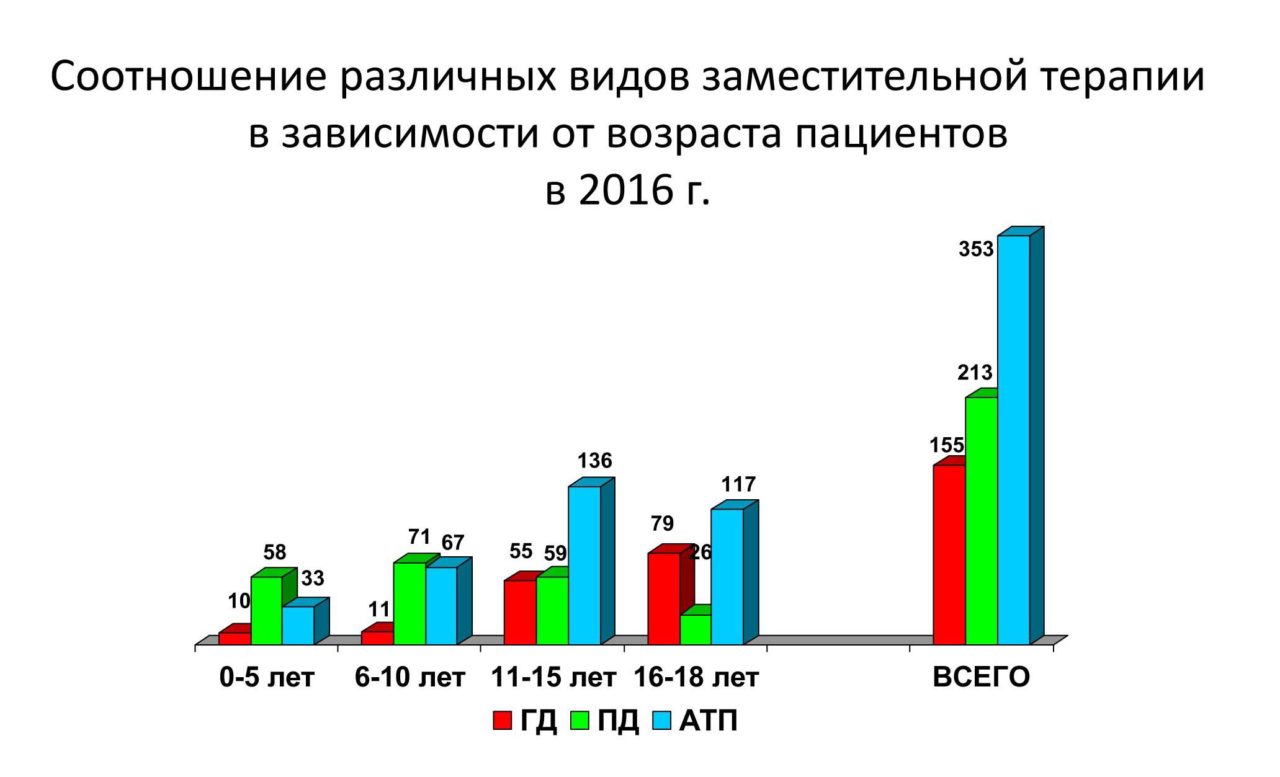 Author of infographics: Molchanova E. A. GD - hemodialysis; PD - peritoneal dialysis; ATP - allotransplantation (i.e., transplant from another donor) kidney photo: Molchanova E.A.
Usually this period for the child is enough to form physically, get an education and socialize.
Sarafan radio
In the absence of support from the family specialists, more experienced comrades in misfortune help out - through social networks and instant messengers. It is through the “word of mouth” that many will learn that their children can save the kidney transplant, and how to “break through” to Moscow. With housing, housing in the capital is helped by charitable organizations.
But here there are problems. One of the important technological points in transplantation in babies is vaccination. The fact is that after such operations, people receive drugs that reduce immunity. And to begin such a therapy to a child who does not have vaccinations at all is almost sure to doom it into severe infectious diseases. Even intensive vaccination takes several months, and it is better to do this at home. Plus, in order to continue dialysis in Moscow, you need a direction issued at the place of residence. So, whatever one may say, without active cooperation with “your” doctors, it is almost impossible to prepare a child for transplantation. This is possible only by 10% of the families of sick children who still get to the RNC.
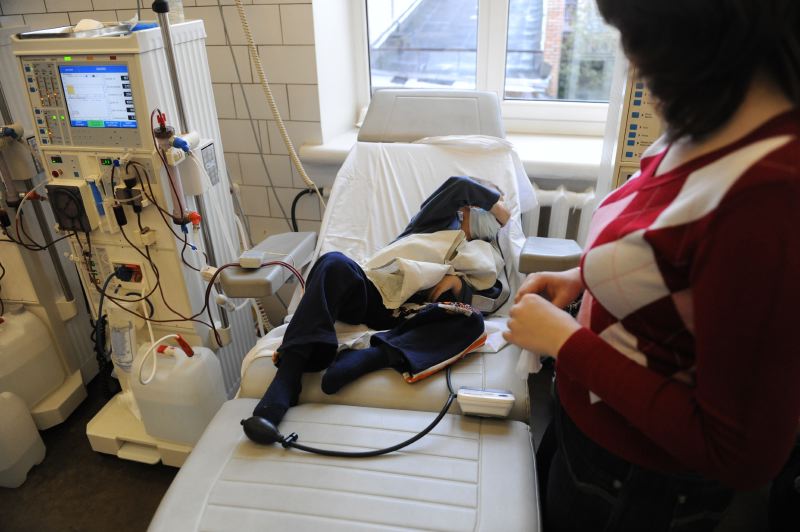 During the hemodialysis procedure in the department of the kidney of the State Institution of the Russian Scientific Center for Surgery named after Academician B.V. Petrovsky Russian Academy of Medical Sciences Photo: Grigory Sysoev/RIA Novosti
Of course, not in all regions they calmly look at how children die. For example, kids from North Ossetia, six months after the detection of the disease, have a donor kidney. But unfortunately, there are few such examples.
More often they help children to break out from under the “guardianship” of their own doctors, who persistently do not advise going to the operation, the transplantologists themselves. “When we receive information about the children who are in the region on dialysis without any prospects for entering transplantation, we try to resolve these issues targetedly,” says Kaabak. — Два месяца назад у нас были сильные дебаты с Новокузнецком из-за троих малышей, и Минздрав нас поддержал. В результате один ребенок уже находится в Москве — на диализе в Филатовской больнице в ожидании трансплантации. А насчет других новокузнецкие врачи стали чуть ли не ежедневно с нами связываться и консультироваться. Нельзя сказать, что Минздрав совсем бездействует. Но реакции на отдельные ситуации недостаточно — проблема требует системного решения в масштабах страны».
What to do
Два краеугольных камня этого решения: национальный регистр ожидающих трансплантацию больных детей и медцентры полного цикла, где были бы и детский диализ, и детская трансплантация, считает Каабак. Для начала такие медцентры можно было бы создать, к примеру, в двух московских клиниках — городской Морозовской больнице и федеральном Научном центре здоровья детей. «В этих больницах мы тоже делаем трансплантации малышам, и здесь совершенно реально развернуть диализ, для того чтобы принимать ежегодно около 75 детей в возрасте до пяти лет, — рассказал он. — Это вопрос даже не больших инвестиций, а политической воли».
Что касается регистра, то сегодня функционирует разработанный Минздравом анонимный регистр. По мнению Каабака, это некий оксюморон — регистр в принципе не может быть анонимным. Открытая часть регистра, без доступа к персональным данным, нужна для того, чтобы не только чиновники Минздрава, но и представители общественности могли контролировать движение детей в конкретных клиниках и добиваться ответа на вопрос, что мешает детям получить трансплантацию. «Это нужно не из праздного любопытства. Регистр позволит принимать эффективные управленческие решения в области организации здравоохранения. Каждый ребенок, который попадает на диализ, должен автоматически включаться в этот регистр. Потому что детям, особенно малышам, кровь из носа нужно делать трансплантацию. Это аксиома», — говорит эксперт.
Сергей Готье , академик РАН, главный трансплантолог Минздрава РФ, директор ФГУ «Национальный медицинский исследовательский центр трансплантологии и искусственных органов имени академика В.И. Шумакова»
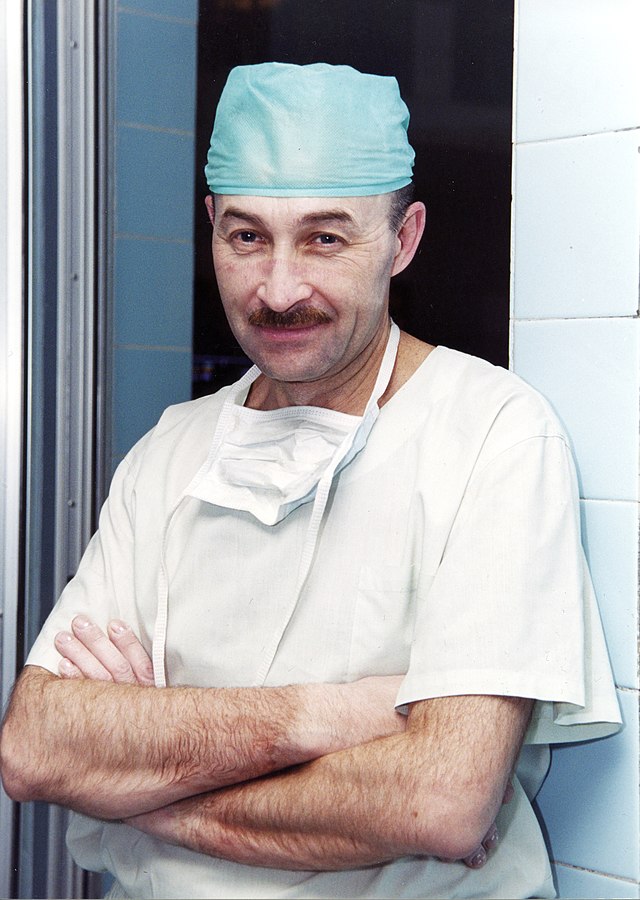 Сергей Готье, академик РАН, главный трансплантолог Минздрава РФ, директор ФГУ «Национальный медицинский исследовательский центр трансплантологии и искусственных органов имени академика В.И. Шумакова» Фото: Владимир Бахарев /Газета «Больница»/commons.wikimedia.org/
По данным статистики развитых стран, доля детей среди трансплантируемых пациентов обычно не превышает 10%. Точно сказать, сколько детей нуждаются в трансплантации почки в России, трудно, потому что не все они попадают на диализ. По нашим оценкам, это приблизительно 100 детей в год, возможно, и больше. Но дело даже не в том, сколько их может быть теоретически, а в том, как трансплантационный центр узнает о наличии такого ребенка, то есть в коммуникации с наблюдающими его детскими нефрологами. И вот тут есть такая практика, что дети очень долго находятся, например, на перитонеальном диализе или на гемодиализе, а вопрос о трансплантации вообще не ставится.
Мы периодически сталкиваемся с ситуацией, когда ребенка не направляют на трансплантацию, потому что, дескать, не знают куда. Действительно, далеко не все центры, которые пересаживают почку, могут работать с детьми — для этого нужны специфические условия и специалисты. Но возможность направить ребенка туда, где ему окажут адекватную помощь, есть всегда. Трансплантацию почки детям могут выполнять четыре московских учреждения — наш Центр, РНЦХ им. Петровского, Российская детская клиническая больница и Институт урологии. Оперируют детей и, например, в Новосибирске.
Наш Центр официально является головным учреждением страны по созданию более адекватных условий для пациентов, которые нуждаются в трансплантационной помощи. Мы составили и разослали в регионы список состояний, при которых лечебные учреждения обязаны обратиться в наш Центр для консультации по определению показаний к трансплантации, ведению пациента, сроков. Это могут быть в том числе телемедицинские консультации. Аналогичный список вскоре будет утвержден и опубликован Минздравом. И нефрологи на местах должны будут соблюдать этот регламент. В любой момент родители сами, без направления, могут обратиться в наш Центр для пересадки почки ребенку любого возраста и массы тела.
Что касается работы национального регистра, то существует электронная база Минздрава, куда на основе информированного письменного согласия вносятся персональные данные всех пациентов, нуждающихся в высокотехнологичной помощи, в частности, детей, которым нужно пересадить почку. Эта база содержит документально подтвержденные данные обо всех этапах и результатах лечения конкретного пациента. Кроме того, с 2017 года функционирует Информационная система учета донорских органов, доноров и реципиентов Минздрава России. Еще один регистр — лист ожидания. В частности, в Москве он единый для всех трансплантационных центров и внесен в электронную базу городского департамента здравоохранения. И при наличии подходящего ребенку донорского органа от донора моложе 30 лет, он его получит. Но надо понимать, что благодаря улучшению качества медицинской помощи, в частности, экстренной, летальность в молодом возрасте уменьшается, что само по себе очень хорошо. Но вот возраст потенциального донора постепенно увеличивается, и в конце концов эти критерии придется пересматривать.
При распределении донорских органов дети имеют преимущество, но все равно это не быстро. В Москве сегодня средний срок ожидания почечного трансплантата для взрослых составляет от полутора до двух с половиной лет. Что касается приоритета для совсем маленьких детей, то этот вопрос обычно решается индивидуально. Если у маловесного (до 10 килограммов) ребенка есть показания к экстренной трансплантации, потому что он плохо переносит диализные процедуры, это оформляется отдельным протоколом, и трансплантат ему предоставляется в первую очередь. Так что я не вижу здесь большой проблемы, тем более что есть еще такая опция, как родственная трансплантация, и это в значительной степени облегчает поиск донорского органа для ребенка. Возможна даже ситуация, когда почку можно пересадить еще в додиализной фазе, что с учетом физического и умственного развития маленького ребенка, конечно, самое оптимальное решение. Но если по каким-то причинам ни один родственник не подходит в качестве донора, этих детей ставят в лист ожидания.
диализ пересадка почки Сергей Готье хронические и неизлечимые заболевания