
Translated material
In St. Petersburg, city -defenders demand to stop the construction of an entertainment complex in the cemetery

In St. Petersburg in the Kuibyshevsky District Court on January 29, a consideration of the defenders of the Paris cemetery against the Committee on State Control, the Use and Protection of History and Culture Monuments (KGIOP) began. Activists want to challenge the department’s refusal to recognize the Porcelain cemetery as an object of cultural heritage (OKN). The claim was filed by a public figure, a bishop of the Apostolic Orthodox Church, Grigory Mikhnov-Vitenko.
As he told MBH Media, at this meeting the court confirmed the need to provide the requested documents on the basis of which he refused to recognize the Porcelain Cemetery as an object of cultural heritage. According to the city defender, there is a great chance to challenge the decision of the KGIOP.
“This is only the beginning of the path, because the decision can only be adopted to cancel the refusal, but this does not mean at all that the Porcelain cemetery will automatically be recognized as an object of cultural heritage. Then there is a struggle already for the recognition of the window. This is a long way, ”Mikhnov-Vitenko remarked.
The Porceravian cemetery appeared in St. Petersburg in the 18th century. In 1713, the Neva built a wooden church of the Savior of Transfiguration - it began to bury local residents, both ordinary workers and wealthy Petersburgers. There were graves of ministers, secret advisers, senators, major generals. The cemetery gradually expanded from the Neva towards the city. In the twentieth century, it occupied the territory of the Lomonosov and Vinogradovsky square. Officially, for burials, the cemetery was closed in 1927, but, according to the city defenders, it was used during the war years - it was buried on the Leningrad residents and fighters of the Red Army who died in the blockade.

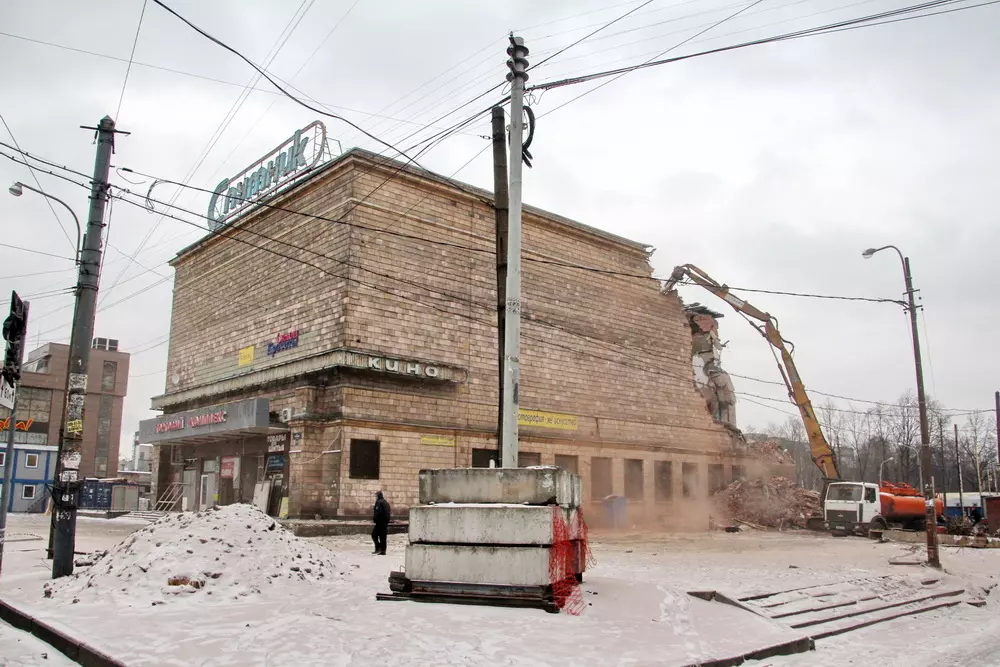
The TRK is erected by the company LC LC LC LC on the site of the building of the former cinema "Sputnik". The company "Likostroy" privatized the cinema "Sputnik" and the territory of the Vinogradovsky square adjacent to it. In 2013, the Kuibyshevsky court recognized the fact of the existence of the old Porporovsky cemetery on the territory around the Lomonosovskaya metro station, but allowed the construction exactly on the site of the old cinema. Likostroy received a building permit in March 2017.
City defenders note: the area of the future shopping center exceeds the area of the former cinema, that is, construction with a high degree of probability will hurt the remains of the buried people.
Last year, deputy Boris Vishnevsky managed to convince vice-governor Igor Albin of the need to conduct independent control over the work of the developer. After all, if the remains are discovered, the developer must stop the construction, and the burial territory should be excluded from the development zone. Grigory Mikhnov-Vitenko noted that, despite the promises of representatives of the construction committee, it was not possible to exercise any control.
“The developer did everything so that this independent control does not take place. In particular, the soil was exported at night, and then the developer cheerfully told us that he did not find any remains, ”Mikhnov-Vytenko told MBH Media.
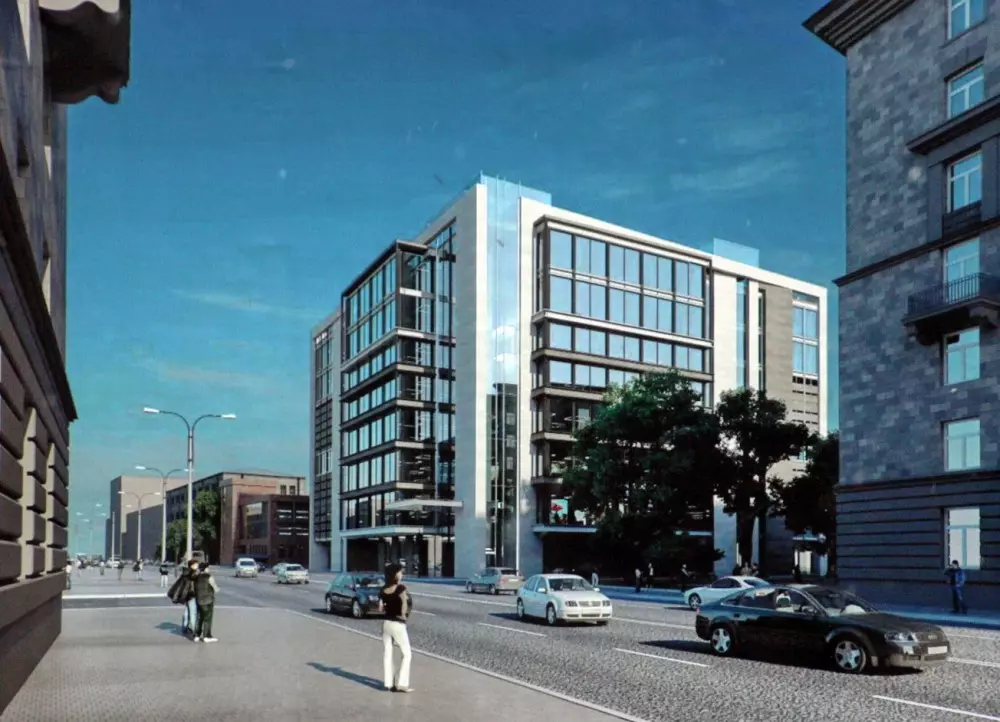
In early December last year, the former construction vice-governor Igor Albin, at a meeting with the public organization, Green Coalition, declared the opposite. “We asked the Committee on Youth Policy, including volunteers, literally every centimeter of the Earth should be explored for the presence of possible remains there, and there were no remains there. Moreover, the object did not go beyond the borders of the former cinema, ” Albin quotes the words“ Zachs.ru ”.
The Gosstroynadzor, with complaints, has also been leaving with an unscheduled inspection and retreats from the construction project has also been discovered more than once.
In the VKontakte social network, the group of social activists posted a video examination of an eyewitness about how the graves were defiled during the construction of the Sputnik cinema in the 1950s. Pensioner Oleg Bronislavovich recalls how, at a young age, he ran to lay the foundation of the cinema. Among the earth, he, along with his peers, saw human bones and skulls.
The next meeting in the lawsuit of the defenders of the Paris Cemetery will be held in the Kuibyshevsky District Court on February 12 at 15.00 (hall No. 7).