
Translated material
Three people with vodka were counting cars. How administrative cases were opened against the leader of garbage protests from Kolomna to pave the way for a criminal case
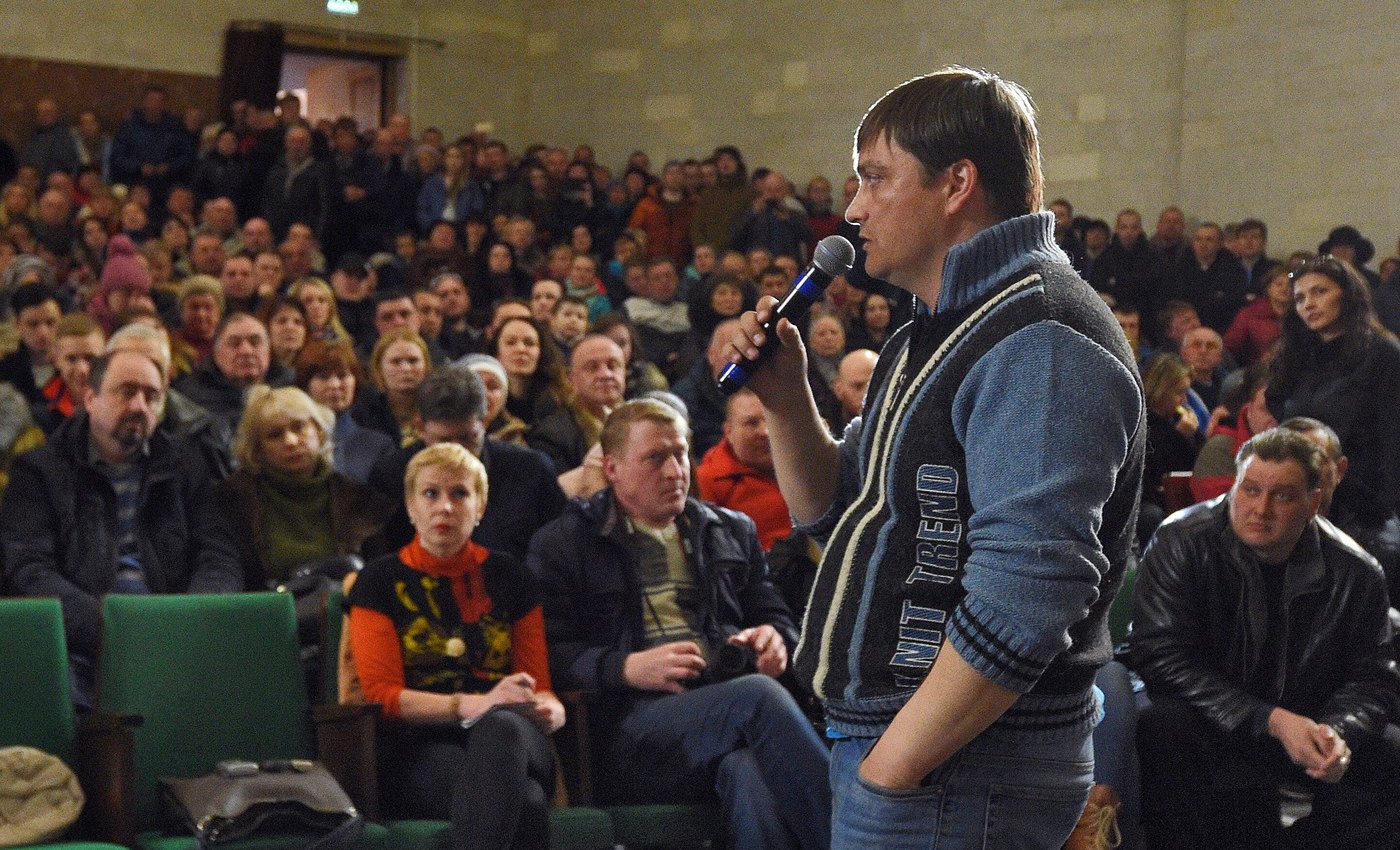
Activist Vyacheslav Egorov. Photo: Alexander Miridonov / Kommersant
Today it became known that for the first time in several years, a new suspect has appeared in Russia under Article 212.1 of the Criminal Code (repeated violation of the established procedure for organizing or holding a meeting, rally, demonstration, procession or picketing). This is Vyacheslav Egorov, the leader of the “garbage protest” in Kolomna near Moscow, who opposes increasing the capacity of the Volovichi landfill and the construction of a waste incineration plant in Myachkovo. “Mediazona” tells how an activist became a suspect under an article that even Dmitry Peskov did not rule out canceling.
December 13, 2018, Kolomna. “There is an open confrontation after my landings, after the intimidation of activists, after an attempt to split the initiative group,” Vyacheslav Egorov, the leader of activists opposed to the removal of garbage from other cities to the nearby Volovichi landfill, tells a Mediazona correspondent.
Egorov has just been released from the police, where another report was drawn up against him for violating the rules for holding mass events. The activist was detained near the building of the Kolomna City Court while a hearing was going on inside on an administrative case against the chairman of the Party of Change, Dmitry Gudkov.
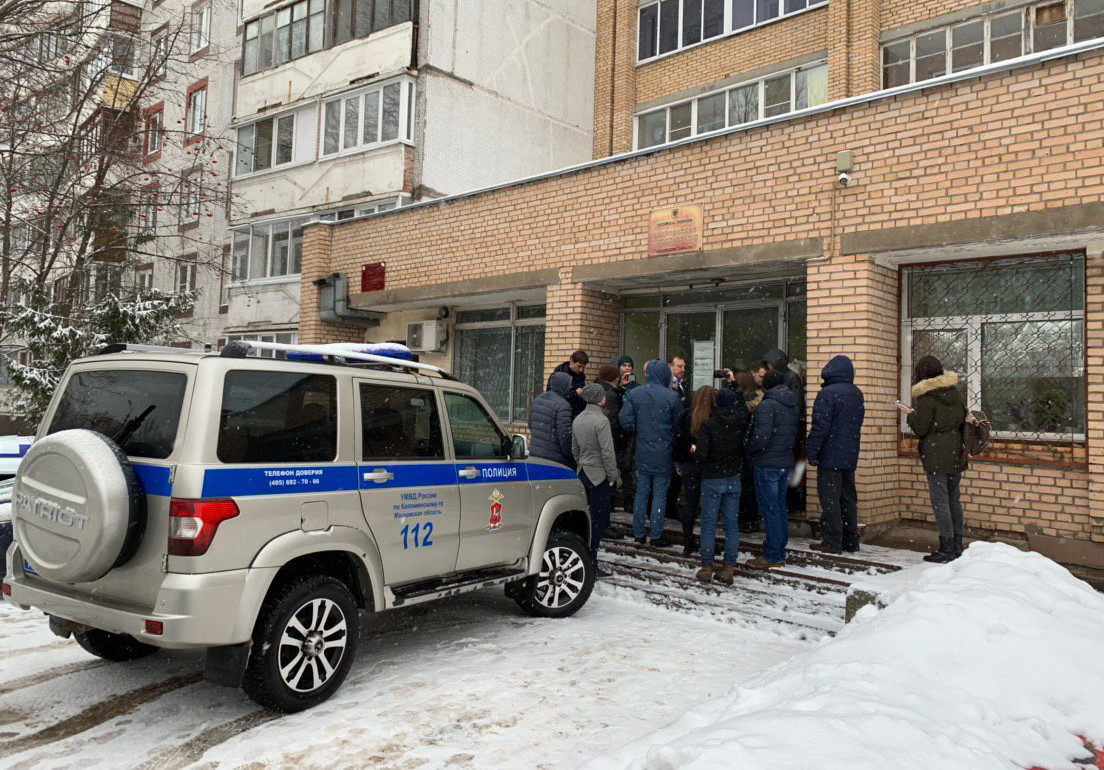
Gudkov and his father Gennady, former State Duma deputies, were fined 30 thousand - protocols were drawn up for a rally against a waste incineration plant at the neighboring Myachkovo landfill, although politicians claim that they simply planned to shoot a video and warned local residents about it.
On the way to the training ground, Egorov receives a call from Gudkov Jr. He actively communicates with local residents in a telegram chat dedicated to the Kolomna garbage problem, and has just launched a platform for coordinating supporters, and Vyacheslav Egorov is the most famous of the Kolomna activists opposing the landfill.
Vyacheslav is no stranger to administrative cases for mass protests. He was the only one detained at the court, although several dozen people had gathered near the building: most were not allowed inside - there were not enough seats in the courtroom - and the activists simply stood nearby. The police even had to block the section of the road adjacent to the building.
Having been released from the police, the activist tells the Mediazona correspondent in detail what the initiative group is doing: independent environmental assessments of waste incineration plant projects, public hearings - and at the entrance to Volovichi he remarks: “We are now going to places of military glory.”
“The stop had already been cleared, there were stickers everywhere, there was always tea, everything was filled with tables with food, barrels, people were warming themselves,” he recalls.
A narrow road leads to the landfill. As Egorov says, local residents began to protest against the import of out-of-town garbage because of the unpleasant smell back in the fall of 2017 - that’s when an initiative group gathered, and the community “NO to the Kolomna landfill” was created on VKontakte, which now has more than 20 thousand members.
Mass actions, the activist continues, began in March 2018, after children at the other end of the Moscow region, in Volokolamsk, were poisoned due to emissions from the Yadrovo landfill. Around the same time, it began to stink in Kolomna.
“Literally next week, local residents came out to block the road. As soon as they came out, we started writing about it, and hundreds of people already came out. At first there were dozens, then hundreds, at peak moments there were nearly a thousand, people asked to take time off from work, it was fantastically cool,” recalls Egorov. “And we didn’t organize anyone.”
Since then, regular detentions of activists on the road to the training ground began in Kolomna. On YouTube you can easily find dozens of videos with titles like “MSW “Valovichi”: riot police forced people off the road!” or “Kolomna - Volovichi 05/07/18 (riot police force disperses people for Putin’s inauguration).”
“People stood there for more than a month. They were dispersed, they gathered again. The monitoring group stood at the pedestrian crossing and stopped cars, checking whether they were transporting out-of-town [garbage] or ours, based on car numbers and invoices. Our cars are small, but there are such trucks - it’s a road train with a smelly trailer. The authorities shouted that they could not do anything, but since people did not leave, instead of 200 cars, 25 came,” says Vyacheslav. — There’s already a crackdown, everyone is tired, by that time I’ve served time, there are dozens of fines, if we talk about small ones, hundreds. Everyone is intimidated, at the administrative level it’s a complete mess, at work they tell everyone: if we see you have a sticker “No to the Kolomna landfill”, we’ll fire you.”
At first, Egorov assures, “everyone leaked information to him - from the cops and FSB officers to the EMSS officers and administration employees,” but later it was the FSB that began to “organize all the landings, all the pressure.”
“People work in court, there was [Judge Svetlana] Belyaeva. She comes and says - Slava, I won’t put you in jail. Well, through relatives. Three meetings take place, and she gives me three days. Then it turns out that first the chairman of the court comes to her and says - you must put Yegorov in jail. And he flies out of the office with kicks - I’m an independent procedural person, go to hell. And then [the head of the local FSB Directorate, Alexander] Filatov comes to the same office, negotiates, and they give me three days. FSB officers come to the teams and say that all this is not just so, that Yegorov arranges this for money,” he says.
Judging by the website of the Kolomna City Court, protocols for mass actions began to be drawn up against Vyacheslav himself at the very beginning of 2018. Over the past six months, he has been prosecuted three times under Article 20.2 of the Administrative Code, the last time on August 22. Judge Belyaeva then assigned Yegorov 25 hours of compulsory labor, considering that on July 7 the activist organized a rally by publishing a text on VKontakte called “Plan X.”
At a hearing in the Kolomna City Court, it became known: three local residents, having read this text, decided to go to the landfill and support the activists, where they were detained. Subsequently, reports were drawn up against all three - Vladimir Makeev, Eduard Smirnov and Andrei Belov - under Article 19.3 of the Code of Administrative Offenses (disobedience to a police officer), and they were fined 500 rubles.
“I don’t show any interest in landfills, the landfill doesn’t bother me, oncology has affected me - everything is so colorful there,” Makeev explained in court. He considered that there was still a call in the article, or there was no call, but he personally misunderstood the text, or there was a call, but then it was deleted by editing the publication - one way or another, the witness added that in 2012 he suffered a brain contusion in an accident and now has memory problems. The version of the article available as of January 31, 2019 does not mention cancer.
Another witness, Belov, answering a specific question, admitted that there was no call for mass actions in the text. According to him, the events of July 7 developed as follows.
“First I read the article <...> I had some comrades visiting me, they decided to go and have a look, they drove their own transport <...> There were women sitting at the bus stop, there were three or four people there, people came up and talked about this situation, what was what, that they had banned the passage of a large number of cars, the women were interested: is it ours or not ours, fellow police officers came up. The cars were stopped temporarily - the police drove them away. In the end, it all ended with a visit to the department, I was tried by a resolution, and I didn’t pay the fine,” said Belov.
Egorov himself and his associates believe that all three witnesses were provocateurs who specially came to the landfill to be detained - this would create an administrative offense.
“I came there after lunch at 15:00, there weren’t many people, there were three guys at the stop whom I didn’t know. The guys sat imposingly at the bus stop, behaved strangely, cursed, threw themselves under garbage trucks - we told them that they shouldn’t do this, which is what we now think. Then a bottle of vodka appeared, we made a remark to them that they could be taken away, they said that they didn’t care,” activist Tatyana Zueva said in court. - Because they were drinking, we moved away from them <...> Around 19:00 a lot of policemen appeared, they went to the bus stop, and suddenly these guys jumped out - and straight to the policemen. A police car pulled up and they drove off.”

The defense tried to add expert linguistic research to the case file, from which it follows that “Plan X” does not contain any calls, but the judge denied this request. Based on the testimony of witnesses detained on July 7, she came to the conclusion that Yegorov was guilty. The Moscow Regional Court subsequently upheld the decision, and now Egorov is preparing to appeal to the ECHR.
However, the activist’s lawyer Maria Eismont notes that in other cases, her client’s administrative cases were structured according to a less inventive scheme: Yegorov was simply detained at rallies and protocols were drawn up. The latest case, filed after the arrest in December, has not yet been heard in court.
Vyacheslav himself assumed back in the summer that such a quantity of administrative materials was needed to make it possible to initiate a criminal case against him under Article 212.1 of the Criminal Code (repeated violation of the procedure for holding a rally). Adopted in the summer of 2014, the article aroused sharp criticism from human rights activists and lawyers, especially after it became known about the torture of the first person convicted under it, Moscow oppositionist Ildar Dadin, in the Segezha penal colony-7.
In February 2017, Kremlin spokesman Dmitry Peskov said that the proposal to exclude this article from the criminal code “deserves attention,” an idea supported by the Chairman of the Supreme Court, Vyacheslav Lebedev.
Although the Constitutional Court recognized that the article does not contradict the basic law, Mediazona has not yet been aware of new cases of its application.