
Translated material
A document of the era

There are documents that do not require comments - they are so transparent and understandable. One of these documents is the report of the prosecutor of the Tomsk region, written in February 1945.
The history of the ordeals and the death of the mother and her two young daughters, with the complete indifference of the surrounding are simple, as a report by the commandant of Auschwitzim, settled in it. Literally a few small questions have not been worked out. For example: two corpses were found in the bushes, but it is not indicated who died before, and who was lying near the cooled body and died the second - a mother or a four -year -old daughter? Or: What can be the body temperature in young children in December in Siberia if the authorities settled them in an unheated room of the old rabbit one? Here's also: did the fighter Andriyanov report to the front three months before the victory that while he “liberated Europe from the brown plague”, in his homeland his wife and children died from hunger and cold in a direct fault of those who were left to take care of the families of front -line soldiers?
SR in mobile SR on Instagram Wed Facebook
"February 3, 1945
Owls. Secret
Secretary of the Tomsk regional committee of the CPSU (b)
Comrade Semin
Report
The prosecutor’s office revealed a criminal nightmare of a soulless bureaucratic attitude to the family of a Red Army-Frontovik Andriyanova Solomonida Fedorovna, who took place in 1944 in the Krivosheinsky district, which consisted in the following:
In 1943, Andriyanova Solomonid at the age of 46–47, who did not have his own economy, whose husband Andriyanov Ilya Mikhailovich, who worked as a carpenter at the oil factory, was drafted into the Red Army in 1942 and sent to the army, having a deterioration of his son born in 1929 and two daughters of 4 and 6 years, was accepted for work as a guard for the subsidiary farm Krivosheinsky Khimleskhoz.
Instead of providing an appropriate apartment, the Khimleskhoz administration placed Andriyanova with children in an old abandoned rabbit, completely unsuitable for housing, especially in winter. There was no heating in the room of the rabbit, and Andriyanova and the children with the onset of winter were forced to bury in the straw and hay, brought by her to rabbit and sleep with children, without undressing, in outerwear and shoes.
In addition, Andriyanova and her children did not have proper clothes and shoes and went in rags in the winter. In addition, Andriyanova did not have any vegetables and other foods and, without receiving enough food, her family was forced to conduct half -starvated existence, and the administration of the chemical zerois, having vegetables and other products in the subsidiary farm, did not provide absolutely any assistance to Andriyanova’s family, despite a number of petitions from the latter.
The indicated inhuman conditions were certainly negatively reflected in the health and disability of the Andriyanova family, who had the age of 46–47 years, and on the health of her children.
Andriyanova repeatedly turned to the administration of the chemical zerois in the person of the director Spirin and the head for help. Shebalin’s subsidiary farm, as well as to the chairman of the Nikolsky s/council Erlinecov, but despite the fact that all of these persons were eyewitnesses of the extremely distressed position of the Andriyanova family, did not provide her with absolutely no assistance and even a cash allowance in the amount of 75 rubles a month, Andriyanova did not receive at all for about 2 years ...
In order to get rid of the family of Andriyanova, the director of the Khimleskhoz Spirin, his deputy technology Andreev and the head. Shebalin’s subsidiary farm, by agreement between themselves in December, was fired from the work of Andriyanov, and in January the M-Mr. 1944 they evicted the Andriyanova family from the rabbit without providing it with any housing.
Andriyanova filed a complaint against illegal dismissal to the chairman of the s/council Erlinecov, but the latter was not taken by Andriyanova’s defense, and the latter lived in the village of Nikolsk for half the winter, wandering with children from home to the house and shed a half -starvated existence, which led to the extreme depletion of both Andriyanova herself and her children.
The corpse of the girl was buried in the ground without a coffin. Andriyanova herself was so exhausted that she was not able to move on
In May 1944, Andriyanova, not finding any other way out of the situation, decided to walk with the children along the banks of the Ob River to the village of Ordynsk to her former place of residence. Not reaching one kilometer to the village of Karnaukhovo, the daughter of Andriyanova fell ill for the 6th year, who was left in the field, and then on a cart, obtained in the village of Karnaukhovo by 14-year-old Andriyanov Yegor, was brought to the village of Karnaukhovo, where she died two days later from exhaustion, and the girl's corpse was buried in the ground without a coffin. Andriyanova herself was so exhausted that she was not able to move on, and therefore her son Andriyanov Yegor left the village of Karnaukhovo alone and, reaching the Shegarsky district, got a job at the Orel collective farm.
Andriyanova Solomonida with a daughter of 4 years old, deciding to go from the village of Karnaukhovo back to the village of Nikolsk, leaving in the direction of the village of Nikolsk, disappeared by the unknown where, and only after 2 months on July 27, 1944, the corpses of Andriyanova Solomonida and her 4-year-old daughter were discovered in the bushes.
The prosecutor's office of the Krivosheinsky district was made by the investigation, the court was betrayed by the director of the chemical zero-chose Spirin and the chairman of the s/Council of the Yerlinecs under Art. 109 of the Criminal Code.
On October 30, 1944, the Narsud of the Krivosheinsky District issued a definition on the return of the case for an additional investigation and prosecution in the case of Shebalin and Andreev.
In the month of December 1944, the case with the protest of the prosecutor of the Krivosheinsky district was received by the regional prosecutor's office, after which the senior investigator was immediately sent to the Krivosheinsky district to conduct the investigation in the death of Andriyanova and her children.
In the process of the investigation, it was found that the specific culprits of the death of Andriyanova and her two children are the director of the chemisthoz Spirin Petr Fedorovich, head. The subsidiary farm Shebalin Philip Mikhailovich, chairman of the Nikolsky s/council Erindi Alexey Dmitrievich and deputy. Director of Technokr Andreev Alexander Nikolaevich, and in relation to Andreev, in view of his draft in the Red Army, the case was allocated to special production and suspended before his return from the army; Spirin, Shebalin and Yerlinecov were charged under Art. 109 of the Criminal Code. At my instructions, they were all arrested, Spirin and Yerlinekov by the decision of the district committee of the CPSU (B.) were expelled from the party members, and the case was transferred to the Narsud of the Krivosheinsky district for consideration, the district prosecutor was given appropriate instructions, and the case was taken under the special control of the regional prosecutor's office. In relation to the former deputy. The chairman of the district executive committee for the state prosecution of a member of the CPSU (b) Fautdinova, the issue of bringing it in a party order was initiated, and the foreman of the subsidiary farm of the Khimleskhoz Borovkova Elena Dmitrievna, who made the family of Andriyanova from Rabbitschik ... was also brought to administrative responsibility ...
The husband of the deceased Andriyanova in 1944 wrote letters from the acting army to friends in which he was interested in the position of his family.
I.O. prosecutor of the region of the justice of justice (Popov). "
For some reason, after reading this document, Bernes's mournful voice and the sad lines of his song climb into the head:
Enemies burned their native hut,
They ruined his whole family.
Where can the soldier go now
Who to carry your sadness?
A soldier went in a deeper mountain
To the intersection of two roads,
Found a soldier in a wide field
The grass is overgrown with a tubercle.
There is a soldier - and like clods
Stuck in his throat.
The soldier said: "Meet, Praskovya,
Hero-muzha.
Prepare a treat for a guest,
Cover a wide table in the hut, -
Your day, your holiday is returned
I came to you to celebrate ... "
No one answered the soldier
Nobody met him
And only a warm summer wind
The grave of the grave pumped.
The soldier sighed, corrected the belt,
Opened his marching bag,
Put a bitter bottle
On the gray stone of the grave.
"Do not condemn me, Praskovya,
That I came to you like this:
I wanted to drink for my health
And I have to drink for the repose.
Friends, girlfriends will come together again
But do not converge for us forever ... "
And drank a soldier from a copper mug
Wine with sadness in half.
He drank - a soldier, a servant of the people,
And with pain in the heart he said:
"I went to you for four years,
I conquered three powers ... "
The soldier hid, the tear rolled,
A tear in unfulfilled hopes,
And on his chest glowed
Medal out of the city of Budapest.
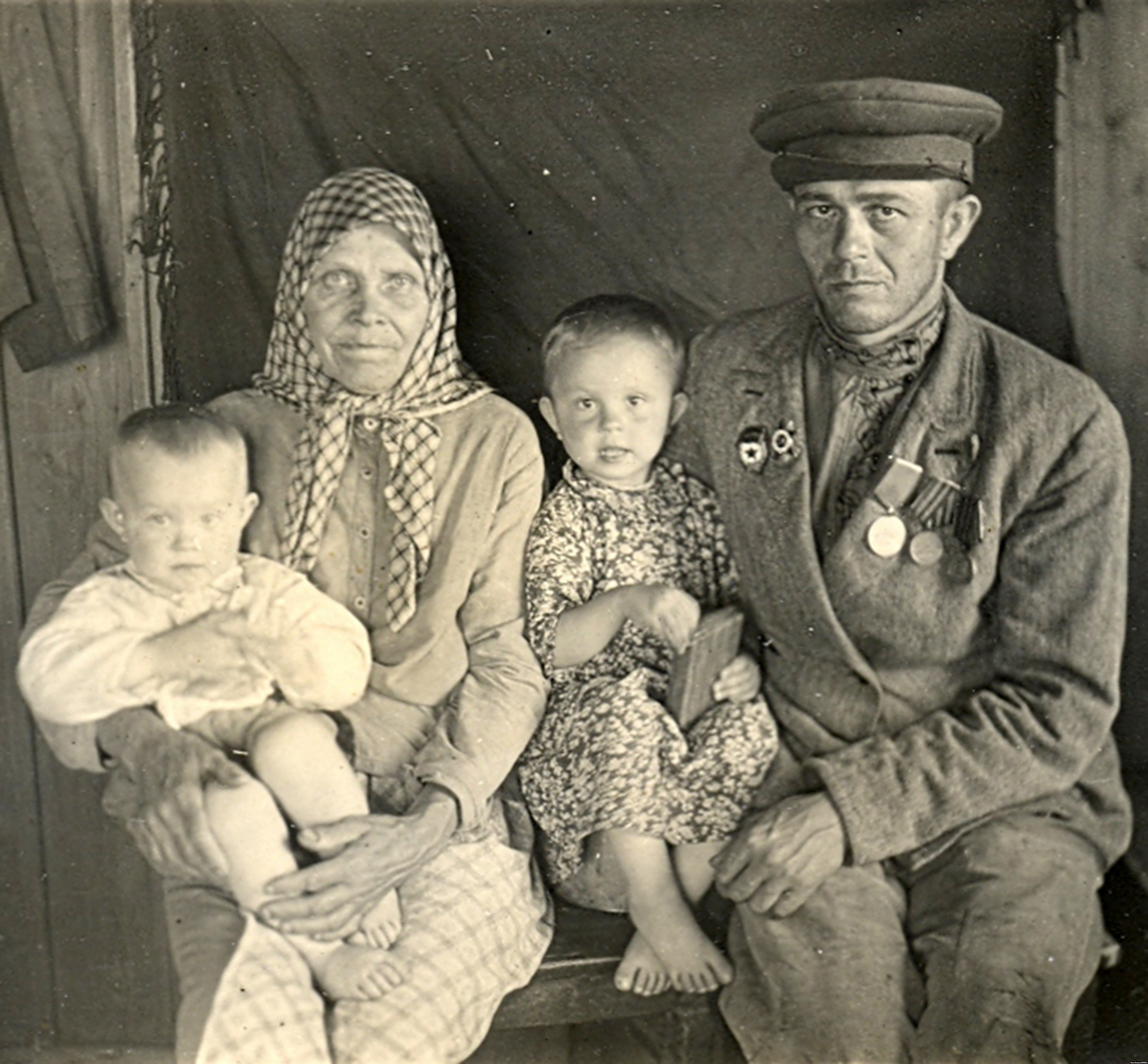
Emotionally the most powerful and true song about the Great Patriotic War. Written by the poet M. Isakovsky and composer M. Blanger in the same year as the report and. O. The prosecutor of the Tomsk region Popov-in the victorious 45th-she was always not loved by the authorities. Under "Get up, a huge country" you can stand for a minute of silence, under the "Victory Day" - march, under "Katyusha" - overturn the glass, and under "Enemies burned their native hut ..."? Just cry. But for the victorious people, another behavioral attitude was given:
"We can sing and laugh like children,
Among the stubborn struggle and labor. "
There can be no dramatic, and even more so tragic mood! Just sing and laugh!
Therefore, the “Culture and Life” newspaper “Culture and Life” criticized the “For the spread of pessimistic moods”, and for many years it disappeared from the repertoire of the official Soviet stage. M. Isakovsky said: “Editors-literary and musical-... for some reason were convinced that the victory excludes tragic songs, as if the war did not bring terrible grief to the people. It was some kind of psychosis, obsession. In general, good people, they, without saying a word, shied away from the song. There was even one-worthy, wiped tears and we couldn’t? It turns out that we can’t skip the song on the radio only after the XX Congress of the CPSU and the exposure of the personality of the personality of Stalin, albeit rarely, but began to perform.
The song does not praise the winning soldier, but shows the tragedy of war, and this did not fit into the framework of official ideology-neither Soviet nor the current one. Meanwhile, the people far from cheers-patriotic virs and songs, "enemies burned their native hut ..." (she was unofficially called "Praskovya") came to their liking. Superbly accepted the story of the return of the winning soldier from the war to the burned house and the lost family and front-line soldiers. M. Bernes, who revived this song in the early 1960s. And M. Isakovsky received a lot of letters from them with similar plots: “I heard a song in your performance how the soldier returned from the front, but he didn’t have any close ones - I had it so. I also had to drink a cup of wine in a pit of a broken dugout with tears in my eyes, where my mother died in a bombing.”
What could the front -line soldier Andriyanov write after returning to his Krivosheinsky district of the Tomsk region, if this territory was never under occupation, but he "burned his native hut, destroyed his entire family"?
Yakov Yakovlev - historian
The "Opinion" expressed in the heading of the point of view may not coincide with the position of the editorial office