
Translated material
"Stop lying and start talking"
An attempt to forecast the international capabilities of Russian politics: everything is overcoming if there is political will
The beginning of the year is the time of forecasts and expectations. True, forecasts often do not come true, and expectations are not justified. But the magic of changing numbers on the calendar polishes blood and activates the brain. This helps to catch those trends and trends that are barely noticeable in the everyday routine of events.
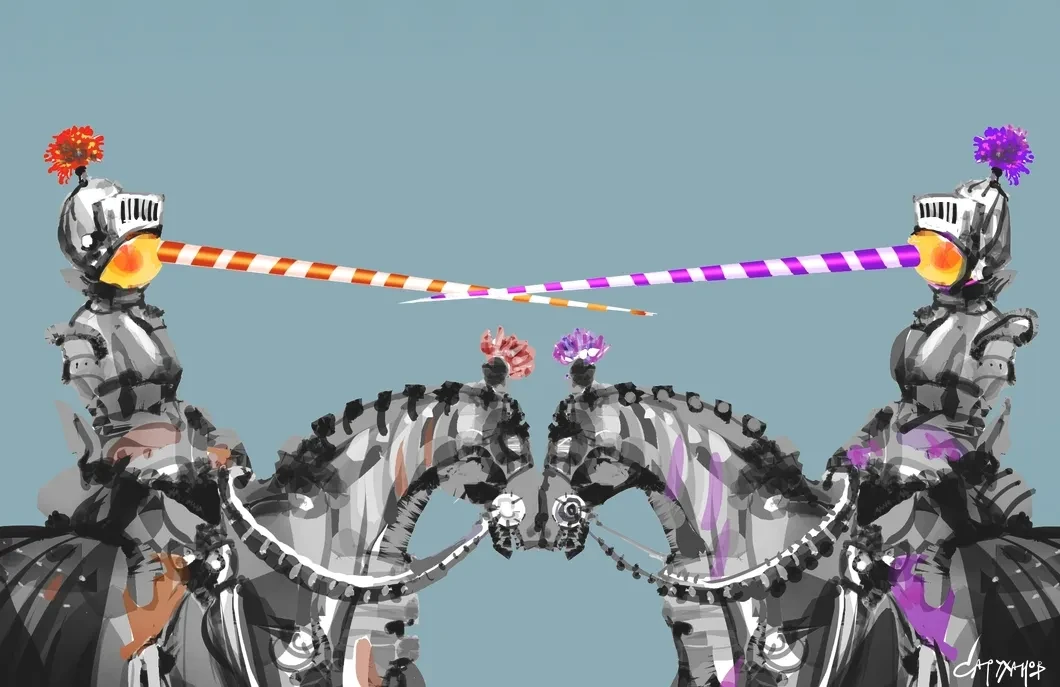
It is especially difficult to predict Russian international policy. Firstly, she does not want to obey the methods, schemes and logic of analysis developed by political science. The fact that they operate in a normal political environment where laws work, institutions function, where parliament and the press are a place for discussions, and politicians cannot carry out completely unexpected somersaults, no matter how much they wanted this.
Secondly, it is divorced from real objective national interests, which are revealed in democratic societies in the only reliable way-as a result of a national public dispute of various political forces. But it is greatly attached to the interests, ideas about the country and the world and even personal insults and phobias of authoritarian leaders and their neighboring circle, which are issued for national propaganda.
And the third, also important. The history of the pre -Soviet, Soviet and post -Soviet Russian policy demonstrates a frequent change in landmarks in choosing its general directions, allies and ideological justifications. This reflects the lack of deep strategic foundations of Russian politics and its attachment to the pragmatic interests of the ruling elites. And these interests sometimes change quickly and unpredictably.
However, it is not so fast that it is impossible to consider a very short distance, for example, the next year, with which the official Russian policy is unlikely to turn off. Even if he wants.
Public request
The need for understanding our international prospects today is more and more obvious. Russian citizens were tired of “getting up from the knees”, confrontation with the West, quarrels with neighbors and sprinkling weapons. The drug dope of “Crimeanashism” and the “Russian world” passes. The propaganda of the “besieged fortress” began to give the opposite effect the plan. Socials of recent times show an increase in the anxiety of the inhabitants of this fortress. It is associated not only with rising prices, a decrease in income, prospects for falling into poverty and unresolved social problems, but also more and more with the fear of war and isolation from the world. The West for many is still “bad”, but not so that it was impossible to agree with him and normalize the relationship.
The prospect of further deterioration of relations, fraught with a ruined arms race and a “hot” conflict, began to scare.
In addition, the connection of the fall of the level and quality of life with the financial costs of confrontation with the outside world, with the participation of expensive conflicts and endless “re -equipment” in distant from Russia, is gradually understanding.
So the question "What will happen next?" - Regarding international politics, he migrations from the midst of experts and “picket vests” into the wide masses of concerned fellow citizens. And more and more of them I want positive changes. Are they possible?
Middle perspective
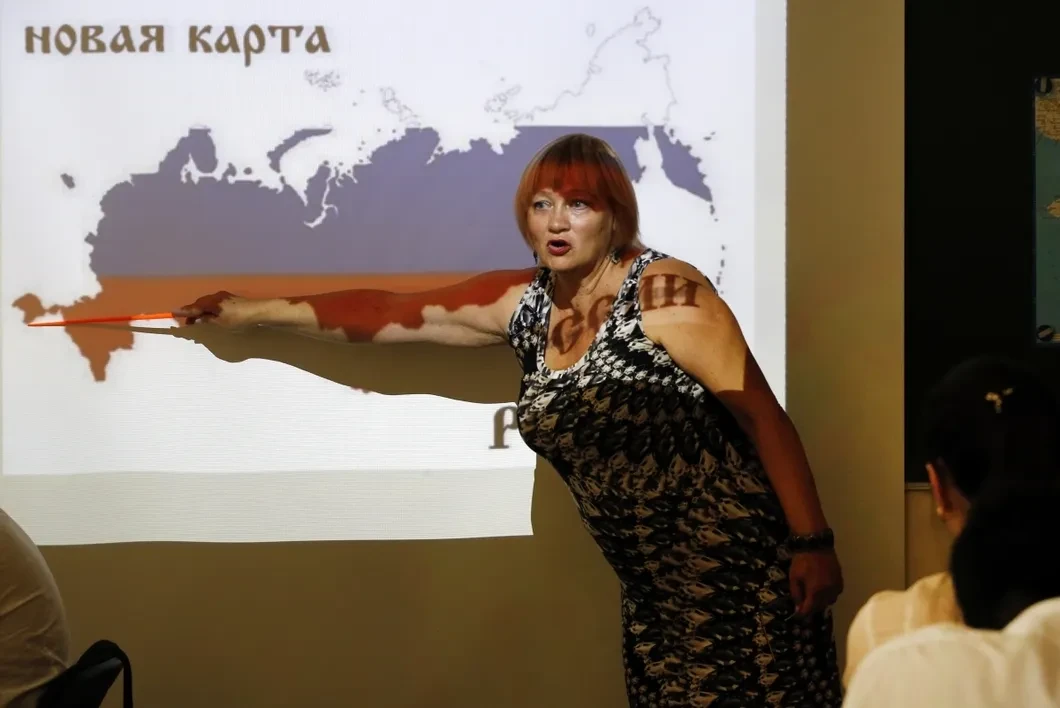
If you look at the nearest events and facts of international life, already declared and with a high degree of probability expected, we have to admit that there is no need to expect anything comforting.
In relations with the United States, which have come into a dead end (and largely deteriorating relations with their European and other allies), nothing shines in the foreseeable prospect.
Firstly, not only does not stop, but also the pressure on President Trump from the Democrats, who gained control over the lower house of Congress, increases. They are looking for convincing reasons for the impeachment procedure. And create mechanisms for blocking the unpredictable initiatives of the president. It is expected to publish the results of the work of the Commission of the Special Prosecutor Muller - first preliminary, and then final. The resumption of investigations conducted by the key committees of the Congress, headed by the Democrats, is also likely. Their rod is a “Russian trace” in Trump’s victory. So, he will have to continue to constantly make excuses and demonstrate his rigidity in relation to Russia. It is clear that for Trump, preserving power is much more important than ghostly bonuses from a “good deal” with Russia. Moreover, the anti -Russian inter -party consensus and the “acidity” of contacts with the current Russian leadership are the obvious political reality of today's America.
Secondly (or maybe even, firstly), the political philosophy of Trump and his team is “America is above all.” In practice, it means a combination of isolationism and folding “doubtful” from the point of view of the White House of international treaties and multilateral projects with the pushing of American military-political and economic interests everywhere possible. All this is combined with the revival of the deterrence policy in relation to "revisionist" Russia, which violated, according to the American establishment, the prevailing world order. This policy against the backdrop of the militaristic rhetoric of the Kremlin about its "leading" achievements in the field of weapons
It will be more and more reinforced by the development and introduction of new American weapons, and this is a real promotion of the next arms race.
Such processes, if they are already launched (funds are allocated, developing, there are influential lobbyists in politics, business, among the military), are usually long -term in nature. The US withdrawal from the INFMD and the ambiguity of the prospects for monitoring weapons after the expiration of the START-3 contract in 2021 make the arms race even more probable.
In the near future, the US sanctions pressure on Russia is also expected . Since the ultimate goal of sanctions is not just to demonstrate dissatisfaction with Russian politics, but to lead to the change of the current leader and political course, stimulating through economic difficulties the dissatisfaction of the population and business of Russia by the current government.
Next in line, the temporarily deferred second package of sanctions “For Skripals”, as well as the possible preparation by Congress of new sanctions. In particular, already declared sanctions bills - Daskaa and Deter. Completely new restrictions can appear, tied to specific cases of “poor behavior” of Russia. The US pressure on European allies through the introduction of “secondary sanctions” against European business for cooperation with Russian companies that fell under US sanctions will also not stop.
The growing military-political rivalry, erosion of the system of control over weapons and ongoing sanction pressure do not leave space to normalize relations.
The distance to the public and politicians of threats to the survival of the country and the world, which can persuade some new edition of the “discharge of tension”, is quite long-in any case, goes beyond the limits of the period under consideration. Today, few people believe in a large nuclear war today, and, unfortunately, some dangerous “shake” is needed so that background anxiety turns into a convincing motive for the resumption of dialogue.
The new problems of Russia also promise “hot spots” - Ukraine and Syria.
This year, Ukraine will be engaged in the elections - presidential at the end of March and parliamentary at the end of October. Not one of the serious politicians and not one of the parties hoping for success can afford not to use the topic of “Russian aggression”, to which the problem of free passage to the Sea of Azov has recently been added. In the atmosphere of the political competition "Who is the largest patriot of Ukraine?" Any compromises are impossible-neither on the implementation of the criticized and only formally recognized by the Ukrainian politicians of the Minsk Protocol, nor on the project of international peacekeeping forces in the "individual regions" of the Donetsk and Lugansk regions, nor for some new projects. And without reasonable compromises, without taking into account the concern of all the real aspects of the conflict, promotion to at least partial settlement is impossible. In whatever format this happens-Minsk, Norman, Budapest, or any other. In fairness, we note that the desire for real compromises is imperceptible from the Kremlin, which pushes its scenario of conflict resolving.
This means that the sanctions against Russia “for the Donbass”, the abolition of which is publicly attached to the implementation of deep -frozen Minsk agreements (not to mention the “Crimean”), will be fully preserved.
And Russia will continue to wear the stigma of the aggressor and be considered the only culprit of the breakdown of the Donbass settlement. Even if on the sidelines some European diplomats and politicians will be quietly sharing the opinion that Kyiv, they say, would also be nice to do something to carry out the Minsk Protocol.
In Syria, there is a transition from large -scale hostilities against terrorist organizations to political settlement. This stage promises no less fierce political contractions between external players who are involved in the Syrian conflict one way or another than during the military operations of their coalitions against terrorist organizations. The main external players are Russia, the USA, Iran, Turkey, Saudi Arabia, as well as Israel, have their own “customers” among the diverse and rival Syrian political forces, which must be seated at the negotiations in the Cyrian Constitutional Committee - to develop a new constitution and subsequent presidential elections.
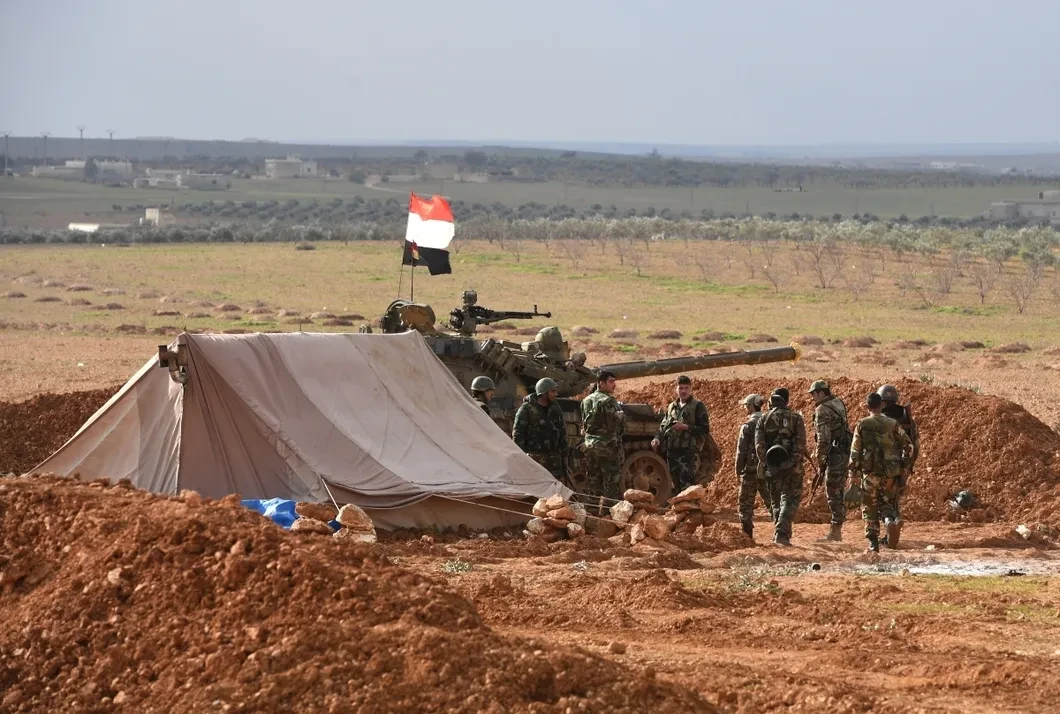
Moreover, this difference in preferences is also manifested within the coalitions that have developed during the armed struggle against terrorists. There is a struggle of everyone with everyone, the emergence of new temporary unions and confrontations.
Russia, which made a bet on the preservation of Bashar al -Assad in one form or another, will have to face not only the United States, Europeans and Saudis, but also with a coalition ally - Sunni Turkey.
After all, she does not want to preserve Alavit Assad in the power of Alavit and fears a new stream of refugees in case of his victory in the elections. Excessive strengthening of the influence in Syria of another temporary ally, Iran, is also objectively unprofitable for Russia. This is not only the danger of a sharp deterioration in relations with Israel, for which Iran and the Right Hzbollah are dangerous enemies, but also a threat to their own interests in Syria from an active and unpredictable Iran. It turns out that the initial idea of Russian politicians about interference in Syria as an opportunity to establish interaction with the United States in the fight against IG (prohibited in the Russian Federation) and thereby at least somehow compensate for the costs from the Ukrainian crisis, crashed. On the contrary, Russia gained a heap of new problems in relations not only with the USA and Europe, but also with other countries, in the Syrian conflict involved.
There are a number of anxious trends for Russian politics and in other directions.
This is a very likely stagnation in the “Kuril theme” in relations with Japan, threatening a decrease in its interest in Russia and the departure from restraint against anti -Russian sanctions.
This is a probable change in the blessed atmosphere within the framework of BRICS - the new President of Brazil Balsonaru was already noted by dissatisfied statements to the members of the BRICS - China and Russia. Some experts believe that the Balzaru team, which reckons Brazil for the Western World, will minimize its participation in this organization.
There is a danger that relations with the EU countries and structures, which are in the state of “post -Kryrmsky” stagnation, may worsen. This will happen if during the May elections in the European Parliament, the excessive activity of Russian propaganda and hacker actions of Russian origin in favor of Euroskeptics and right -Popopulistic politicians is discovered, the success of which many in Europe predict.
There is also a probability of problems in the very narrow circle of Russian allies today. Relations with Belarus can deteriorate against the background of oil and financial disputes, as well as unwinding speculations about its “absorption” by Russia. It is also not clear how relations with the new leadership of Armenia will take shape, which is trying to diversify its international activity, which in the Kremlin is usually looked at with suspicion.
Incorrect pictures of the world
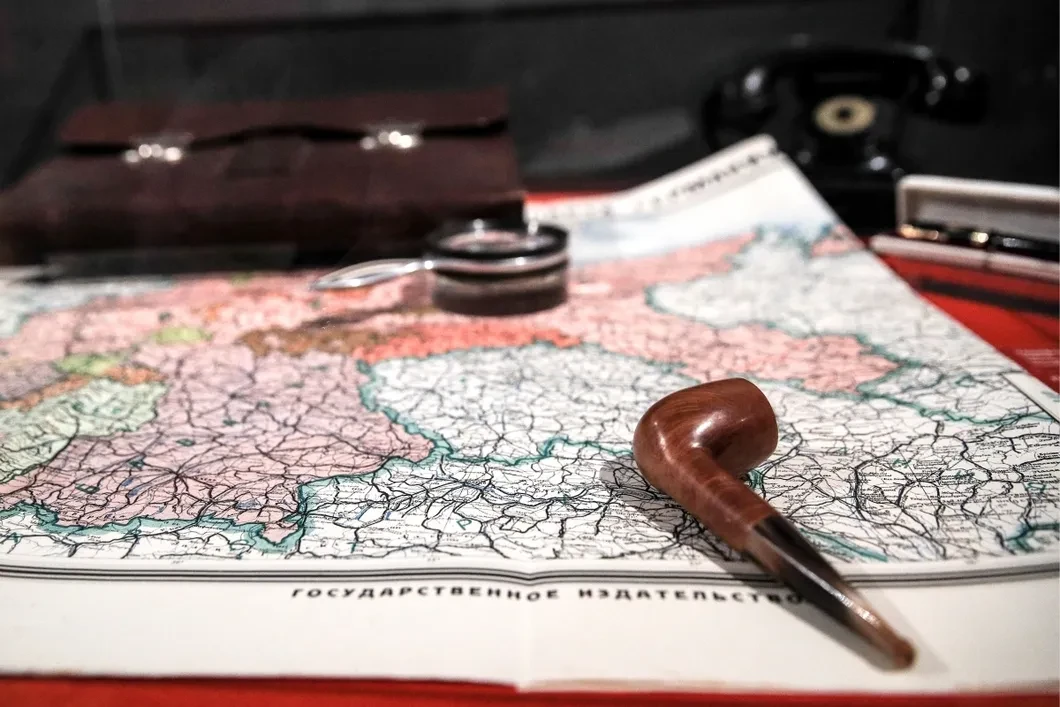
Most of these specific international troubles follow from fundamental causes. First of all, from the dramatic mismatch of the ideas of Russian and Western politicians about the modern world and the foundations of the world order.
A certain generalized West considers himself a winner in the Cold War. He believes the world order that has developed after the end and collapse of the USSR, including its “single -polarity” with the leading role of the United States as a guarantor of world security, as well as the keeper and “distributor” of democracy, unshakable. The collapse of the USSR and the exit of Russia from the "socialist world" was welcomed and supported as an application for the gradual entry of Russia into the family of democratic countries. However, the international role of the Russian Federation in the understanding of most Western politicians has become much more modest than the role of the USSR - the global nuclear superpower and the leader of the Eastern Bloc. She began to be considered as a partner, but, by the definition of one of the Russian international experts, "nearby, and not in a row with themselves."
The expansion of NATO at the expense of countries from the so-called “gray zone”-the former allies of the USSR under the Warsaw Treaty and the former republics of the Baltic states-is explained in the West by the exceptionally persistent desire of the Candidate countries to join this organization and their sovereign right to this, and not at all the initiative of NATO and the desire to cause damage to Russia's security. The same applies to their movement to the European Union. The Eastern Partnership, created 10 years ago, is just a European response to the interest of the post -Soviet states (Armenia, Azerbaijan, Belarus, Georgia, Moldova and Ukraine) in expanding relations with the EU.
And the plans of Georgia and Ukraine to join NATO are a protective reaction to Russian aggressive actions against these countries.
At the same time, the West continues to believe that those special mechanisms that were created for Russia's contacts with these organizations (Russia-NATO Council and the Russian-EU partnership and cooperation agreement) are quite sufficient.
According to the West, the causes of the so -called "color revolutions" in post -Soviet countries are exclusively within these countries themselves. The annexation of Crimea and the hybrid war in the Donbass, as well as the rejection of Georgia of Abkhazia and South Ossetia in 2008, is a violation of the rules of the rules clearly recorded in the Helsinki final act and other agreements signed by the USSR (and Russia is its successor) and designated the end of the Cold War.
The desire of Russia to replace the prevailing European and world order by a certain new publication of the “concert of powers” of the 19th century, the Yalta-Potsdam post-war agreements of the great powers or a new agreement on European security are unacceptable. Like any other attempts by Russia through such designs to actually limit the sovereignty (in particular, to influence the entry or non -profit into certain unions) of neighboring countries included in the zone of its “vital interests”.
So Russia is an “revisionist country”, ready to redraw the world order with the help of power, and this must be opposed.
Official Russia, for its part, is sure that the role of the USSR in the termination of block confrontation and the “return to Europe” of the countries of Central and Eastern Europe, at least no less than the Western. And her intention of equal entry into a number of powers that determine the world agenda was supposed to meet with a more benevolent movement of Western countries towards her, taking into account her interests and concern.
The Russian leadership believes that the previous experience of partnership with the West turned out to be “one gate”, that the West with “weak” Russia was not considered enough and expanded its own sphere of influence to the detriment of Russian interests. He carried out the unauthorized UN and international law of intervention in Yugoslavia and the Middle East, consciously and contrary to the oral agreements of the late 80s expanded NATO in the direction of Russian borders, created the “Kosovo Precedent”, inspired and supported the “colorful” geopolitical interests of Russia in the immediate zone of the “vital” geopolitical interests of Russia, and the began the deployment of elements of the American About the near Russian borders.
Russia, especially, starting with Putin’s Munich’s speech in 2007, actively advocates “multipolarity”, trying to restore its geopolitical role as the Global Center for Power and “force” the West with it, as well as with other “non -Western” countries (China, India, other BRICS countries) to be considered.
Конфликты с Грузией и, особенно, с Украиной рассматриваются как вынужденный ответ на пересечение Западом некой «красной черты» в распространении своего влияния на сферу российских «жизненных интересов», на вовлечение этих стран в зону своего влияния и своих альянсов. Стремлением Запада к наступлению на российские интересы (а не реакцией на присоединение Россией Крыма и ее вооруженное вмешательство в Донбассе) объясняются также действия по укреплению военных возможностей НАТО близ российских границ и санкционное давление.
Where is the exit?
Столь глубокие несостыковки картин мира постоянно подпитывают противоречия между Россией и Западом. Создавая все новые очаги соперничества и не оставляя надежды на нормализацию отношений между ними.
Чтобы не доводить противостояние до опасной черты, и российскому руководству, и его западным оппонентам придется имеющиеся глубокие различия как минимум осознать и понять мотивы поведения и озабоченности противной стороны. И затем свои позиции скорректировать, что-то просто отбросив как несостоятельное. Приближая свою картину мира — во многом искаженную под воздействием фобий, традиционной мифологии и тактических соображений — к реальной.
This is a difficult task. Никто не хочет за просто так терять лицо. Трудно и некомфортно отказываться от наезженных пропагандистских схем, в том числе рассчитанных на внутреннее потребление и объясняющих многие домашние проблемы происками внешних сил. Повсюду есть элитные группы, корыстно заинтересованные в продолжении эскалации напряженности и демонизации международного оппонента. Порушены многие каналы диалога, что затрудняет серьезный разговор — «по делу», а не для очередной пропагандистской перепалки.
При желании все это преодолимо, если есть политическая воля выйти из длительного периода противостояния, если это становится приоритетной внешнеполитической задачей. Тогда стороны начинают разговаривать друг с другом, согласовывать несовпадающие интересы, выяснять, в чем они сами неправы и искать компромиссы.
Для начала обе стороны могли бы чуть угомонить враждебную пропаганду, перестать врать и расширить поле контактов и переговоров.
Россия — прекратить опасные вылазки «спецтуристов», пресечь международное пакостничество хакеров, не устраивать показ устрашающих мультфильмов о непобедимости российского оружия. Запад — приостановить санкционный каток. То есть чуть почистить отравленную атмосферу взаимоотношений.
Если же весь позитив сводится лишь к публичным заявлениям о готовности к нормализации, но она мыслится исключительно на своих условиях и не предполагает встречных шагов, то шансов на нее нет. К сожалению, пока российская концепция тотальной западной «русофобии» и западная концепция повсеместных «зловредных действий» России — господствуют.
Пока это так, нет шансов ни на достойное и справедливое разрешение конфликта вокруг Украины, ни на прекращение санкционного противостояния, ни на нормальный разоруженческий диалог. Зато возрастает вероятность крупного международного конфликта. В мире, напичканном взаимным недоверием и разрушительным оружием, он кому то нужен?
PS
Пока готовился материал, стало известно о переговорах США и ЕС о введении против России новых санкций — теперь за инцидент в Керченском проливе.