
Translated material
The right to say goodbye
In Russia, relatives can still be legally prohibited to a visit to intensive care, even to a dying
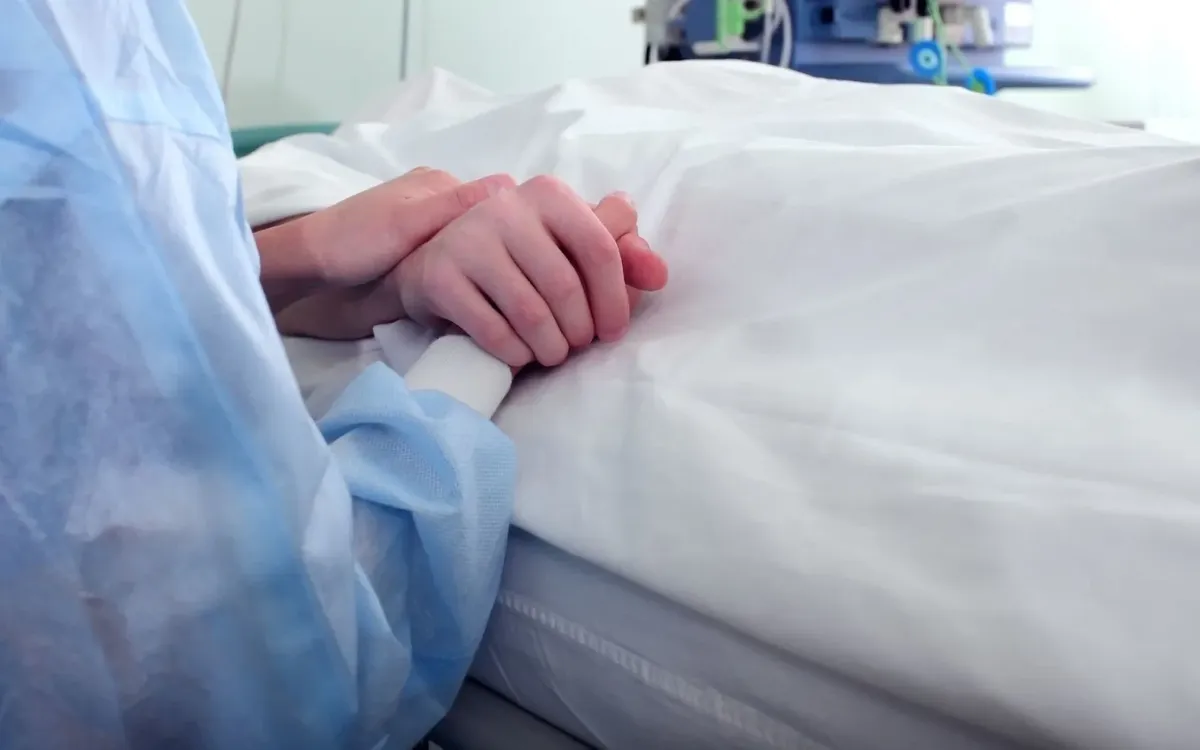
On January 31, in the intensive care unit of the city of Zverevo, Rostov Region, 17-year-old Alina Shevchenko, daughter of Anastasia Shevchenko, the first in the country accused under article 284.1, died. Anastasia is persecuted for work in an unwanted organization - “Open Russia”, founded by Mikhail Khodorkovsky.
Shevchenko, who was under house arrest, was not allowed into the hospital, they were interrogated all day. When the condition of the child became critical, they still allowed a visit to the hospital. But then doctors joined the punitive machine of the investigation. And now they did not allow the child to see, referring to the fact that the girl was in intensive care.
Anastasia spent the night in the hospital corridor. When it became obvious that the child was dying, the ban was lifted.
“In the end, of course, they let her daughter, managed to see each other,” Natalya Gryaznevich said the opening press secretary of Open Russia.
In fact, Anastasia Shevchenko was sophisticated for several hours, not letting the dying child. And it could be assumed that these torture selectively applied it to it within the framework of investigative actions. But this is not so. Not selectively.
Keeping the intensive care doors closed in front of the desperate relatives of seriously ill or dying people is an ordinary hospital practice in Russia.
The Adovas are the circles of separation from loved ones in the last hours of life are experienced by hundreds of people daily on both sides of the resuscitation ward.
In recent years, this norm has tried to change this norm with all possible forces and public figures, charitable foundations, and doctors. Makhin managed to move the ban, but very slightly.
A year ago, a bill was introduced to the State Duma, correcting the law "On the Basics of Protection of the Health of Citizens in the Russian Federation." It proposed to oblige the Ministry of Health to approve the procedure for access to intensive care units. The bill in June was the first hearings, the date of the latter has not yet been scheduled.
Almost simultaneously in June 2018, the metropolitan healthcare department for the first time in Russia issued an order “On the organization of visits to patients in the intensive care unit and intensive care”. However, despite the name, the order fundamentally did not change anything. And he only concerned Moscow. The lion's share of the text of the order is described how and where to place special memos for relatives who want to visit resuscitation.
The leadership of hospitals has the right to limit certain hours of visiting the visit and “ make restrictions on visits at your discretion ” ( identified by me. - N. Ch .). That is, simply put, the hospital administration will comply with all the instructions offered by the Ministry of Health if it forbids to come to a dying mother after 22 hours, and if she is under a dropper (because it is impossible to be near during medical manipulations).
One way or another, in Russian hospital practice, especially in the province, today the practice of the total insulation of patients in intensive care remains habitually common. The main argument for the ban is violation by visitors to the sterility of the departments.
I have no doubt that somewhere the desperate father broke into intensive care, sweeping away everything in his path when I heard that "there are no chances." I have no doubt that the mother, tired of powerless tears, persuaded the nanny to let the nanny to the child for money for at least “five minutes”. Tears, despair, powerlessness and animal fear cannot be in time - these are the emotions that the relatives of sick people experience.
If you think about it, the ordinary standard of hospital practice is a legalized mockery and violation of human rights.
The Parliamentary Assembly of the Council of Europe even issued the recommendation “On the Protection of the Rights and Dignity of Eraciously Parks and Dying”, in which it calls for the states to ensure guarantees “Protection from death alone and without proper care”.
A year ago, the Charity Fund "Children's Palliative" and the Association of children's anesthetists-resuscitators of Russia prepared standard documents for medical institutions for organizing a joint stay of a child with parents in resuscitation and intensive care departments. Karina Vartanova, Director of the Children's Palliative charitable foundation, said that the developed provisions and rules are based on the best Russian and foreign practices, were prepared in accordance with the legislation of the Russian Federation and underwent approval at the Russian National Research Medical University. N.I. Pirogov and St. Petersburg State Pediatric Medical University. That is, they comply and take into account all medical standards.
And most importantly, the developers of “open resuscitation” are striving to convey to the medical community -
Children really (scientifically proven) feel better and recover faster next to their mother.
Mom is sometimes the last effective resource when everyone else is exhausted. And I do not think that adults in the basic need to see nearby in the moments of the suffering of a loved one are different from children.
The practice of “open resuscitation” for this year began to be actively introduced in the regions. Somewhere the matter went, somewhere he is stopped, somewhere categorically rejected. One way or another, the mother’s right to visit regulates the prince. He wants to - will allow, no - he will find reasons to refer to the instructions.
When the law in Russia has a chance to interpret in the “recommendatory mode” of application, there is no doubt that it will inevitably be chronically ignored.
At the end of 2018, an event took place that created a precedent in the history of the confrontation of relatives of patients with resuscitation administrations. A resident of Moscow sued the Moscow GKB named after D.D. Pletneva for not allowing her to intensive care to a dying mother, despite the fact that doctors informed her that a woman was conscious and that her condition is critical. Izmailovsky district court refused to satisfy the claim. However, in December, the Moscow City Court canceled this decision, relatives were awarded compensation for moral damage in the amount of 30 thousand rubles in favor of everyone. The court indicated that “from the norms of the current legislation it follows that relatives have the right to visit a patient in resuscitation and intensive care units ...”, and that “the hospital did not prove that she took all possible actions aimed at exercising the right of farewell to a dying relative.”
Lawyers note that this judicial precedent will hope that the administrations of hospitals will simply become afraid of the prospects of major payments to relatives. In the meantime, if you are not allowed into intensive care,
Take the current law, sterile shoe covers, a bathrobe and go to the factory or chief doctor and try to convey to him without a scream and threats that you have the right to see a loved one.
And this is yours, not his right. Your right.