
Translated material
"When the state takes the production from the owner, everything quickly falls into decay."
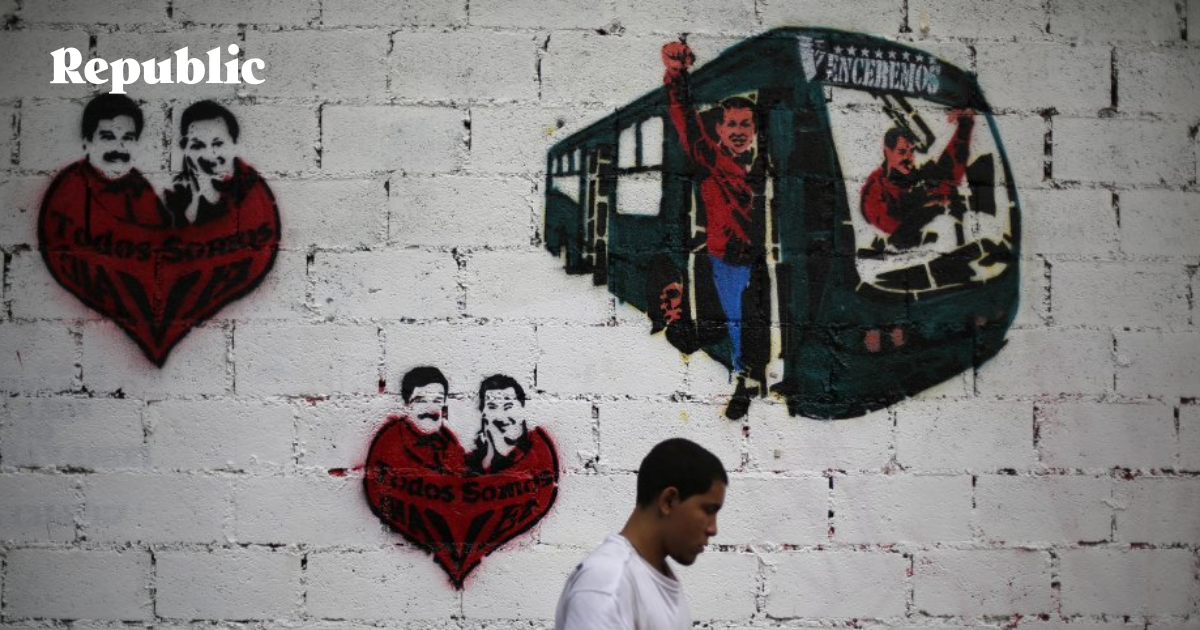
In Venezuela, dual power continues against the background of a serious economic crisis. Ilya Ivanov spoke about the historical reasons for the situation, the similarities and differences with Russia with the native of Venezuela Rostislav the Horde-Tanayevsky , the founder of the Rostik Group Corporation.
- You can be called the most successful Russian Venezuelan. Or Venezuelan Russian. Your mother is a Spaniard, father - a descendant of Russian emigrants of the end of the civil war, you were born and you spent most of your life in Venezuela. Many Latinos, when they live here, say that Russia is very similar to Latin America. This is true?
- I would say that Russia is very similar to Venezuela. Latin America is located in vast space, it is very different. But Venezuela yes. So fate decided that I was born in a country that is so similar to my historical homeland, which I really love - Russia.
- And what is the similarity between Russia and Venezuela?
-Well, firstly, in wealth-both countries have received a blessing from God, they are very rich, and in everything! Therefore, both of these countries, in a sense, are great lucky, are very spoiled. Both peoples are often not their best qualities-they are too relaxed, not very binding, they are too trusting in some ways ... although, of course, there are differences: if you come to Russia, the Russians will first meet you with apprehension. In Venezuela, you will be immediately hugged. But in Russia, as soon as you pass this threshold of first distrust, the soul will open before you. Of course, it’s cold, it’s hot there, Russia is large, Venezuela is small, they speak Russian here, in Spanish.
- You were born six months after the fall of the dictatorship of General Markos Perez Jimenez. Your childhood and youth passed in the years that are called the Golden Age of Venezuelan Democracy. What are your memories of this time?
-Childhood in Venezuela of the second half of the 1950s-early 1960s was blessed. It is unlikely that anyone will poorly remember their childhood, unless, of course, you have passed in childhood some global shocks, wars, did not survive such a blockade of Leningrad. Both Europeans and ordinary Soviet people, who grew up in the 1950s, 1960s, 1970s, love their childhood with love. But I argue that in Venezuela of the 1960s, childhood was a paradise on earth. It was a rapidly developing, prosperous country - oil prices grew, the currency was very stable, there was only one small devaluation (I don’t remember how many years I was then).
Rostislav Ordovsky-Tanayevsky. Photo: Personal archive
Subscribe to read the whole
Make a subscription Redefine.media to read Republic
Subscribe [you can pay for a Russian or foreign card. The subscription is extended automatically. You can unsubscribe at any time.]
Where are the money subscribers going