Translated material
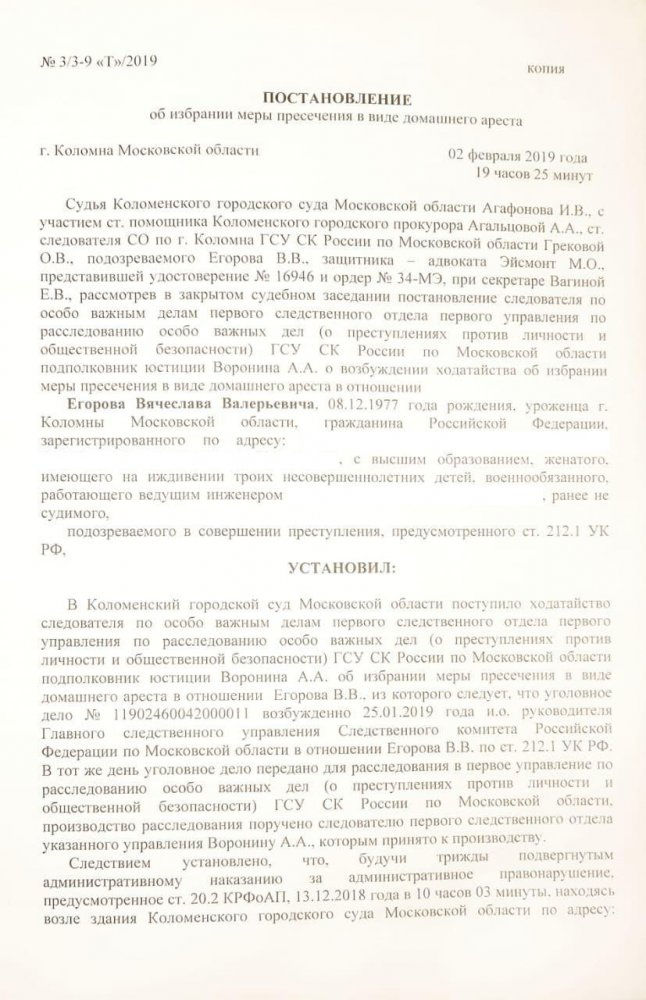
Resolution on house arrest Vyacheslav Egorov: "threaten unidentified witnesses"
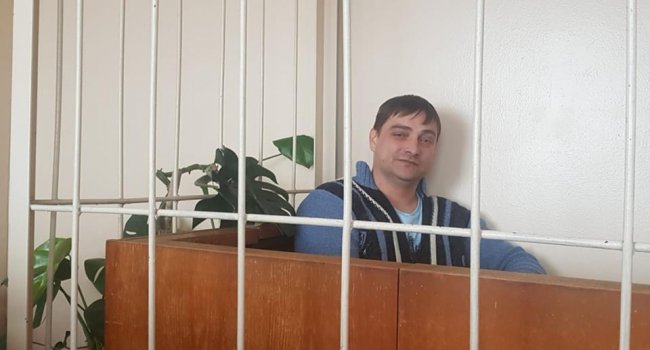
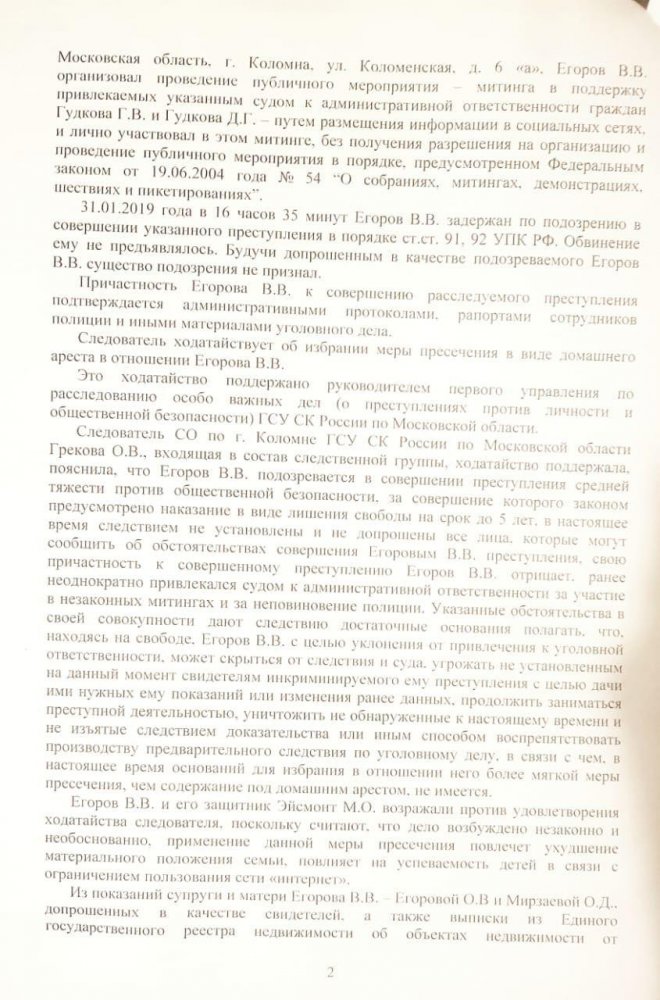
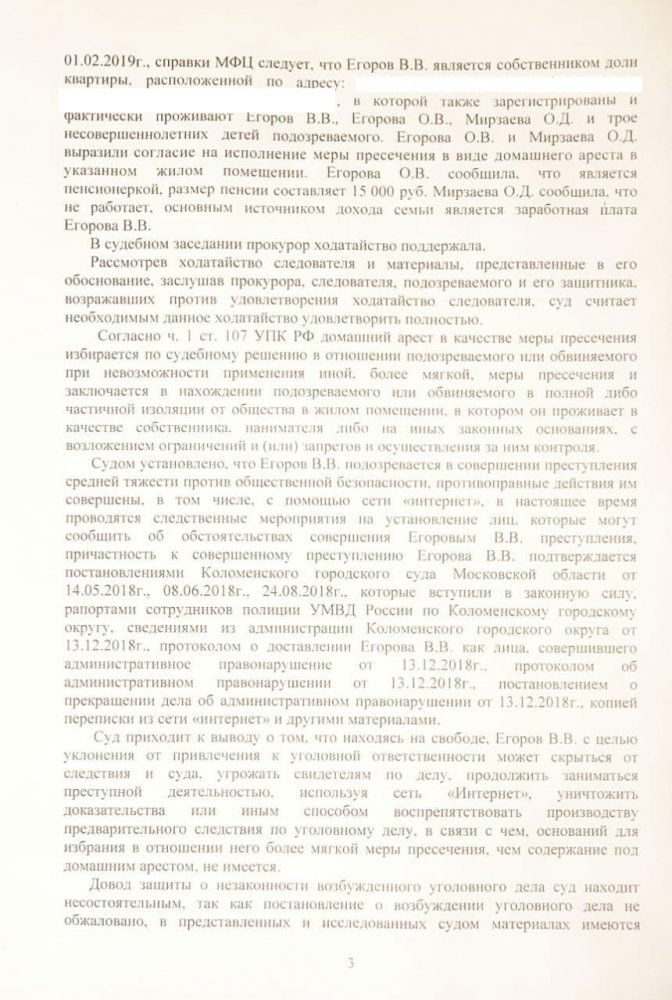
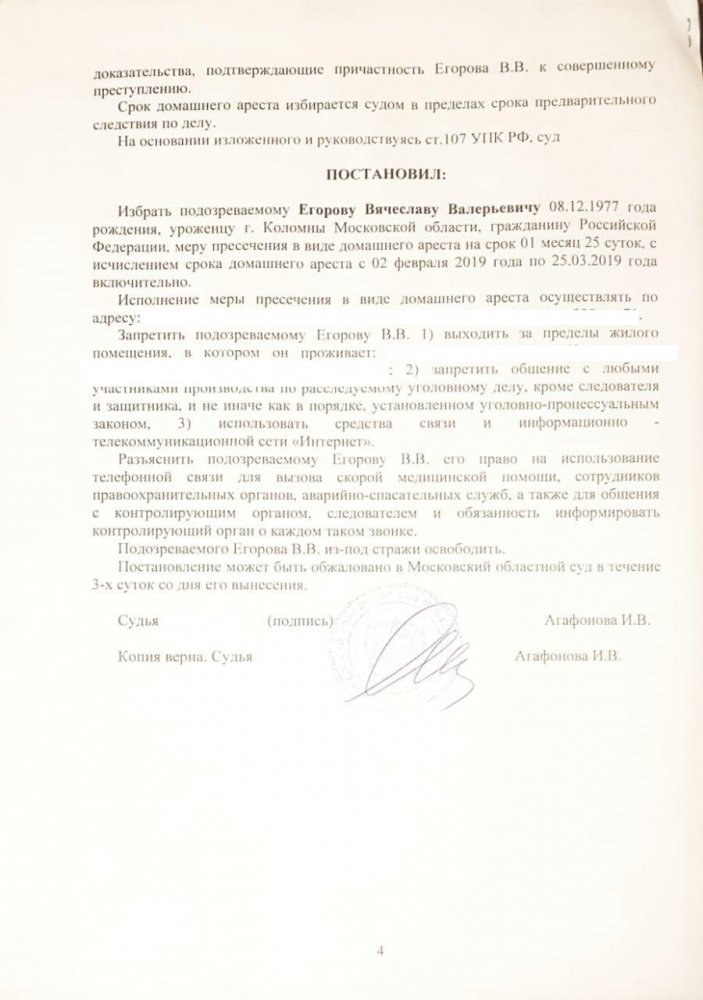
On February 2, the Kolomensky city court sent under house arrest the local environmental activist Vyacheslav Egorov, suspected of "repeated violation of the procedure for conducting public actions." We publish the text of the decision. This week there are interrogations with witnesses in the case, including those detained on January 31.
The meeting was held closed. Lawyer Maria Aismont, representing the interests of Egorova with the support of the OTD-Info and the Rus Sitting Organization, asked the court to make the meeting open, since it was closed on the grounds not prescribed in Article 241 of the CPC on the vowel of trials. In the case, we are not talking about state secrets or about sexual integrity, the suspect has reached adulthood, the interests of ensuring the security of participants in the trial and their relatives are not affected. The judge left the meeting closed, referring to a certain secret of the investigation, and also stating that the case is still being investigated, the court will explore the materials presented, and the public may affect the course of the investigation. (OTD-info has an audio recording of the meeting at the disposal.)
Listing the grounds for the election of house arrest as a preventive measure, the investigation emphasized that, being at large, Egorov could “threaten witnesses not established at the moment” and “destroy the evidence that have not been found to date and not withdrawn by the investigation”. In addition, the investigation is convinced that Egorov can flee from the country. The report of the senior officer was introduced to the case, which states that there is “operational information about what [that] Egorov <...> could leave the territory of the Russian Federation in case of criminal prosecution.” There were no facts, neither in the report, nor at the application of the investigation - the investigator explained in the court that it was about secret information. Eismont lawyer asked the court to demand to declassify them and introduce them to the case file, but the judge Irina Agafonova refused her.
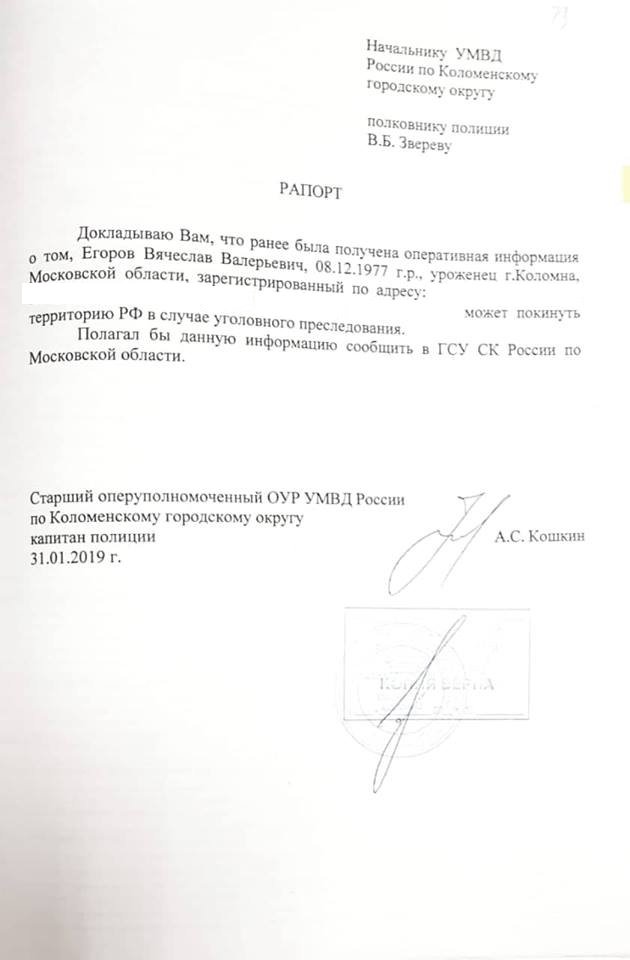 A lawyer in a conversation with the OVD-Info recalled that the decision of the Plenum of the Supreme Court requires not only to refer to the approval of the investigation, but to explore specific factual data that allow you to decide that a person can really hide, continue to engage in criminal activity, destroy evidence, and threaten witnesses.
Although the court session lasted several hours, the lawyer filed petitions and spoke in detail at many points of the investigation position, in the court’s decision on house arrest, all the defense arguments were reduced to several lines.