
Translated material
Memory. Nikolai Zelinsky
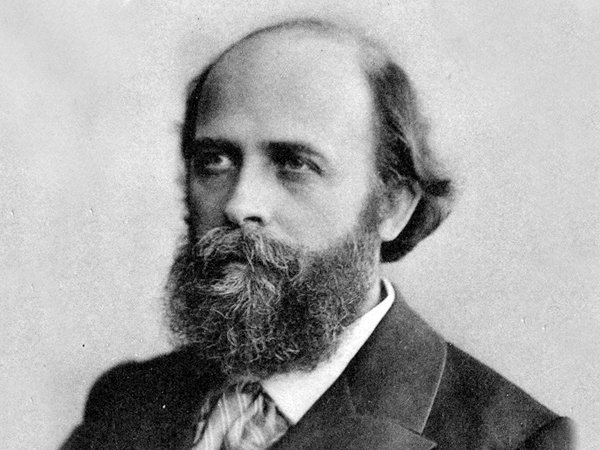
On February 6, 1861, a chemist-organic chemist Nikolai Zelinsky was born.
Personal business
Nikolai Dmitrievich Zelinsky (1861 - 1953) was born in Tiraspol in a noble family. Early lost both parents, his grandmother Maria Vasilieva was engaged in his upbringing. She gave her grandson first to the district school of Tiraspol, then to the Richelian gymnasium in Odessa. The boy became interested in chemistry early. “I was ten years old when I tried to get chlorine, acting with hydrochloric acid to the peroxide of manganese,” he recalled. He attended public lectures on physiology read by Ivan Sechenov. After graduating from a gymnasium, he became a student at the Odessa Novorossiysk University, studied at the Faculty of Physics and Mathematics.
From the first year, Nikolai Zelinsky devoted himself to the study of organic chemistry, and by the end of training, he published his first scientific article in the "Journal of the Russian Physical and Chemical Society". It was devoted to the synthesis of alpha-meomethylamic -ube-oxylyatic acid. After graduation, he was left at the department for preparation for a professor’s rank. In 1885 - 1888 he was on an internship in Europe, worked in the laboratories of Leipzig and Gettingen Universities. Having returned, he passed the master's exam and became a privat-document of the University of Novorossiysk. He gave lectures on organic chemistry, defended the master's thesis “On the issue of isomeria in the thiophenic row” (1889), and just two years later, a doctoral dissertation on the topic “study of stereoisomeria phenomena in the ranks of maximum carbon compounds”.
In 1891, Nikolai Zelinsky was appointed an extraordinary professor of Moscow University. He read the main course of organic chemistry for natural department students, led practical classes in analytical and organic chemistry, as well as at the invitation of Ilya Sechenov, he taught organic chemistry to students of the medical faculty. From 1893 to 1911, he published more than 200 studies on the synthesis of amino acids, oil chemistry, the synthesis of cyclic hydrocarbons and other topics. In 1902 he became an ordinary professor. In addition to working at the university, he organized the Department of Organic Chemistry and the Laboratory in Higher Women's Courses.
In 1911, Zelinsky, as part of a large group of university professors, resigned in protest against the actions of the Minister of Education. For some time he gave lectures at the People's University of Shanyavsky, then moved to St. Petersburg, where he headed the department of commodity studies at the Faculty of Economics of the Polytechnic Institute and the Central Laboratory of the Ministry of Finance created by him himself.
He returned to Moscow University Zelinsky in 1917. In 1924 he was elected a corresponding member, and in 1929-an academician of the USSR Academy of Sciences. In 1929 he headed the Department of Organic Chemistry, and in 1938 - the Department of Chemistry of Oil of the Faculty of Chemistry of Moscow State University. He also headed the laboratory of antibiotics and biogenic bases. In 1934, at the initiative of Zelinsky, the Institute of Organic Chemistry of the USSR Academy of Sciences was created, now bearing his name.
Nikolai Zelinsky died in Moscow on July 31, 1953.
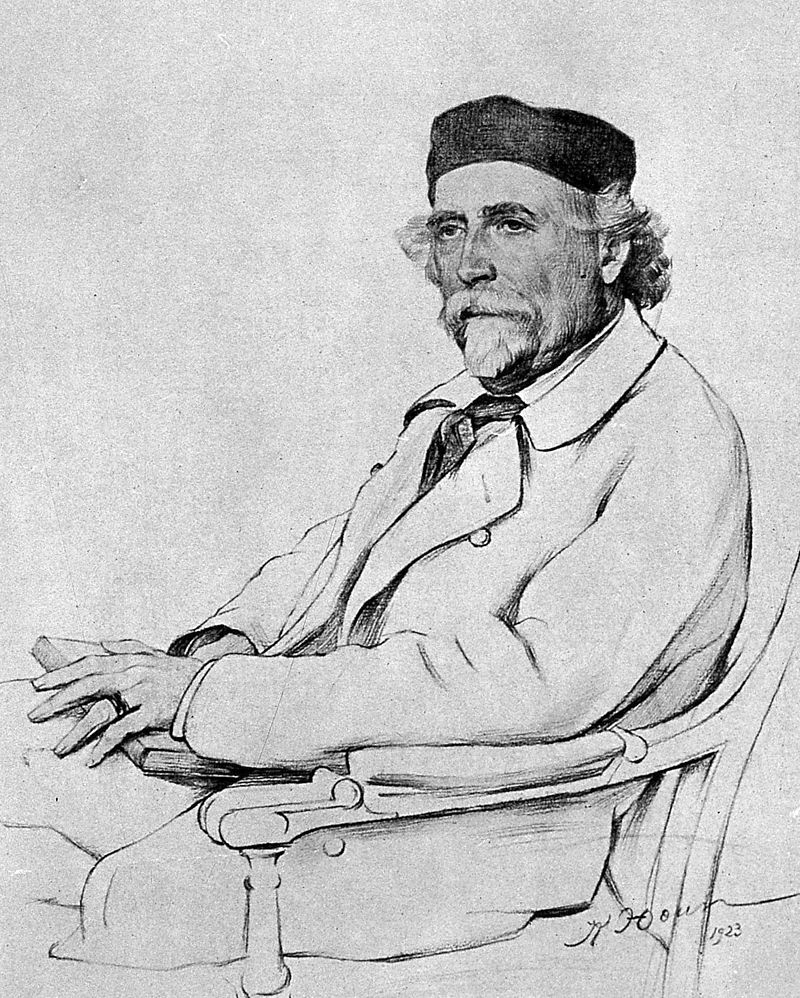 K. Yuon. Nikolai Dmitrievich Zelinsky. 1923 Wikimedia Commons
What is famous
The most famous Nikolai Zelinsky is his work on the creation of a gas mask. Different types of masks to protect the respiratory system began to appear from the second half of the XIX century. They were used by miners and firefighters. But they were not able to protect against military toxic gas. Inventors of different countries, one after another, offered new designs of gas protection masks using various adsorbing substances. Zelinsky in 1915 decided to use the adsorbing properties of activated coal. And in the end, the gas mask created by him turned out to be the most effective, he defended even from phosgen, which other models could not. The technologist of the Triangle Rubber Products Plant Mikhail Kummant designed a rubber mask and a box for placing a Zelinsky coal filter. In the summer of 1916, the military ministry ordered to supply the gas masks of Zelinsky’s construction - Kumanta all troops. Already at the age of 90, Zelinsky said that the greatest happiness was brought to him by the fact that the gas mask he created saved thousands of lives.
What you need to know about
The works of Nikolai Zelinsky cover a wide range of directions in organic chemistry, from hydrocarbons to the structure of protein molecules. The reactions of the synthesis of cyclic hydrocarbons investigated by Zelinsky underlie modern oil refining processes. Zelinsky discovered dehydrogenization catalysis, that is, the selective effect of platinum and palladium on cyclic and aromatic hydrocarbons and the ideal reversibility of passing hydro- and dehydrogenization reactions only depending on temperature. Hydrogenization catalysis was used by Zelinsky for sulfur from gasoline and kerosene, which is of great importance for the processing of high -hearted oil. The butadien obtained in this way has become the starting raw material for the production of synthetic rubber.
Direct speech
When the chemist gets acquainted with the structure of oil hydrocarbons, studies their properties, he cannot but be surprised how easily nature has created these amazing forms that are so difficult to prepare synthetically.
Nikolai Zelinsky
She [the methodology of teaching Zelinsky] has its own good aspects. Firstly, the student gradually masters the methods of experimental resolution of the tasks of organic chemistry, moving from a simpler setting of experiments to more and more complex (working with fractionation in vacuum and fractional crystallization). Secondly, the student practically gets acquainted with a number of various representatives of organic formations and is convinced of the existence of a strict connection between structural ideas and experience in experience. Thirdly, the student imperceptibly and easily assigns a number of details of organic chemistry.
From the memoirs of Professor G. L. Stadnikov
Passing a qualitative analysis of N. D. Zelinsky, we went with real chemists, even a month; Outside of this, they could not submit the offset; He gently but firmly drove us through the chemical system; In raising the ability to smell a scientific gunpowder, a huge merit of the professor. <...> Do you remember how you worked in the laboratory? Laboratory life was life, fraught with impressions, fears, joys: “life”, and not at all serpent of the offset; A skilled soft-grown hand of Zelinsky was felt; and a demanding exam - the test was held unnoticed; Zelinsky seemed not cutting, but friendly listening. He squeezed knowledge out of us, but we did not form; It seemed to us to prepare for the exam sometimes absurdity: they were preparing in the laboratory, daily everyday life, which with soft perseverance, he furnished us with all; Forced, they did not feel; Chemistry knew better than other items; If other professors knew how to sit down in this way, then the average level of knowledge would have increased.
Strict, soft, pleasant, unpleasant, highly holding teaching - this is how Nikolai Dmitrievich is seen. Tall, straight, with his head thrown, why a respectable bald head shone above the back, with long soft curly brown hair almost to the shoulders and with a salary beard (after - a haircut elongated escapanol), straightforward, with a soft mustache, with large, smart eyes, pleasantly pale, - he walked in deceptibly with corridids Or between a number of devices, sometimes stopping and talking very quietly, as if he walked as the spaces of an ancient temple; But there was no pose in the shade of solemnity; It was a solemnity to himself: from the consciousness of the cultural affair of the created here.
Andrey Bely
Ten facts about Nikolai Zelinsky
- Nikolai Zelinsky said that from his maternal side his great -grandfather was Turks, a five -year -old child, saved by the Suvorov soldiers during the fire during the storm of Ishmael and then brought up in the regiment.
- Zelinsky's parents died from a fleeting consumption. Grandma was afraid for the boy’s health and paid a lot of attention to his hardening. As a result, he grew up a strong child, retained tireless ability to work until the end of his life and lived 92 years.
- Nikolai Zelinsky was married three times. His marriages lasted 25, 25 and 20 years. He had two sons and a daughter.
- Working in Gettingen, Zelinsky planned to conduct a synthesis of tetrahydrotiophene. The intermediate reaction product was dichlorordil sulfide, which later became known as “Iprit”. The young scientist received severe burns and spent almost the entire semester in the hospital.
- At the end of July 1891, Zelinsky took part on an expedition on the Konorozhets gunboat on the study of the Water of the Black Sea. Having examined the water samples taken at great depths, he came to the conclusion that the hydrogen sulfide in the Black Sea is of bacterial origin.
- The design of the gas mask of Zelinsky was officially transferred by Russia of Great Britain, where the production of gas masks was urgently organized. During the First World War, 11,185,75,750 gas masks of Zelinsky were sent to the army.
- In 1938, Zelinsky proposed translating the natural science faculties of Moscow State University to Lenin Mountains. In 1945, among other scientists, he signed a letter addressed to Stalin about the need to develop a promising development plan for the university, for which it was proposed to urgently build new educational buildings and allocate permanent land for this purpose.
- For his scientific works, Zelinsky received the Stalin Prize three times, was awarded four orders of Lenin, two orders of the Red Banner of Labor, received the title of Hero of Socialist Labor.
- The name Zelinsky is a large chemical audience of the Faculty of Chemistry of Moscow State University.
- The Museum-Quarter Nikolai Zelinsky is located in Moscow at Nikitsky Lane, house 2. The Zelinsky Museum also acts in Tiraspol, where the scientist’s childhood passed.
Materials about Nikolai Zelinsky
Article about Nikolai Zelinsky on Russian Wikipedia
Nikolai Zelinsky in the project "Chronos"
Nikolai Zelinsky in "Chronicle of Moscow University"
An article about Nikolai Zelinsky in the Encyclopedia "Circumspices"