
Translated material
The party of war wants a revenge
The idea of deputies politically justify the entry of troops into Afghanistan is an attempt to protect the right of a narrow circle of people to decide the fate of the country
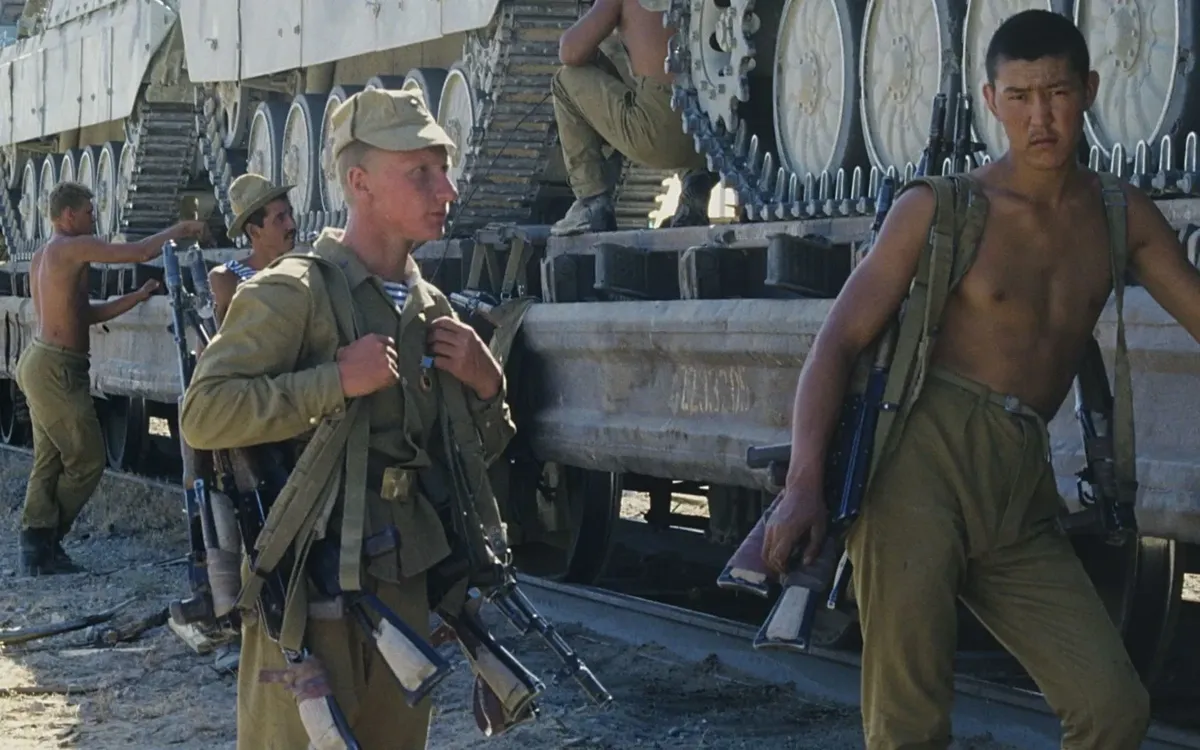
When rumors began to appear at the end of last year that a number of people were busy with a revision of a political assessment of the decision to enter the Soviet troops into Afghanistan, I first did not attach much importance to this. Well, you never know what absurd ideas do not appear in the heads of our not always adequate compatriots. However, soon rumors began to find real outlines: at first, the initiative to revise was supposedly veteran organizations, for example, “Battle Brotherhood”. Then - as usual in a political cuisine - the soil was loosened by notebook participants in television shows. And then the baton was picked up in the State Duma Committee on defense: he decided to submit a draft statement to the lower house of parliament, which emphasizes the historical injustice of conviction in 1989 at the Congress of People's Deputies of the USSR on the introduction of Soviet troops into Afghanistan.
That is, now we are one step from ...
Then I would like to pause. Let's read the lines of the very decree of the Congress of People's Deputies of the USSR of December 24.
Its first paragraph contains the support of the assessment that the Committee of the USSR Armed Forces for international affairs gave a decision to introduce Soviet troops into Afghanistan. The congress considered "that this decision deserves moral and political condemnation."
What specifically condemned the people's deputies, among which, incidentally, there were many veterans and disabled Afghan war? Reading in the Kremlin the verdict of the Committee on International Affairs, its head A. Dzasokhov said, in particular, the following:
“The decision in December 1979, of course, influenced the excessive ideologization of Soviet foreign policy activity, which developed over a number of years under the direct influence of ideological attitudes that then dominated ... with this action we contrasted ourselves with the majority of the world community, the norms of behavior that should be adopted and observed in international communication ... The decision on the introduction of troops was made in violation of the Constitution of the USSR (Regulations of the article 73 paragraph 8) ... The Supreme Soviet of the USSR and its presidium did not consider the question of the commissioning of troops. The decision was made by a narrow circle of persons. ”
Further, A. Dzasokhov lists these persons: Brezhnev, Ustinov, Andropov, Gromyko. And emphasizes:
“Foreign policy should always be under the control of the people. It seems especially important to us, reliable and strict control over the development and decision -making related to the use of the armed forces. ”
And another very important passage from this document - it must be remembered, continuing reading:
“Politically and morally condemning the decision to enter the Soviet troops, the committee considers it necessary to declare that this in no way throws a shadow to soldiers and officers who were heading to Afghanistan. The faithful oath, convinced that they protect the interests of the Motherland and provide friendly assistance to the neighboring people, they only fulfilled their military duty. ”
Let us return to the initiative of a “number of persons” and its support by today's parliamentarians. What do they want to revise? What do they see historical injustice?
And here, I must say right away, we are waiting for completely unusual discoveries. It turns out that the input of the Soviet troops prevented - no less - “the intervention of the Americans to Afghanistan to partially replenish the loss of Iran and its influence in the East” (I quote the document of the “Battle Brotherhood”).
But a long time ago it is known-from declassified archives, memoirs of politicians, generals, scouts, diplomats-that the plans of Washington Afghanistan was in no way.
In general - in any way and nowhere. Well, there were no such plans then - neither the CIA, nor the Pentagon, nor Soros.
Pursuing the modern history of Afghanistan and, in particular, the period preceding the invasion, I raised thousands of pages of different documents - both abroad - held conversations with dozens of seniorly, and nowhere did not discover the “American trace”. And as I wanted - such an intrigue would be! Moreover, the book "Virus" a ". As we fell ill with an invasion of Afghanistan, ”I wrote in collaboration with foreign intelligence colonel, candidate of historical sciences Valery Samunin, who, on the eve of the input of the troops, was an employee of the Kabul residency of the KGB and was well aware of the true intentions of the Yankees. But he could not add anything new to this topic.
In fact, the initiators of the revision repeat that old party-gabish trick, urgently invented forty years ago to explain and justify the Soviet military invasion.
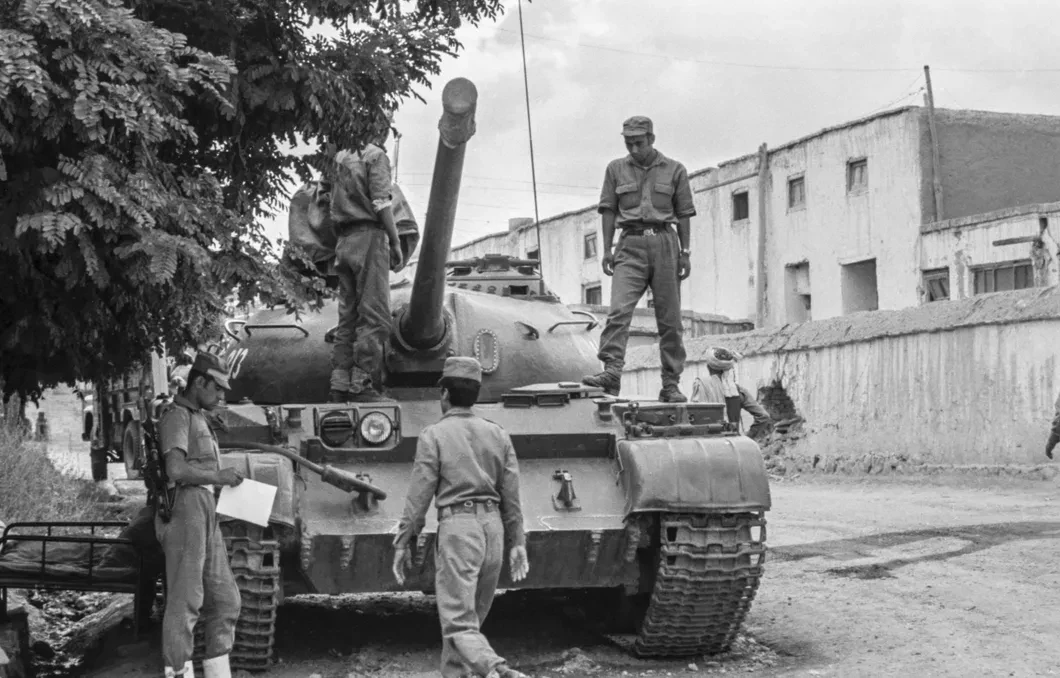
The deputy communist N. Kharitonov, who allegedly, had an alleged applause, read a draft application for a review of the revision: “The decision to enter the troops was made in full accordance with international law,”.
Well, here I don’t even know what to say. So they ask for unprintable expressions. What international law can we talk about if, having appeared in Kabul, troops and special services first physically destroyed the very head of the sovereign state, who so persistently asked him to provide military support.
From the memoirs of the secretary of the Central Committee of the CPSU L. Zamyatin
“The four was created: Brezhnev, Ustinov, Andropov, Gromyko, at the Chernenko secretary. There it was a decision to enter the troops into Afghanistan ... In addition to the protocol, which was written by Chernenko’s hands, nothing ... This is the first time in the history of the Politburo-the decision was not printed on a typewriter, but was written by hand ... Ustinov’s assurances were that it was a temporary entry of troops for a maximum of three to four months, and then we would withdraw them. ”
They gathered cells, the protocol wrote by hand, everything is secret - even from other members of the Politburo, not to mention members of the Supreme Council.
What is international law and generally right, everything was like a conspiracy or an act of political terrorism there.
Finally, in the speeches of the “number of people” another incredible sounded: they say, the world then did not condemn the invasion unanimously, they say, all the fabrications of the pseudo -specialists. Again I want to scatter with my hands: but then what about the boycott of the Moscow Olympiad, the most severe sanctions, acute criticism, which sounded from the lips of the leaders of many communist and fraternal parties. What to do with a vote at the UN General Assembly on January 14, 1980, when 104 countries condemned Moscow and demanded an immediate withdrawal of troops?
Today it is not superfluous to recall some circumstances accompanying the decision on the invasion.
The Afghan leaders, who in 1978 committed a coup in Kabul and brutally dealt with President M. Daud, his family and associates, indeed, repeatedly turned to Moscow to provide them with military assistance. Neither the Taraki nor the amin who replaced him enjoyed the support of the broad masses, they experienced all the increase in pressure from the radical Islamic organizations. A year after the coup (the so -called “April Revolution”), the new Kabul regime turned out to be in hostage by the opposition. And since the summer of 1979, Brezhnev associates began to think about what to be.
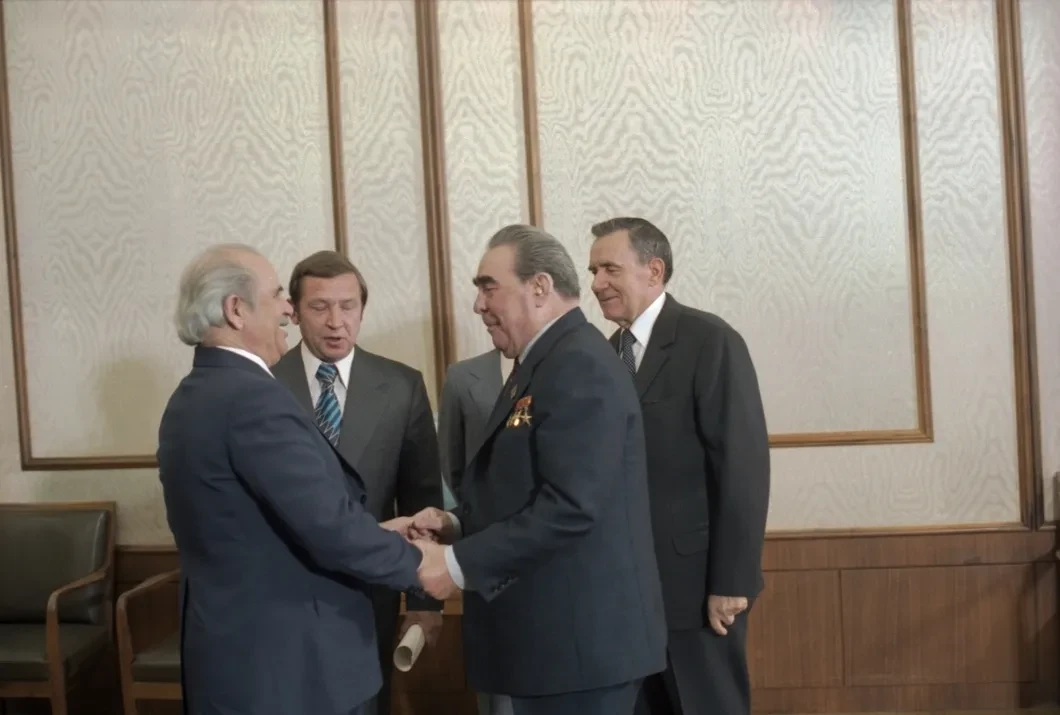
The declassified documents of party and state archives indicate that up to the deep fall of the Kremlin old men, all as one stood to death: Kabul’s support should be provided, but the troops were introduced in any case. However, after the head of Afghanistan, Nur Mohammed Taraki, was killed, and the killer took his place, in the Kremlin and on the old square the mood began to change. Now it is known for certain that three people - but the most powerful - began to push the decision to enter the troops. Defense Minister D. Ustinov, head of the KGB Yu. Andropov, Minister of Foreign Affairs A. Gromyko. The Secretary General by that time was so weak that he would agree with any option. Even with a proposal for the landing of our divisions in the sun. But, of course, at night.
Each of these three had its own grounds for military invasion. Ustinov hoped to train the flabby muscles of his armed forces to the south, quickly defeat the fragmented detachments of the opposition and, after three to four months, return the troops to the barracks. For Andropov, this was a chance to deal with Amin, who was already appointed “CIA agent” in the bowels of his department and tried to liquidate three times, but each time unsuccessfully. Well, Gromyko did not dare to argue with “Dima and Yura”, although deep down, as he later recalled, was against the power option.
Keleino, in a narrow circle, it was these people who discussed how best to “return to the Leninist norms of the party leadership in the NDP.”
Note that it was not about the fight against terrorism, as people like deputy Kharitonov, but of the "Leninist standards of leadership," are now trying to imagine.
But - attention! - Quite unexpectedly, the idea of military intervention was met with bayonets precisely the most senior generals of the Ministry of Defense. Firstly, two representatives of the Moscow Region in Kabul spoke out consistently against this: the chief military adviser Lieutenant General Gorelov and the adviser from Glavpur Lieutenant General Platin. The General of the Army Pavlovsky, directed "beyond the Independent Inspectorate" for the Independent Inspectorate, also returned to Moscow, also spoke out in a categorical form against the introduction of troops. He was well aware that this position would not like the minister, but Pavlovsky was one of those generals who put the truth above career considerations.
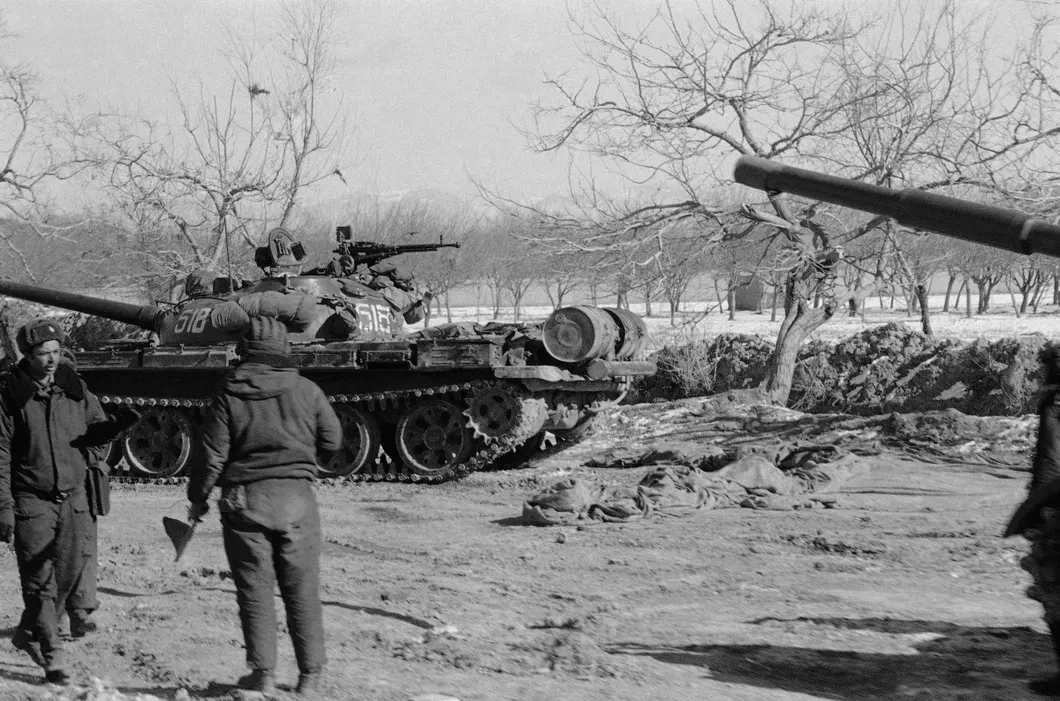
Further - more. The chief of the General Staff was opposed to Marshal Ogarkov, as well as his deputy general of the army Akhromeev and the head of the main operational department, general of the army Varennikov. Against was the foreman Kosygin. In a note sent to the Central Committee, Academician of Primakov expressed his objections. Later in the same note, the reasonable disagreement was expressed by academician O. Bogomolov.
The documents prepared by the authoritative military and academic experts contained a conclusion: the invasion would mean the inevitable escalation of military operations, will lead to the inevitable drawing of our units and units in them, and the West will regard this as an occasion to significantly increase the assistance of the armed opposition. Such a step will become difficult to explain even to our friends from socialist. There will be much more losses than acquisitions.
Alas, by that time the process had already taken up an irreversible character.
Here, it seems to me, it is important to add the following.
Both Ustinov and Andropov were sincerely convinced of the inevitability of the Third World War.
Figuratively speaking, they constantly held their fingers on a nuclear button: not to miss the moment when the Americans hit them. There was no doubt about the fact that they will definitely hit. You can call it paranoia. But this is a fact. As a fact and the fact that they looked at the Russians about the same then from behind the ocean.
Both sides with a painful suspicion, if not more, belonged to each other's military activity, to the slightest change in the geostrategic alignment of forces. This is not to justify the elders, but in the explanation of their motives.
So, let's continue: what do the retired deputies want to revise?
They want to cancel the decision of the meeting, which was, perhaps, the most representative in the history of the USSR and New Russia. Meetings of people delegated by all the republics of the Union. Is Mr. Kharitonov and the faces applauding to this? Can they protest the decision adopted with the active participation of the veterans themselves of that war? The solution is balanced and suffered.
When Boris Gromov, Ruslan Aushev, Sergey Chervonopisky, Marshal Akhromeev, General Varennikov, Academician Primakov and others voted for the resolution of the congress, they probably remembered those fifteen thousand soldiers, officers, generals, and civilian specialists who were flying in Afghanistan. Does Kharitonov remember?
They realized that the criterion of any assessment is the result. And the result of an almost ten-year military presence for Amu-Darya and Punja is known: the Kabul regime could not resist, earlier a well-being has been in a state of chaos, clashes, terror for 40 years.
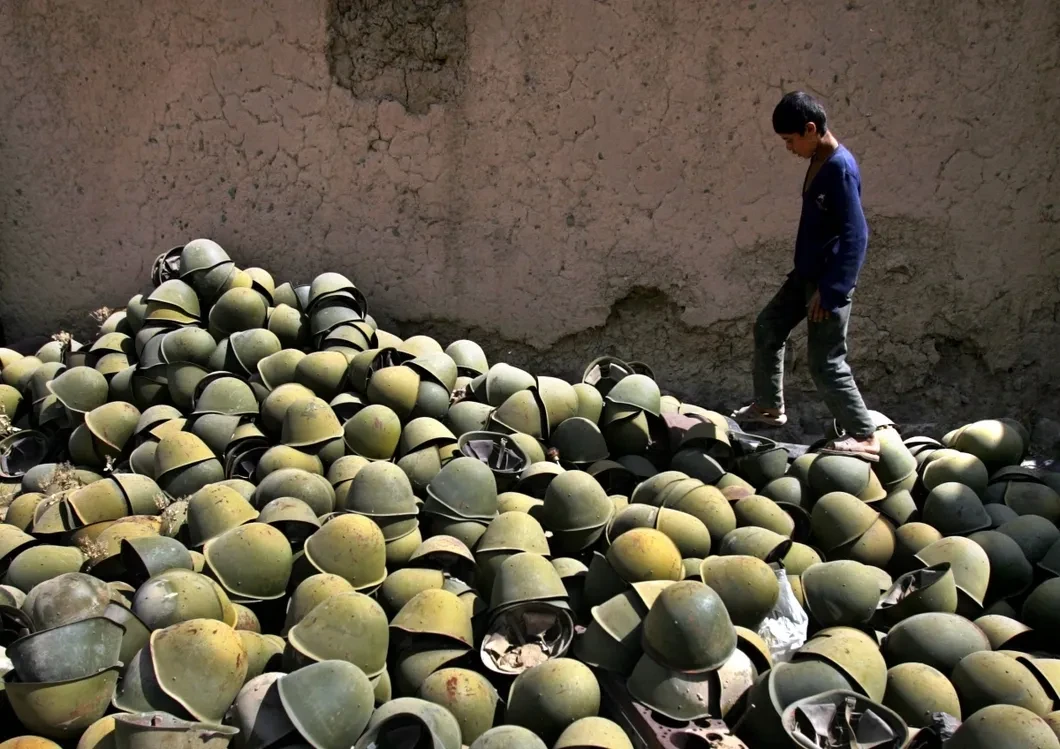
The forecast contained in the analytical notes of 1979 was justified one hundred percent: the presence of foreign troops became a powerful incentive for the growth of the armed opposition, the radicalization of Islamic parties and movements, and the rampant terrorism. Yes, I agree that all those nine years of the 40th army fought with the detachments of radical Islamists. But they - at first they called them dushmans, then the Mujahideen - were part of the Afghan people, and their leaders - today are the elite of Afghan society.
By the way, this is also a question for the initiators of the revision: how do you imagine a relationship with the official Kabul, if they, these relations, are based on the recognition of Moscow in the input of troops in 1979?
The truth is that, killing ten dushmans, the next day the 40th army received a hundred new enemies. The truth is that it was that war that gave rise to such lawmakers as al-Qaeda thugs ( prohibited in the Russian Federation - approx. Ed. ), The irreconcilable fighters of the Taliban ( prohibited in the Russian Federation - approx. Ed ), contributed to the emergence of underground cells of religious fanatics around the world.
General Alexander Lyakhovsky, who for a long time worked as part of the operational group of the General Staff in Kabul and is rightfully considered the most authoritative historian of military operations in the DRA, wrote about those who made a fateful decision: “They put personal ambitions and ideological dogmas. They hoped to win in the conflict, acting on the principle that even history did not judge the winners, not like people. But politicians who guide the sake of their own ambitions to the slaughter of the people are always cursed to them sooner or later. ”
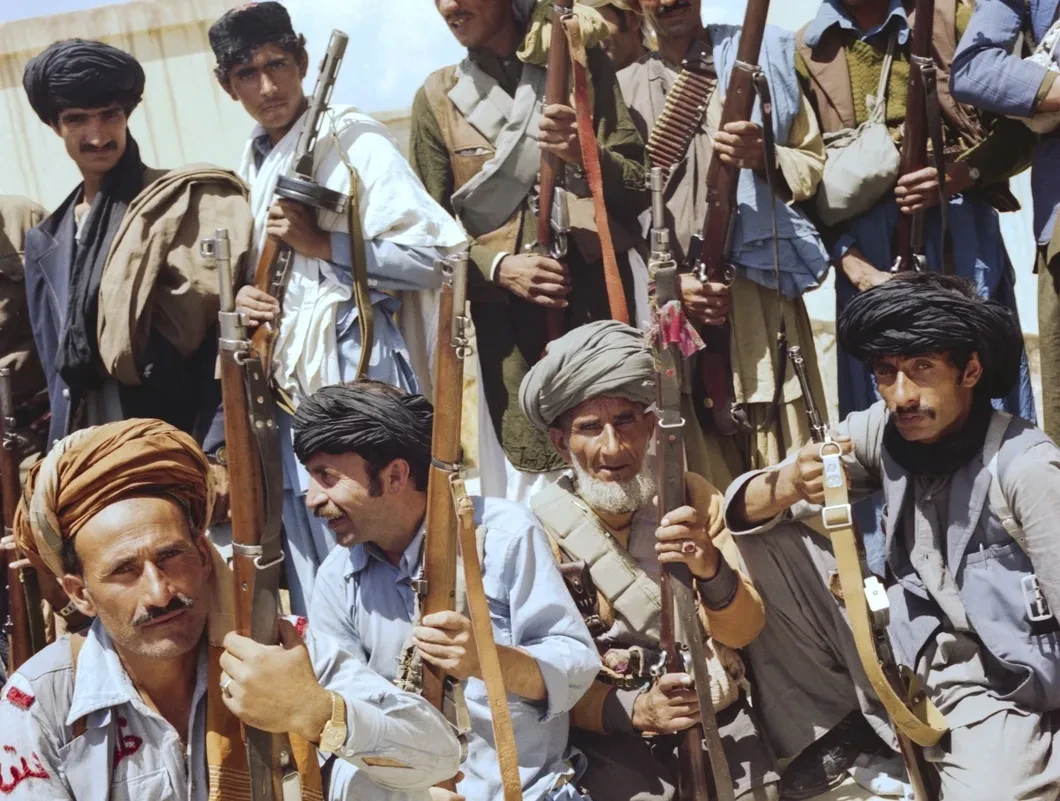
Over the years, more than 600 thousand people passed through Afghanistan. It is necessary to emphasize once again: most of them honestly and steadily fulfilled their military duty there. But after all, another has long known: it was that war that gave us a monstrous surge of drug addiction, illegal weapons trade, its bashfully “hidden” character became the cause of many cracks that destroyed social morality, trust in power and the state.
Military expenses, as well as resources abandoned for the maintenance of a neighboring state, lay on our economy by an excessive burden, aggravated its already crisis position.
When preparing this publication, I turned to one of the functionaries of the “battle fraternity” with the question: how to explain the transformation that occurred in the ideas about the war with the leaders of this public organization? The answer was: "This is necessary for veterans themselves."
But here, the ends meet do not converge. Indeed, it was precisely in the very resolution of the congress that they want to review now, in its final paragraph, that an instruction was given to the Council of Ministers “to develop a state program aimed at resolving issues related to the arrangement of the life and life of military personnel and other persons that were part of the contingent of Soviet troops in Afghanistan, as well as families of the dead soldiers.” It was then that state support of veterans began. And if they, veterans, which is necessary, is not demagogic situation, but real and targeted assistance.
And now I will return to the beginning of my article. Now we are one step from returning to the time when decisions about the start of the war were made by a cellular circle of people. In one step from returning to the "Leninist norms of party leadership." A step away from the recognition of Mazhm - the rule, and paranoia - the usual working condition of politicians.
It is difficult to say that it drives the initiators of the revision. Elementary stupidity? Ignorance? Kholu's desire to guess the signals received “from above” and please the authorities? Don't know. But this is dangerous and offensive to the memory of the dead bustle. Incompatible with the status of a democratic state in the 21st century.
Vladimir Snegirev - especially for "New"
About the author
Vladimir Snegirev is a journalist, historian. From 1981 to 1992 he represented the newspaper Komsomolskaya Pravda, Pravda, Trud in Afghanistan. Candidate of Historical Sciences. The author of a number of books dedicated to the Soviet military presence in the d. Member of the Coordinating Council of the Committee on Affairs of Internationalists from the date of its founding (1990). For his work in the war, as well as for the search and liberation of our prisoners of war, he was awarded the orders of the Red Star and Friendship.