
Translated material
Two states
In Russia, the law of conservation of thought crime is open and is valid
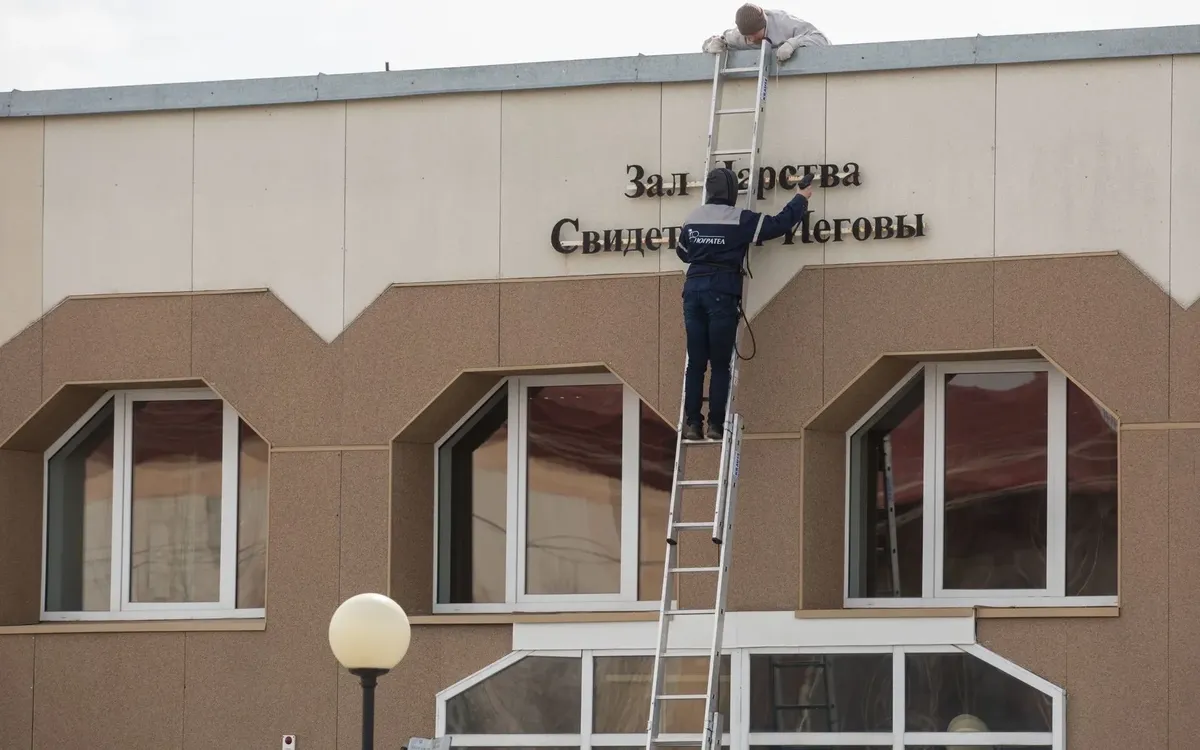
Colonel Kvachkov is freed from the colony in connection with the partial decriminalization of the 282 articles of the Criminal Code. At the same time, Dennis Kristensen, a citizen of Dennis, was sentenced to 6 years in prison for participating in Russia prohibited in Russia “Jehovah's Witnesses”-and on the same 282th. The paradox is obvious, some people are not punished for words, others are punished. Which of these two decisions is state policy? And is there a power in Russia that coordinates all this?
Lawyer Pavel Chikov reports that now the Agora human rights organization is conducting 55 cases in which citizens are judged for words on the Internet. 35 of them are excited according to the 282 article of the Criminal Code. 19 such criminal cases have already been terminated due to the lack of corpus delicti - mainly in connection with decriminalization. The rest are waiting for consideration: Agora lawyers filed a petition for the termination of all such processes.

The case of Kvachkov is indicative, the last criminal case of which ended in 2017 by a sentence to deprivation of liberty for 1.5 years for "actions aimed at arousing hatred and enmity." The verdict in the previous criminal case related to the organization of the armed rebellion, the 70-year-old Kvachkov served and now he is released. Recall that the colonel was also accused of organizing an assassination attempt on Anatoly Chubais, but was justified by the jury.
In parallel with acts of this - quite reasonable - humanism, the state judges the activist of Open Russia Anastasia Shevchenko for the very fact of participation in this organization. Suspicions of thought crime committed by Shevchenko turned into a tragedy: a daughter died under the house arrest in a house arrest. The accusations against Shevchenko do not even think to shoot, on the contrary, this is the first thing in Russia specifically for participating in “undesirable organizations”.
And in relation to the journalist “Echo of Moscow - Pskov” Svetlana Prokopyeva just started a case for “justification of terrorism”. In the latter case, instead of decriminalized, the 282nd article used 205.2, which involves an even more stringent punishment, from 5 to 7 years in prison. Kvachkova, by the way, was originally judged for the last time precisely by this composition, but then re-qualified for the milder 282th.
What is the crime of Dennis Kristensen, representing the prohibited “Jehovah's Witnesses”, even the judge who pronounced the verdict will not be able to formulate.
In fact, tens of thousands of people in Russia, who consider themselves to be this religious organization, are simply to blame for the fact that they believe in God incorrectly.
Last year, the authorities somehow could guess that landing by likes was a bad way to strengthen their own power and that it is better to avoid such excesses. The discussion and calls for the abolition of the scandalous and “rubber” of the 282nd article led to the fact that President Putin made amendments on its partial decriminalization. Which immediately did not allow parliamentarians a chance to ignore such an assignment. And under the article, administrative responsibility was introduced in the event of the first offense related to "inciting hatred and enmity."
What immediately makes the situation unattractive for the security forces, according to the 282nd article, it became difficult to report on the work done. People who have already threatened criminal liability are exempted from her. Even Maria Motuznaya from Barnaul ceased to be the “criminal”, the best forces of law enforcement officers were abandoned to clean up the pages of which on VKontakte from Extremist Pictures.
But the security forces do not lose heart and instead of the 282nd they begin to use any other articles of the Criminal Code to suppress the thoughts, from the 148th (insulting the feelings of believers) to 284.1 (activities of unwanted organizations).
It seems that in Russia not one, but two states.
One of them cynically cares about his own future and therefore tries to minimize the risks associated with the dissatisfaction of society and especially young people “landing by likes”. Another state consists of security forces and acts in its own interests. Here, budgets allocated to fight “extremists” are mastered depending on the work done, and the latter is measured by reporting. The security forces learned to lobby bills that allow this to continue this hunt for witches to infinity, even if the president simultaneously makes proposals for softening the law.
How long can this law of preservation of thought crime, open in Russia, without the risks of a serious public explosion?