
Translated material
Understand how hell works
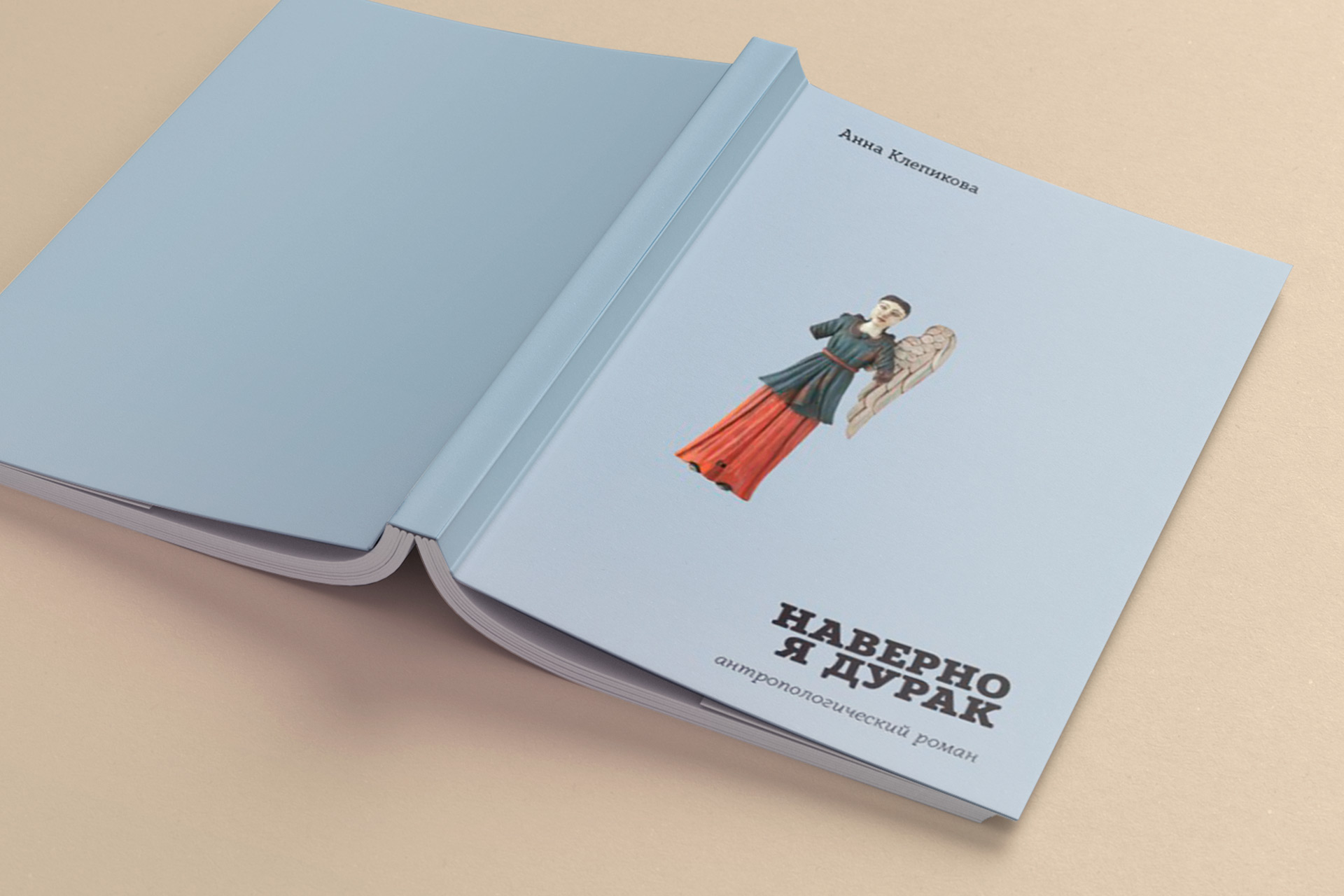
For the reader, this book is a modern extreme experience: it allows the author to survive the convergence to hell and then, through observations and thoughts, this hell is somehow realized and comprehended
In 2009, the student of the European University Anthropologist Anna Klepikova went “in the field” - a volunteer to a boarding school for mentally retarded children to collect material for a future dissertation. In this boarding school, she spent a year, and another year in a neuropsychiatric boarding school for adults. Although its goal was a scientific research, a book that turned out in the end turned out to be much big.
Not a novel
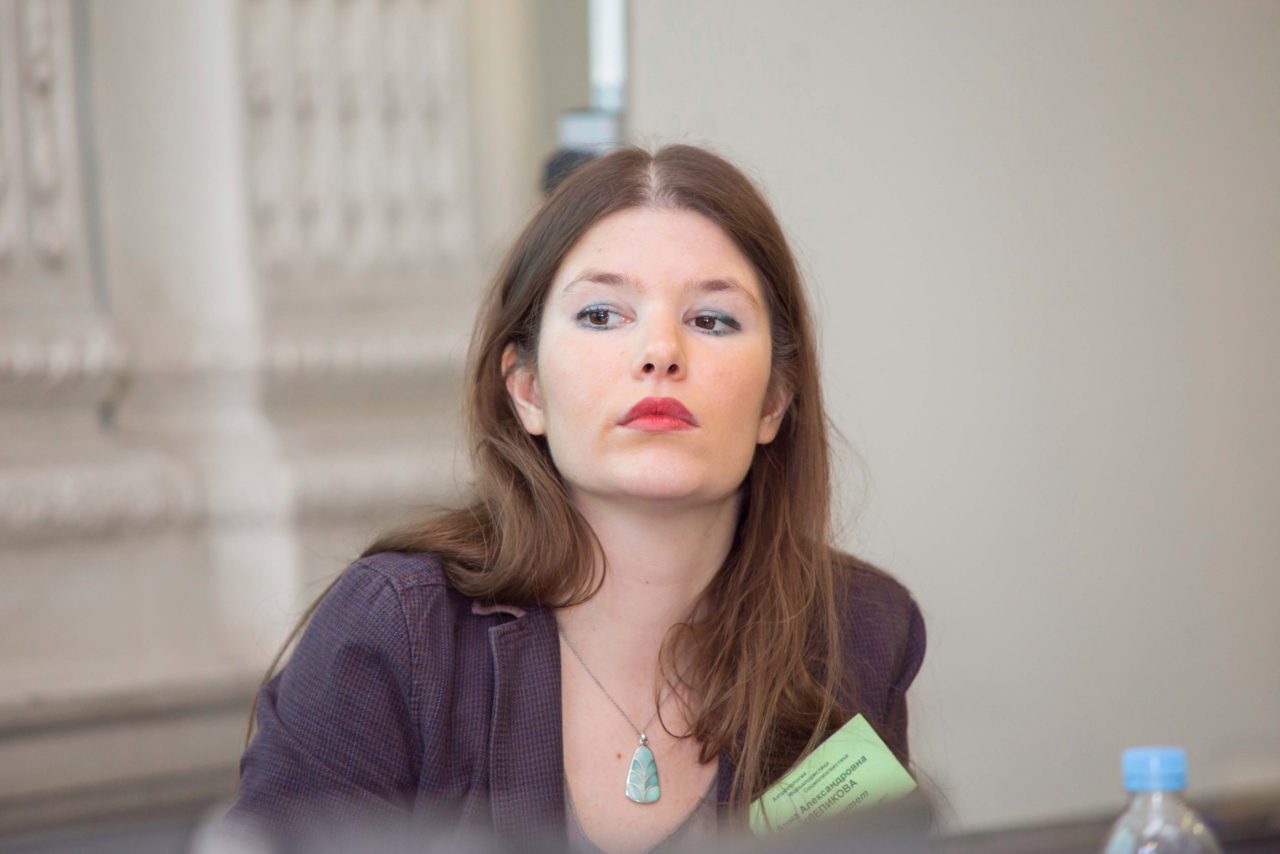 Anna Klepikova photo: Sofya Razumovskaya
The cover indicates the genre - “Anthropological Roman”. The hero of this novel is a man who consciously walks into the world of “another”: Anna Klepikova had not done volunteer programs before, she did not work with mentally retarded children. In this, she is no different from most readers of her book. Books, published by a meager circulation of 800 copies, in the Academic Publishing House of the European University, with a scientific apparatus, outweighing the text, albeit submitted into end footnotes. Books, literally expanding the extreme experience of each reader: it allows the author to survive the convergence to hell, into the world of the unknown, and then, through the almost meditative experience of observations and reflection, this world is somehow realized and comprehended.
Probably, the first reaction of any reader who is poked in the face of a book and they say how necessary and important it is to put an important book in the giving throat and go to re -read his “Jane Air”. And therefore, the book recommender has these words, about the important, to avoid by hook or by crook. We say that the book is exciting - although in fact it is more difficult to read it, but necessary. We promise that she will give the reader some new experience, although he, perhaps, did not order this experience. We promise, finally, that the book will change his life, although at first he may not notice this and it is never clear what to do with this changed life later. In general, the most important books are, as a rule, the most inconvenient: you can’t put them on any regiment, not to attribute to any genre.
The book of Anna Klepikova “Probably I am a fool” is just that - she is a novel, a documentary, and a piercing inconvenient reading, and reading the most detached, unemotional, with a very conscious task - not to manipulate the reader. The latter is all the more important that the Russian reader is always worried that they will begin to manipulate them. A large hysteria, for example, around Anna Starobin, “Look at him” was connected precisely with the author’s message to speak on the topics that concern him emotionally and passionately, because all this happened to her. “I must be a fool” is the exact opposite of this emotionality. This is not the story of Anna Klepikova, it is only an observer here. Her most important effort is to not leave the observer’s position. Oddly enough, it is this emphasized scientificity of the text that turns a field study into a real novel, namely the presence of the author with such a desperate desire to retire from the text and becomes his main plot.
Anna Klepikova’s novel makes such a powerful impression precisely his refusal to impress. It’s as if to even be a novel with your fundamental disagreement: with a drama, with plot lines, with epithets. The author very consciously, very diligently adheres to the position of “I am an observer”, a person devoid of emotions or rather even the right to emotions, merciless primarily to himself: why did I think so? Why did I say that? Why in this situation I find myself on the side of some, not others? If the novel is drama, then it is primarily in this constant effort of awareness. All what he saw, he heard, is fixed by the author, trying to remain impartial even to his own emotions. It is as if there are two Anna Klepikova: Anya-volunteer, who can experience disgust, rage, sympathy, and Anna-research, who will bring this rage and sympathy into the observation diary, will analyze, in the right place will come to Foucault. It is in such an analytical approach that real opportunities for sympathy are revealed.
Not a hero
We read many stories, we meet a whole crowd of heroes, but not a single hero becomes central, not a single point of view will become the main one. Despite the fact that there are several worlds on the territory of the boarding school, reaching hostilities. This is not a world of children-they cannot express themselves, cannot stand up for themselves. Rather, the world of volunteers - spiritual assistants - and personnel, physical assistants. To know what exactly the children themselves need, of course, neither those nor the others can. But everyone is able to act by virtue of their ideas about good. The author has repeatedly says that he felt not quite a real volunteer, because in his actions he looked too much at the staff. And in the end, all their actions receive an excuse, more precisely, rationalized. Yes, the children are tied with tights to the bed, but this is so that they do not beat themselves, they are underway, but this is so that they do not go for themselves, especially since the orphanage has an eternal flaw of diapers. “I was angry almost to tears, watching the orderly puts children's oranges in bags,” the author says, but immediately admits that he understands the need to compensate for a low salary.
It may seem that the author flirts into the Devil’s lawyer, especially since her supervisor Ilya console in the afterword admits that everything that “turned out to be impossible for the reader was removed from the original manuscript, because it made too high the requirements of tolerance.” But almost the main conclusion from the book is the conclusion that there is nothing deader than misunderstanding.
One of the most piercing stories here is about the boy Vita, who was torn in adult stumps, and there, one, in the ward with lying old people, burned out from longing in a few months and died. Another story, already with an almost happy ending, is about the three -year -old Timosha, “mentally preserved”, but a deaf -blind child, whom the staff tries to reassure: he takes away toys, otherwise he does not sleep and does not give others, locks in bed, does not give a pot, does not give food, because Timosha eats too slowly. In a strange way, this picture of a blind child, who feels the air in the hope of finding the one who plays with him, is one of the most memorable in a book, which has a lot of truly terrible. Timosha is “lucky”, he will be transferred to a boarding school for blind men in Sergiev Posad, many heroes of this book will be less lucky.
Not a fool
“I must be a fool” - the book is not just smart, but first of all incredibly sober with its effort to go beyond the limits of understanding, because sometimes, even to understand completely elementary things, you need to get out of the system and look from the side. It seems that the highest point of this self -reflection is a recognition that “if it suddenly happened that I came to the orphanage to work as a nurse, without specifically preparing for this role and knowing anything about people with severe violations, then the sprouts of volunteer ideology would not have stormed in me by themselves.” And this is not just an intelligent reflection of the family "Let's regret everyone, all the poor." This consideration is absolutely rational, like everything else in the book: our worlds, our knowledge does not intersect, and from where they would. There are neither good, nor bad, no good, no evil, no right, nor guilty. There are only many people who are captured by their own ideas. And in this coordinate system it is very important to name the ship: a ship of fools or a special ship. Moreover, the line between normal and abnormal is so thin that it is sometimes almost invisible. The phrase in the title of the novel, “probably I am a fool,” repeat not only volunteers here, borrowing from “over the abyss in rye” (“and my business is to catch the children so that they do not fall into the abyss <... probably I'm a fool”), but, for example, a smart twenty -year -old Zakhar with paralyzed hands, when another time is noticed about a normal boyish life.
However, there is also a happy final in the book of Anna Klepikova. The path of knowledge and acceptance that the author passes can not help but go into his own novel of education, into his own great internal change. There are several such changes here at once: the life of the heroes will change, and most often not for the worse, the system is gradually changing, but the main thing is that the heroine’s personal puzzle will turn out in the end. And if the main tragedy was misunderstanding, then understanding will be the main success. For example, the ability to speak with crying children in a boarding school is not as with objects of education, but as with people. For example, the joy of the communication that happened. For example, those few seconds of meetings with a child, "when we are both completely happy." This effort of understanding here is the result of a huge work. Moreover, it is lucky to the reader who, in order to share this work, is enough to read the book.
volunteers of the book PNI Psychology