
Translated material
"From now on we were called" specialists "
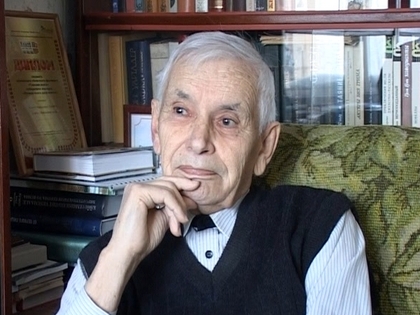
In Tomsk, the writer Vadim Maksheev died, who created the martirologist of the Estonians repressed and exiled to Siberia.
On February 7, at the 93rd year of life in Tomsk, a member of the Russian Writers Union, Honored Worker of Culture of Russia Vadim Maksheev, died. He wrote his main book a quarter of a century ago. The documentary novel "Narymskaya Chronicle", dedicated to the tragedy of special settlers in Siberia, was looking for his publisher for a long time. The meeting with Alexander Solzhenitsyn, which occurred in Tomsk in 1994, helped. Solzhenitsyn read the manuscript and handed it to Ymca-Press. Three years later, the Narym Chronicle was published in Russia. The next ten years, Maksheev worked on the documentary research "Specialists", in which he collected information about almost all special migrants of the Narymsky district in 1920-1950. At the end of the zero, the "specialists" came out a small circulation in the private publishing house of Tomsk.
In 2011, the Government of Estonia awarded Maksheev the Order of the "Cross of the Earth of Mary" - for many years of work on the creation of a martirologist of all Estonia citizens repressed in the Narym and Tomsk districts.
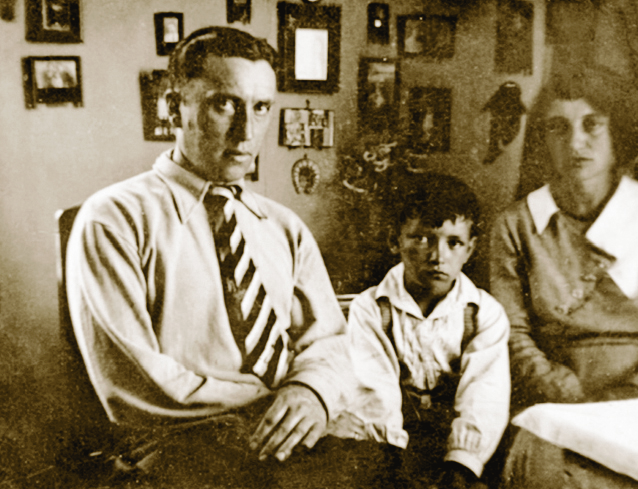
The son of white emigrant Vadim Maksheev grew up in Estonia. Before the start of the Patriotic War, in June 1941, the NKVD bodies cleared the republic from "socially dangerous elements". Maksheev’s father was sent to a camp in the polar Urals, the rest of the family were sent to the Narymsky Territory, to the banks of the taiga River Vasyugan. By 1942, only Vadim remained alive.
He had to spend twenty years in Vasyugan. Fifteen - under the commandant’s office, and five more in the status of an unproparponic collective farmer. A boy from an intelligent family worked as an apprentice at a fish premium, a hammer in a forge and wrote notes for the district newspaper. Journalism has become for him a "step in literature." From notes and essays, stories were gradually born. And then books.
We managed to talk with Vadim Maksheev about his life and books. And this is an interview.
- Vadim Nikolaevich, once I fell into the hands of the reference book of the Union of Writers of the USSR, where it was written that you were born in Leningrad. And no mention of childhood and youth spent abroad. You had to adjust the biography in those days to avoid "unnecessary" questions?
-My parents lived in Estonian, as they said then, the Bourgeois Republic since the beginning of the 1920s. But I was really born in Leningrad. Just because my mother, being pregnant, went there to her parents. In those years, there was still no iron curtain between the USSR and the rest of the world. Russian emigrants who turned out to be outside the country of the Soviets could, if desired, get a visa and visit their homeland. So about Leningrad is a pure truth. Although I don’t remember this at all. A few months after my birth, my mother and I returned to Estonia, to my father.
- And until the forty -first year you have not been to the USSR?
- No, we could not afford foreign trips. The whole family lived on a modest salary of her father. At the beginning of the thirties, he worked as a foreman on the construction of the railway, then there was an economic crisis, construction was stopped, there was a lot of unemployment, but the dad managed to get a worker at the Slanting Plant in the Miner village of Kivili. Many Russian emigrants worked there, who, like the father, served as Wrangel, went through the Galipoli concentration camps, and picked up Europe.
- Your father was an artillery officer?
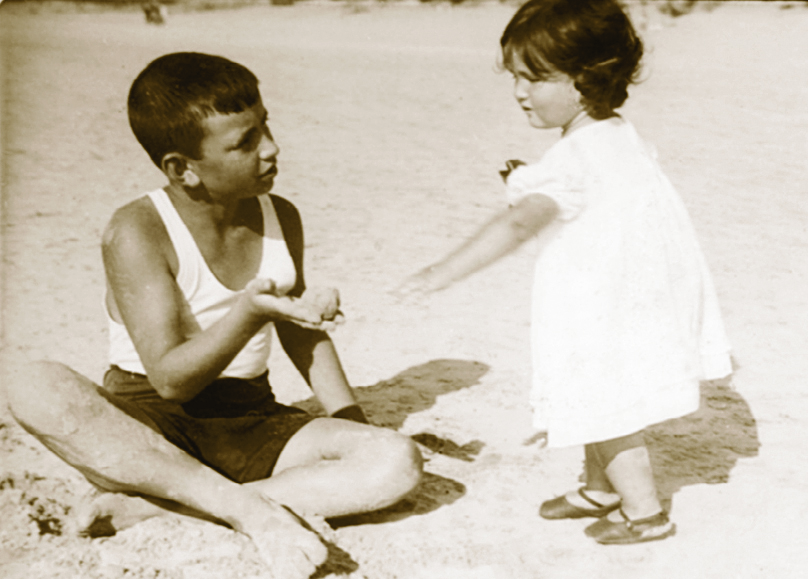
- Yes. The family tradition of the army service is rooted in the 17th century. As stated in the herbnik of the noble clans of the All -Russian Empire, "the names of the Maksheevs many Russian throne served the noble services and were complained to the estates." But after the revolution, only memories remained of previous merits. Father worked a lot to feed us, especially when my younger sister, Svetlana, was born. But for me this time was filled with happiness. The quiet provincial Estonia, the mining village of Kiviili, where there was a people's house with a Russian library. And most importantly, our whole family is together.
- Was the remaining relatives of your mother in the USSR?
- Mom’s parents died before the beginning of a large terror. Her brother was shot in Leningrad in 1937. Beloved brother Vadim. I was named in his honor.
- But in the end, this fate did not pass your family. How has the life of Russian emigrants in Estonia changed with the advent of the Red Army?
- After the signing of the Molotov -Ribbentrop Pact, not emigrants from Russia, but the Germans living in Estonia were the first to feel. In 1939, I studied at the Tartu real school, where my parents sent me literally with the last money. The gymnasium students lived in the German boarding house, which contained an elderly woman, I still remember her surname - von Ramm. I shared a room with a German boy named Haines.
- How did you communicate with each other?
-He did not know Russian, I knew in German two dozen words. Therefore, with Haines and other Germans, including the hostess of the boarding house, I talked in Estonian. I can’t say that we were friends with that boy. But he had a luxurious collection of tin soldiers, consisting of Prussian grenadiers, Napoleonic guards, English Ulan. All figures are painted manually. I then did not dare to dream of such an army. Haines and I sometimes played together. In the fall of thirty -ninth year, an unfamiliar young German with a military bearing appeared in the boarding house. He asked Frau von Ramm to assemble gymnasium students in the lunch hall. After half an hour, my neighbor ran in tears. A man with a military bearing said that the Wehrmacht soldiers “released” Poland and now the ethnic Germans of the Tartu district should go to Poznan, because Soviet troops will soon take Estonia. I described the mood of that fall in my story "And our bitter connection is strong": all the conversations in the boarding house were then about Hitler’s call, and soon the hasty mass departure of the Germans from the Baltic states, similar to the flight, began. The young, who had never seen Germany left, left the old men and old women standing in one foot in the coffin - "Fuhrer calls, the Fuhrer promises, the Fuhrer unites the nation."
The young, who had never seen Germany, left, left the old men and old women standing in one foot in the coffin - "Fuhrer calls, the Fuhrer promises, the Fuhrer unites the nation"
- That is, you learned about the upcoming changes from the German gymnasium student. Why did he cry?
- They were allowed to take only the most necessary things with them. The collection of soldiers was not included in this list.
- A very vivid image of the beginning of the world war - the little German says goodbye to his tin soldiers. And what happened next?
- Soon I left the real school. It became clear to parents that the further study of the Estonian language does not make sense, since the Baltic republics are included in the sphere of interests of the USSR. For some time I lived with my parents and my sister in kiviili, and then I was sent to the Narva gymnasium. There, in Narva, Russian boys ran to meet trains with the Red Army, who went to us across the border.
- Are you talking about this as a joyful experience?
-We experienced some kind of romantic upsurge. Our life in Estonia was not rich in events. Everything is quiet-calm, but at the same time-life, everyday life, poverty. And suddenly a new era began. Her symbols were a sickle and a hammer on the wings of military aircraft flying above us towards Finland, and red stars on the caps of Soviet soldiers. I really wanted to have one. Once my friends and I came to the station where a military echelon from the USSR stood. The doors of the wagons were open. The soldiers smoked on the platform. We decided to approach them and speak. I don’t remember what the conversation was talking about, but in the end I admitted that I dream of wearing a red star. Then one of the soldiers unhooked the star from his cap and gave it to me.
“ And you began to wear it?”
- Yes. But under the lapel of the jacket.
- Why?
- He was afraid that his father would not approve. In the Civil War, he defended Crimea from the Red Army. I did not want to upset him with the view of the Red Star. But he, of course, noticed my acquisition and said: "Do not hide. If you like it, then wear it open."
- So he was not configured anti -Soviet? Didn't be in the White Military Unions?
- No. Absolutely peaceful civilian. All that cared was the well -being of the family and the opportunity to give education to children. He was disturbed by what was happening, but he understood that he could not affect not only the political situation, but even on the "Soviet" mood of his own son. Therefore, he showed wisdom, and we did not have conflicts "for ideological reasons."
“The forty -first is already a terrible war year, but it was one hundred and seventy -two days of peaceful pre -war, outdoor, but not yet scorched by violently cracking fire, not crumpled tanks that were not inscribed in funeral tutters by woeful dates.
A comrade flies away to the distant land,
Native winds after him fly ... -
We sang to the sounds of a piano on the spokes of the school choir.
Once, many years later, I will hear this song on the radio and I can clearly remember the sounds and smells of that spring, the long -leaving faces, I will recall the Narva - my city of Kitezh so much. In 1944, for more than four months, there was a German defense line along Narova - and ruins remained from Narva. Only the Orthodox Council survived near the bombed station and the Ivangorod fortress and the Swedish castle looking at each other over the river over the river. And there was no Svetloyar nearby, who would save a beautiful seven hundred -year -old city from the Great Black. "
From the book of Vadim Maksheev "Specialists"
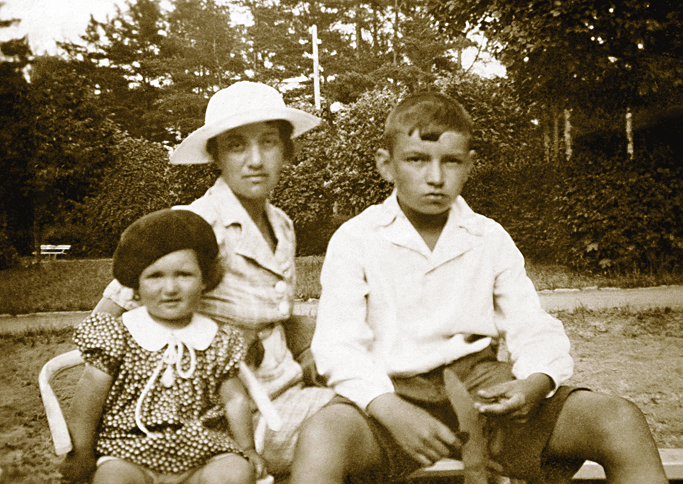
- In the story "and strongly our bitter connection" you write about the folklore image of an equestrian knight, in thought looking at the roadside stone with letters knocked out on it: "You will go to the right - you will stay alive, and your horse will be dead, you will go to the left - the horse will be saved, and you will die, you will go directly - to do it." And you call this image "prophetic for Russian emigrants." Your parents, their friends really felt on the eve of the war in a selection of choice?
- From our village Kivisi only two families left for Poland occupied by the Nazis. The rest remained, including us. My father told my mother: "We, Olya, share our fate with Russia, and our children will live in Russia." In addition, leaving with the Germans meant to change even if a stranger, but a living a country to someone else's country, where no one guarantees either work or a roof over his head. First of all, people think about it, not about high matters. For Russian emigrants, the civil war remained far in the past. It seems that no one really believed that the new authorities could blame this biography page. And at first, with the change of flag over the town hall in 1940, almost nothing has changed for us. We were not touched. Father worked at the factory. I studied at the Narva gymnasium, came to my parents for the weekend, even thought about entering some Leningrad Institute. It seemed quite real, because there was no more border between us and we all seemed to become Soviet citizens. But in the summer of the forty -first it turned out that we were considered a “fifth column”, that the NKVD prepared the deportation of “socially dangerous elements” and their families from the Baltic republics for several months.
- How did this happen?
- It all started, as usual, with a search. In the early morning of June 14, three came-a border guard, some kind of nondescript person in civilian clothes and enkavedeshnik in a forage flattened as a pancake. They with a bang leafed through the dad's books and threw them to the floor. Then we were taken under the convoy and took us to the local cinema, where several hundred people were gathered - Russian families living in the east of Estonia, in Narva and the surrounding places. There, among suitcases and knots, we spent the last day together - mom, dad, I and Svetlanka. At some point, the Encavedeshniki ordered men to build in front of the cinema. Father hugged us all in turn, and put his penknife in my hand. With this knife, I checked a hole in the wooden wall of the commodity car, where women and children were plunged from husbands and fathers. From now on, we were called "specialists", special settlers, we rode far to the east, beyond the Urals, to Siberia. Through a hole in the wall of the car, I watched Russia, it was endless. Then, at some station, the sentry found my sabotage and my father’s knife was taken from me.
From now on, we were called "specialists", special settlers, we rode far to the east, beyond the Urals, to Siberia. Through a hole in the wall of the car, I watched Russia, it was endless
"Dad will carry my sister on the shoulders, we will walk with my mother and we will drive us out - they will still have a lot of work. We will not know that this is the last road we go together, we still believe the Encavedeshnik, who said to the floor, who said that we are only resettled in a remote area. We still believe in us: rare passers -by will look at us: -Frightened, others-woeful; an unfamiliar Estonian will rush to his mother and hug her, the escort will unlock her with a rifle button, and we, in a hurry, will go further to the folk house, which is stunned by the soldiers, where we will, together with the same, are the same as we are waiting for our fate here.
“Take care of mom and sister,” my father will tell me there.
Mom is also next to him, still quiet Svetlana on his knees, but he already understood everything. The low -growing, dense captain, with a tablet hanging on his side, will announce loudly - they will be the first to lead to the railway station men, women and children will go in other wagons. Estonian and Russian surnames will sound in the silence that has come, and men will begin to stand in a line. Clotted dad. He will press his cheek to Svetlana for a long time and give her to his mother. He will kiss her, me ... Mom hastily crossed him. And the three of us will remain. The captain will vomit, and the convoy will lead the men's line to the exit.
“ Lord ... Bread! .. ” Mom will remember. - Take the dad. When they are still fed ...
I will rush after my father to give him half of the loaf, but, pushed by the convoy, he will do not wave his hand. In the doorway, it will turn out - pale, wrapping smiling, looking with his eyes in the crowd of mom and Svetlana, the last time she will look at me ... I will never see him again. Dad, dad ... twice wrote such an expensive word on paper, remembered the farewell paternal gaze, and the heart squeezed inequate pain. What are you? Well, for what? "
From the book of Vadim Maksheev "Specialists"
“I know that your father could not withstand the camp conditions of life.”
- He died in the same autumn in the Stupinsky campuncture of Sevurallag. Half a century later, I managed to get his business in my hands. Then I learned the exact date of death - November 12 - the day when he and his mother got married to Tartu in 1923. But it so happened that, not knowing about the death of my father, I considered him alive for a long time. And I buried my mother and sister with my own hands in the fall of next year. They died of exhaustion on one day, October 17, 1942, in the hospital of the village of New Vasyugan, in the deaf taiga corner of Western Siberia. The specialists received rations, but it was a pure formality - a quarter of bread per day. No one could be saturated with such a ration. Therefore, we exchanged our things for products. The worst of all was "luxury items" - a wedding dress or a gold ring. Locals highly appreciated something more practical-tools, warm clothes. But we ourselves could not do without it. In winter, Vasyugan is crackling frosts, and summer is even worse in its own way because of mosquito clouds. From the habit, this brings to madness - constant hunger, and at the same time mosquitoes seize.
And I buried my mother and sister with my own hands in the fall of next year. They died of exhaustion on one day, October 17, 1942
“The last book that I read at home before we were sent to special settlement to Siberia is“ ninety -third year ”by Hugo. The terrible hungry winter from the forty -first -year -old once, my mother and I returned from the district center - the new Vasyugan - to the village of Volkovo, where we were determined by the place of permanent residence under the supervision of the commandant’s office. The fish and an incomplete bag of potatoes-that was given by a woman in exchange for the mother’s wedding ring, dining rooms and teaspoons-all that we brought with Estonia, my mother exchanged her brooch and our underwear-Mom, mine and Svetlanin. The district center from the house to the house ... We were very tired, and the return journey seemed even more often, we sat down to take a break on the luggage lying on the hoods and again wandered to where the frozen window in an empty hut was waiting for Svetlana-my six-year-old sister, a thin, submissive girl with large sad eyes.
I don’t remember why I undertook to retell to my mother "ninety -third year." Maybe to pass the path, or maybe-my mother asked me to remember something from what she read. Simur-Cen and Gooven, Marquis de Lantenak, who saved children in the burning castle at the cost of his life ... Vandeus with her struggle and passions, cruelty and nobility ... How incomprehensibly far it was from us! I don’t know if my mother delved into what I said, but I remember how she affectionately said that I have a good memory. На маме была папина зимняя финская шапка и старое коричневое пальто, которое после маминой смерти четыре года будет укрывать и согревать меня...
За первый год ссылки в Волкове умерло одиннадцать женщин и детей из т. н. нового контингента спецпоселенцев (первыми обживать чащобные берега нарымских рек завезли в начале тридцатых годов семьи раскулаченных крестьян). Новым подневольным поселенцам хлеб поначалу продавали в сельпо (взрослым – пятьсот граммов, детям – триста), но вскоре продажу прекратили, начальство объявило, что хлеб ссыльным следует получать там, где они должны работать и зарабатывать трудодни. Но в колхозах хлеба не было – предыдущий год был неурожайным, а зерно нового урожая практически все, за исключением семенного, надлежало сдавать в госпоставку. У местных жителей имелись хоть какие-то припасы – вновь прибывшие ссыльные, обменяв на продукты немногое, что смогли с собой привезти, стали опухать от голода и умирать. В первую очередь погибали дети, следом за ними – их матери...
Мама и Светлана скончались в октябре сорок второго, они лежат в одной могиле, и у меня нет сил писать, как все это было..."
Из книги Вадима Макшеева "Спецы"
– Кажется, в таких условиях человеку невозможно выжить. Тем более подростку, который остался совсем один. Как вы справились?
– Пешком я ушел из деревни Волково, к которой мы были "прикреплены", в райцентр, где поступил в восьмой класс местной школы. За эту самоволку я был лишен пайка и месяц спустя с диагнозом "дистрофия" оказался в той самой больнице, где незадолго до этого умерли сестренка и мама. Я бы не выжил, если бы не поддержка добрых людей. Школьная уборщица пустила меня в свою избу, когда мне было негде жить. Ссыльная учительница из Ленинграда ходатайствовала, чтобы меня взяли учеником счетовода в колхозную контору. Полвека я жил с чувством долга перед этими людьми.
– А сейчас вы чувствуете, что выплатили этот долг своими книгами?
– По крайней мере я сделал все, что мог.
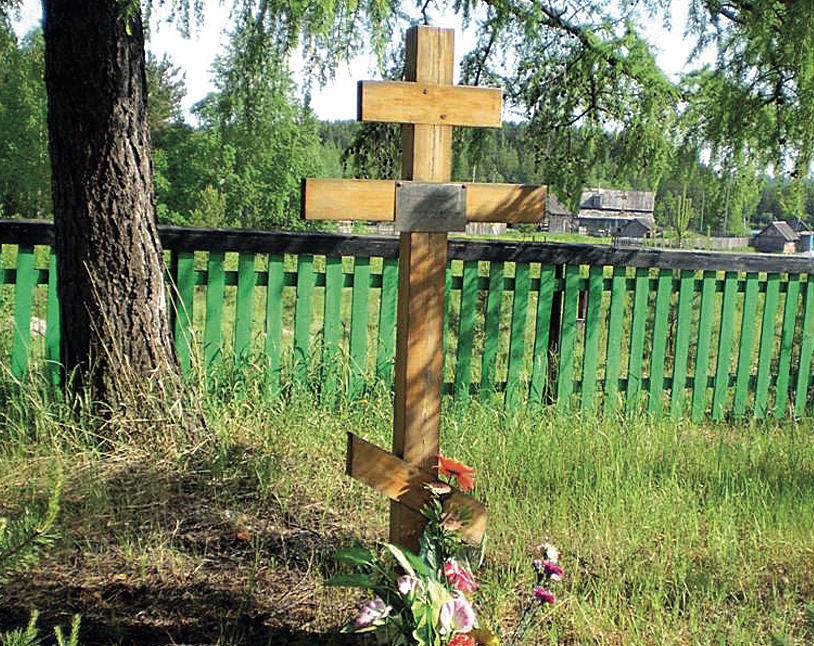
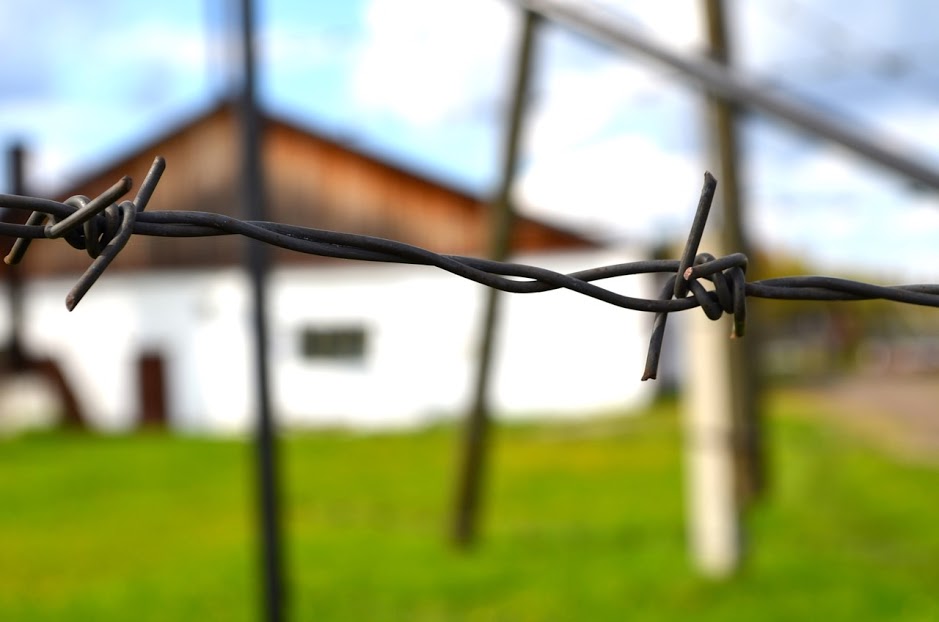
"Боже мой! Если б могли встать из-под земли все безвинные, сгинувшие за колючей проволокой сталинских концлагерей, умершие в спецпоселках от голода в роковых сороковых, – все-все – мужчины, женщины, дети... Если бы все они, превращенные в лагерную пыль, истлевшие в рвах и братских могилах на Соловках, в Мордовии и в Караганде, пo берегам сибирских, архангельских и уральских рек, стали сейчас плечом к плечу – какая бы необозримая шеренга протянулась! От стона их содрогнулась бы земля. Но голоса их давно смолкли, и рты их забиты могильной глиной... Пройдет еще лет десять, и не останется никого, кто был свидетелем того прошлого, о котором я стремился успеть написать это исследование. Пусть и оно тоже будет метой по дороге к храму Памяти всех тех загубленных и убиенных. Лишь Господу Богу известны имена всех их, только Он знает, сколько было их, только Ему ведомо, как каждый из них страдал, как каждый из них умер".
Из книги Вадима Макшеева "Спецы"