
Translated material
What is the "northern stream - 2"? Why do so many countries opposed him? If you build it, will you not need gas transit through Ukraine?
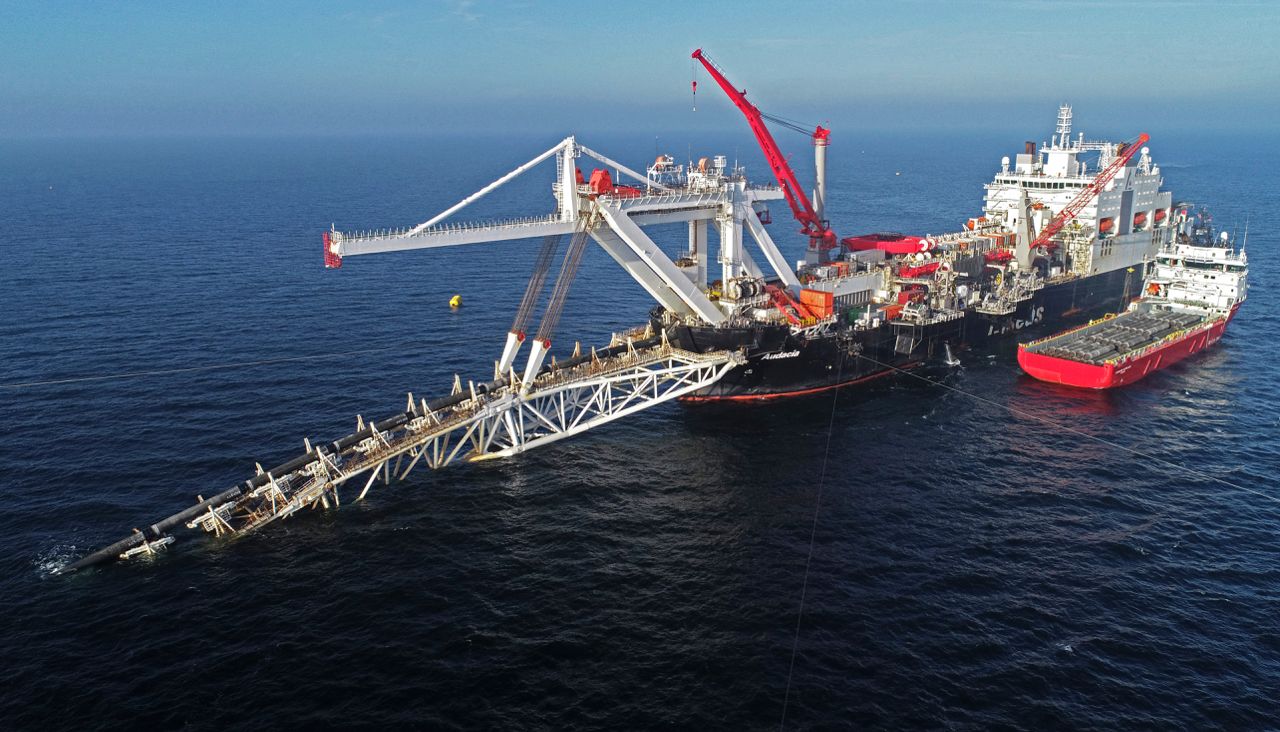
On February 12, the European Union officials will discuss the status of the North Stream-2 gas pipeline, which is now being built along the bottom of the Baltic Sea from the Russian Ust-Luga to the German Gracevald. The United States and many European countries are opposed to the project, but it seems that Russia and its main supporter on the construction of the gas pipeline - Germany - are close to victory: at the end of last week, the German authorities managed to agree on a compromise with doubt, in particular, with France. "Medusa" tells what Nord Stream-2 is and why it causes such disputes.
What is this gas pipeline? And why is there such a struggle for him?
“North Stream-2”-“Twin” already operating since 2012 of the North Stream-1 gas pipeline. Both pipes are designed to supply 55 billion cubic meters of gas from the Leningrad region to Germany along the bottom of the Baltic Sea. 55 billion cubic meters are more than a quarter of the total exports of Russian gas to Europe. The control package of shares of the project belongs to Gazprom, and European energy companies also participate in it. The project is very beneficial for its participants: it is assumed that it can pay off for nine years (for comparison-the payback period of the Northern Stream-1 is 14 years, because under the condition of the contract, a reduced tariff applies).
But Russia is obviously needed not only by economic benefit. Now Russian gas is entering Europe through the territory of Ukraine, and the North Stream-2 can first completely save Moscow on this dependence.
Now the alignment is this: Russia exported to Europe a little more than 200 billion cubic meters of gas; At the same time, transit through Ukraine in 2018 amounted to 86 billion cubic meters. This, according to US estimates , gives Kiev about two billion dollars or 2% of the country's GDP; Ukraine will lose another 1% due to gas deficiency-since 2014 it does not formally buy gas from Russia, but takes part of the transit to itself in agreement with the EU countries.
While Russia must supply gas through Ukraine, but on December 31 a long -term contract forces it to do this will end; The parties can (but not obliged) agree on a new contract. And it is by this date that Russia plans to complete two pipelines-Nord Stream-2 and Turkish Stream (two threads with a total capacity of more than 30 billion cubic meters); Together they can completely block the entire volume of Ukrainian transit. As a result, already in 2020, Ukraine may fall into the next economic crisis.
The head of the Russian Ministry of Energy, Alexander Novak, has already said that it guarantees gas supply in 2020 even if a new contract with Ukraine is not concluded. The head of Gazprom, Alexei Miller, said that if Russia continues to supply gas through Ukraine, it will reduce transit to 10-15 billion cubic meters.
There are two problems: firstly, no one except Russia itself is interested in Ukraine completely expelled from the gas business. Secondly, Russia in the European gas market (now it exceeds a third of all supplies and continues to grow), the United States claims. Therefore, the North Stream-2 project is subjected to attacks both from the USA and from many European countries.
How did you try to disrupt the construction of the Northern Stream-2?
Ukraine repeatedly asked the EU to block the project; It was supported by numerous experts , politicians of most countries of Eastern Europe, the European Parliament and the USA. The American authorities continue to threaten the project participants with sanctions. All of them call the project political and expresses fears that Europe will be too attached to the supply of gas from Russia, which will receive a lever for "energy blackmail".
Romania, which now presides in the EU, was going to “drown” Nord Stream-2 in bureaucratic procedures; According to the amendments to the EU gas directive proposed by Romania, Gazprom was supposed to lose the right to act as a project operator (it can only be an independent company), as well as reserve 50% of the volume of the “pipe” for other gas suppliers. All this questions the payback and terms of the project.
Until the last, Germany even refused to discuss amendments, but in early February, France unexpectedly performed on the side of Romania, still considered a supporter of the construction of the Northern Stream. On February 8, the parties after the whole night of negotiations managed to reach a compromise; Germany agreed that the amendments can be adopted, but with one condition : make a decision on whether to extend to the gas pipeline all bureaucratic rules or not, there will be the country in which the pipe “emerges” from the sea. In the case of the Nord Stream, this is Germany itself.
At the same time, the German Chancellor Angela Merkel tried to reassure the opponents of the project outside the EU: Ukraine said that Russia should conclude a new long -term transit agreement with it; The Americans promised that Europe would buy more liquefied gas in the United States. This is what Donald Trump wanted from the EU, who promised to provide Europe with gas if it refuses to cooperate with Russia.
Why doesn't the EU want to buy American gas instead of Russian?
American liquefied gas is much more expensive than Russian pipeline; Therefore, the United States is suspected of using the political situation in order to gain economic benefit. The EU admits that it is necessary to purchase liquefied gas because it saves Europe from Russian dependence. But in fact with the United States, only a few countries agreed on large supplies, for example, Poland. The rest of the gas is bought from the United States, individual companies in the open market are bought - when there is not enough Russian. Meanwhile, Europe has been consuming more and more gas since 2015: this is due to the fact that thermal power plants in the EU are massively transferred from other types of gas to gas. The issue of price for the same Germany is more important than politics.
So Gazprom won?
This is not for sure. It is unlikely that now opponents of Northern Stream-2 will be able to block the project, but perhaps the coordination of amendments to the gas directive will be delayed. And if all bureaucratic barriers are not removed until the middle of the year, the terms of the project can be shifted, and then Russia will have to negotiate with Ukraine about the transit without having the main trump card in the hands.
In addition, there is a danger that the United States will nevertheless impose sanctions against project participants. Many of them have already stated that in this case they will leave Northern Stream-2.
Dmitry Kuznets