
Translated material
"Language is the best weapon"
"Cultural opposition" to the Lukashenko regime is preparing to resist the Russian "Annexation"
Against the backdrop of the next economic disagreement between Moscow and Minsk, not only the foreign policy rhetoric of the President of Belarus, but also Lukashenko’s attitude to the opposition, primarily “cultural”, changed. The Belarusian identity is increasingly in fashion. Obviously, her foundation is a language. The special corner of the "New" Ilya Azar went to Minsk and talked about the political and cultural role of the Belarusian language-in Russian.
Artem Shreibman
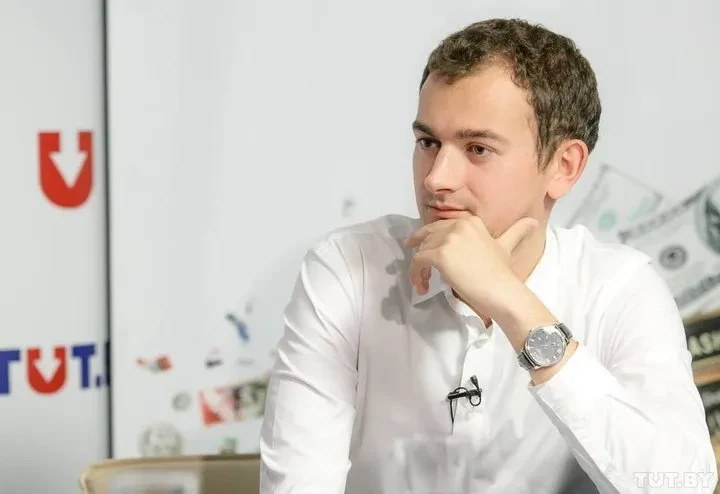
political observer of the largest Belarusian portal TUT.BY;
Nikolai Cherginets
Chairman of the Union of Writers of Belarus, former deputy of the parliament, supporter of Lukashenko;
Victor Prokopenya
owner of VP Capital, initiator of the Decree "On Digital Economics";
Oleg Trusov
Chairman of the Belarusian Language Society, nationalist, co -author of the textbook "History of Russia";
Alexei Dzermant
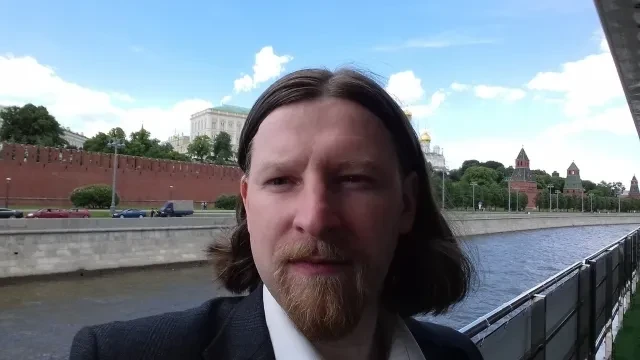
political scientist, supporter of the Union State;
Victor Martinovich
The writer teaches at the Belarusian University in exile in Vilnius;
Belarus is a sovereign (in any case, for now) a country in which Belarusians live, which have their own language - Belarusian. But they do not use it. According to the 2009 census, the Belarusian language called 60% of the country's residents relatives, but only 26% of the population admitted that they were talking at home. And this despite the fact that in Belarus they admit that many, answering questions, have embellished the picture.
In 2017, only 13% of children studied in schools in Belarusian, and this indicator falls. Among students, the picture is generally amazing: 0.1% (approximately 300 people) receive higher education in the language of the titular nation. In Russian in Belarus - all private signs, advertising, most of the media. Belarusian can only be seen on street signs and in the subway. If you go to the central book, then the literature in the Belarusian language takes two small stands there, and the Russian -speaking one - all the remaining place, two floors.
Virtual University
In March 2018, the University of Nila Gilevich was registered in Minsk, training in which will be carried out only in Belarusian (in fact, in English, but its founders must emphasize that not in Russian). His rector Oleg Trusov meets me in the office of his organization "Society of the Belarusian Language".
He sets out the history of the issue for a long time and in detail: the university with the Belarusian language was in Soviet Belarus in the 20s, but by the end of the decade, the case ended with repression and a power translation of higher education into Russian. “The new revival began in perestroika, and back in the 90th year we adopted a law on languages, according to which over 10 years there was a transition to Belarusian all universities. All schools from the first grade quickly became Belarusian -speaking, ”Trusov tells the voice full of nostalgic warmth.
The line under this period in the history of Belarus failed Lukashenko in 1995, organizing a referendum in which the Belarusians chose the Russian second state. Training in the Belarusian was folded in one year, which quickly led to the almost complete disappearance of the Belarusian. Trusov calls the referendum “the victory of external and internal counter -revolutionary forces” and does not recognize its results.
The supporters of the Belarusian -speaking higher educational institution again inspired the supporters of Elena Anisim from the same “Belarusian Language Society” in the Parliament. “The authorities realized that if everyone will speak Russian, then they will take the power and make the Russian province here, because the language and culture make the nation a nation, and when the state loses its language, there will be an effect of Austria, the threat of Anshulus has always been hanging,” Trusov claims.
However, not everything is so rosy. Lukashenko, whom Anisim told about the university back in 2017, promised to think, but did nothing. Then in the "Society of the Belarusian language" they decided to create a private university. He has no licenses, however, he is going to get her Trusov this year. So far, only paid courses for applicants and everyone who want to study in Belarusian physics, mathematics, history, English, Polish and Ukrainian language are operating. The plans for starting to start six departments - IT, germanics, polonics, artistic translations to Belarusian, cultural studies and museumvision. Then it will be necessary to rent a building, get grants, invite teachers from different countries, including from Russia.
Dzerman: I think that they will not be given a license, and I think that this is good, because our state has a monopoly on educational policy. It is balanced in our country - there are elements of national identity, culture and language at BSU. Why create a duplicate structure? Just so that more or less moderate nationalists of panties and Anisim raised someone? From the point of view of the state, this is unacceptable. Everyone who wants, and now they can find the opportunity to study in Belarusian. I am normally belonging to the Belarusian language and speak it perfectly, but I doubt that real students have a request for the Belarusian language.
So far, the point is the matter, Trusov writes textbooks: last year, the “History of Russia” in the Belarusian language was published (another book “The History of Medieval Europe”, which says that Belarusians as a nation appeared 200 years earlier than Russians, was even discussed on Russian television). “This is the Belarusian view of the history of Russia from the early Slavs to the last elections of Putin. The worst thing is that the spirit of imperialism woke up in Russia again, Russia rose from the knees, and its main task is expansion, because any empire cannot live without it, ”Trusov says.
- Russia is a war! Georgia, Ukraine, Syria. The empire lives while fighting. Russia is also the Euro -Asian Empire, and the specifics of the Asian empires in complete indifference to its citizens. This Asian model is very dangerous, so Russia is a danger to the whole of Europe.
“I think the annexation of Belarus has been preparing since the 90s, but Ukraine saved us.”
- ( continues ) Crimea turned out to be a suitcase without a pen, the standard of living of ordinary Russians became worse than ours, the mines are falling at home. There is money for war or on the Crimean bridge, and no for repairs in Khrushchev’s houses.
- You have nothing to fear, it turns out?
- There is, because at the beginning of the 20th century they came up with that Russia needs small victorious wars. Then they attacked Japan, and the result of that war is known, but we are not Japan.
“But the war is unlikely to be, ” I am trying to reckon the future rector.
- Of course, it is unlikely that Russia will begin by entering tanks into Minsk.
“But there is still Stalin's tactics when, at first, military bases are put in the country, then the local fifth column, as in the Crimea and in the Donbass, goes out into the streets, and from these bases green men with machine guns are captured peacefully.”
So far, our country from bases is repulsed, but the leadership of our army is even worse than Ukrainian - they are allowed by general stripes, large salaries, and only young officers can oppose. I do not believe in the loyalty of the generals, because I know many personally.
But Trusov does not doubt ordinary Belarusians, who, in his opinion, will not want to: “Belarusians have never lived so well over the past 200 years, as under Lukashenko: the bulk has the opportunity to travel abroad, can engage in business, we have no stratification of society, as in Russia, and there is no close. When Russia comes, we will live, as in the Smolensk or Bryansk region, but how they live there, our people know. ”
“Well, the main blow is a pension reform. Who wants to go to Russia if the age has been raised there than ours? Neither work will be, nor pensions. ”
He even calls Lukashenko a “fellow traveler”, believing that now his interests and interests of the people coincide.
As if by the way, Trusov tells how, during perestroika, he dealt with the return of the Belarusian USSR of the Smolensk region, went to Moscow, and deputies of the Russian parliament "All as one supported our idea, because it was much better in the BSSR than in the Bryansk region."
- Well, yes, and then the Smolensk region would become Crimea.
- I could become, but I could not become. But if a referendum is now in the Smolensk region, it is not known how it will end.
Trusov says that the Vilnius region in Lithuania, Belostochin in Poland is the Belarusian lands, that in Daugavpils and now Latvians are less than half. He tells how in 1655 Russian troops met in Mogilev under the ringing of bells, and a few years later several thousand people cut out at night, because "they realized what brothers came."
You listen to Trusov and rejoice that the imperial spirit will not wake up in Belarus and it will not fight for these territories.
- The most important thing is to mobilize our country, to explain that there is such a threat, and all that we can contrast is to develop language and culture. This is the best weapon. Our institute is one of the bricks of the preservation of the democratic Belarusian state, because the country's elite should be patriotic and speak at home in their native language, and not on a stranger, ”Trusov argues.
- And what to do with the Russian language?
- We can leave the Russian second state. The Finns left the Swedish, why not? Why not have one or two Russian -speaking universities in our country - there is one in Finland.
- Well, that is, schools in Russian will not be taught? I clarify.
- Why make Lithuania’s mistake, where they replaced Russian English, and the youth now does not know Russian? We believe that it is necessary to conduct training in schools and universities in the native Belarusian, and Russian, like Polish, should be studied as an optional language in every school. Without knowing the Polish and Russian language, you will not know our history, because we have Polish, like Russian, 200 years for 200 years.
“But almost half of the Belarusians call their native language Russian!”
- The Belarusian language must be offered, promoted, but not imposed. When we adopted the Belarusian law in the 90th, then after 4 years 70% of first-graders of the country went to the Belarusian classes, and there were no strikes and protests. If not for interference from the East, we would now have a country where our native language was respected!
Martinovich: The Belarusian language was killed for a very long time, and it is sharply impossible to revive it. In the 94th year, the Soviet conservative project won, because people who headed the national movement in the 90s went too far. They introduced teaching in the Belorussian one at the same day, introduced a document flow in Belarusian, and this scared people. You need to return the tongue smoothly. Enough one generation, if suddenly 30-50% of the broadcast on television, schools and universities will become in Belarusian.
Prokopena : Belarusian language is beautiful, and I believe that it would be good if it were more. But I do not think that if tomorrow everyone says in Belarusian, then everything will become fundamentally better. I do not see the correlation between the presence of my language and some other political and economic things.
“We must know that the Russians are not brothers and not friends to us,” Trusov said in an interview, and I decided to clarify why. It's a shame.
- They came up with that there are three brothers, but then the older brother is Ukrainians, we are a middle brother, and the Russians are a younger brother who, thanks to the circumstances, called himself the eldest. In Ukraine, Russia destroyed its entire doctrine, making millions of Ukrainians their enemies. And what Ukrainians, Russians, the Poles are brothers to us, if we fought so much with them? - Trusov is surprised.
He says that he was from Smolensk, and his ancestors fought with the Russians. “Most of all, the Smolensk people did not like the Russians, because they all the time came from Moscow. My mother’s ancestors stood on the mesh on the mesh and harrowed our territory from the Muscovites. The ancestors understood: “Do not let Moskal into the hut, it’s better to start the devil,” he says.
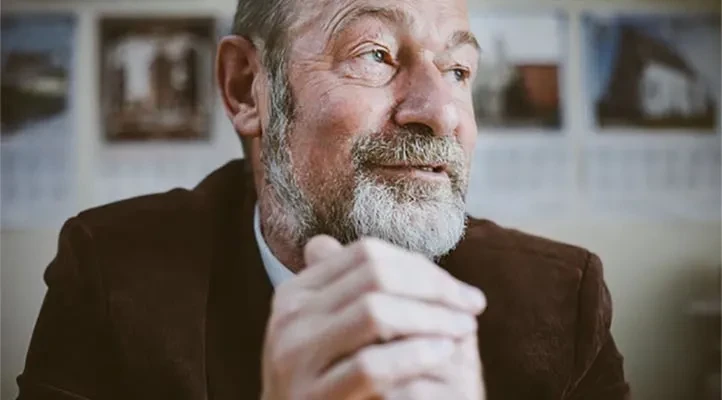
According to Trusov, the mentality has a different mentality for Russians and Belarusians. “The mentality of Russian is the mentality of a nomad, this is a Russian steppe, a Russian field, a wide Russian soul, and we have everything narrow, we have swamps, we are swamp people.
“There is nothing in common. You have few Slavic blood-one third you are Finno-Ugers, one third of the Turks. And we have Baltic and Slavs, that is, we are even other people by blood. ”
“In general, I feel, you don’t like Russia, ” I finish the conversation.
- I treat her like any post -Persian country, as in Germany, France, Britain. I also want to go to the European Union, because our task is to be a buffer. But we do not want to be brothers, we want to be good neighbors.
***
Journalist Artem Schrebman does not consider the Belarusian language a factor in national consolidation. “Much more people speak in Belarusian in villages than in cities, and more people speak Belarusian in the older generation. At the same time, supporters of independence and European choice are more among young people and in cities, ”says Schreibman.
He calls himself a “spaceship”, “pro -Western liberal”, but does not believe that he needs to speak the national language in order to feel even more by Belarusus. “Moreover, Russian -speaking cities are no less support for independence than Belarusian -language villages. The development of Belarusian identity and language is necessary to strengthen the country's independence, and I always speak the most aggressive propaganda of the Belarusian language, but I also understand that one of the parts of Lukashenko’s success in 1994 was a fear of a large part of the population before their familiar Soviet, soft pro -Russian identity, ”says Shraybman.
He compares Belarus in relation to the Russian language, integration with Russia and national identity with the Kharkov region. “This is not the Donbass, which is aggressively tuned to Kyiv, they are loyal to Ukraine, consider it part of it, they love Ukrainian, but they say everyone in Russian,” says the journalist.
According to Chergin, Belarus clearly answered this question about languages at the 1995 referendum. He cites several reasons for the deplorable situation with the Belarusian: “Belarus in the USSR was one of the advanced republics, and the main language was everywhere Russian. After the war, Belarus was completely destroyed by the Germans, and Russian experts went to us first and brought Russian documentation. And the propaganda of the Belarusian language by the Nazis did not work in his favor. "
As the head of the Writers' Union, he claims that the state already supports the Belarusian: “For example, the state pays for the publication of Belarusian books, and at our proposal it was decided to make tablets of streets and road signs in Belorussian. We also made a proposal to make benefits for those who will go to Belarusian courses, for example, per hour earlier to leave work. ” Cherginsky is gracious, but adamant: “At the local level, it is necessary to give more opportunities to speak in Belarusian, but not by a revolutionary way, but with calm work, encouragement-to give more concessions to schools, to make a role model. It is important not to let him die. ”
But, of course, in fact, the Cherginets, like most officials, does not want to develop the Belarusian language - it reminds that the Belarusian is not the UN language, that “when the issue of recruitment in the class arises, even one Belarusian -language is impossible”, that this is the language of the village, not intelligentsia, because it is not without reason that 65% of his members of his union write in Russian.
“It is difficult to instill the Belarusian language also because the opposition does it with a political slogan,” Cherginsky complains.
-I once awarded the youth awards, and among it a 30-year-old unemployed baldbes was clogged. He took the award, but said: "I do not want to shine your hand, because you do not speak in Belorussian." Here you have the propagandist of the Belarusian Mova. It’s simply a fool who does not want to work. ”
Pro -Russian political scientist
In Belarus, a researcher at the Institute of Philosophy of NAS Alexei Dzermante is called a “pro -Russian political scientist”, but Russian sites supporting the concept of the “Russian world” are marked as a “Belarusian nationalist”. The Eurasia Daily website says that in 2002, Dzermant became one of the founders of the Gega Rukh organization, which “saw one of its predecessors of the Belarusian National Socialist Party,” but he himself claimed that “Belarusians are not even glorified Baltic, but the Third Baltic people”.
The argument is fresher: the three convicted “supporters of the Russian world” from REGNUM Dzerman condemned: “The punishment for them is too harsh, but in their work there is a clear manipulation of facts, distorting and attempts to push the foreheads of Russians and Belarusians.”
Однако сейчас политолог является постоянным автором белорусского «Спутника» и пишет в своей программной статье «Союз неразлучный» (иронии в заголовке нет) следующее: «Отказ от Союза станет настоящей катастрофой для Минска… Союз с Россией дает белорусам если не все, то очень многое, самое главное. Именно ему мы обязаны спокойствием и уютом». Именно у Дзерманта канал НТВ берет комментарий для сюжета о росте национализма в Беларуси.
—Вы себя сами называете пророссийским политологом? I clarify.
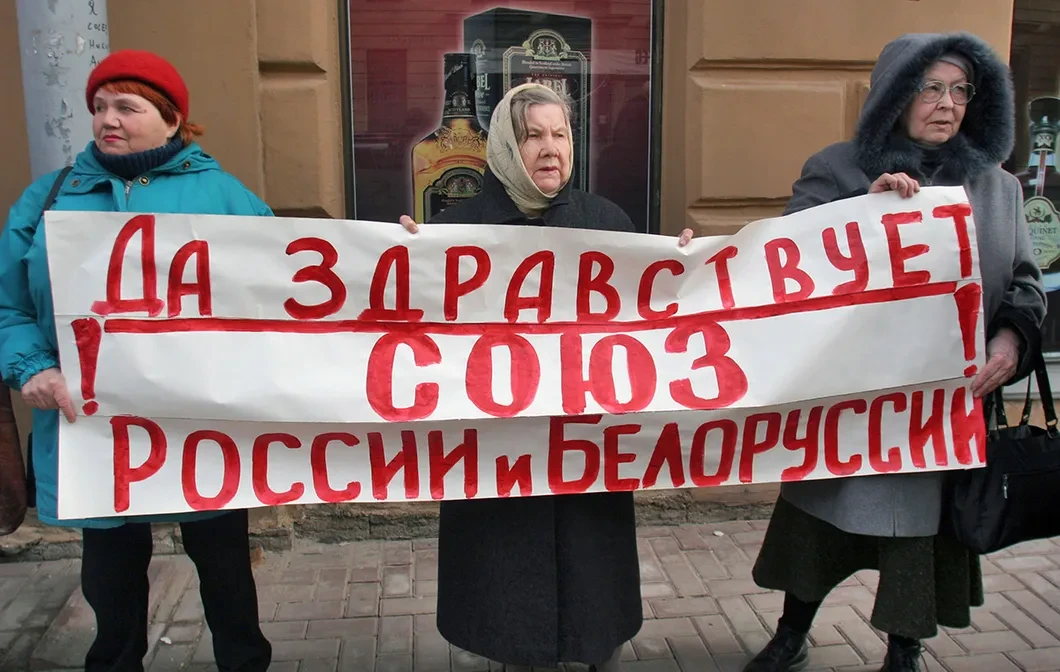
— Я называю себя пробелорусским, но оппонентам выгодно поставить ярлык. Но да, я за союз с Россией, за интеграцию с ней и за пророссийскую геополитическую ориентацию.
Дзермант не отрицает, что был сторонником западного пути для Беларуси, но понял, что заблуждался. «Для многих молодых людей, которые интересуются интеллектуальными вещами, альтернативы нет. Если интересуешься историей и философией, то в Польше или Прибалтике можно получить образование, поэтому я довольно рано попал в пул политологов, которые продвигают идею, что нам надо быть с Литвой и Польшей, что мы отдельная [от России] цивилизация», — рассказывает Дзермант.
Но еще до майдана западник прозрел: «Во время попытки переворота в Минске в 2010 году я увидел, как прозападных политиков использовали в грязных целях, и мне стало понятно, что это не лучший путь для Беларуси, что у нас будет гражданский конфликт с последующей войной. К 2014 году я более-менее представлял, что такое украинский национализм и его младший белорусский братик, поэтому я логично пришел к мысли, что я не могу основывать свою идентичность и мнения на этих деструктивных идеях».
Редко встретишь такой кардинальный поворот в идеологии у публичного человека. Зато теперь именно Дзерманта белорусские журналисты советуют как едва ли не единственного публичного человека в Минске с пророссийскими взглядами. Конечно, он выступает за суверенитет Беларуси, да и не считает Россию угрозой для него. «Я рассматриваю Союзное государство как возможность для Беларуси очень серьезного экономического роста. Российский рынок важен для Беларуси, а она может предоставлять гарантии безопасности для России, в военных вопросах противоречий я не вижу. Но надо строить союз, исходя из факта, что Минск от суверенитета не откажется. Спор идет экономический за достаточно большие деньги, он усиливает позиции прозападных политиков и националистов, то есть вредит имиджу союза и реальному налаживанию отношений», — переживает политолог.
— А союзный договор разве реально исполнить?
— Нет, невозможно создать политическую надстройку, да и вопрос с единой валютой нерешаем, но таможенная и акцизная политика может быть решена даже в рамках этого договора, поэтому реалистично ожидать приведение союзного договора к современным реалиям. Россия говорит о выполнении условий 1999 года, но думаю, что это скорее аргумент в споре, чем реальное требование, говорит Дзермант.
In his opinion,
Лукашенко вообще мог бы объявить референдум о едином государстве с условием доступа на выборы: «Я не уверен, что он проиграет, и не факт, что российская элита к этому готова».
«Западный путь, повторюсь, для Беларуси губителен, невозможен без уничтожения наших ценностей и социума», — писал Дзермант в статье про необходимость Союзного государства.
— А вы почему против западного пути? Гейропа и вот это все?
- No. Все страны, которые выбрали западный путь, — Прибалтика, Украина, Молдавия, Грузия, — столкнулись с разрушением промышленности и превращением страны в аграрно-туристический придаток. В Беларуси промышленность, оставшаяся от Советского Союза, была модернизирована и приносит реальный доход и валюту. Уничтожение серьезного экономического базиса приведет к социальному взрыву, нищете населения, росту криминала и демографической катастрофе, когда люди поедут на Запад. Получится типичная восточноевропейская периферия ЕС — как Румыния, Болгария и та же Прибалтика. Для нас этот путь губителен.
— Но есть мнение, что Беларусь — это исторически часть Европы , — спрашиваю я, а Дзермант вздыхает.
— В рамках европоцентричной мифологии все логично, есть символ веры, что Беларусь была частью западной цивилизации, но в эпоху Древней Руси мы были в рамках одной цивилизации, и по историческим, культурным и ментальным ценностным признакам я вижу, что Беларусь — часть российской сферы.
— Думаете, менталитет белорусов схож с русским?
— Он более спокойный и терпимый, есть влияние католичества, но в целом в плане социального самоощущения белорусов мы не западноевропейские люди, мы ближе к россиянам. Мне кажется, это очевидно.
Дзермант признает, что в истории Беларуси были периоды сильного польского влияния, но оценивает их критически. «Господство польских элит я рассматриваю как колониальный период, для большинства населения Беларуси это был период эксплуатации, и ни о каком национальном развитии речи не было», — говорит политолог. Выбор западного пути приведет, по мнению Дзерманта, к потере самостоятельности и влиянию Польши.
Зато советский период он считает периодом эмансипации белорусов, освобождения крестьянской массы. «Советский проект был освободительным для белорусов западной части страны, он вывел нас из польского государства, где нас ждала только ассимиляция, полный перевод на польский и привитость польского самосознания. Да, были репрессии, но для белорусов это был период роста и становления как нации, образование, наука, социальные лифты. Белорусы стали руководителями сами себе, поэтому назвать это периодом оккупации никак нельзя». Выбор западного пути приведет, по мнению Дзерманта, к потере самостоятельности и влиянию Польши.
Политолог иронизирует, что «у молодежи в Минске есть мода на язык, на вышиванки, и это даже подхватило государство, но это не признаки самостоятельности». «Самостоятельность — это когда есть более-менее работающая экономика, когда в социальной сфере ваш социальный контракт выгоднее, чем в России. Тогда вы имеете аргументы. Не рюшечки эти, а то, что наша экономика может выжить без России, а наша медицина лучше, ведь в России она уже вся страховая».
Read more
«Национальная идея? Стать белорусами!» Лукашенко заговорил, что наши народы больше не братские. Что думают об этом его сторонники и противники?«Интересы Лукашенко совпали с национальными». Белорусская оппозиция о том, что для нее хуже — «свой сукин сын» или «большой брат»