
Translated material
How to work in the office of Facebook, Google and WeWork, where is there everything for life?

Study
Exploring the modern transformation of the concept of “house” together with the peak, we could not bypass the offices of large technological companies and startups from Silicon Valley. What is it - to work in a company where at work there is everything that can come in handy in life: free food and kitchens around the world, upholstered furniture and the opportunity to sleep, hammocks, dry cleaning, payment for training, purchase of any necessary equipment. Some employees of IT companies completely refuse to spend money and do not even rent housing. Employees of Facebook, Wework and Google tell.
When the 23-year-old Brandon Oxidine moved from Massachusetts to the Silicon Valley at the invitation of Google, instead of calling for two thousand dollars, he settled in a truck. In the thread on Quraa, several former googlers shared their memories of how they lived in parked cars on a campus to save on housing. Large corporations have long turned into entire cities that provide employees with not only free food and desktop, but also shower, round -the -clock coffee houses, game consoles, massage, walking park and many other bonuses. On a campus, you can spend all day, come home to spend the night, and with rental prices in California, staff with the most expensive rental rental in the United States, give a few thousand dollars a month for this and is completely disappointing.
Office spaces turn into separate countries with their culture, rules and conditions. We asked several employees of technological companies about how their lifestyle and attitude to the house have changed in connection with their work.
Kira Sergacheva, Wework

Thanks to the development of coworking and, first of all, Wework (the largest company of office spaces; today it is estimated at more than forty -eight billion dollars) to employees cannot offer faceless offices - it is simply unprofitable. Many needs also go away - for example, our residents no longer need a coffee machine at home, because we offer coffee all day, like different types of beer, so they don’t need to think where to go to the corporate party after work.
WeWORK creates a beautiful and convenient space (the famous Danish architect Biang Ingels works with the company), where people can spend time both during work and outside. In our office, music is constantly playing-one resident once told me that when he wants to enter the working condition of the house, he includes a WeWork radio station and thinks that he is at work.
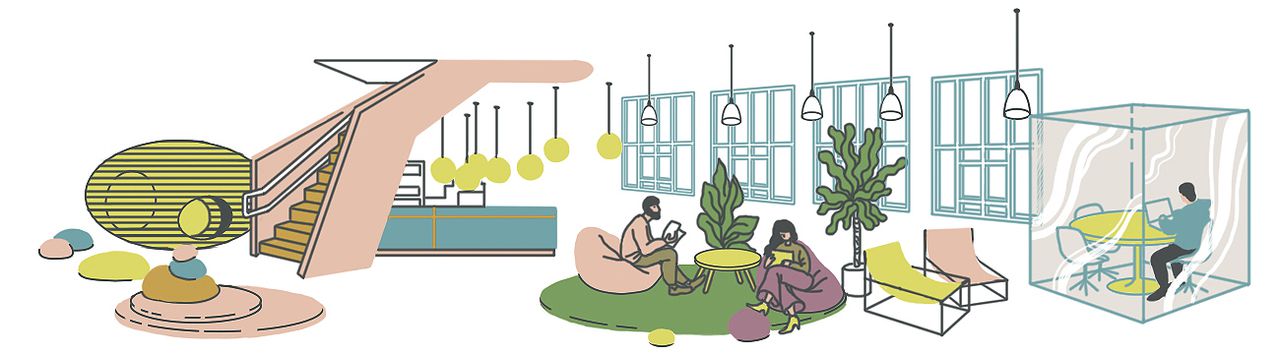
To unite the community, we arrange special Happy Hours, where representatives of different companies come and get acquainted with each other. Some teams celebrate birthdays and holidays here.
Sometimes people spend the night in offices, but this is rather an exception. Since we have many locations, the office is chosen closer to the house. Moreover, usually the one who pays: he makes decisions. One of our companies of twenty people recently moved from a beautiful office with a view of the Hudson River to the building at the central station. We did not understand such a choice, but it turned out that their boss moved to Connecticut - and it became more convenient for him.
The main value of WeWork is not offices, but a community. Therefore, we are overgrown with other projects. Recently, we opened the gym and spa in one of the office buildings. Those who work there sometimes go down to the hall directly at lunch, and then return. Our co-lining (Co-lining-joint housing) Welive changes attitude to the house. WeWork and Welive are in the same building, so many people live and work there. Welive removes all the worries about the house: all the furniture and dishes are already there, as well as the price includes cleaning once a week. On each floor there is a large kitchen, which residents share each other, as well as a gym and a room for watching a movie. A medium is created there in order to make friends. Welive has even a small bar where they arrange their Happy Hours, evenings with paste, yoga and other events.
Julia Nechaeva, Google

Since I got a job in Google, my lifestyle has changed. I'll tell you about my road. I live in San Francisco, I work in Mountain-Vew (Silicon Valley). Every morning I get on the train and go to work. Everyone knows that I have been working since seven in the morning and finish in five days when I leave the train. In the morning I go to the Google coffee shop, in the evening to the gym there. If I lived near the campus, I would have played sports there in the morning.
When you are in Google, there is only a campus around. They told me that Google created his campus by analogy with the university. But even in Berkeley, where I studied, there is an opportunity to go to the city, but here it is not. Although they care very much and create home comfort. In almost every coffee shop I have my cup with the name Julia, so I feel at home in the kitchen.
Google is a whole city. From one part of the campus to the other you can go forty minutes. In fact, everything is there, but you come home, just to communicate with your family. We have about forty cafes and restaurants, only in my complex American, Asian, European and Mexican cuisines. In the afternoon, free food trips of different companies arrive.
I immediately felt that it was a much less money. I go out somewhere in the evening not because I want to eat, but because it is something cool. But I do not want to spend more time at work than necessary. Moreover, the companies themselves are confused on the balance between work and life, so no one motivates you to spend ten hours there. Nobody will answer a call on the weekend. Letters on the weekend also almost do not come.
Some friends from the university live in the same mode as they live: they rent a house for five or six people-and so save. This is quite typical while you have no family. But I do not see some kind of Voricolism here (Workaholics are people who work a lot).
For me, the house is important, my apartment looks so that I am not ashamed to hang it on Pinterest. I do not think that the attitude to the house has changed a lot. Even if you rent housing for several people, it is still your space.
What can you? Everyone can take part in the study and tell their story the search and discovery of the house. Have you been on the road for a long time? Changed two hundred cities? Lost everything and gained again?Write your stories of the samizdat editors - [email protected] - and we will definitely read your story.


Google bonuses equalize everyone. People who put employees on the bus receive the same bonuses as programmers and look absolutely happy.
I relate to this as a data center. They buy part of my brain as a space in a data center, and do not want me to spend it on unnecessary things and routine. They equalize everyone according to the mind: people who fall on Google are already smart. It doesn’t matter how you look, what you do and which race you belong to: if you were hired in Google, then you are smart. For example, if you are sitting at a meeting and saying nothing, loses Google from this, it is believed that you need to give a person more freedom and make him hear him.
Georgy Buranov, Remerge

I live and work in Berlin, the technological companies here have conditions and bonuses are approximately the same. We have corporate dinners, beer, snacks and other food. Every six months we are traveling in Europe. Once a year they pay for a trip to any office (for example, this year I spent a month in New York) and at a conference around the world. We can work from home and take unlimited vacation. I personally spend a lot of time in the office, because it is easier for me to concentrate there. But our CTO, for example, sometimes likes to work at an hour or two nights from home. In this sense, we can say that our office flows into the house, and the house into the office. Maybe this is just a lifestyle of programmers. For example, I also mainly either work or sleep at home.
At the same time, the Germans really value time. In Germany, they are proud that they work little, but efficiently - the country's economy is the strongest in Europe. In contrast to, say, Greece, where a lot work, and the economy is much worse.
In Berlin, everything is pretty close, so you can settle anywhere and work will be in the availability of half an hour drive. When I lived in Moscow and worked in Acronis, many settled next to their office in Otradnoy, from where an hour get to the center.
Due to low prices in Berlin, it is quite easy to accumulate for an apartment. The initial contribution is ten percent, then you can take a mortgage. I put off 1000 euros per month and accumulated in about three years. This is also a profitable investment, because real estate prices in Berlin are growing all the time. Although Germany believes that buying an apartment limits mobility - I read that more than half of the Germans rent housing, and this is the highest percentage in Europe. From what is in the house, the balcony is most important to me. By the way, the balcony is also a feature of Berlin. Unlike Moscow balconies, which are often used to store trash, they like to spend warm evenings here. There is even a popular German film about this - "Summer on the balcony." At work, we also have a huge balcony, where we often communicate with colleagues.
Igor Mahanyok, Facebook

The Facebook office in New York is different from our office in Silicon Valley. Here I have everything at the side: the gym, like several banks, is all in one block. In Menlo-Park, Facebook campus in Silicon Valley, everything is nearby, because there is nothing around.
Before Facebook, I worked at Google, and before that in a small company in Minsk. There, of course, the approach is completely different: even basic things for work such as buying a new monitor had to be knocked out. On Facebook, we can connect to Amazon and buy everything you need for work - everything is automatically paid from the company's account. For Facebook, it is important that it is convenient for a person to work and he did not waste time and thoughts on all kinds of garbage. Therefore, there are restaurants in the office - lunch takes fifteen minutes, during this time you can still talk with colleagues, which is also useful for work. Breakfast at ten in the morning and dinner in the evening have people to come to work earlier and leave later. Although our schedule is free - come when you want.
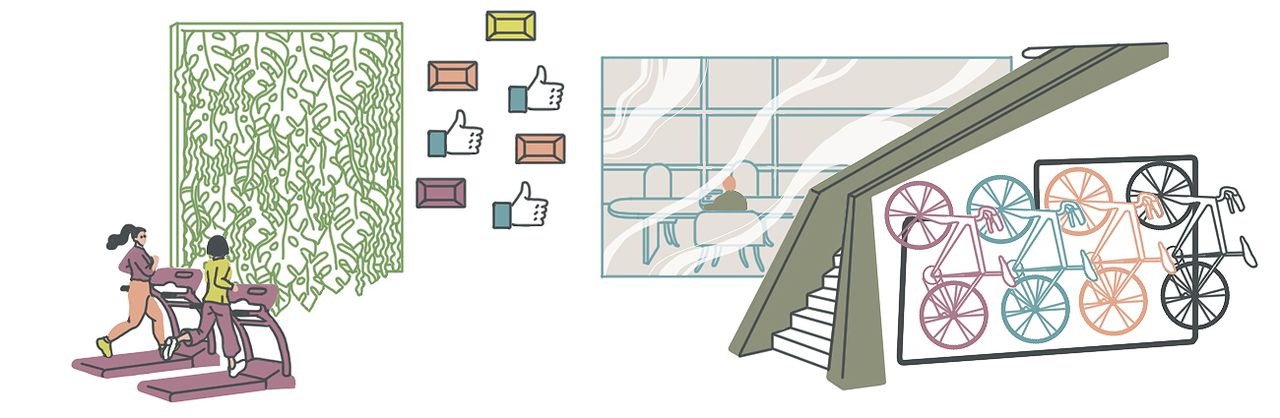
Facebook initiates many opportunities to communicate with colleagues. For example, we have an internal system where we are paid for various hobbies. I am in the club of football lovers; Our team is declared to the corporate league, and in order to enter there, we need a contribution - it pays Facebook.
Guests often come to our office and say: “Oh, you have where to eat, where to sit, it means that you can live here.” I have a feeling of homesickness in the office because it provides comfort, but that is not all. The house is still needed - to feel their space. I heard about people who live in trailers and save on housing, but I could never. Again, everyone has such salaries on Facebook that you can afford housing next to work.
Facebook maintains self -development and pays for what concerns, negotiations, study of English and more. We allocate a budget for the corporate parties of the team per month. They also pay insurance and washing, sometimes travel, invite massage therapists, arrange photoes and other things. It remains to spend money on housing, clothes and travel. Although some of my colleagues practically do not spend - they are accumulating to retire early. They want to earn several million dollars and from thirty -five to forty years to live on interest.