
Translated material
Putin's polar plans. Why "spark" between Norway and Russia
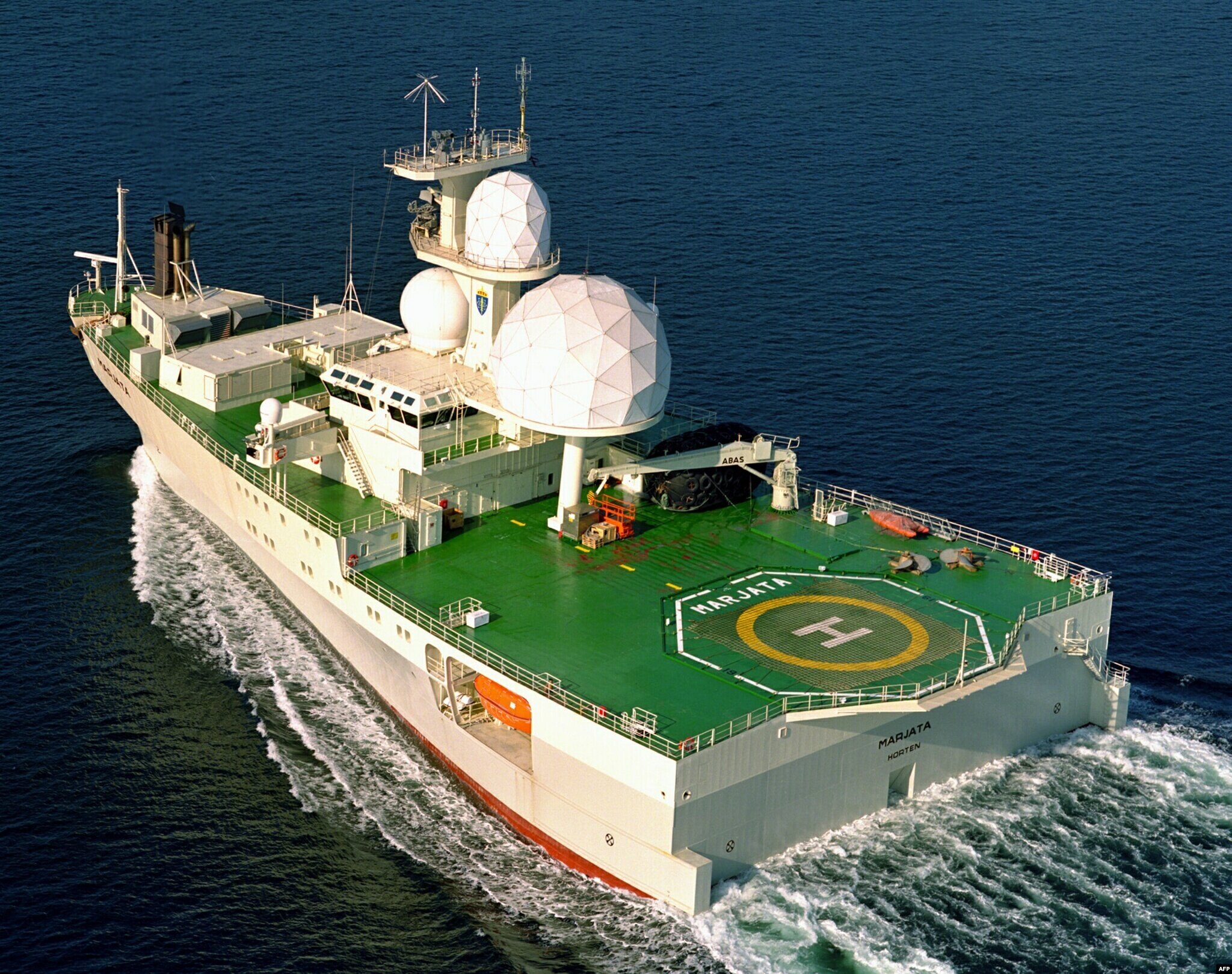
Three to four times a month. With this frequency, according to the Norway Ministry of Defense, submarines of NATO allies, primarily the United States and the UK, enter its ports in the north of the country. In the northern part of the country, such visits in the last two years have become more than three times more than 10 years ago. Recently, the Grotsteund port near the city of Tromso began to be used for these purposes. Moscow really does not like it. The tension in the relations of Russia with its northernmost neighbor is constantly growing.
The official representative of the Ministry of Foreign Affairs of the Russian Federation Maria Zakharova, during the next weekly briefing, scolded Norway : “They drew attention to the publications in the Norwegian media reports on the increase of three times over the past ten years of the NATO atomic submarines in Norwegian waters. Only in 2018 did 27 suckers recorded. In order to substantiate such actions, there are stuffing about the imaginary Russian threat. At the same time Examples of the active participation of Norway itself in the implementation of NATO plans to build up the presence of an alliance in the Arctic region, in 2019, this list will be replenished with a contribution to the creation of infrastructure for servicing submarines in the North Atlantic. ”
The commander of the Russian Northern Fleet Admiral Nikolai Evmenov in the December interview of RIA Novosti drew this picture: “This year for the first time, the US Bartic -Global Hawk Strategic Intelligence Aviation Air Force Strategic Intelligence Air Air Force Strategic Intelligence Air Forces. NATO Juncture-2018 exercises were held in the Arctic-the combat potential of the Norwegian and the United States has agreed to extend the deployment in the Norway of the US Marine Corps, increasing its number from 350 to 700 people at the Norwegian military. Poseidon ".
But the arguments of the other side. Vice Admiral Klave Johnston , commander of the NATO Navy, back in 2016 stated that the North Atlantic Union "sees more activity from Russian submarines in the north than ever since the Cold War." At the end of 2017, the American admiral Andrew Lennon told the Washington Post that Russian submarines, including belonging to the Northern Fleet, showing "activity in the immediate vicinity of the underwater cables, which we hardly once observed." The admiral had in mind transatlantic communication lines connecting Europe and North America: "Russia clearly shows interest in the underwater NATO infrastructure."
Russia clearly shows interest in the underwater infrastructure of NATO
13 new atomic submarines are being built in Severodvinsk, at the beginning of the next decade, the northern Fleet of Russia should be more than 30 Premierces. The publication of Barents Observer published last year an investigation dedicated to the Russian base in a deer lip (Murmansk region), where, according to it, the world's largest fleet of deep -sea vehicles - including the so -called spy subbelines. The Minister of Defense of Norway Frank Bakke-Yensen then said in an interview with Barents Observer: “In recent years, the military potential of Russia has been significantly strengthened, including in neighboring areas. New opportunities have been developing, more training and teachings are being carried out. Nevertheless, the extreme north remains a region characterized by stability and cooperation. The increased military activity means that we must have our allies and our allies. It is more careful to track the actions of Russia and what is happening in the areas neighboring with us. "
The causes of Russian-Norwegian frictions and the possibilities of confrontation and even a military conflict in the Arctic of Radio Radio Radio Talks with an Arctic specialist Professor Pavel Bayev , an employee of the Norwegian Institute for Research of the World (Prio).
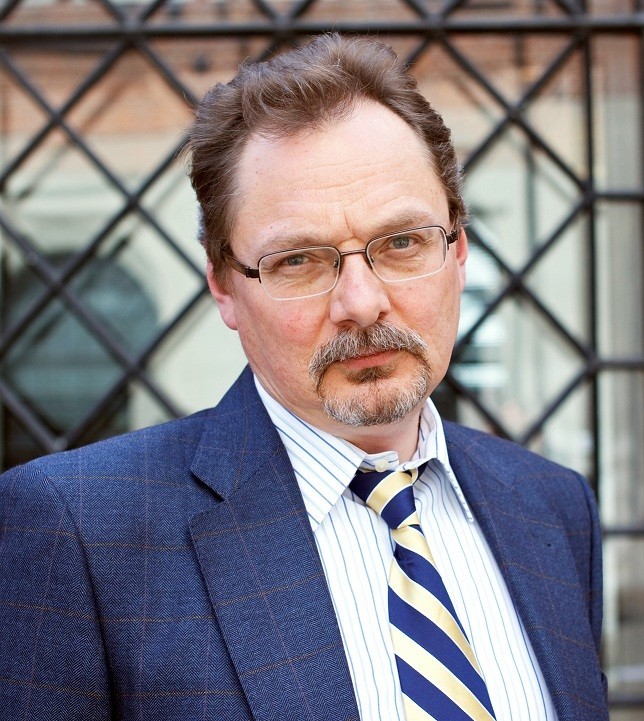
- What is the cause of the nervous reaction of the Russian Foreign Ministry? Norway committed something out of the ordinary, allowing NATO submarines to go to the Grotstound port in the north of the country?
-I do not think that the reaction is nervous, it is rather demonstrative, in a sense, showing, which is generally characteristic of Russian foreign policy. As for what is happening - no, there is nothing extraordinary. But it is clear that NATO continues to consistently conduct a course to increase its military capabilities on the northern flank, which is very vulnerable. Russia, in turn, has increased its capabilities there for a long time and now has a clear military superiority in this area. This bothers Norway and its allies. Because no one can predict how Russia will dispose of this position.
- You said that Russia has serious military superiority. How great is it? As far as I understand, it was not always, it was only in recent years, such an increase in forces in the north has gone in the Putin era.
-I would even say that not from the very beginning of the Putin era, but somewhere since the beginning of this decade. As soon as the famous expedition to the North Pole , which was carried out with the money of the Western sponsors, set the flag there and all this noise arose, it seems that they woke up in the Kremlin, became interested in all this problematic and saw that every step in the north causes a great resonance that this is the area where, having done something small, we can achieve an imbalance of an imbalance. Somewhere since the beginning of this decade, serious consistent efforts have begun to modernize nuclear and ordinary forces, which, to my some surprise, not only continued, but even accelerated after the start of the conflict with Ukraine. Russian military documents once after time said that the main priority is Crimea and Ukraine, the second priority is the Baltic states and the third is the Arctic. Not the Central Asia, not the Far East, where there are a lot of its problems, but the Arctic, where in general, nothing seriously threatened Russian interests.
The main priority is Crimea and Ukraine, the second priority is the Baltic states and the third is the Arctic
The consistent extension of the Russian military potential in this region really reached such a scale that NATO was forced to somehow think through the answers. Although not everyone, of course, in the North Atlantic Union on this subject share this concern: some Italy, Spain or Portugal has other problems, not to mention Turkey. But one way or another, the joint position of NATO was developed, little by little steps are implemented, which, apparently, is very annoying Russia. Although, of course, if you look at all sorts of quantitative relations, it is clear that certain sunset of submarines to this Norwegian port are not compared with the number of combat exits of the Northern Fleet that are made. Now, by the way, despite the time of the year, the North Fleet is again conducting exercises in the Barents Sea.
- What is the logic of Norway and wider - NATO Union? In addition to such, judging by your words, not the most serious things, like traveling to the port of Grotstound, is there any information about some more decisive NATO steps?
-I must say that Norway and its allies behave very carefully and in all their actions avoid any serious exacerbation near the borders with Russia. Norway is not so small, what is happening in the Budyoy or Bergen area is actually very far from Russia. Although even when the frigate this unfortunate Norwegian sank in November last year, the Norwegians were forced to get rid of ammunition on his board, the messages flashed in the Russian media that, they say, explosions and so on are on the borders with Russia. But there, before the borders with Russia, swim and swim.
Helge Ingstad frigate of the Royal Navy NOMS after a collision with the Sola TS tanker. Photo Martin Strande. pic.twitter.com/zrqkuy5b6y
- IVAN O%27Gilvi (@o_gilvi) November 13, 2018
So all new training bases, which are actually very small - 300 American marine infantrymen or 600 on the basis of rotation arrive in Norway for winter exercises - all this is produced very carefully and really not at all on the border with Russia. Border of Kirkenes , as was a small town living mainly due to relations with Russia, remains. There is some small construction in the area in the Budyu area and further south. In general, Norway behaves extremely carefully in this regard, so that Russia in no way irritate the appearance of soldiers on its borders.

-Is it possible to judge any strategic goals of Russia in this region? He, as you said, the third priority. The line is allotted. What is the goal? It is clear that it is hardly possible to supplant Western countries from the Barents Sea and the adjacent region. What is the goal: just play muscles? Or is there any more thoughtful strategy behind this?
- Here, apparently, there are several installations superimposed on each other. One of them is most intelligible and lends itself to logical explanation - of course, the modernization of strategic nuclear forces, the emergence of a new generation of underwater missile carriers of the Borea class . This modernization is going on, perhaps, not as fast as Moscow would like, but nevertheless progresses. Everything is clear with this program, it really needs to replace previous generations of submarines - in order to avoid new accidents , in the end.
Norway behaves extremely carefully so that Russia is in no way annoying
The second installation, which again lends itself to rationalization, is the development of the Northern Sea Route . In order for this path to earn might and main, the efforts are needed primarily not the military, but rather civilians. Nevertheless, the idea that Severpomt needs control and some kind of military cover is visible in the construction of new bases. True, even in Soviet times, the bases were small. The task of covering the Severmorput, which then actually acted, understandable, is intelligible, although it was clear that no one was especially going to attack in any scenarios. This chain of new bases is visible along the Severmorput, which would be more useful and reasonable to develop in a non -universe dimension.
The third task, which is less amenable to rational explanation, can be called an increase in the military group on the Kola Peninsula. It significantly goes beyond the parameters that are needed for at least the theoretical cover of the bases of strategic missile carriers, which are not many compared to Soviet times. It is this grouping that causes the greatest fears in NATO. Because indeed here there are the possibilities of carrying out sea landing operations or blocking a large airspace zone. Why this is being done, how Russia is going to use this situation of military superiority, no one knows. It is clear that investments in this matter were big, and the desire to get some return on these investments, of course, is present. But so far no one can find any return.
- How does public opinion in Norway react to news related to these polar frictions with Russia? Not so long ago, the Norwegian television series "occupied" had made a lot of noise, it was even shown in several other European countries. There is a plot, in the center of which there is an invasion of Russia to Norway. It looks somewhat phantasmagoric, but about 15 years ago many things that are happening in the world now would also seem fantastic. Is there any feeling of anxiety in Norwegian society about Russia?
- Very different opinions in society. There are large groups of interests related to the preservation of cultural, economic, social, humanitarian ties with Russia. There are people who really put it at the forefront. They are ready to turn a blind eye to everything - to Crimea, Syria, on everything else Russian behavior. At the same time, concern, of course, is present. There is a need to increase attention and investment in your own security - this point of view is quite widespread. How compatible this line is with the preservation of relations with Russia depends not only on Norway.
In Russian politics, this dualism exists in the same way. Russia proclaims a commitment to the development of Arctic cooperation, again this year there will be a large forum, which for some reason was transferred from Arkhangelsk to St. Petersburg, where Putin will again act, declare the same thing that Russia is ready to develop cooperation in the north. But it is very difficult to say how this is combined with the course on building military muscles. It looks like these are two independent politicians, ”says Pavel Baev , an employee of the Arctician, an employee of the Arctic Institute for Research Problems (Oslo, Norway).