
Translated material
Russia helped Venezuela bypass US sanctions
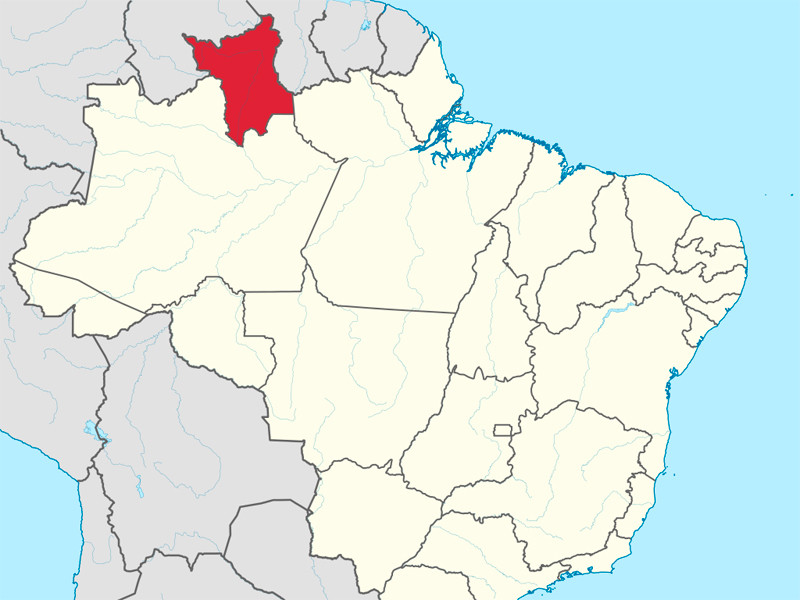
Venezuela authorities successfully circumvented American sanctions with Russian participation. So, Brazil pays for the electricity supplied by Venezuela using an account opened in one of the Russian banks, writes the Brazilian newspaper Folha de Sao Paulo with reference to its own sources.
The Brazilian state of Roraim, located on the border with Venezuela, is the only one of the 27 regions of the largest South American country, which is not connected to national power grids, TASS reports. Due to the geographical features of Roraim, electricity to this state comes from Venezuela. However, since the end of 2018, the Brazilian authorities have difficulties with paying for relevant services in connection with the sanctions imposed by Washington against Karakas. The fact is that many banks began to block financial transactions that are associated with Venezuelan state structures.
According to Folha de Sao Paulo, by December 2018, the debt of the Brazilian company Electronorte to the Venezuelan state corporation Corpoelec was already $ 40 million. As a result, the Brazilian side, fearing the disconnection of the whole region from electricity, began to look for other ways to transfer funds. For these purposes, one of the Russian banks was selected, which was confirmed by sources in the Brazil government. However, the name of the bank neither the sources of the publication, nor the Brazil Foreign Ministry revealed.
"We are talking about a commercial operation between the two companies. The seller provided an account for payment for the consumed electricity. The Brazilian Embassy was not involved in Moscow," the newspaper quoted the foreign ministry as saying.
We add that the other day, Reuters, citing its sources, reported that the Venezuelan state oil company Petroleos de Venezuela Sociedad Anonima (PDVSA) transferred to the Russian Gazprombank banking accounts of joint oil enterprises due to US sanctions. In particular, PDVSA sends the customers of these joint ventures notifications with the order to transfer funds from oil sales to new accounts in the Russian bank.
The Venezuelan state -owned company also requires foreign partners on their participation in joint oil projects, including from Chevron, Total, Equinor.
The Gazprombank told representatives of the media that Venezuelan PDVSA did not open new accounts.
"Reuters information is not true. Being one of the largest oil companies in the world, PDVSA has open accounts in many large banks, including international ones. As part of interaction with several Russian Bank clients in the GPB group (Gazprombank), PDVSA accounts were also opened several years ago. However, we emphasize that no new accounts were opened and we were opened The bank is not planned for the opening, ”the release of the Russian Bank, published by the“ financial newspaper ” , says.
Earlier, the Russian Gazprombank was already accused of using gray schemes for withdrawing PDVSA funds, as well as in giving bribes in the amount of $ 2 million to the former top manager of the Venezuelan state-owned company Ortiam Ortege in exchange for preferences.
Ortega himself confessed to receiving a bribe in the amount of five million dollars in exchange for the provision of preferences to the Russian bank and the French company, as reported by the prosecutor's office of the Southern District of Florida in the United States. But the names of the Russian bank were not given there. It was only indicated that these structures were minority shareholders in joint ventures with Venezuelan state -owned company.
Gazprombank also denied the November message to Reuters on a bribe to Abraham Ortega. It was a speech in recognition of the top manager of the Venezuelan company about the events of 2006-2007, when Gazprombank has not yet created a joint with the PDVSA enterprise "Petrosamor". Consequently, according to the representatives of Gazprombank, and there was nothing to give a bribe.
Recall, the US Treasuryimposed sanctions against PDVSA in order to reduce its export oil and coercive President Venezuela, Nicholas Maduro to retire. In particular, these restrictions provide for freezing in the USA assets of the Venezuelan state -owned company, which is the main source of the country's income.
Since January 28, the Americans have already blocked the company's assets for $ 7 billion, which are in their jurisdiction, and also banned transactions with them. In addition, Washington provided the head of the Venezuelan opposition Huan Guaido access to the accounts of the government of the Bolivarian Republic in American banks.
At the same time, the US presidential administration Donald Trump did not forbid American companies to buy Venezuelan oil. This trick is due to the fact that the United States is the largest importer of Venezuelan oil (about 0.5 million barrels per day.). That is, American companies, and in the conditions of sanctions, can carry out transactions with PDVSA, provided that money is transferred to blocked accounts, to which the government still does not have access.
Over the past five years, Venezuela losses due to sanctions imposed by the United States and the European Union amounted to $ 260 billion to $ 350 billion. The losses for each Venezuela, thus, amounted to from 12.2 thousand to 13.4 thousand dollars, according to a report of the Strategic Latin American Center for Geopolitics (Celag), which refers to RBC .