
Translated material
The leadership of agricultural holdings in 13 Russian regions suspect tax failure
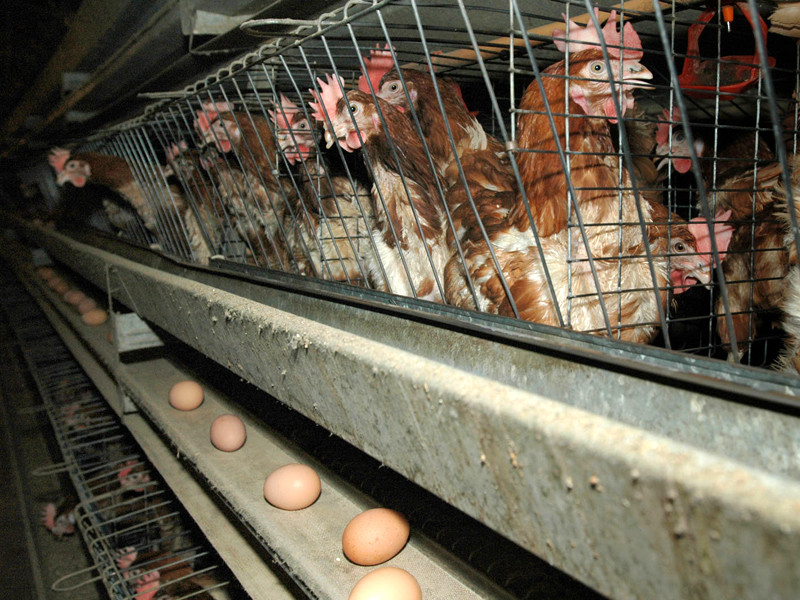
Employees of the Office "K" of the FSB of Russia and its regional divisions, as well as the Federal Tax Service, conduct an examination and seizure of documents at enterprises of large agricultural holdings of the Russian Federation. As Interfax told a source familiar with the situation, the actions of the security forces are associated with the possible evasion of taxes and non -compliance with the provisions of the Charter in the field of agricultural turnover.
Searches are carried out in 13 regions: Moscow, St. Petersburg, Tambov, Chelyabinsk, Sverdlovsk, Voronezh, Moscow, Saratov, Penza, Leningrad, Belgorod, Lipetsk regions and in Mordovia. As Komsomolskaya Pravda clarifies, searches are on several poultry farms of the Chelyabinsk region. Znak.com reports the seizure of documents at the Bogdanovichi overalls in the Sverdlovsk region.
The Charter in the field of agricultural turnover was signed by large exporters and grain producers last year. The signators stated her intention to achieve good faith in the payment of taxes, the maximum transparency of trade operations and the exclusion of the multi -stage process of resale of agricultural products. Also, the signatures of the Charter announced their intention to form an intolerable attitude towards companies that deviate taxes.
The need to sign the Charter arose in connection that part of the agricultural producers pays the so -called single agricultural digest , which does not provide for VAT. The rest pay VAT at a rate of 10%.
Since the VAT is returned during export operations, its non -payers resort to various schemes for obtaining these funds, attracting numerous intermediaries. The annual budget losses from this are estimated at 65 billion rubles a year, counted in the National Association of Exporters of Agricultural Products (NESSP).
At the beginning of this year, the Ministry of Economic Development created a draft of a new document in which it promises small and medium -sized businesses a number of tax and other messages . Thus, the ministry proposes to reduce the rate of income tax for the first two years of activity for small businesses, which is moving from a simplified taxation system to a general fiscal regime. And the ministry offers companies on simplification and a single agricultural agency voluntarily becoming a VAT payer to build large business suppliers in chains.