
Translated material
Serial oligarch
Circus " Risky Business "
Serial oligarch.
The story of how Vladimir Gusinsky reconciled with Vladimir Putin
Project team, February 13, 2019

The oligarch Vladimir Gusinsky who left Russia in 2000 concluded an “indestructible agreement” with the Kremlin. Having transferred NTV to the NTV authorities, the businessman got the opportunity to make money on the supply of TV shows for federal television channels, and his companies created almost all the religious ribbons about the “cops”. This scheme probably allowed Gusinsky to earn several hundred million dollars.
Vladimir Putin was always not indifferent to large Russian business: he greeted one billionaires, he fought irreconcilably, often selecting everything from them - both business and freedom. Putin was equally not indifferent to Russian television, with the establishment of control over which his reign began almost 20 years ago. During the first years of the Putin authorities, the once most influential oligarchs of the country went to exile - Boris Berezovsky and Vladimir Gusinsky, and the ORT and NTV television channels were controlled by the state. Then, the head of the oil company Yukos, Mikhail Khodorkovsky, who, like the first two, supported the media and the opposition and the opposition.
But, as the project found out, the fight against the oligarchs was not so implacable: Vladimir Gusinsky concluded an “indestructible agreement” with the authorities, which allowed him not only to engage in the media business in Russia, but also probably earn millions of dollars on this.
Infective agreement
In the first half of the 2000s, Vladimir Gusinsky agreed with the authorities in several stages: he refused an active struggle for NTV and did not use the decision of the Strasbourg Court against Russia.
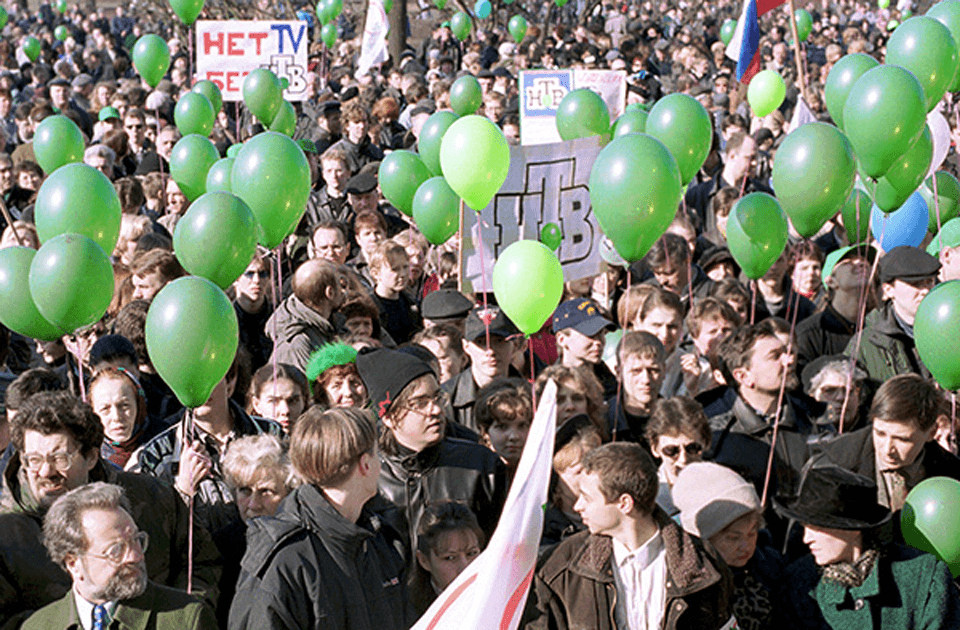
“The great Russian people are deeply convinced that the“ Media-Most ”was taken away in the bud. But this is not entirely true, ”says the head of one of the major studios engaged in filming films. On June 13, 2000, Gusinsky ended up in a Butyr prison in the case of illegal privatization of the Russian Video company. Behind the bars, he received an offer from the press Minister Mikhail Lesin-to sell Gazprom Media-Most Holding at the price that the gas monopolist himself will determine. The holding included Most-Bank, the NTV, TNT and NTV+television company, the Echo of Moscow radio station, the newspaper today, the weekly results and 7 days, the magazine Caravan of Stories and the Avia Airlines. In return, Lesin promised to close the criminal case. Gusinsky agreed and three days later went free. On July 20, an agreement was signed; Protocol No. 6 contained a situation that provided for the cessation of the persecution, although the very existence of the protocol is called into question, it was such a version that was presented in the decision of the ECHR in the Gusinsky against Russia case in 2004.
How much Gusinsky received for NTV
According to the July Agreement, Gusinsky did not just give the channel in exchange for liberation: he sold the entire holding for $ 773 million, of which most of which went to pay off debts, and the entrepreneur himself reached $ 300 million. But after the release and departure of Russia, Gusinsky, who at that time, became the defendant of the case of the border of loans from Gazprom, refused to comply with the terms of the contract, Having stated that the document was signed under pressure. For this reason, he did not get $ 300 million, recalls Alfred Koch, Gazprom-Media general director in 2000-2001. Finally, Gazprom-Media bought the businessman’s assets in 2002. The amount of the transaction was not disclosed. Gusinsky, according to Kommersant 's interlocutors , could receive from $ 30 million to $ 190 million. At the time of arrest in the summer of 2000, the value of its assets, according to Forbes , was $ 300 million.

The July Agreement was not the only one. By 2002, when Gazprom-Media bought the last shares of Gusinsky on NTV, NTV-Plus and TNT, the entrepreneur reached another agreement with the Kremlin. Seven people told this “project”: a friend of Gusinsky, a senior employee of one of the largest media holdings, a former Kremlin official, an interlocutor in Gazprom, the head of one of the major television studies, a media market and a former partner of Gusinsky. The “indestructible agreement”, as the businessman himself calls him, according to the head of one of the major studios and interlocutor in the leadership of Gazprom, guaranteed him financial well -being for many years. “When he was“ accepted ”and he agreed on the outcome, he had an agreement confirmed by“ himself ”, the greatest (Vladimir Putin -“ Project ”). At least, Gusinsky himself always emphasized this, although I think that “myself”, of course, has never been talking to Gusm, ”says the interlocutor in Gazprom’s leadership, using Gusinsky’s nickname common in the 90s.
The agreement concluded in stages: the basic conditions were approved around 2002, the interlocutor said in the Gazprom leadership, the head of one of the major studios and a source on the media market, and everything was finally signed in 2005, says the acquaintance of Gusinsky. The document exists on paper with the condition of appeal in the jurisdiction of the United States, and also contains financial obligations of the parties and provides for very strict penalties for early breakdown of the agreement and for the disclosure of details, the source on the media market notes and confirms the acquaintance of Gusinsky. According to Gazproma top manager, if the “indestructible agreement” is broken, then the Russian side, which is represented by Gazprom-Media, will pay the entire amount during the contract of the contract, is also considered by a source on media market and the head of one of the major studios.
The main content of the contract is that the businessman refused the active political struggle and left the country. It was important for Putin, recently taking up the President’s post, to fulfill his election promise and deal with the oligarchs. “I remember when I came to Moscow from St. Petersburg, I was shocked and surprised how many crooks gathered here. Moreover, their behavior was so amazing for me that I could not get used to it for a long time. These people did not have any restrictions at all. Well, what is an oligarchy? This is the fusion of power and money in order to influence power, to influence the decisions made in order to continue enrichment. My task was to share money and power, ”Putin recalled in 2017. Gusinsky became the first “victim” of this struggle. “In a public field, this was formed as a big victory. In Chechnya, they have not yet won, and the goose already. This was the first pearl in Putin’s crown, his first success, ”recalls the head of one of the major studios that produced telekontent.
In addition, the agreement stipulated that Gusinsky would not take advantage of the decision of the Strasbourg Court of Human Rights. The Decree of the ECHR of 2004 stated that the “Appeal of Gazprom” to the applicant (Gusinsky - “Project”) with a request to sign the “July Agreement” and its subsequent execution by the investigator who terminated the criminal case confirm that the criminal prosecution of the applicant was used in order to intimidate it, ”the Russian government“ did not dispute that the “July” The agreement ”linked the termination of the case against the“ Russian video ”with the sale of Gazprom state -owned media belonging to the applicant. This document gave Gusinsky the opportunity to compete in the courts for the foreign assets of Gazprom, however, under an agreement of 2005, he allegedly took the obligation not to do this, he knows the familiar oligarch.
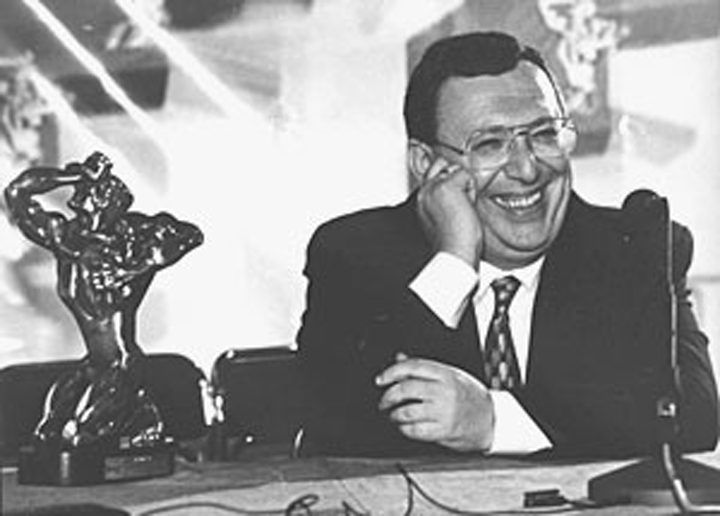
From the book of David Hoffman “Oligarchs. Wealth and power in New Russia ":
A easily vulnerable and very emotional young man, Gusinsky graduated from the director's faculty of the theater university, but could not find a job in Moscow theaters. He was a Jew and considered anti -Semitism the reason not called by anyone, why all the doors slammed in front of him. Jewish directors successfully worked in Soviet theaters, but not Gusinsky. He was engaged in organizing concerts and cultural events and even helped in organizing a cultural program for goodwill games in 1986. The situation worsened after, due to a harmless joke, he ruined relations with the Moscow City Party Committee. He sent them to hell.
20 years of loneliness
The “indestructible agreement” was allegedly concluded for about 20 years, Gazprom was supervised by its signing. The contract allowed Gusinsky to even save media assets in Russia.
Serial tycoon
In the framework of the “indestructible agreement”, Gusinsky companies put 456 series on federal television-or one eighth from all series that have ever shown in Russia. This could bring an entrepreneur from $ 172 million to $ 529 million.
In 2015, the new Gazprom-Media leadership arranged a conference for content manufacturers. Among the invited were several employees of the company of the Gusinsky Forward-Film. The conversation with them turned out to be not very meaningful, recalls the interlocutor, familiar with the details of the meeting. Dmitry Chernyshenko, who recently took the post of chairman of the board of state holding, was surprised that the series of the firms were more expensive than, as he claimed, the products of other studios comparable in quality. “You produce so much, there are brilliant projects, but there is something that we do not understand,” the interlocutor retells Chernyshenko. However, the case did not go further than the verbal claim, the interlocutor recalls, explaining this by the fact that soon Chernyshenko was put before the fact: a agreement concluded at a higher level applies with Gusinsky. A friend of Gusinsky insists that television channels buy content from the firms of the former oligarch, solely thanks to his high quality.
If you watch continuously all films and TV shows that Gusinsky’s companies have set for federal television since 2000, it will take almost 86 days
These are 456 seasons of different series or 2647 episodes, and among them there are very famous ones: “National Security Agent”, “Cop Wars”, “NLS Agency”, “Secrets of the Investigation” and “Streets of Broken Lights”. In total, Gusinsky firm released on Russian screens a little more than 13% of all series that have ever received rental certificates, the project was calculated based on the data of the registry of rental certificates of the Ministry of Culture; When counting, films and series were taken into account, the rights to which belong to the companies “Forward-film”, “New Russian series”, “Progress Studio” and “Film Production Center”; Gusinsky, as follows from the information “Contour. Focus ”and these registers of the legal entities of Great Britain, Switzerland and Gibraltar, owns firms through a chain of offshores.
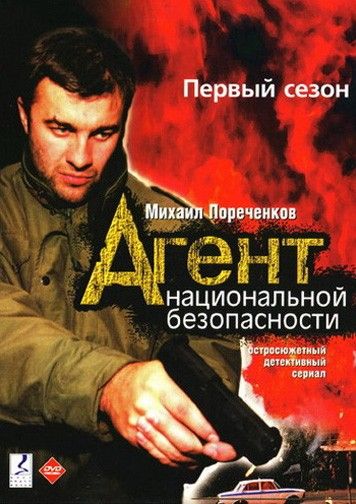
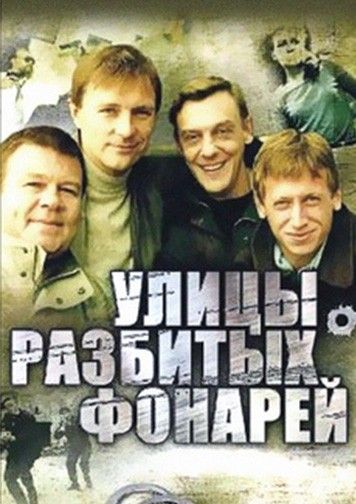
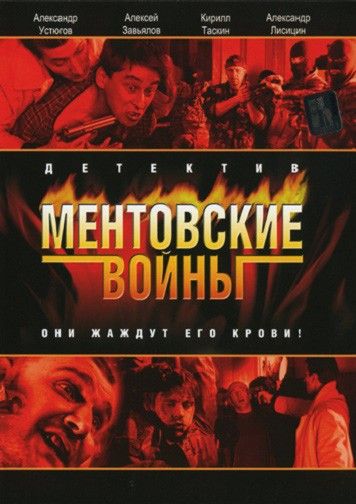
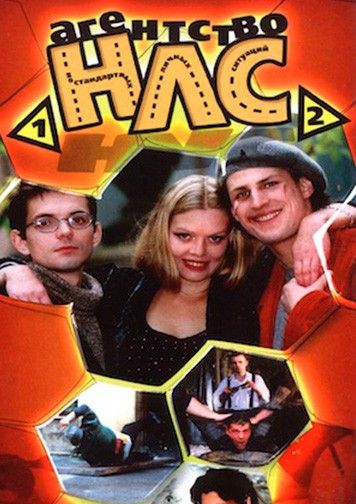

TV shows shot with the participation of Gusinsky companies
A considerable part of the series of the company was shot, concluding contracts directly with directors and screenwriters, but professional studios played an important role in the production process, for example, the St. Petersburg Panorama studio, which for many years removed the “secrets of the investigation”, as follows from the register of rolling certificates, “Panorama” took 87 series for which the rights to the contracts moved to contracts under the contracts Companies of the former oligarch.
The cost of filming could be from $ 50-60 thousand if the oligarch company was directly engaged in production, up to $ 125 thousand per series, if the contract concluded with the studio, such estimates are given by the head of one of the large studios and the interlocutor in the leadership of Gazprom; From the materials of arbitration cases it follows that the cost of one series of “chasing the past” produced by the Panorama studio was about $ 80 thousand. The TV channels then bought these TV shows for $ 125–250 thousand for the series, such grades are given by the head of one of the large studios and the interlocutor in the leadership of Gazprom; Similar prices appear in the materials of arbitration vessels, which mention the series "Shamanka", "16 days" and "Secrets of the investigation - 15". Thus, the businessman’s earnings could start with $ 65 thousand per series and reach $ 200 thousand - or from $ 172 million to $ 529.4 million for all products since 2000.
Gusinsky’s serial business was not a secret for those who worked in the media, the interlocutor in the leadership of Gazprom and the head of one of the major studios, and in 2012, the Forbes magazine drew attention to the Russian assets of the businessman. On the other hand, the oligarch sought not to advertise that he was earning on cooperation with federal television channels, says the head of one of the major studios, the former editor of the newspaper Today and the publication “Daily Journal”, Mikhail Berger, and confirms a large entrepreneur familiar with Gusinsky.
At the beginning of zero television, Gusinsky TV shows were high, some of them received Russian awards. However, according to the Kinopoisk portal, out of almost 90 paintings, the rights to which belong to the “forward-film”, only 17 rating exceeds seven points. In the TOP-100 rating programs in 2018, the “secrets of the investigation” made its way out of all Gusinsky products, Mediascope calculated; The series took 96th place with a rating of 5.6%.
The empire must go bankrupt
Since 2014, Gusinsky companies are probably lacking in funds. Now banks have made claims to them more than 6 billion rubles.
The scale of Gusinsky’s business in Russia became clear after how in 2016-2017 his Russian media -imperia began to experience problems. Arbitration claims were filed for several companies of the former oligarch, including at the initiative of Panorama studio - until that moment an important content manufacturer for Gusinsky companies and for the federal television.
The problems began when, after the accession of Crimea to Russia, the ruble exchange rate and television companies began to pay for series with a large delay, sometimes up to a year, says the head of one of the major studios. The entrepreneur’s firms began to take loans from the Luxembourg Bank East-West United Bank owned by AFC Sistema, Probusinessbank and BFG credit, follows from arbitration courts.
In 2015, Gusinsky tried to sell his business, says the interlocutor in the leadership of Gazprom; The Vedomosti wrote about this: these are the manufacturers of the series, Newsru.com and the share in the authorized capital of Echo of Moscow, according to the service "Contour. Focus ", the American company of the Gusinsky EM Holding and its lawyer Ilya Kurtov controls about 17% of the radio station EMKHK through the company; 16% through the same company EMKHK belong to the chief editor Alexei Venediktov and the long -term general director of Echi Yuri Fedutinov; Venediktov claims that Gusinsky is not among the shareholders of the radio station, while he provided the “project” with the scheme of ownership “Echo”, which confirms the information from the Contour service. Focus". The Gazprom-Media began preparing the transaction, but then in the holding they received the full stop team-apparently, from the presidential administration, says the interlocutor in the leadership of Gazprom. However, Gusinsky was able to reduce the costs of the radio station, stopping leaning to some journalists, says an employee of one of the largest media holdings; According to him, payments went through the company "Resocal"; Venediktov confirmed that the businessman really paid extra radio station employees for television broadcasts.
Soon, the businessman’s companies launched a bankruptcy procedure, Kommersant called this “ring bankruptcy”: they announced mutual claims to each other, recognized obligations, but could not pay for them. Bankruptcy was not even stopped by the decision of one of the appeal instances. The decision of the appeal instance in the A40-5242/17 case said that the dispute between the companies “is artificial and fictitious”, since the firms are “affiliated persons”-they have one owner and one representative in court sessions, and the defendant pays the costs of the entire group of companies, including the plaintiff. Other legal entities of the oligarch, not related to the series, for example, the maternal company of Newsru.com, are gradually announced about bankruptcy, follows from the materials of the Unified Federal Register of Bankruptcy Information.
Banks put forward a claim to the Gusinsky company for more than 6 billion rubles
Debt obligations of companies to banks and each other, million rubles.
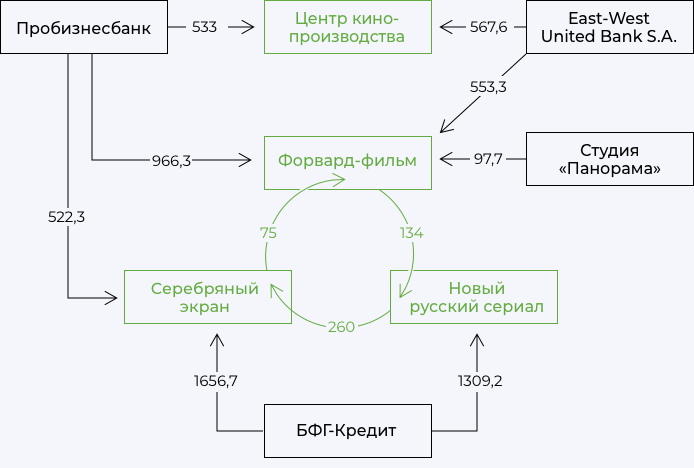
Loans of Russian banks were provided with pledges: if the companies do not pay the debt, then the bank receives the right to demand from the VGTRK the amount due to the structures of the oligarch under the contract for the series is from arbitration cases. Why the banks agreed to such a pledge remains a secret: the VGTRK not only completely paid under the contracts, in connection with which nothing could be requested from the television and radio company, but it was not aware that she became a party to credit transactions.
Source: Service "Contour. Focus ”, materials of the Arbitration Courts of Russia, the data of the Unified Federal Register of Bankruptcy Information and the British Register of Journalists.
Разбирательства с кредиторами идут не только в российских судах: структуры АФК «Система», по утверждению источников, подали иски в Лондоне и в Люксембурге , рассказывает собеседник на медиарынке и источник в руководстве АФК «Система».
У телеканалов, которым поставлялась продукция фирм Гусинского, формальных претензий нет, хотя собеседник в руководстве «Газпрома» утверждает, что НТВ тяготят некоторые обязательства сотрудничества с бывшим олигархом. «В контракте есть забавное свойство, которым Владимир Александрович постоянно пользуется, — рассказывает собеседник. — В нем не прописана суть контента, только указана некая сериальная продукция. И как только Гусинский начинает не договариваться с кем-то, он говорит: “Я вообще сейчас куплю украинские сериалы, сдам их вам, и вы у меня их примете”».
С ВГТРК у фирм бизнесмена отношения более легкие. Олег Добродеев, перешедший в начале 2000 года с НТВ на ВГТРК, поспособствовал тому, чтобы сериал «Тайны следствия» спустя несколько лет перекочевал вслед за ним. «Ему был дорог этот проект», — вспоминает руководитель одной из крупных студий. С 1999 года Добродеев живет в том же доме, где квартирами владели связанные с Гусинским компании. У телебосса почти 300-метровая квартира в центре Москвы в доме на Лесной улице, которая досталась ему от компании Гусинского , следует из данных ЕГРН; ее кадастровая стоимость — около 135,5 млн рублей. Пресс-службы «Газпром-Медиа» и ВГТРК не ответили на запросы «Проекта».
В 2016 году сотрудники ВГТРК неожиданно обнаружили, что первые 13 сезонов сериала «Тайны следствия», права на которые принадлежат телекомпании, показывает канал «Дом Кино», входящий в сеть Первого канала. В результате разбирательства в суде выяснилось, что компания Гусинского «Серебряный экран» продала ленту сразу двум покупателям — в результате «технической ошибки в учете прав». Процесс, едва не стоивший Первому каналу 192 млн рублей, завершился мировым соглашением , такую сумму, по данным материалов арбитражного суда, требовали представители ВГТРК.
И не враг, и не друг
Гусинский владеет недвижимостью в нескольких странах, а его компании зарегистрированы по всему миру. Возвращаться сейчас на родину он не собирается, но при этом подчеркнуто не комментирует события в России и не выступает против Путина
— Я родился в этой стране. Я владею русским языком. Я не в изгнании и до сих пор вижу Россию как свою страну, — говорил Гусинский в 2009 году в интервью израильской газете The Marker. Приехать на родину он не может: «нерушимое соглашение» никак не оговаривает возможность его возвращения, а уголовное дело против него не закрыто . В том числе по этой причине за время своей эмиграции бизнесмен несколько раз попадал в поле зрения правоохранительных органов разных стран, побывал за решеткой , но длительного заключения и экстрадиции все же избежал.
Почти 20 лет олигарх перемещается по всему миру: у него была недвижимость в испанском городке Сотогранде , рассказывают высокопоставленный сотрудник одного из крупнейших медиахолдингов и собеседник в руководстве «Газпрома», и на юге штата Коннектикут , следует из данных реестра юрлиц штата, на швейцарском курорте Санкт-Мориц , следует из данных реестра юрлиц Великобритании, в Англии и в Израиле, личный бизнес-джет Gulfstream , рассказывают высокопоставленный сотрудник одного из крупнейших медиахолдингов, собеседник в руководстве «Газпрома», бывший бизнес-партнер Гусинского и руководитель одной из крупных студий, и яхта , в документах на яхту из международного реестра судов указаны контакты адвоката Гусинского, экипаж которой однажды помог спасти американскую семью, тонувшую недалеко от Маршалловых островов.
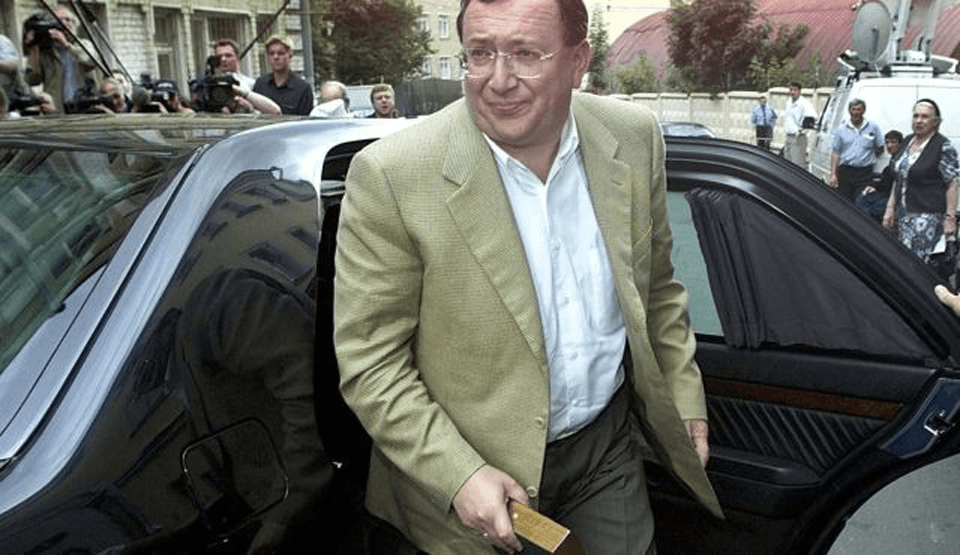
Сериальный бизнес, наиболее вероятно, был основным источником дохода для Гусинского , утверждают собеседник в руководстве «Газпрома», высокопоставленный сотрудник одного из крупнейших медиахолдингов, руководитель одной из крупных студий и собеседник на медиарынке. Но он занимался и другими проектами: например, вкладывал деньги в канадскую недвижимость , в банковский сектор , в производство CD и DVD и в украинское телевидение , а в последние годы загорелся идеей создать OTT-платформу , рассказывает знакомый Гусинского. «Это что-то вроде Netflix, но транслировать планируется российские сериалы, права на которые принадлежат Гусинскому», — рассказывает собеседник в руководстве «Газпрома».
В 2009 году, когда Гусинский давал интервью The Marker, надежду на возвращение в Россию предпринимателю подарил Алексей Венедиктов , утверждает сам главный редактор «Эха Москвы». В то время он просил за Гусинского президента Дмитрия Медведева. «Гусинский тогда хотел вернуться из эмоциональных соображений. Перегорел», — вспоминает Венедиктов. Последнюю попытку обсудить с руководством страны перспективы приезда олигарха Венедиктов предпринял в 2012 году, но и тогда это ни к чему не привело. Вероятно, в это время Гусинского в России уже не считали врагом. По крайней мере, в том же году с юбилеем предпринимателя поздравил его родной телеканал. Не забыли его и на 25-летие НТВ.
Отсутствие Гусинского в стране, впрочем, почти не сказывается на его сериальном бизнесе: несмотря на банкротства и тяжбы, производством лент сейчас занимается новая компания , — «Кинопроизводственный центр», следует из данных реестра прокатных удостоверений, это подтверждает знакомый Гусинского; выручка компании за 2017 год составила, по данным сервиса «Контур. Фокус», 766 млн рублей. Все последние годы олигарх придерживается одной линии в отношении российских властей, говорит собеседник в руководстве «Газпрома»: «У Гусинского было внутреннее понятийное ощущение, что ему нельзя наезжать на власть, поэтому он никогда не высказывался против Путина. Скорее, он сам для себя это сформулировал — “я не враг”». Возможно, когда-нибудь это поможет ему вернуться в Россию.