Date
Author
Рон Синовиц; Александра Вагнер
Source

Preserved copy
Translated material
Do not vaccinate!
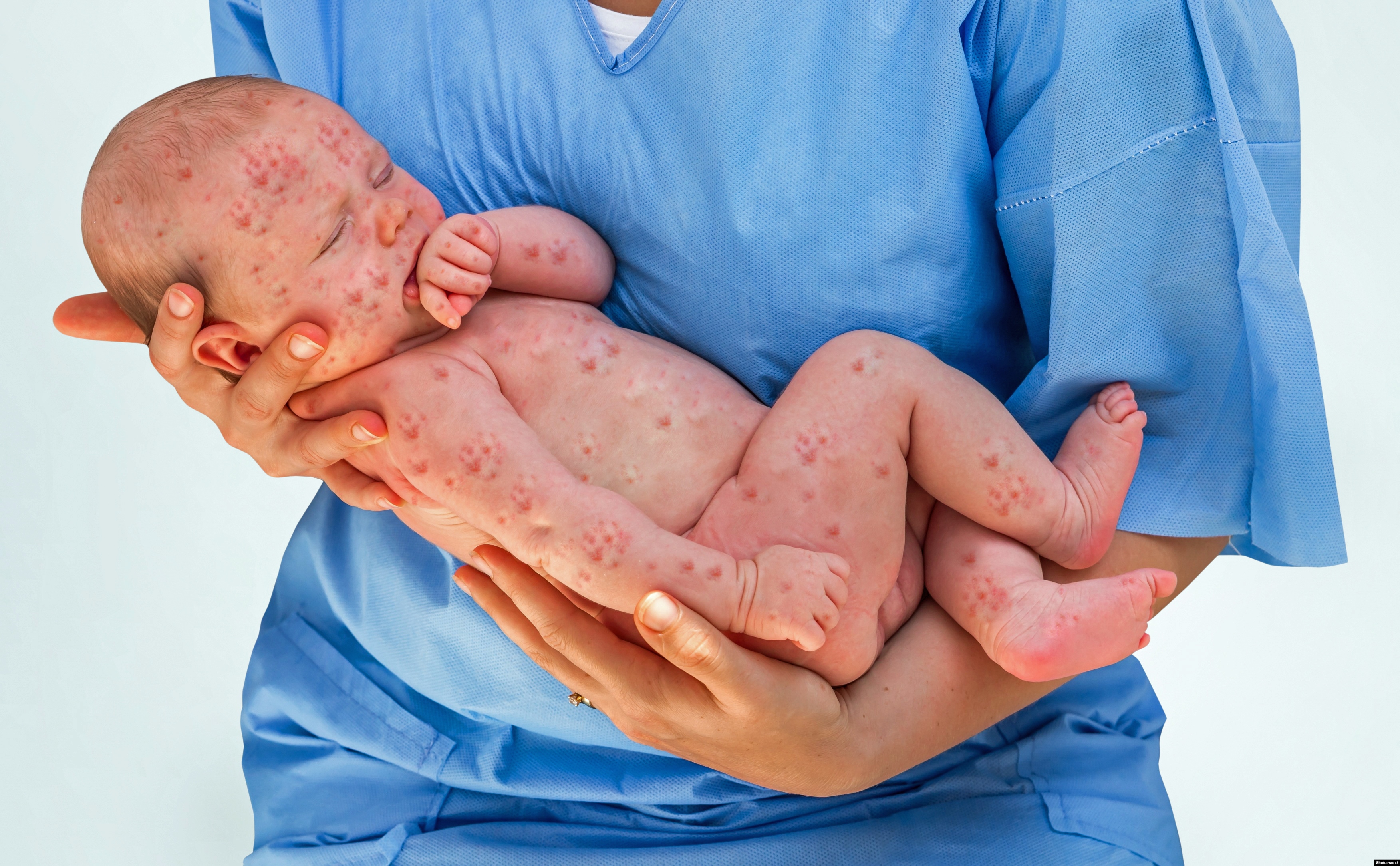
In the Cores epidemic in the countries of Eastern and Southeast Europe, due to which 72 people were killed, including young children, opponents of immunization and trolls from Russia may partly be guilty. In social networks, they are participants in not only Russian -speaking, but also English -speaking groups, which discuss issues related to vaccinations for children. Arguments against the use of vaccines from severe infectious diseases lead to the fact that users have an impression of the groundlessness of vaccination and the lack of consequences. And this, in turn, became one of the reasons for the crisis that occurred in the fight against infectious diseases.
At the end of last year, the American Journal of Public Health, which is published by the American Health Association, published the results of a study regarding the activity of Russian trolls and activists in groups where children's vaccination was published.
In a study in which eight experts participated, messages were analyzed that users left on Twitter from July 2014 to September 2017. Through analysis, Russian trolls, bots and active users of social networks were allocated, who left comments about the dangers of vaccination. They did this more often than ordinary Twitter users. In cases where it was about anonymous accounts in social networks, the frequency of negative responses about vaccinations was higher. The tactics of Russian participants in the discussions about immunization were different: the trolls initiated a discussion, often gave arguments both in favor and against vaccination, bots simply distributed untruthful information. The authors of the study concluded that this activity on the Internet led to a decrease in the level of public confidence in vaccinations.
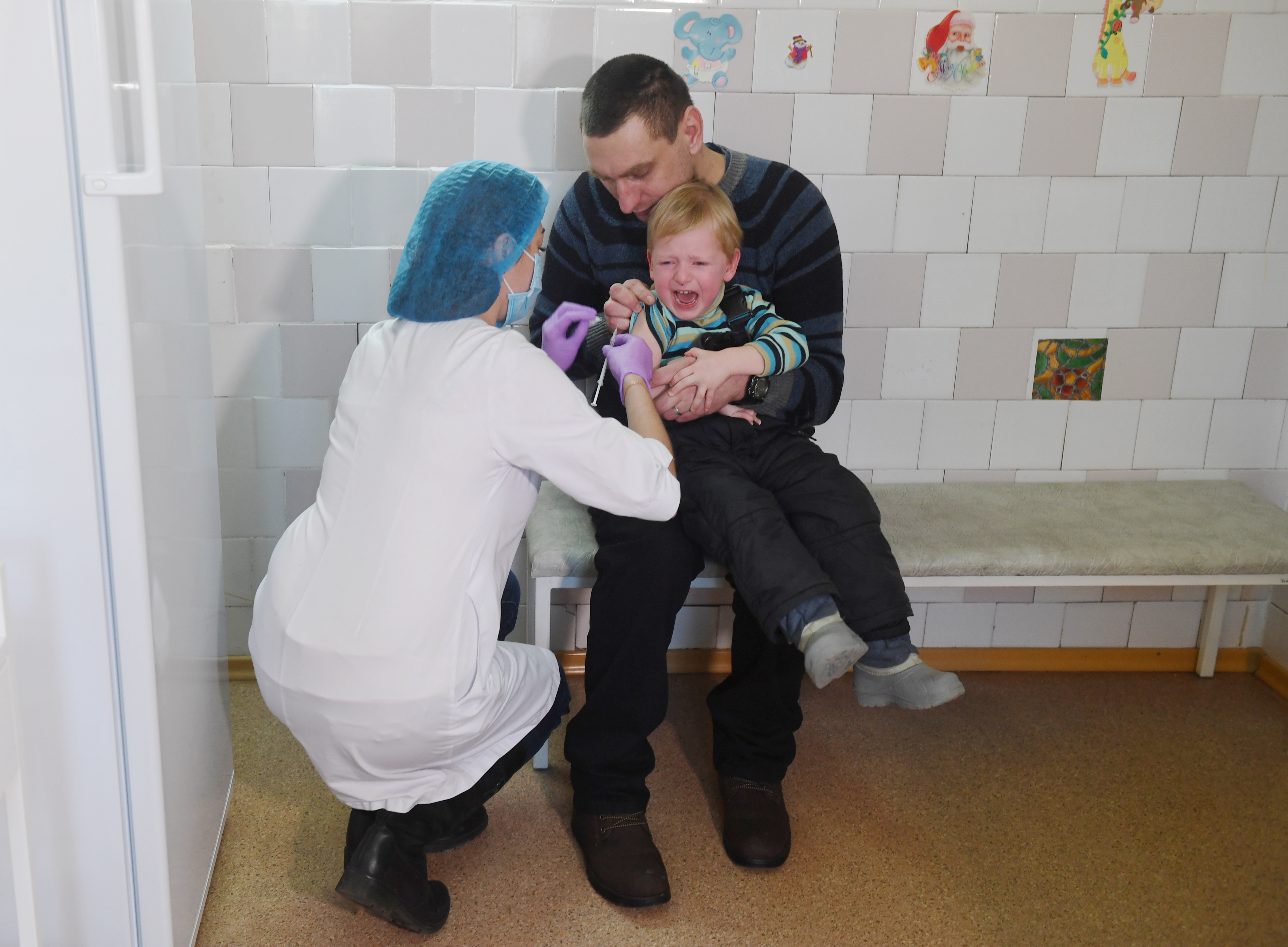
One of those who took part in a study on the activity of Russian trolls, bots and the so -called anti -prisming activists on the Internet is David Bronezovsky from the University of George Washington. In an interview with Radio, Freedom said that he had no evidence that Russia tried to weaken the West countries, convincing people not to vaccinate. According to him, it is more likely that the paid Russian trolls pretended to be ordinary users of social networks and discussed immunization in order to achieve polarization of political opinions. “This is a well -known strategy - to first combine the interested group around a specific question or topic, and then slowly try to introduce new topics into this conversation,” explains Bronatovo. “After the Troll manages to achieve that the participants of social networks become their subscribers and begin to do the retweets of their messages, they begin to write about other problems that trolls can first be replaced by messages Of the groups criticizing vaccination in order to enter into their trust before becoming a member of this group. " Nevertheless, according to Bronovsky, thanks to the arguments of the "pros and cons, they cited trolls and bots, they managed to disprove to legitimize and spread the dubious arguments of the skeptics of vaccination.
- We observed the use of Russian trolls to discuss hot topics as racial relations and freedom of choice. In one of the tweets made from the account of the confirmed Russian troll, it was said that compulsory vaccination encroaches on the rights of religious freedom protected by the Constitution. Another troll expressed the opinion that the American government cannot be trusted by publishing the phrase: “Do you know that there is a secret database of children affected by vaccination?” Says Bronyatovo.
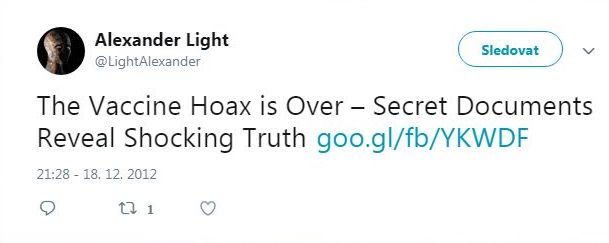
According to the scientist, trolls supported the idea of distrust of pharmaceutical companies, saying that they are fighting diseases that are relatively safe, and also tried to cause fear in people, saying that vaccinations cause autism or that the disease causes more persistent immunity than vaccination.
All of the above statements can be found in many forums or in groups for raising children and in the Russian segment of the Internet.
- This is an extremely multifaceted problem, and trying to dump everything on the paid trolls is ridiculous. That is, maybe some of them really do this, the devil knows them, but there are too many ordinary people, parents or their loved ones, who are negatively configured for vaccinations. If you introduce the name of any disease or vaccine in English in English, then chic articles written by professionals will fall in a very understandable language for ordinary people, based on the very recent scientific data. This is the Mayo clinic, Patient.uk, Webmd, MedicalNewstuday and other worthy sites. If you introduce the same name for the disease in Russian in the search - you will fall in the top such hell that the hair is just moving: charlatans, homeopaths, alternatives, dietary supplements, etc. And if you introduce a vaccination request in Russian, most of the received will consist of aggressive and anti-priglishing sites, ”says pediatrician Sergei Botri . - That is, such a flurry of disinformation was created in Runet that it must be interrupted with quality information, and no one is engaged in this or engaged in a very modest scale. Messages on this topic on the official state sites are written by a heavy chancellery, and even when they correspond to the truth, it is simply unreadable for ordinary people, not to mention the fact that distorted, outdated or even false information is often found here. People simply stopped trusting state sites such as Rospotrebnadzor. The words “state” or “official” site carry a negative rather than positive. ”According to the pediatrician, it seems to him that in Russia the anti -tax movement is more widespread than in other countries, although the latest study on this topic showed that Russia occupies only the third place.“ I was surprised by these results, it seemed to me that only in the developing countries of Africa, where the population did not even know how to do the population. Read, ”says Sergey Butriy.
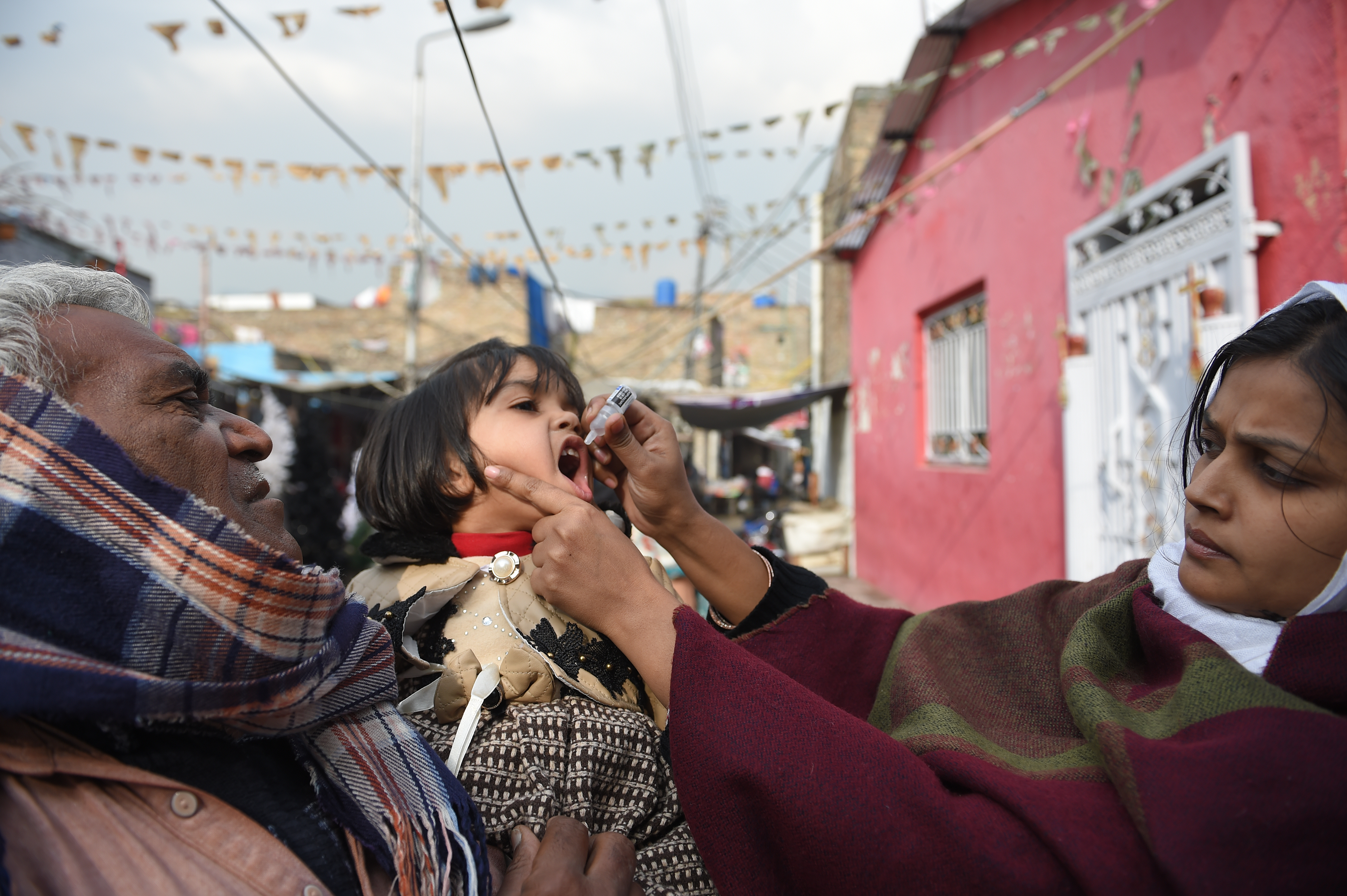
In Russia, thousands of young parents are still watching a film shot back in the late 1990s Galina Chervonskaya about the dangers of immunization, based on distorted facts. More than once, the doctors debunk her statements, but still many people believe in the word what was said in the film. Chervonskaya calls himself a virologist, but she never took part in studies of the effects of vaccines on the human body and is not published in scientific journals in immunology. It is alleged that it has a scientific degree of a doctor of biological sciences, but confirmation of this has never been found.
Another ardent opponent of vaccination in children is the popular Russian homeopath Alexander Kotok. His books on the dangers of vaccination were published in many countries of the former USSR and social camps in Russian, and also translated in Bulgaria, Poland, Slovakia, Ukraine, the Czech Republic. In some of these countries last year, an epidemic of measles broke out. Ukraine suffered most: 15 dead and 53,200 infected, as well as Georgia, Serbia, Russia, Romania, where 40 dead and 8400 cases of disease were registered. In the social networks of these countries there are a lot of disinformation about vaccinations, and many refuse to make them to their children.
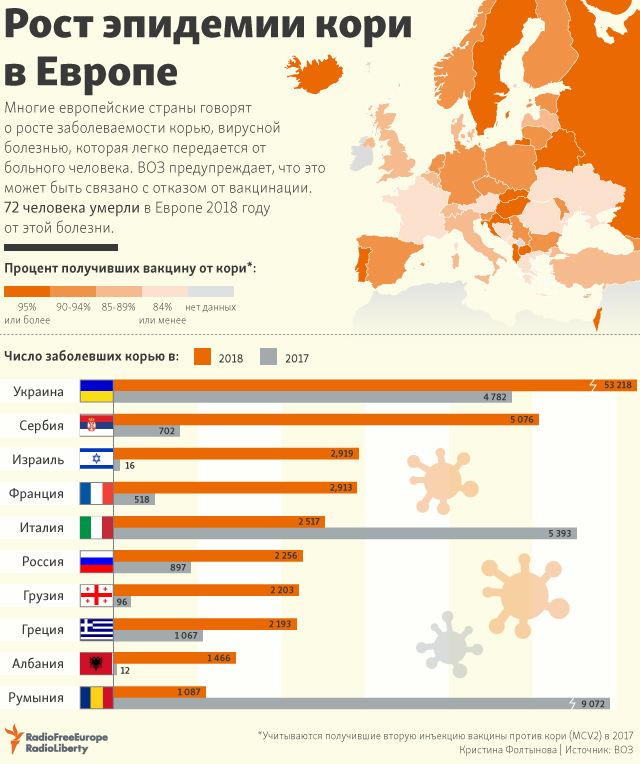
The activity of Russian users of social networks on the field of combating vaccination may also be due to the fact that it is in Russia and wider - in Eastern Europe that the refusal to vaccinate children is more common than in other countries. In the European Union, for example, only in France and Italy a very skeptical attitude to vaccinations, in other countries of the European Union we are talking about a small marginal group.
For example , only in St. Petersburg, 16 thousand families wrote refusals against measles vaccination against measles. It is impossible to talk about the epidemic so far, but eight people have already fell ill in the Frunze district. Now the authorities call even the refuseniks to come to the doctor and instill children. In Moscow, in late January , two schools were temporarily closed due to measles. In Chita, a large family was not vaccinated for religious reasons and all its members fell ill.
The legal consultant of the MOO "Mom" Ruslan Trofimov draws attention to the fact that the right in the legislation for citizens to abandon vaccination in itself should not be questioned. Every person, before he agrees to introduce a vaccine, wants to have security guarantees - to know where it is produced, what is its validity, whether it has certification, will it be harmful to health:
- There is no anti -infection in Russia as such. There are people who enjoy their right, parents or adults who, in their own certain parameters, decide not to vaccinate. Moreover, we, as lawyers and human rights activists, must understand that in this case, parents have a huge range of issues that require clarification. Unfortunately, the medical community is not always - I do not think that only in Russia, all over the world - does not meet, does not fully inform what this or that vaccine can harm right now. In our country, it is approved by law that a citizen has the right to refuse vaccination. And in the law, of course, there are certain requirements that indicate a citizen for consequences in case of refusal of vaccinations. This is also a state of health or other restrictions. For example, if a person works in the medical industry, then certain types of vaccinations are included in the mandatory list: if a person wants to work in this industry, he is obliged to make them, ”says Ruslan Trofimov.
The World Health Organization (WHO), in its annual report on threats in 2019, called the abandonment of vaccinations one of the most important problems. Vaccination is called in the document the most effective method of preventing dangerous infectious diseases and allows you to save lives from two to three million people annually. According to WHO, recently there has been a thirty percent increase in cases of measles throughout the world, and partially this is due to the refusal of vaccinations.
Doctor Sergei Botri leads the blog "Notes of a children's doctor". In one of the posts , he said that pediatricians in state clinics often invent the reasons and refuse to vaccinate even those children whose parents would like to follow the national vaccination calendar.
In addition to the Internet, according to the pediatrician, in Russia, many refuse vaccinations or make them not on time, are to blame, in addition to the Internet, the low level of education, the quality of knowledge of the current graduates of universities. “Today it is more difficult for parents to explain why they should believe in one study, and not to believe the other,” says Butriy. “That's why they believe in charlatans - they appeal only to emotions and cognitive distortions, so they won. Remember the joke about chess with a dove ? It is ideal for describing a doctor’s dispute with an enemy of vaccinations.”
Another reason for refusing immunization is the high efficiency of vaccines.
- I am convinced that vaccines have become hostages of their own high efficiency, they eliminated the former epidemics, and now, against the background of general infectious well -being, the risks of vaccination seem to people much more serious than the risks of wild infections. Anti -inferiorities begin to manipulate statistics, based on the absence of epidemics. A simple example: the mortality from measles is 1: 1000 sick, and the probability of fatal complications of vaccination is about 1: 1,000,000 vaccinated. Opponents of the immunization say - it is true, this is so, but do not forget that 2500 people fell ill in 2018, and the vaccination was introduced to millions - and at the exit we have an approximately equal probability of perish from vaccination and from wild infection - let the parents decide what they want their child to die. This is a manipulation in the style of "the probability of finding a dinosaur on Moscow Street 50 to 50 - or a meeting or not." The current Corey epidemic corrects this roll, children's deaths resemble even the most skeptical parents that actually die of measles is much more likely. But as soon as it is possible to stop the current epidemic - well -being will return and the people will again refuse vaccinations. But in order for such outbreaks no more, it is critical to maintain a high level of vaccination of the population, otherwise sooner or later everything will return, ”says Sergey Butriy.
Experts from the USA and European countries call the "incredibly complex" problem of refusing to vaccinate against measles in adults and children. They note that parents often make an erroneous decision regarding immunization under the influence of rumors and fears that apply in groups in social networks, where issues related to raising children are discussed. At the University of Duke, the Center for the Processing of Scientific Medical Information was created, which analyzes the campaign of disinformation about vaccines. Its director Robert Kaliff says that now it is very difficult to reduce the risks from this campaign, since studies show the influence of paid posts on this topic on social networks, especially from Russia. Kaliff calls it cyber.
Other experts are not so decisive in their assessments. Katarina Kislich from the University of Vienna writes that often the problem of vaccination can be considered from the point of view of political science. She believes that a certain share of guilt lies with medical workers and politicians who have a lack of influence on those citizens who are skeptical of vaccinations.
Katherine Habertsat from the World Health Organization says that disinformation is only one of the reasons for the recent surge of measles in eastern and southeastern Europe due to a decrease in the number of children vaccinated in this region. Among other factors are insufficient awareness of threats to the human body in connection with an infectious disease, distrust of medical workers and the inaccessibility of services.
Ukraine, which was most affected by the measles epidemic last year, after the start of hostilities in the Donbass, has significantly reduced the number of vaccines available at the expense of the state for children in 2015 and 2016, and this led to the massive spread of the disease.
"In fact, we do not know exactly how strongly the misinformation on the Internet on the behavior of people when making decisions on vaccination. But I hope that there will be more studies in this area that make it possible to understand the intensity of such an influence and the possibility of combating this misinformation," says Katherine Habersaat. According to her, the European regional Bureau of WHO set up a “strategic partnership” with the Ministry of Health of Russia, which provides for cooperation with German specialists to study the culture of rejection of vaccination in Russia and Eastern Europe. The results of this study will be available in mid -2020 and will cover, among other things, where there is a significant decrease in measles vaccination - Georgia, Kazakhstan, Kyrgyzstan, Moldova, Serbia and Ukraine.