
Translated material
Ducks and boiling water, Michael Kalvi vs Artem Avetisyan
The Baring Vostok case as the struggle of two views on the problem of a “good investment climate” - explains Dmitry Butrin
The story that happened to Baring Vostok on Friday is quite rational to express exactly as they said about this on Friday. Indeed, it is difficult not to believe in the conspiracy of the Federal Security Service against the investment climate. It is at the moment when the Prime Minister of Russia, four deputy prime ministers and half of the ministers, together with 78 heads of regions of the Russian Federation, are discussing priority national projects near Sochi, to bring to court six employees and partners of the oldest foreign fund Private Equity, which has been working here since 1994, led by the known Moscow Calvi, which is known on Saturday on Saturday He detained until April 13 on charges of fraud 2.5 billion rubles. Indeed, in fact: everyone found out analysts and investigators of the FSB, and they certainly know everything. And they know that Kalvi, having spent a quarter of a century on the conviction of his colleagues from the global investment community that Russia is not at all that it seems at first, but a completely normal country, set off into all the serious ones, persuaded its accomplices on the controlled Baring Bank of Vostochny to withdraw $ 37 million from it. Through some “first collector company” (and collectors, this is in Russia and this is in Russia and this is in Russia and this The child knows that everything is completely bandits) and even involved Sherzod Yusupov from Tashkent Yusupov into his plans. But Yusupov came to his senses and went to the FSB, a shining state security sword gave everyone on the head-and here is the result, the first deputy prime minister Anton Siluanov mumbled “Well, if it was fraud, then, probably, it is not necessary to violate the law”, simply because he is not aware that the investment climate in Russia was once again struck under the breath. And not in the course of Siluanov. And no one from the government is in the know. And even Vladimir Putin is not in the know, I am sure, no lies. Only the FSB is in the know.
Morality: there is power in the country who does not like all this capitalism at all, but like it when you can get a punishing sword of justice and show it to the public?
So be silent. Variations on the topic of morality: the FSB wants even greater Western sanctions, the FSB is bribed, the FSB actually acts on the instructions of Putin, the FSB will always be against companies such as Baring, which have invested several billion dollars (in a quarter century, by the way, there are not so many) and contributed to the emergence of such flagships of Russian “white” capitalism, as a penniless. Avito, Tasteville, Gett, Yandex, which is not on this list. In general, choose with whom you are - either with the FSB, or with Baring. And Michael Kalvi has yet sat, think about his behavior.
If you believe that the irony is hidden in the previous passage, then in vain: do not hesitate, all this is something like this, I can only join in almost everything that has been said above. I have only one addition, but it is important. In Friday history with Barings Vostok management, Russian power structures are conducting a fundamental and irreconcilable struggle not against improving the investment climate in Russia, but for it. Moreover, they are completely not against investors, but people on whom they are guided in this uncompromising struggle have absolutely no phobia against the American Private Equity funds and generally against the influx of capital to Russia, no excluding American. They only want this good investment climate to be arranged differently and work differently.
The story of the Bank of discord
I’ll try to state the story that we are talking about, as it is seen for me.
At first - about the subject of the dispute, which led to the news that we all read and heard on Friday with some horror. Baring Vostok, on the one hand, and a group of investors, which include Sherzod Yusupov, on the other hand, did not share the Vostochny bank. The history of this credit institution is in many ways the history of the Russian economy. Initially, back in 1991, Vostochny was called the Far Eastern Regional Bank of the Vnestorgbank of the Russian Federation and in such a quality - as the Annunciation Dalvneshtorgbank - for a very long time was almost the only human bank in the Far East of Russia, since the vast majority of Russian banking structures are no Far East of Russia with its outflow of the population, huge distances, bandits, indistinguishable They were not seen by governors and other exoticism. In the process of its existence, Dalvneshtorgbank repeatedly changed the owners, entered one or another banking alliances, then Harel, then restored-but never was something outstanding, except that he was the only bank in Russia, which had an extensive network of branches after the Baikal (except for Chukotka, where the subordinates of Abramovich’s novel, apparently, was apparently considered to be not considered the honor of him To let in - yes he did not seek). In the debt process, Dalvneshtorgbank changed the name to East Express, in 2010 acquired a large foreign shareholder - 20% of capital bought the Baring Vostok Foundation, at that time, who was enthusiastically enthusiastically, like many other investment funds, the idea of buying up the underestimated retailers in Russia - and, in fact, lost the main shareholder, since the latest actual owner of the Eastern Express, and the last actual owner of the Eastern Express, Banker Igor Kim, who endlessly constructed something mysterious from the small-sized banks by merging and shuffling, lost interest in him. Baring, which is essentially a “direct investment fund”, how best to translate Private Equity Fund, remained involuntarily in the “Eastern Express” by the owner: the fund partners invested more and more capital tranches to comply with the Central Bank’s standards, and along the way, they would need to be needed by Vostochny. Sell Michael Kalvi and his team Bank then, they would record a small profit, would transfer a saved bank with all its Far Eastern network and many years of problems to the new owner and go to look for new objects for investment in Russia, as they have since 1994 - it is successful, then not very, this, in fact, is the usual business of the Foundation for direct investment.
And such a future owner in 2011 appeared on the horizon - although in the Eastern Express and Baring they still did not know anything about this, the career of Artem Avetisyan was observed there literally live. It was precisely when Baring realized that in the person of East Express he got a suitcase without a pen, Avetisyan, the owner of a not too large consulting company NEO-Center, became the head of the New BUSINESS Directed Agency of Strategic Initiatives. Asi occupies in the list of government agencies created in the second decade of this century in Russia, a completely separate and amazing role. On the one hand, the autonomous non -profit organization (ANO) created with the hot support of Vladimir Putin as the main founder should have been engaged in improving the investment climate in Russia and, believe me, was engaged, and even very actively, and not feverishly. It was Asi that made a considerable contribution to the improvement of Russia's position in the ranking of the Doing Business Asi, as in many other quite positive processes in public administration in the middle of this decade. On the other hand, anyone who dealt with ASI someday accurately recognizes the business style of this institution-supernatural activity that compensates for the absence of a reasonable plan. By virtue of this feature of the state structure, forced to work with ASI, usually this organization was used as in the army of the Ottoman Empire used the irregular infantry of Bashibuzukov - if you give it a reasonable target, it will demolish any fortress wall, but this military unit itself can boil only violently and violently (one of the flagship projects of ASI, interdisciplinary disciplinary disciplinary projects Covorking in the regions is called - “boiling point”). As it turned out a little later, the ASI leadership in business fully understands that otherwise Artem Avetisyan in 2015 would not be the owner of the Uniastrum bank, by that time, also essentially left by the owners due to the impossibility of constantly generating it.
So, two moderately problematic banks are quite large, both in the TOP-100, or even the TOP-50 banking business of Russia (however, it didn’t matter in 2015, because due to tightening the requirements of the Central Bank for capital capital and due to the sharp strengthening of the state banks in Russia, the future fate of any small credit organization looked in the long-term perspective of sad). East Express, the bank to which Baring is looking for the owner, and the Uniastrum, which Avetisyan is looking for use. The parties found each other: about a half share of each, both structures in 2017 united in Vostochny Bank, the 32nd bank in terms of capital. Baring received the hope that Avetisyan would manage common property, and Baring gradually sell shares and get out of capital.
If there was 2011 in the yard, so it would probably have happened. But in the yard was the wrong year. Back in 2016, Artem Avetisyan wrote a letter to Vladimir Putin: there is an idea to unite Vostochny, the State Bank of Small Enterprise Support MSP-Bank and several more banking assets to the main support bank for lending to small and medium-sized businesses in the country. Naturally, under the patronage of ASI, with synergy with all development institutions, with stormy boiling, terrible growth, a quick breakthrough - everything, as it should be in such cases.
The idea aroused conflicting feelings in people involved in decision -making in this area. On the one hand, Avetisyan over the years of ASI’s boil quite showed himself to be a representative of the new power in entrepreneurship in Russia, literally one of the leaders of the new generation of universal businessmen, who are clearly considered by the authorities as future support and support of the country's economy. They are innovative, educated, gestures, ardently support the course of the state and its leader, go to Antarctica and know a huge number of words that the head of Sberbank Herman Gref - “turquoise companies”, agile and everything else that the government consultants from McKinsey and BCG are talking about in power structures. They invest in pharmaceutical import substitution, in artificial intelligence, blockchain and fintech - and at the same time politely do not encroach on the plots of Rostec and Rosneft, but are invited to partners. On the other hand - no, well, what impudence! Is this, this Avetisyan thinks that there is no one in the government to create a large bank of support for small and medium -sized businesses? It will not be oily?
In general, the scale of the application was estimated, the idea of Avetisyan was ardently approved and, as a result, was sunk in disagreements, objective circumstances and temporary difficulties.
Baring vs Avetisyan
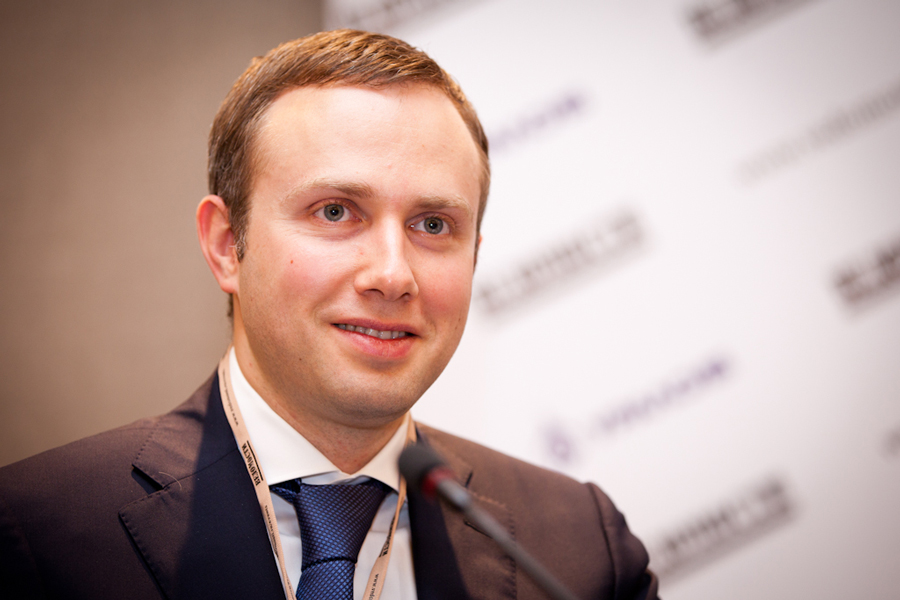
By 2018, the leadership changed in Asi, and Baring and Avetisyan with partners had in their hands “Vostochny”, who earned his best (and with great risks, as he fought fought for the profit of retail lending to individuals) and demanded a person.
Avetisyan had no money for this (or he did not consider it necessary to spend a boring business on this), and Baring seemed to stop believing that from the violent plans of partners to create something profitable from the “eastern” intergalactic financial center (Baring has a rather boring business-to increase invested capital). By the end of 2018, the parties were already suing each other in London and in Moscow, and they accused each other of exactly the same sin-of “inflating” the bank’s capital through transactions for the purchase for the frantic money of some left assets. Baring, in particular, suspects Avetisyan and partners of buying Uniastrum before merging with the Eastern Express of some mushroom farms and canning factories, and Avetisyan Baring in the purchase of the First Collection Agency with a long-long rubles of 2.5 billion rubles. And, according to their version, nothing standing.
In general, the usual dispute of business entities in the classical Russian style. But there is an important ideological background. For Baring and Avetisyan, the “investment climate” is not abstract, but quite practical concepts. If you want, this dispute is about the Russian development strategy for the next decade, and it is seen by the parties differently.
On one side is the investment climate that becomes a little old-fashioned in the understanding of the golden years of the beginning of Vladimir Putin, 2005-2007, when not only the Baring business has bloomed-but also the quarries of most of the most important players in Russian politics and economics, which later turned into states, reputation, and large state posts. This is the time of “equivalent” of the oligarchs, the landing of Mikhail Khodorkovsky and the weaning of Yukos, and we will not forget - the restoration of the volume of direct foreign investment, including American ones, to the Russian economy. It was at this later time that Siemens arranged grandiose concerts of classical music in St. Petersburg, Russian metallurgists victoriously bought specialized assets in the world, and in the Russian market all large banking holdings of the world were awaiting and inquired, and many bought and invested and earned. This is an investment climate of the country as a whole rather authoritarian, but in general prosecutory: it gradually had to get rich, forget gopnik’s habits and acquire the skills of the philanthropist, learn to play Blueberry Fields on the White Royal, buy paintings of old masters and master the skills of playing great world ideological games, from the salvation of Africa jungle and the salvation of the jung Deserts of Asia before the fight against global warming and for female equality. Brazil as Brazil, not without features, but what do you want from Emering Markets?
Such a country needs its own investment climate. On this it may be wishes to earn Baring. About the head of such a country, a high -ranking official from the United States could well say - "Yes, he is a son of a son, but he is our son of a son."
On the other side - Russia, in which 2014 was only logical, but episode. This is another country. This is Russia's instant careers and the unrestrained construction of a new version of the special economy-the state of the winning private-state partnership, in which the money cannot be earned otherwise than between the state budget and offshore. In the new Russia, everything is extremely digitalized and robotic, everything is in motion, the difference between private and state projects does not exist in principle, and the correct process justifies any result, even if there is no one. This is a world of new ideas and megaprojects, the right movement and constant hysterical administrative struggle, it is the economy of high risks and high bets. This is a country in which Dmitry Rogozin flies on an imaginary rocket on the moon so that the Chinese do not occupy a satellite, Rospotrebnadzor studies the poorly translated Japanese experience of measuring the waist of the obese population, and are ready to record children from the Unarmia from three years. In such Russia, by the way, there is also a place for foreign investments - but on Russian conditions: do you think there are no people who want to? And why then in Russia the Hyperloop One management is constantly grazing? Why did Uber invest in Russia? In the end, Russia is an oil country, no worse than Saudi Arabia and Emirates. Full of money. Yes, there are features, Qatar as Qatar. But what do you want from Emering Markets?
For such a country you need another investment climate. And this is another option for a politician to become a “our bitch son”: not only Artem Avetisyan can and want to earn money in such an investment climate. In the Russian Forbes lists in the lower lines is full of various few people known from the outside - Russian, Tatar, Armenian, Chechen, Jewish, but what's the difference, which ones. These people are younger than those who are higher on the list, often they are ambitious children of consisted state parents and younger partners of the previous era of state people. They are respectful while they have this opportunity. But when it comes to the loss of prospects, albeit foggy - they cannot afford to allow defeat, they have everything ahead.
The interests of the FSB
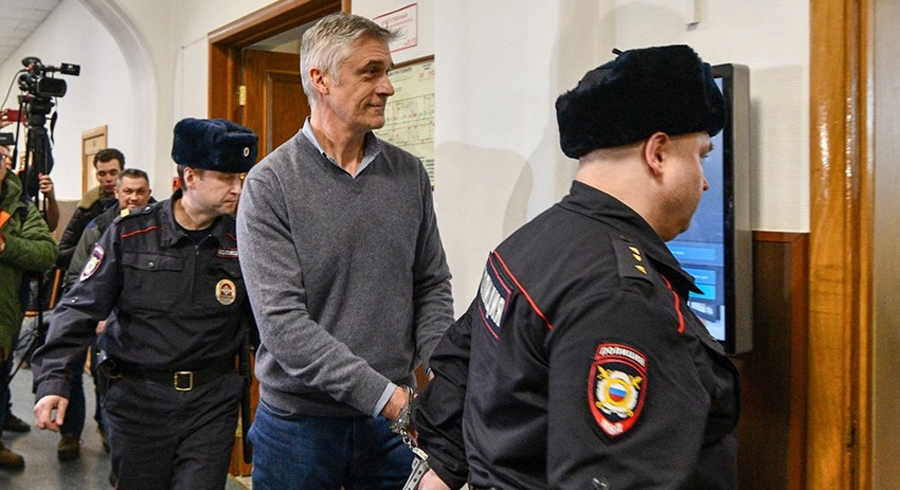
Actually, it was precisely because of this dispute that Michael Kalvi and his colleagues on Friday discovered themselves in the Basmanny court. It is difficult to say why the FSB initiated the case against Baring. It is unlikely by chance: the business of banks in Russia is not only retail lending and project financing, but to this day and “transit” with “cereal”, this is traditionally a clearing, on which the traces of people from the FSB have been discovered daily for the past 20 years. Perhaps, the investment climate is less interested in specific people from the FSB than the complaints of Avetisyan’s allies about daring Americans with whom people from the FSB will not do it anyway - but Russian applicants can. But it is clear that the Russian power structures, despite the legends of their omnipotence in the power, are completely not satisfied with their role in the conservative version of investment climate - but in the “boiling” version of investment climate they have something to do.
In other words, the ducks in their own pond are beautiful, and boiling water on the head to all enemies is also good. What to choose? With whom are you, master of public administration?
То, что суд в пятницу арестовал до 13 апреля пятерых партнеров Baring и их контрагентов, совершенно понятно — суд отчетливо боится ФСБ, а для судей эти арестованные совершенно никто, были бы кто — их бы не привезли в суд в автозаке. А вот Майкла Калви суд в пятницу не арестовал, а лишь продлил ему временное задержание на 72 часа — до понедельника. Но в субботу суд передумал и отправил Калви, как и остальных, за решетку до 13 апреля. И это, похоже, важно. Суд сутки думал, возможно, знакомился с высказываниями главы Сбербанка Германа Грефа, главы РФПИ Кирилла Дмитриева, бизнес-омбудсмена Бориса Титова и еще десятка очень влиятельных людей, сразу и прямо заявивших, что Калви они знают как честнейшего человека, а происходящее — или недоразумением, или чрезвычайным происшествием. Очень многим в российской элите частный случай атаки на устои, в которых private equity funds в России должны иметь иммунитет от кавалерийских наездов башибузуков с приданными им неизвестно кем таранами ФСБ, не понравился. Хотя бы потому, что фонды прямых инвестиций в России под управлением иностранных специалистов являются важным способом умной элиты законно приумножать свои доходы без ненужных глаз. Это вам не санкции Конгресса, инвестиционный климат действительно под угрозой, и впереди другой инвестиционный климат: ой как не вовремя все это затеяно. И субботнее решение Басманного суда — серьезное подтверждение этим опасениям.
Что же касается недоумения правительственных чиновников по поводу того, что происходит, могу лишь предложить на досуге ознакомиться с содержимым инфлайт-журнала специального летного отряда «Россия», который перемещает сотрудников правительства в государственных делах по стране. Декабрьский номер издания, очень скромного и даже консервативного в интонациях, рекламирует для своей аудитории элитный отдых на островах Теркс и Кайкос, новый год в отеле Бурж Аль-Араб в Дубае, Bentley Bentayga 8, многоуровневые апартаменты в элитных комплексах столицы и вертолетные туры в заповедные уголки Камчатки и Магадана. Не знаю, о какой борьбе с коррупцией сотрудники правительства говорят, но общие ценности у них, увы, есть — они в рекламе этого журнала, и проблемы инвестклимата начинаются здесь, а не в ФСБ, не в Басманном суде и не в молодой шпане, готовящейся старшее поколение немного потеснить.