
Translated material
Trust in calculation

The Kremlin has developed a new system of key indicators of activity, common to the domestic political unit of the Presidential Administration and Vice-Governors on domestic policy. With the help of it, they will evaluate the confidence in the president and the governor’s support index by the population in a particular region. In addition, the updated KPI of the election will appear. According to experts, an updated scheme will help to avoid shifting responsibility.
The first deputy head of the Presidential Administration Sergey Kiriyenko announced the introduction of the new system for vice-governors in domestic policy in the Moscow Region. It was developed by the Ministry of Economy on behalf of Russian President Vladimir Putin and government chairman Dmitry Medvedev. “Key performance indicators for vice-governors in domestic politics and for the domestic political unit of the Kremlin coincide, a general KPI system has been created,” RBC reports with reference to sources. In November, according to the results of the meeting of the Presidium of the State Council on national projects, it was decided to introduce it for governors, but now this will be applied to their deputies working in close bunch with the presidential administration. At the seminar, they talked about the goals of this work - stability of the state, the sustainability of development, the well -being of citizens.
 Vladimir Putin at a meeting with the Kamaz-Master team / Kremlin.ru
 The confidence will be based on six criteria, of which two vice-governors are counted in domestic politics-the confidence of the president and the governor’s support index by residents of the region. At the same time, it is assumed that I will not be measured by abstract numbers, they will work with specific needs of the population in different situations. “For example, if we are talking about the resettlement of dilapidated housing, then for the domestic political unit it is important not the number of resettled square meters, but the number of people who have been provided with new housing. The more people were moved, the higher the level of trust, ”RBC said one of the participants in the seminar. If we talk about the patient recently, the issue of garbage collection, while in terms of economic indicators it is important how much has already been taken out, and on domestic political ones - how much is still left.
The KPI elections, as expected, will include the result of the candidate from the authorities or party of the authorities following the results of the campaign, the legitimacy of the elections, the level of turnout. If we talk about the results in the elections of governors, then the task is a confident victory of the candidate from the authorities in the first round. At the same time, here, too, they do not set the task of gaining as many numbers as possible, when calculating the KPI, they will pay attention to the features of the subject. As for the level of legitimacy of the elections, this criterion can be evaluated according to the data of hundreds of questions, such as the ratio of the number of citizens who positively and negatively answered the question of whether they believe in the honesty of the election campaign. The goal is to process information about social dissatisfaction with qualitatively and timely so that it does not turn into protests.
 Sergey Sobyanin with the people/ photo: sobyanin.ru
According to political strategist Grigory Kazankov in the maintenance of the general KPI system, "eliminates the possibility of shifting responsibility to each other, allows you to have a common coordinate system and understanding of common tasks." The expert also considers a good signal that when evaluating the elections, they pay attention not only to the turnout and the result, but also to legitimacy. Political scientist Vitaly Ivanov does not believe that they came up with something new in the Kremlin: “You can call it KPI, you can not call it, but from governors, vice-governors in domestic politics, mayors have always been asked for election results. Starting from the mid-1990s, dozens of governors and their deputies lost their posts for poor election results. ”
Recall that the idea to evaluate KPI officials (Key Performance Indicators - key indicators of activity) has been developing for several years, and recently the technology has been gaining momentum. The main task is to regain the trust of Russians in the institutions of the authorities. With the help of hundreds of questions, they will learn an opinion on many problems, for example, the popularity of domestic tourism or the share of domestic products on the shelves. In 2012, the system was introduced for regional authorities and heads of federal departments. In 2016, it was proposed to introduce additional KPI to evaluate the work of ministers. In 2017, Prime Minister Dmitry Medvedev approved the methodology for calculating nine new indicators of the effectiveness of governors.
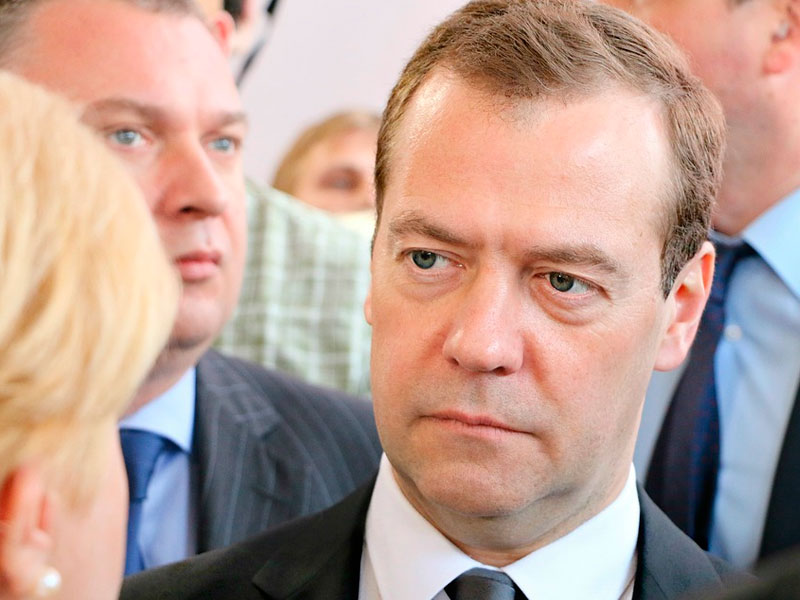 Dmitry Medvedev / Premier.gov.ru
 In November, the head of the Ministry of Economic Development, Maxim Oreshkin, announced that the regions will be installed by KPI on an increase in investment. In January, it became known that the authorities will monitor the implementation of national projects in these parameters, they will have to be compiled with a breakdown by year. At the beginning of this month, the Ministry of Natural Resources and Ecology of the Russian Federation sent for approval to the Ministry of Economic Development a draft methodology for calculating the “Environmental Quality” indicator to evaluate the work of governors, and the mayor sent a bill on “communal” KPI for governors to the government. The indicators are introduced on the ground, for example, the Governor of the Voronezh Region Alexander Gusev specified that the premium part of the salary paid to the employee will depend on performance indicators. According to him, the introduction of the KPI pilot project should begin this month.
It is assumed that since 2020, new indicators will be applied in assessing the effectiveness of activities to increase the level of socio-economic development, and from 2021-in assessing the achievement of the high rate of increasing the economic potential of the regions.