
Translated material
Memory. Tsarevich Alexei
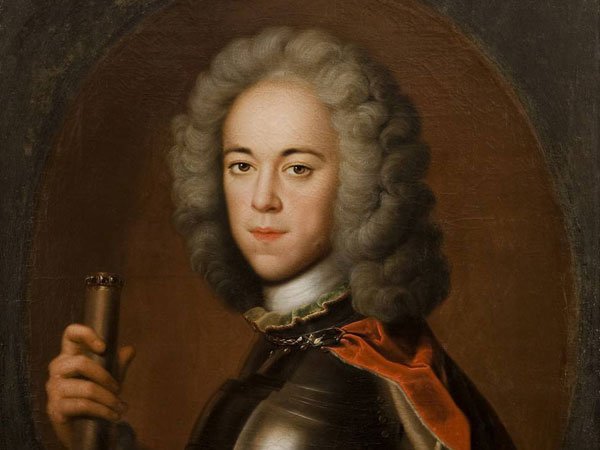
February 18 (28), 1690, Tsarevich Alexei, the heir to the Russian throne, the eldest son of Peter I was born
Personal business
Tsarevich Alexei Petrovich Romanov (1690-1718) was born in the village of Preobrazhenskoye near Moscow. He was the eldest son of Tsar Peter I and his first wife Evdokia Lopukhina. He was named after his grandfather, Tsar Alexei Mikhailovich. The boy spent his childhood in the company of his mother Evdokia Lopukhina and grandmother Natalia Kirillovna (mother's mother).
Since 1698, after the imprisonment of his mother in the monastery, he was in the care of his beloved sister Peter Tsarevna Natalia Alekseevna, lived with her in the Preobrazhensky Palace. In 1701, Peter sent the mentor to his son, the German Martin Negebauer, and since 1703, the German Baron, Dr. Genrich Gyssen, was engaged in the upbringing of Tsarevich. In 1705, after Huissen’s departure abroad, Alexei became close to people hostile to Peter - Naryshkin’s nobles, Princes Vyazemsky. The Tsarevich, in his own words, was surrounded by persons who accustomed him to “have a khaniy and conversion (communication) with priests and blacks, and often ride and drink to them.” The confessor Yakov Ignatiev helped the prince to correspond with his mother, and arranged a date with her, which caused the king’s anger.
In 1707, Peter sent Alexei to Smolensk, entrusting him with an inspection of recruits and a collection of provisions. Later, Alexei controlled work to strengthen Moscow in case the attack of the Swedish king Charles XII. In the same year, Guissen spoke to the prince Princess Charlotte Wolfenbuttel, sister of the future Austrian empress. In 1709 he was sent to study in Dresden, where he was engaged in geometry, geography and French. He also took dance lessons there and attended theatrical performances. In the spring of 1710 he saw his bride, and in October 1711 a wedding was played in the German Torgau German.
In the marriage, the daughter of Natalia (1714-1728) and son Peter (1715-1730), later Emperor Peter II, was born. A few days after the birth of her son, Charlotte died, the prince by that time had already started a mistress from the serf prince Vyazemsky - Efrosinya Fedorov. Father demanded that he correct him and become a worthy heir, or go to the monks. At the end of 1716, the prince, along with Efrosinya, fled to Vienna, hoping to marry her with the support of Emperor Charles VI.
At the beginning of 1718, Peter managed to call his son to Russia. Alexei abdicated his rights to the throne in favor of the young prince Peter - the younger brother born of Emperor Catherine I. The prisoner in the fortress of Efrosinya gave the Tsarevich’s dreams to take the throne when his father, his threat to his stepmother Catherine and hope for the rebellion and murder of his father. Alexei Petrovich confirmed these testimonies, after which he was taken into custody and subjected to torture. Peter convened a special court over his son, consisting of the generals, representatives of the Senate and Synod. In the summer of 1718, the prince was sentenced to death. Two days after him, June 26 (July 7) 1718, the prince died in imprisonment.
The body of Alexei Petrovich was transferred from the Peter and Paul Fortress to the Church of the Holy Trinity. Four days later, in the evening he was buried in the Peter and Paul Cathedral in the presence of Peter I and Catherine.
What is famous
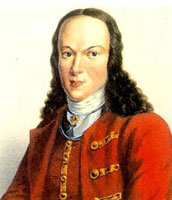 Tsarevich Alexei
The eldest son of Peter I, like his mother Evdokia Lopukhin, is known as the opponent of his father's reforms. With the reign of Alexei, his supporters connected the hopes to turn Russia to the old way of life. The political program of the prince, as far as one can judge by the preserved testimony against him, was reduced to the end of the war, a significant reduction in the army and navy, to facilitate the taxes and transfer of the capital to Moscow.
The reforms of Peter I caused dissatisfaction with representatives of a variety of classes. It was also difficult to exhausted by the simple people who did not understand the goals of endless wars and the meaning of numerous innovations. The clergy was outraged by the violation of traditional values and total control by the state. Representatives of the elite are tired of the more and more duties assigned to them by the emperor.
What you need to know about
After the death of Tsarevich, Peter published a message that said that Alexei, after hearing a death sentence, was horrified, fell ill with something like apoplexy, confessed, communed, asked the king for forgiveness and died in a Christian. However, in the books of the Peter and Paul Fortress it was recorded that on the day of the death of Tsarevich Peter with nine dignitaries visited the fortress and there was “a dash” - torture, over whom - is not indicated. The next day there was the anniversary of the Battle of Poltava, a cannon salute and fireworks were produced in St. Petersburg, decorated ships passed along the Neva. A day later, on June 29, the sovereign celebrated his birthday, during the celebration he launched a ship, and in the evening he gave a feast that continued until late at night. Peter, according to contemporaries, looked calm.
On June 30, the Tsarevich’s body was devoted to the earth in the Peter and Paul Cathedral, next to his wife. They did not declare mourning. The prince’s case continued, and at the end of the year Yakov Ignatiev, Abraham Lopukhin, Ivan Bolshaya Afanasyev, Dubrovsky and Voronov were executed. Other convicts in treason beat with a whip and cut their nostrils.
Direct speech
Efrosinya, the mistress of Alexei: “Yes, he, the prince, used to say: when he will be an sovereign, and then he will live in Moscow, and St. Petersburg will leave a simple city; Also, the ships will leave and keep them; And the troops will be kept only for defense, and did not want to have a war with anyone, but wanted to be content with old possession, and intended to live winter in Moscow, and summer in Yaroslavl. ”
Tsarevich Efrosinya, from her words: “Maybe either my father will die or a rebellion will be: my father, I don’t know, doesn’t love me for the stance, and wants to teach my brother, he is still a baby, and my father hopes that his wife, and my stepmother is smart; And when, having committed this, he will die, that will be a woman’s kingdom. And there will be no good, but there will be confusion: others will become for my brother, and others for me ... I, when I become the king, will translate all the old ones, and gain new ones of my own free will. ”
Peter I is in a letter to the escaped son: “If you are afraid of me, I am encouraging you and promise to God and the court that you will not be any punishment, but I will show you better love if you listen and return to my will. You won’t manage this, then, like your sovereign, I will declare and will not leave all the ways to you for the traitor, like the traitor and the abuse of father, to manage. ”
The case of Alexei went parallel to his mother Evdokia Lopukhina. Alexander Pushkin wrote about this: “In this time, another thing was embittered by Peter; His first wife, Evdokia, tonsured in the Suzdal Pokrovsky Monastery, was brought to Moscow with the nuns, with the Rostov bishop Dosifi and with the treasurer of the monastery, with Major General Glebov, with Protopop desert. Both investigative cases are confused with one another. The former queen was convicted of wearing a worldly dress, in threats by the name of her son, in connection with Glebov; Tsarevna Maria Alekseevna in an attacked sovereign; Bishop of Dosifei in false prophecies, in indulgences to the slutty life of the queen, and so on.
On March 15, Dosifei, Glebov, Kikin, Treasury and Vyazemsky were executed (in fact, Vyazemsky was justified). Baklanovsky and several nuns are carved with a whip. Tsarevna Maria is imprisoned in Shlisselburg. The queen is carved and taken to the new Ladoga. Peter boasted with his cruelty. "
5 facts about Tsarevich Alexei:
Alexei was two years old when Peter began an affair with Anna Mons, met by the king in the German settlement. Two years later, Peter finally left Evdokia. In 1698, the prince actually lost his mother. Peter, who interrupted the trip to Europe over the news of the Streltskiyskiyskiyskiyas, returned to Moscow annoyed, immediately sent his wife to the Suzdal Pokrovsky monastery, where she tonsured her in the nun against his will.
Tsarevich received a good education, knew German and French, Latin, loved to read.
According to the American historian Paul Bushkovich, and Peter and Alexei were Europeans, but everyone took his own from Western civilization. Peter was closer to the Protestant cultural tradition and its rationalism. Tsarevich gravitated to the playful culture of South European Baroque.
In 1722, Peter announced a new order of inheritance of the throne. “Why have they have been pleased with this charter to manage, so that this was always in the will of the government sovereign, to whom it wants, to determine the inheritance,” Peter commanded. He substantiated such a decision by the attempt by Alexei to seize power.
The fate of the prince attracted the attention of writers and historians. One of the most famous paintings by N. N. is the canvas “Peter interrogates Tsarevich Alexei in Peterhof” (1871).
Materials about Tsarevich Alexei:
Article about Tsarevich Alexei on Wikipedia
Biographical certificate RIA Novosti
Biography on Funeral-spb.narod.ru
Biography on to name
Article about the prince in the magazine "Around the World"