
Translated material
Are your rights real in the virtual world?
The virtual world has no boundaries, but its “inhabitants” have rights and obligations. And if Russian lawmakers do not get tired of reminding the latter, then the field of protection of rights is still Terra Incognita. Where to start her research, said the journalist of the greenhouse Julia Kalenkova .
The technological revolution brought generous gifts: we can solve many problems with clicking mouse, and the distances are now measured not by kilometers, but by the speed of the provider. But as the World Wide Web, the relationship between people grew more and more unpredictable.
You are given the right to free communication on the Internet, but not on Telegram, if you are in Russia. You are free to choose from whom to receive letters, but your spam folder is still replenished with “letters of happiness”. And if you think that scandals with the declassification of confidential data concern only giants such as Facebook, you are mistaken. Your search queries, addresses of web pages, IP addresses and other information could sell the same MGTS.
Do you have the right to remain silent?
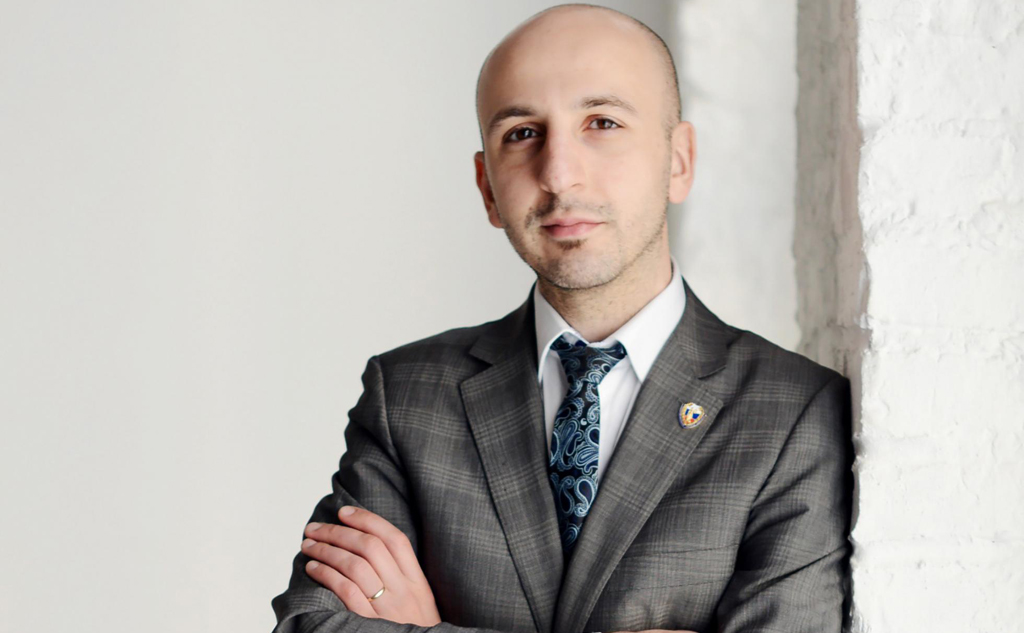
“The first thing that digital rights begin is the right to access the Internet and access to information. Naturally, around them a number of different rights related to copyright, with the right to Privacy, the right to digital assets, ”said the leading lawyer of Roskomvoboda , head of the Sarkis Darbinian Digital Rights Center .
Digital rights:
- the right to access the Internet and information;
- the right to use, creation and publication of digital works;
- the right to privacy, freedom of speech, anonymity;
- The right to access and use computers and other electronic devices, as well as communication networks.
The right to access the Internet seems to us unshakable. In September 2016, the United Nations Council (UN) on human rights issued a resolution with condemning the restriction of access to the Internet by the authorities of states. Meanwhile, only one company has earnedin Cuba last year and only one company provides it. And in Asia countries almost half of the population (52.8% for 2016) do not have access to Facebook or YouTube.
The right to create and publish digital works, otherwise - a copy (copyrighted by material), is now under the onslaught of several forces at once. Since 2015 , the European Union (EU) has been discussing a copyright directive in a single digital market ( Directive on Copyright in the Digital Single Market ). She has already survived two votes and still causes fierce disputes.
Last summer, Wikipedia, in protest against the directive for the day , closed access to some of its sections. Two most acute questions in the document: should Internet sites pay for content producers-primarily to authors of texts, music, video? After all, YouTube and Facebook do not create anything, but get money for advertising. And the second point: can these sites technologically ensure the filtration of content even at the time of its pumping on the server? There are no answers yet, but there are hot disputes, which will probably soon affect Runet.
The right to anonymity is a literally forbidden fruit. Since July 1, 2018, since the entry into force of the “Package of Yarovaya” ( No. 374-ФЗ dated 06.07.2016), the organizers of information distribution and communication operators must store and share with the intelligence agencies not only metadata users, but also all their correspondence, calls carried out by file exchange. In other words, we are talking about everything generated on these sites traffic.
Does this article 23 of the Russian Constitution violating about the secret of correspondence, telephone negotiations, postal, telegraphic and other messages? And Article 24 prohibits the collection, storage, use and distribution of information without the consent of the subject of law, in this case, the user. The contradictions are evident. However, Russian Minister of Culture Vladimir Medinsky guarantees that “in the future we will enter the Internet“ on the passport ” .
Everything you say can be used against you
As you can see, the area of digital rights, and especially their protection, is the fiery borders of our time. An even greater turmoil makes the unwillingness of the owners of these rights to join them. “I have nothing to hide” is a convenient position, if you think only about photographs in social networks. But what if it comes to the theft of a digital personality? The story with Deepfakes (a porn in which the face of celebrities adds a neural network) showed how easy it is to fabricate compromising evidence. Modern services can imitate someone else's voice or find you online from a photo.
- For 12 years that have passed from the first day of personal data protection, Infowatch has registered14.3 thousand leaks of confidential information from commercial companies and state organizations.
- More than11 thousand leaks (78% of the entire base) are associated with cases of compromising personal data.
- Since 2007, today more than 30 billion records of personal data has flowed, including more than 20 billion over the past two years.
That is why, observing duties in cyberspace, you must definitely know your rights. In Russia, the culture of privacy is still very young and the understanding of its importance has not ripened, says Sarkis Darbinyan. He is sure that this is a sociocultural factor and heritage of the Soviet Union - "when everything is common, and even a private life is not."
People do not value issues related to security, secret private life, because only about 25 years have passed since the social system has changed. This is the past of the Soviet mentality: "Do not hide anywhere, and an honest person has nothing to hide." Sarkis Darbinyan
Obviously, each person has a huge number of secrets - from the secrets of personal life and commercial to medical and lawyer. We will talk about the legal aspects of digital rights and organizations that help in their protection in the following articles.
The base of knowledge
- The SAFE project is a collection of materials on digital security. Experts of Roskomsvoboda are divided by useful tools to protect data and communications.
- The blog of Access Now , an international non-profit, human rights, socio-political group engaged in open and free Internet.
- Cases Electronic Frontier Foundation , a non -profit organization engaged in the development and development of new bills to protect user civil rights. By the way, the fund presented an interesting analysis of the “Package of Yarovo-Ozerov” adopted in July this year ( excerpts in Russian).
- The Open Rights Group website, a non -profit organization working on issues of compliance with human rights and freedoms in the digital world, as well as the protection of intellectual property rights on the Internet.