
Translated material
My alien grandmother

Memory disorders, problems with orientation in space, suspicion, attacks of sudden aggression or laughter for no reason ... When dementia turns a loved one into a frightening stranger, the most important thing is to overcome fear and learn to love again
“Let's write a book about mushroom pickers?”, “How is your bakery? I want to bequeath it to you! ”,“ We must press the nurse to the nail! Which one? Well, the one in the kitchen ”,“ Where is my daughter? No, it's not her, why are you deceiving me? I have a girl, and this aunt is some old. ” Recently, grandmother has been offering many strange ideas. And he asks a lot of strange questions. Recently, this is three and a half years: it’s for so many years to a grandmother's diagnosis. Grandma is 82 years old, and doctors believe that she has vascular dementia. Sometimes they add: “You are still lucky that it is not Alzheimer. Then there would be a completely guard. ”
It all started when my grandmother went to the store and got lost. She stopped some woman, called her address and asked her to spend her home. Once at her entrance, she, of course, was very surprised that it suddenly found her. And we, children and grandchildren, were also surprised and frightened: in our family no one had dementia. My great -grandmother thought more than 90 years clearer than many young people. So we had no idea what alarming calls should pay attention to, and decided that my grandmother simply had some kind of glitch. Happens.
But gradually the "glitches" became more frequent. Grandmother could put water in the kettle and go to chat with a neighbor, and when she returned, the kettle was already black. I could hide the documents somewhere and completely forget where they are now lying. She could have been imbued with a sudden unreasonable hatred of someone or something: for example, she suddenly began to terribly annoy the curtains in the kitchen-she stubbornly shot them and was angry with the one who came and hung them back.
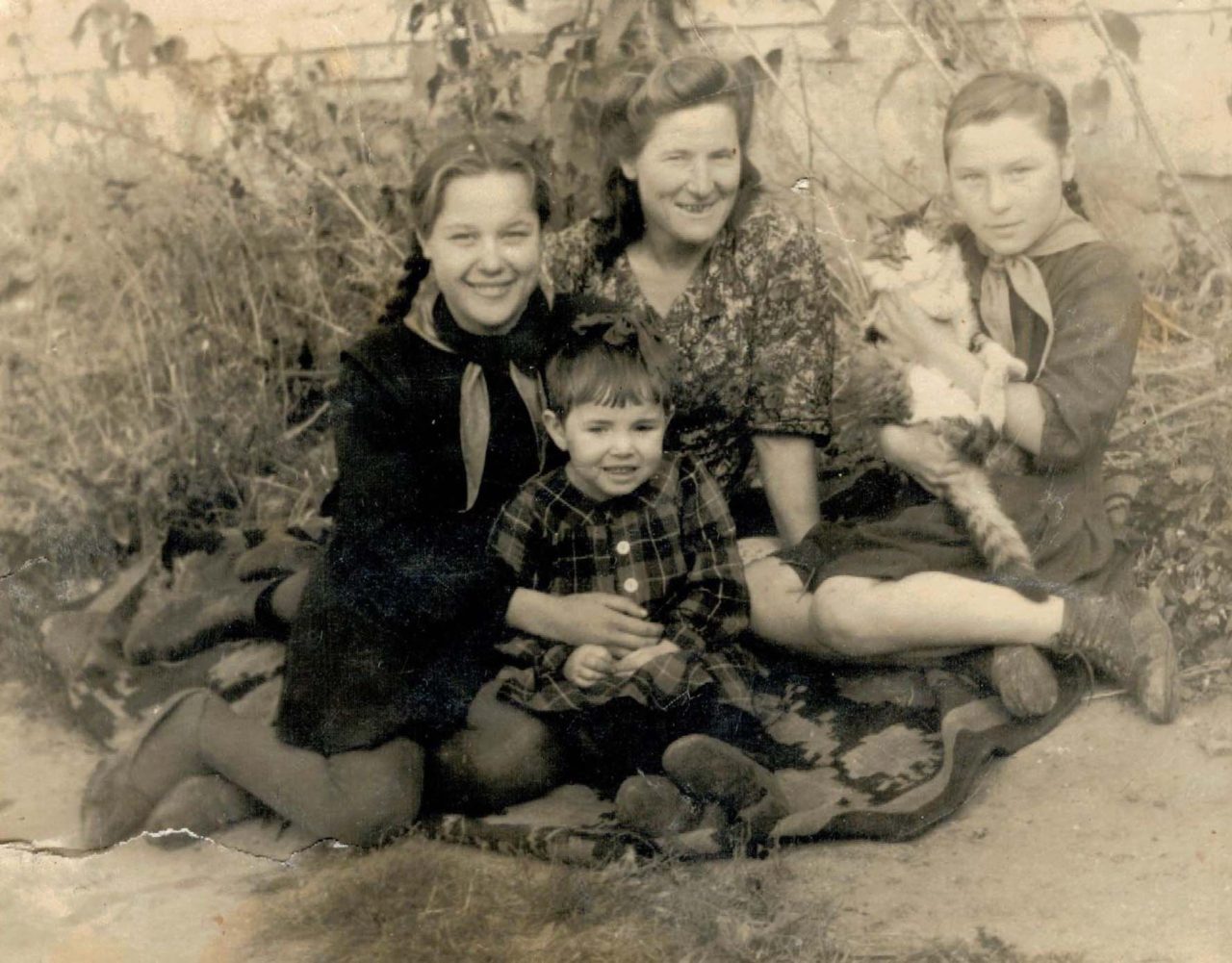 Grandmother (left), great -grandmother and grandmother's sister Aunt Larisa. In the arms of my grandmother, the daughter of one of the neighbors. In the hands of Aunt Larisa, a cat Vaska photo: from a personal archive
And then a dog died with her grandmother, who lived with her for almost 20 years. She died without torment, from old age, lying in her favorite chair. But the grandmother did not understand this. I did not understand that a dead dog lies in the chair - and turned to him as a living. Only then did it come to us that my grandmother seems to be seriously ill.
Grandmother is a horn
When we first called a psychiatrist, I was afraid not only of the conclusion that he would make. It was scary for me that he would scold me: for sure to see a doctor was worth it much earlier, immediately after my grandmother got lost in the area familiar to her from her youth. Then, perhaps, the dementia would be able to stop or at least significantly slow down its development: at that time I still knew little about the syndrome and amused myself with illusions.
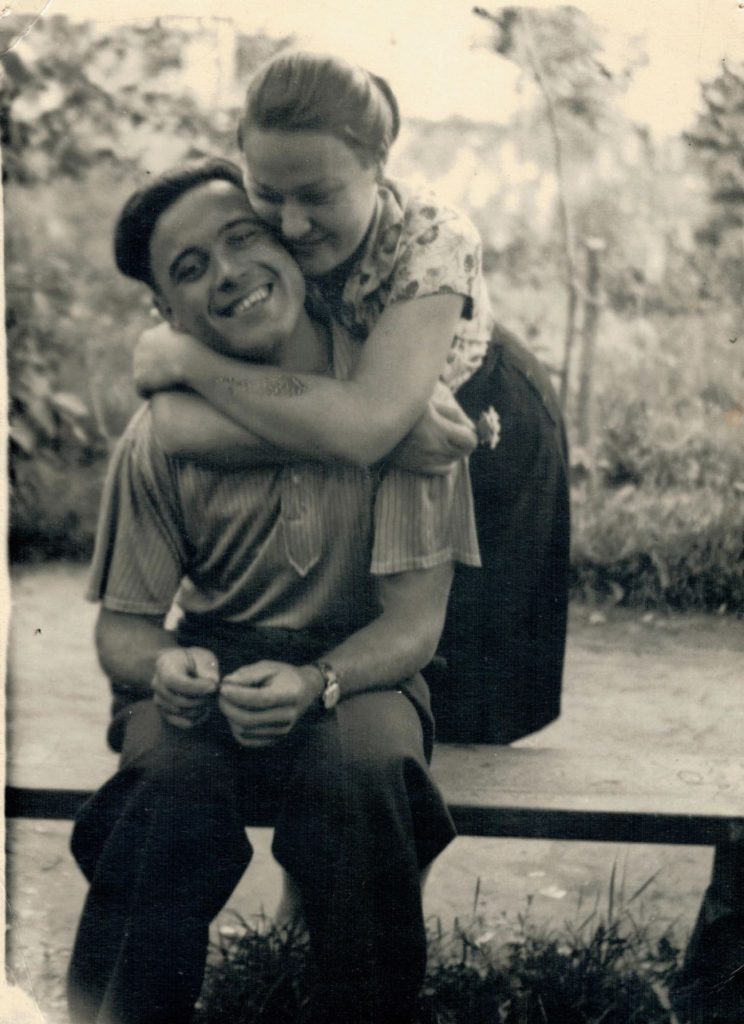 Grandma and grandfather shortly after the wedding, 1950s, Oryol region photo: from personal archive
But the psychiatrist - a young man, almost my peer - behaved very correctly and sympathetically. He listened carefully to his grandmother, found out if she noticed that she began to forget a lot, whether he was worried about this. He gave me the first important lesson: despite the fact that an elderly person with dementia often becomes non -self -state in everyday life, does not remember his name, cries or laughs for no reason and generally seems completely insane, his personality still needs to be respected.
However, the awareness of this did not prevent me from feeling frightened, unhappy, crushed by guilt and anxiety. A relative’s disease, seriously affecting him or her cognitive functions, is experienced as a loss-with all stages according to Kybler Ross: denial, anger, trade and further along the list.
Yes, he or she does not die, does not disappear physically. But it turns into some strange, as if hastily a stranger's stripped illness. Capricious, suspicious, evil. Or vice versa: frighteningly cheerful, stupidly giggling, hovering in the clouds. This is not talked about this, but dementia is sometimes accompanied by both love delirium and sexualized behavior: his grandfather is pestering her granddaughter, taking her for a woman with whom he had a relationship decades ago.
 Right to left: grandmother, her mother, my great -grandmother Tanya, and grandmother's sister Aunt Larisa, Swan Photo: From Personal Archive
Grandmother, an infinitely close person to me, whose presence was always felt nearby in difficult moments, suddenly became a “non -bacon” - someone else's, indifferent, stubborn. She lost the ability not only to maintain a conversation, but also to compassion, to be interested in my life, and just to do what they ask: attempts to persuade the patient with the dementia to drink medicine, change bedding or take a bath sometimes stretch for several days, take a lot of energy and bring to white heat.
Almost unrequited love
The issue of hygiene often becomes especially painful. Even if your relative does not smear excrement on the walls and does not throw the remnants of food into you (and this happens too), he usually begins to pay much less attention to the purity of his home and his body. You can, of course, pay extra to the nurse so that it conducts wet cleaning every day. But physical contact is still difficult. But it was he who ultimately helped me stretch out the first thread from the "nonsense" to my grandmother. In the grandmother's memory there was almost no information about where I live, who I work, how old I am and even what my name is. But her body still remembers how to hug, how to hold a hand, how to smile not someone else's, but her own, a special smile.
The presence of a person with dementia in the family gives rise to a lot of anxiety: you are trying to predict how the disease will develop; You are worried, suddenly a grandmother will accidentally arrange a fire; You suspect the nurse that she will try to quietly send her grandmother to the next world, having previously forced her to rewrite the apartment. But I was most worried about something else. I suffered terribly from the thought: since my grandmother hardly remembers me, then she fell out of love. The dementia of a close relative re -teaches you to love: insanely, unrequited and contrary to everything.
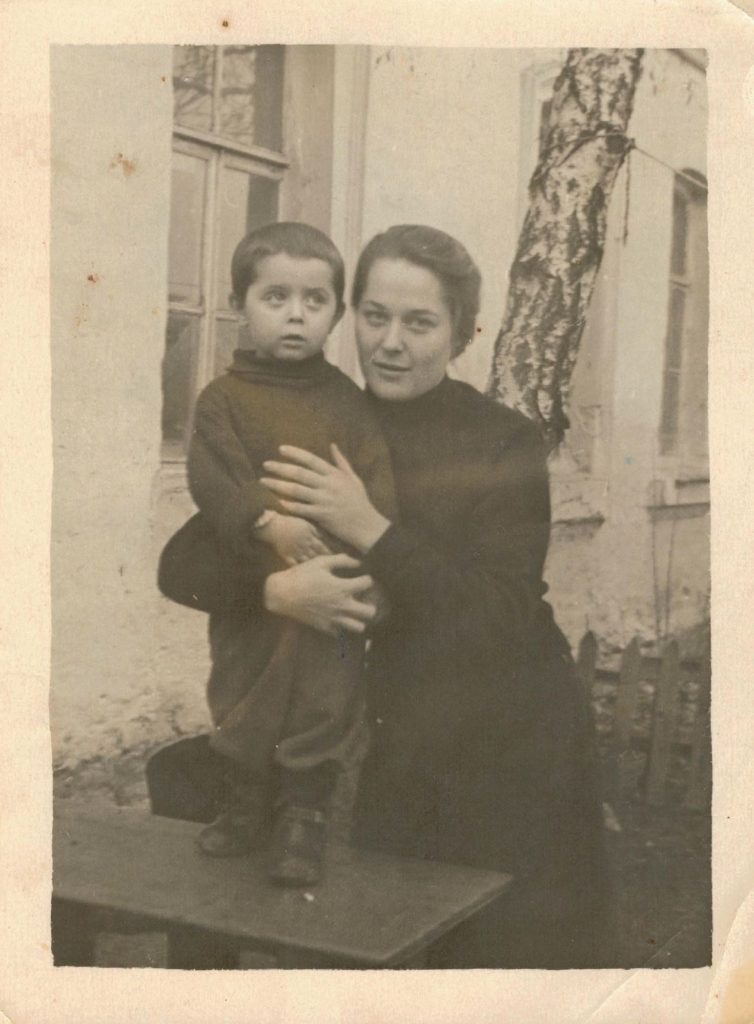 Grandmother and her eldest son, my uncle Andrey, 1950s, Oryol region photo: from personal archive
As I now understand, the most correct solution at the early stage of the grandmother's illness was to admit: angry, screaming, proved, to persuade her to behave “normally”-it is useless. Yes, from time to time my grandmother was able to literally force me to remember how many grandchildren she has and where they live. Or persuade not to hide a wallet from us, because we do not need it. But this took a lot of strength, and the effect was enough for a maximum of a few minutes. Instead, it was necessary to work to accept a reality in which the grandmother would never become the same.
About the same, my cousin Vadim assessed the situation. Other, closer relatives for a long time did not believe that the grandmother was really sick. They thought she was pretending. They tried to catch her on a lie. The periods of enlightenment that became increasingly rare were perceived as evidence that the “actually” grandmother is still healthy. They were sincerely offended when she showed aggression or did not thank if they did something good for her. It seems to me that they tried to protect themselves from pain and despair.
To remember
According to the World Health Organization, in the world there are about 50 million people suffering from dementia. By 2050, this figure can increase three times, which means that today's 20-30-year-olds, the risk of encountering this syndrome in the future increases. But even earlier, many of us will have to see how dementia destroys the personality of our grandparents, dads and mothers, scientific leaders and neighbors on the entrance.
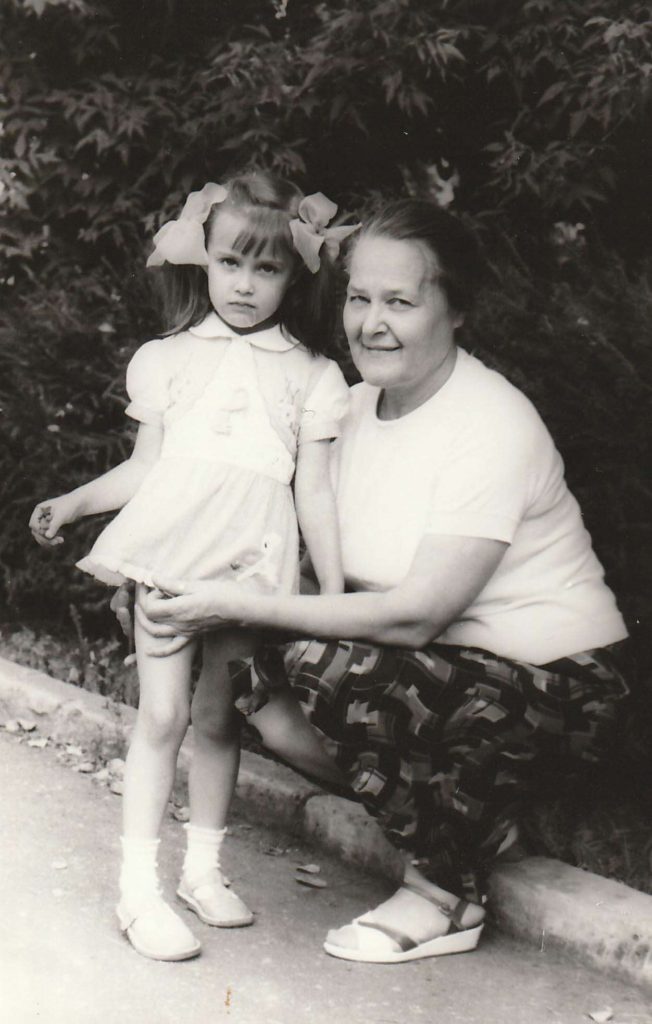 Grandmother and I, the beginning of the 1990s, Oryol region photo: from a personal archive
There are three resources that can help. The first resource, of course, is material: the sooner it is possible to establish life, the better. In our case, it was impossible to transport a grandmother, who lived alone for the last 30 years, it was impossible to one of the relatives: the change of the situation seriously worsened her condition. Therefore, slightly recovering from the shock, we first hired a nurse. Nastya not only ensures that her grandmother ate and takes pills in time, but also walks with her, reads her newspapers, attracts her to simple housework. In a word, we were lucky with Nastya. Alas, not everyone has money for a nurse, and the nurses are different. But you can contact the Center for Social Assistance: even if the social worker will come only a few times a week and will only take on the purchase of products and cleaning the apartment, this will already become a significant help.
The second resource is psychological assistance. Care for the elderly parents is perceived as a holy duty and is usually drawn in sentimental tones: in infancy, your mother fed you breasts, and now you feed her from a spoon. And few people say that it is actually very difficult. Especially if in childhood a daughter or son had a bad relationship with her mother, but now you can no longer just dismiss and close in her room: she needs to take care of her - despite the anger, fatigue and old insults rising in her soul.
I had no offense at my grandmother: only endless love, sadness because she gradually leaves, and guilt for the fact that I cannot help recover. But so far, about a third of time on psychotherapeutic sessions, I spend on living emotions that I experience in connection with my grandmother's disease. And even with professional help, I still have breakdowns when I just sit and cry for hours at home. At such moments, you begin to especially appreciate people who are able to listen to you without condemnation and uninvited advice and just stay nearby.
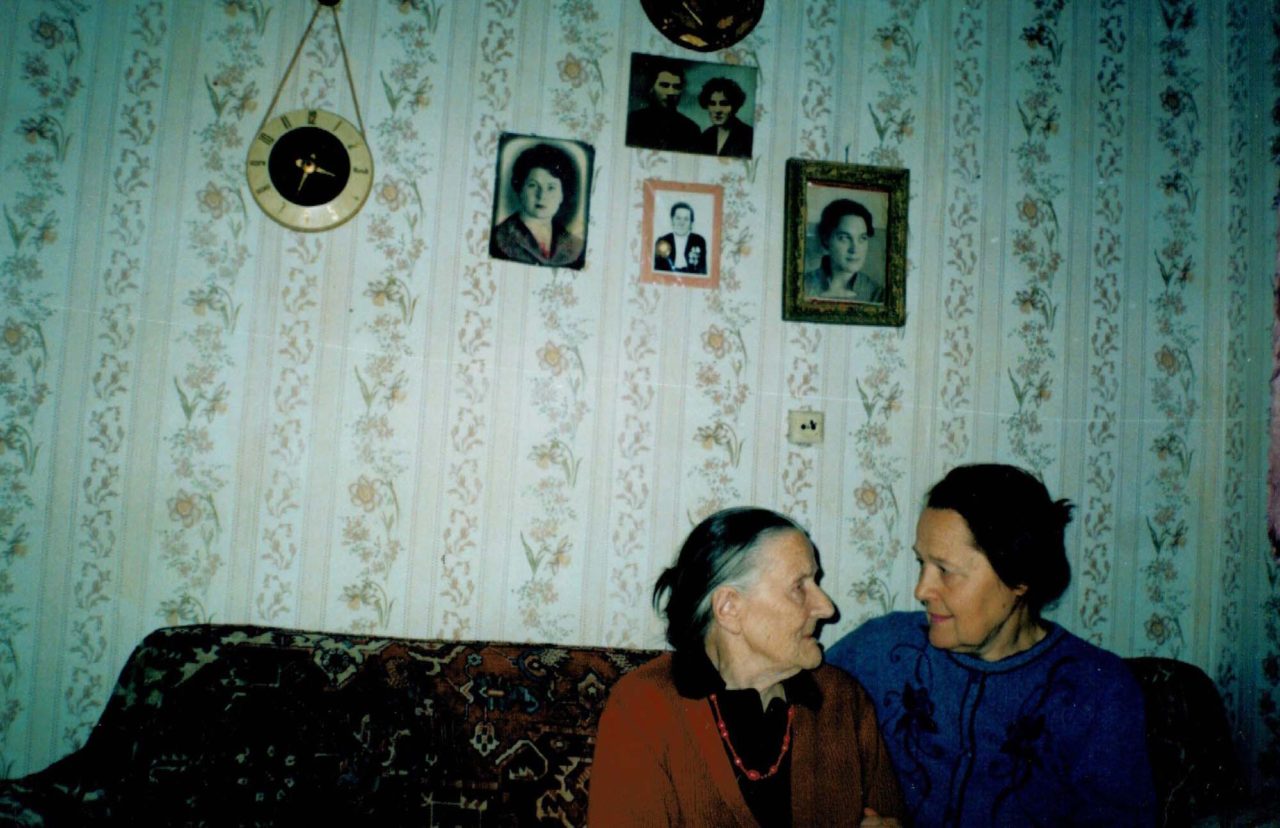 Grandmother with her mother, my great-grandmother Tanya, end of the 1990s, Oryol region photo: from personal archive
Finally, the third resource is its own memory. I remember how, in deep childhood, my grandmother wore me around the room in her arms, rocking me before bedtime, and a huge, terrible moon looked out the window, and I pressed against the grandmother's chintz robe in a flower, looking for protection from her. I remember how my grandmother drove me to the park to ride the North attraction: I rushed in a circle on a plastic deer, and she stood behind the fence and waved my hand. I remember how we made spirals from potatoes together and fried them in oil. I remember how they went to the grandmother's neighbor, to Dyade Yura, who bred fish: he had so many aquariums that they, who were put on each other, occupied a whole wall.
All these memories will remain with me forever. No matter how the grandmother changes under the influence of dementia, no one will take them from me. Today they help me consider the former grandmother in the present and less scared when she turns to me someone else's, unfamiliar face. They give me the strength and courage to call my grandmother, come to her, accept her any: fun, sad, apathetic, too excited. Moreover, all the nonsense and oddities that the grandmother say are also gradually turning into memories - extremely valuable, saving and sometimes even funny. They will also be with me to the end.
And who knows - maybe one day I will really write a book about mushroom pickers. This is not such a bad idea.
Medical Aid Elderly Psychology