
Translated material
To whom "sticks", and to whom - "club"
The Criminal Code has become the main document not only for security forces, but also for businessmen who use it against competitors and even customers

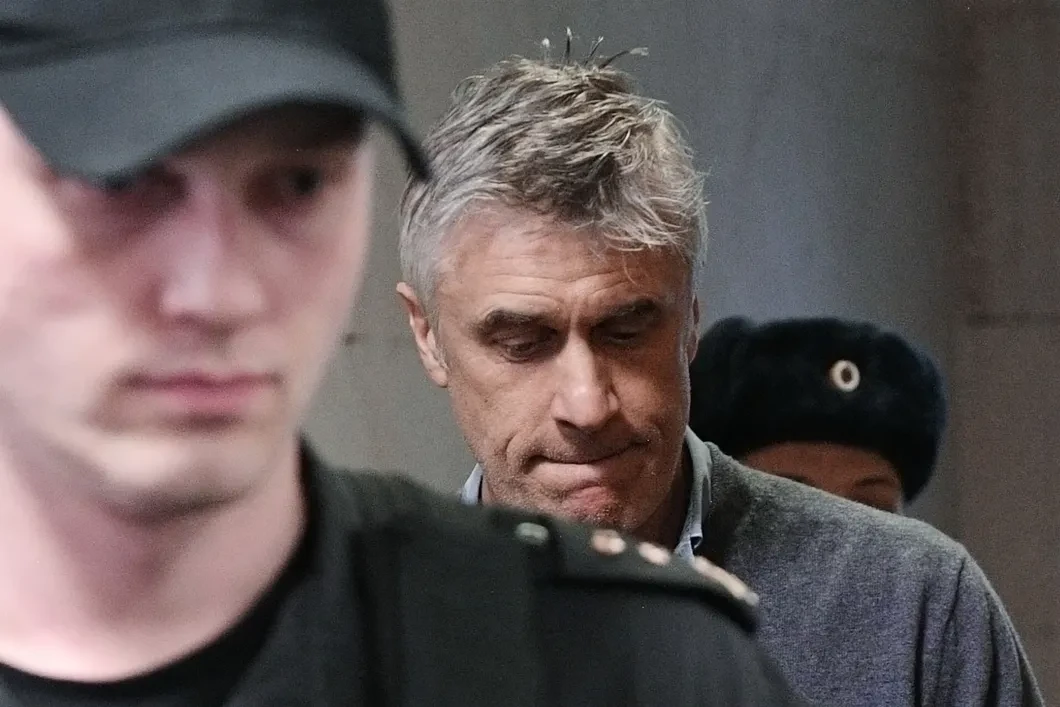
The arrest of the founder of the Baring Vostok investment company Michael Kalvi, as well as four of his partners and top managers, actualized the problem of power pressure on the business. Many representatives of the Russian elite, including the chairman of Sberbank, German Gref, publicly stood up behind Kalvi. Vladimir Putin spoke about the protection of entrepreneurs from illegal criminal cases in a message to the Federal Assembly. And the chairman of the UK, Alexander Bastrykin, promised to create a special hot line and personally listen to the complaints of businessmen.
However, the problem, it seems, is not solved by the elimination of “curds on the ground” - it is how the law enforcement system works in Russia as a whole. As civilian relations, they turn into criminal crimes, explains sociologist Kirill Titaev, director of research on the Institute of Problems of Law Enforcement of the European University in St. Petersburg.
- Russian financiers defended Michael Kalvi. Alexey Kudrin described the arrest of top managers of the Baring Vostok Foundation as an “emergency” for the Russian economy. At the same time, everyone has long been accustomed to the fact that the security forces in Russia intervene in economic disputes. Is there something yelling from the point of view of Russian law enforcement in the arrest of Kalvi and his colleagues?
-You can discuss whether this is a custom-made case or not, but it is important to understand that our law enforcement agencies widely use similar practice in matters in which it is very difficult to see some kind of order. For example, when some microscopic amounts, microbusinesses, etc. appear in the case.
Our fundamental problem is that Russian courts allow you to rewrite ordinary commercial relations in terms of a criminal offense.
My favorite example concerns the company that produces and sets plastic windows. She takes orders for 40 installations per month, but forgets to carry out one installation, that is, she takes an advance, but does not take any action. The client is offended, comes to law enforcement agencies, submits an application, and this case passes quite calmly as fraud, because the contract was concluded, but no steps were taken to execute it.
Business cannot work perfectly according to the rules, it cannot always be profitable, someone always loses, bankrupt, etc. And, in fact, throughout the world the primary is civil law, with the help of which disputes are allowed. And criminal prosecution is some Ultima Ratio (the last argument), it is used only in the most extreme case.
Our model is opposite. The Paradigmal for Soviet law was not the Civil Code, but the Criminal Code. Therefore, the entire description of reality is originally built in criminal terms.
And as a result, we have absolutely any economic failure and even normal economic activity can be described in terms of crime. If we look at statistics, we will see that the main “criminal load” does not fall on underground businesses, not on trade without licenses, but on violations that arise in legal business. Despite the fact that a quarter of the economy, according to Rosstat, refers to the informal sector, 90% of criminal and administrative pressure falls on crimes in the field of legal activity. Therefore, the case of Baring Vostok, of course, is egregious, loud and so on, but it does not stand out, but nothing but size.
- In a country with a more civilized law enforcement system, this would be a regular conflict of shareholders who would understand the arbitration court?
- Yes. And it would be necessary to have a very large investigation carried out as part of a civil proceedings, which, perhaps, allowed to find some signs of a crime. There is an interesting Kazakhstani experience where, at an informal level, it is simply forbidden to initiate a criminal case if there is at least one civil law document in the case. If you have a receipt in your hands, then you first need to go to court for civil cases and only then, if there is reason for this, you can deal with the position of criminal law.
- But in Russia there are such norms. For example, the 108th article of the Code of Criminal Procedure prohibiting the preliminary detention of persons who have committed crimes in the field of entrepreneurial activity. There is an explanatory decision of the Supreme Court of what is considered entrepreneurial activity. Why is it still that the judges find loopholes and qualify violations as criminal?
- This is the fundamental mistake of our reformers, including the well -being, like the Boris Titov team, who made a lot to the appearance of just such a design. The fact is that they tried to protect entrepreneurial activity as something special. Instead of objecting to the idea of criminalization of economic activity in general, they said: “Yes, there is fraud in the field of entrepreneurial activity ...”. For this, special compositions of the 159th article were introduced, the 108th article of the Code of Criminal Procedure was introduced for this. No guys, this is complete nonsense:
The vast majority of what you yourself sincerely call fraud in entrepreneurial activity is not fraud, but simply non-fulfillment of civil law obligations.
For example, a number of largest Russian banks for all problem loans are applied to law enforcement agencies, and law enforcement agencies are quite intensively initiating cases on this subject. At the same time, we are talking about a civil dispute: there is a loan agreement, a loan agreement under which one of their parties turned out to be insolvent. And when the bank gave this loan, he took on this risk. The state and criminal law have nothing to do with it, it is a dispute between business entities. And in the affairs that go there, no one proves the forgery, they prove a completely idiotic thing there: the presence of initial intent on failure, which, in general, is highly strange.
The design of the solution to this problem that we have chosen is obviously flawed, because it leaves discretion for law enforcement and judicial authorities in the field of entrepreneurial activity, despite the numerous and rather sound explanations of the Supreme Court. The investigator comes and does what is called "objective imputation." He says: you are not going to do business, and accidentally allowed the mistake, and you gathered with a criminal intent. The fact that you deny the criminal intent is "in order to get away from punishment." This is what we see in the case of Kirill Serebrennikov and in the Kalvi case-some objective imputation when people do something together, and then they were told that they gathered five years ago with the aim of committing a crime.
Such stories are in world practice, but in this case intent is proved. It is proved and not charged. How does this happen? It is proved, as a rule, by audio and video recordings or, in extreme cases, by witness indications where we met and agreed that we were misleading someone. The intent should manifest itself in something, it should be objective, fixed, confirmed by the statement of the subject of intent.
-That is, the presumption is that intent should be sought in existing civil law agreements, and not in the heads of investigators?
- Yes, the presumption is that a person commits any action without a goal to break the law. He can break the law by stupidity in the way (not to give a loan), he may make a mistake and not calculate his capabilities ... What is the fundamental difference here? There are actions that the criminal per se is the illegal seizure of other people's property, when they are selected by force that it does not belong to me.
In our country, a person puts performances, invests money, etc., and then the investigator comes and says that he had intent, and does not lead to evidence of this intent.
And until we solve this fundamental problem with the objective imputation of intent with regard to economic activity, nothing will change. Because it will be possible to say: yes, 20 years ago, Kalvi came to Russia for the original purpose to steal 2.5 billion rubles.
- The authorities often talk about the need to soften criminal pressure on entrepreneurs. But this category itself-criminal economic crimes-generally makes any sense?
- No, she is crazy. There are several categories of crimes around the world. A wider, umbrella concept is White Collar Crime (white -haired crime), all the others are called Blue Collar Crime (blue -breed crime). White -haired crime is a crime that requires a person of some preparation and some position. It is divided into several parts. The most understandable is the crime of companies. This is when a legal entity is a criminal, not an individual. For example, when the plant poisoned many people, and the leadership knew that it was poisoning people, a crime was committed in this situation.
The second option is all kinds of complex fraud. And they are separated from ordinary economic activity on two principles. Or we have a testimony of intent, that is, a person spoke aloud or wrote something somewhere, which indicates an understanding of the illegality of his actions. At this moment, an economic crime arises. The second option is when we understand that he did not conduct any other activity that we identified as an obvious crime. As, relatively speaking, Bernard Meidoff. He built the Pyramid. Could he believe that this pyramid is real economic activity? How did the proof in court on meidofffoff go? It was proved that he read such and such books that he was prepared this way, accordingly, organizing just such a scheme, he could not help but understand that he was there to be misleading customers.
This is another very important point: the situation when the declared differs from the real one. That is, for example, I take money from you and I say that I will invest it in the shares, and I give it as dividends - I work according to the pyramid scheme. Usually we are talking about situations where there is no activity, but I took all your money and distributed it as dividends, then I attracted it more and so on. These are all kinds of brokerage fraud and so on.
You can not commit a crime in the field of economics without having intent. Another mandatory requirement is the onset of consequences. And we saw this in all the high -profile affairs: in the case of "Yves Rocher" and in the case of "Kirovles". But in fact, this is no exception, this is not some kind of tool that is selectively applied to Navalny or Baring Vostok. This is a tool that is used in the same way at the bottom level.
- The head of the RDPI, Kirill Dmitriev, made a motion to mitigate the preventive measure against Kalvi. How often in Russia they are abused by conclusion in a pre -trial detention center?
- The measure of restraint around the world is the conclusion of a person in respect of whom sufficient evidence has not been collected in order to consider the crime proven. And there is reason to believe that his further finding at large will either interfere with the investigation, or he will continue his criminal activity.
Case, who understands all the textbooks of forensics: you and I come to the place of murder and see there a sleeping drunk person, next to which is a knife and a corpse. But actually, nothing prevents the assuming that three were drinking there: one killed and left, and the second by that time was already sleeping drunk. And we will need several days to deal with this. Nevertheless, we lock this person in a pre -trial detention center, because we assume that otherwise he will run away, which is completely rational and correct. And we have an institution of rehabilitation. If we found that it was not him, we must release him and pay him something about a thousand rubles for each day spent by jail.
So this should work more or less all over the world. It really works like this in Europe, the USA is a little worse, in Latin America and South Africa it is very bad (there the average detention was 7 years in 2012, all this time people were in prison and waited for courts).
How does it work with us in practice? We use it in real life with approximately the same intensity as all over the world. That is, it cannot be said that we literally locked everyone in a pre -trial detention center for any reason. What is our feature?
Firstly, if not torture, then quite difficult conditions of arrest. When we take a “white collar” and send it to a pre -trial detention center, he is very bad there.
Even if we treat it as loyal as possible and put it on the BS (this is a “safe content”, but everyone is deciphered as “former employees” - this is what former judges, prosecutors, lawyers hold), they are still not smeared with honey.

Secondly, our courts do not understand two things. In one, they are not very and should understand the law - this is in the degree of proof. They consider the issue of necessity. The decisions of investigators look approximately as follows: "It is accused of a serious (especially serious) crime, may hide or prevent the investigation." How he can hide and how to prevent the investigation - this issue should disassemble the court. The court does not. My favorite example: that very often the presence of a passport becomes a pre -party committee. And when the side of the defense says: “Let us simply deposize the passport in court,” - this option is usually not considered.
- And if we are talking about economic crimes?
- When accusing heavy fraud, arrest is quite likely even in Europe. The requirements for the evidence base will be significantly higher at this stage, but if the evidence base is satisfactory, then the probability of a preventive measure associated with imprisonment is quite noticeable.
- In the recent message of the President, the Federal Assembly Putin once again said that "a conscientious business should not constantly go under the article." Actively, Medvedev began to talk about the humanization of economic crimes within the presidential term. Have you noticed any progress since then?
- Since 2009, there have been two waves of changes. One is connected with the specification, with an attempt to highlight this delusional category to determine fraud in the field of entrepreneurial activity (Article 159 of the Criminal Code). It was a rather long story. And she did not take off. Or soared badly.
The second story that was going on in parallel is, relatively speaking, decriminalization: a decrease in sanctions, the removal of the lower thresholds of punishment from very many articles, the expansion of the grounds for terminating affairs. The last point for entrepreneurial articles did not work at all. Humanization worked for entrepreneurs, as the research of my colleague Irina Chetverikova shows, but to exactly the same extent as for all other crimes.
And there were several private decisions. For example, about the fact that tax affairs are initiated only at the statements of the tax inspectorate. Then there was a rollback. There was a period when it was clearly visible in the statistics that the criminal prosecution for tax crimes really became Ultima Ratio, as it should be. If a person has not paid taxes, we need him to pay taxes and compensate for the costs of investigating his crime. After that, he is already punished by this board and can move on.
- So, after all, it should be with any economic crimes: the main goal of the state in this case is compensation for damage.
- Yes. It must be admitted that our laws, in general, are similar to global. For fraud in Germany you can get six years. But, again, this is a situation of fraud of a “healthy person” when there is a prove to fraud and proving damage. We have neither one nor the other.
Hence these stories in criminal law about microsumma. All the power of the criminal law falls on a person who stole 500 rubles - this is generally incomprehensible to the mind!
We always think of a category of violation of the law, and not a category of damage or danger.
- The famous "We act within the framework of the law."
- Yes. That is, the violation can be absurd, but all (including the first persons) say: "There was a violation."

- It turns out that after each call, stop the business administrative pressure either symbolically decreases or even grows. Why is this happening? Are law enforcement agencies so inert that even the first persons of the country cannot break their resistance?
- Here we are returning to the problem with which we started. In their world, nightmare, this means coming completely unreasonably, and better even with corruption motivation. And in all other cases they say to you: "Well, there was a violation, there was a crime." The idea that something may not go so in virtue of intent is, in principle, there is no. If I took a loan, I started building a business, but my business burned out, and then I had a nervous breakdown, and I spent the second half of the loan on the resort, then in their world it is a crime. Притом что это обычная гражданская безответственность, которая дальше решается через взыскание на активы, через банкротство физлица. Потому что умысла на преступление не было. Например, я мог совершенно честно полагать, что я сейчас проведу полгода на курорте, восстановлюсь, я же гениальный предприниматель, вернусь и эти деньги отработаю.
— Как вы оцениваете президентские поправки к 210-й статье, по которой руководство преступной группой становится особо тяжким преступлением? Утверждается, что это поможет борьбе с «ворами в законе», которых раньше можно было привлечь только за совершение «общественно опасных деяний», но не за сам факт членства в ОПГ .
— Это ужасающий кейс. Мы видим, что для людей, у которых два столпа образования — плохо понятая марксистская политэкономия в советском изводе и плохо понятая идея «законности», — любая предпринимательская деятельность преступна почти по определению. Почти всем, кого привлекают за предпринимательские преступления, шьют организованную группу, несмотря на разъяснения Верховного суда. Верховный суд говорит, что нельзя так делать. Они говорят: «Ну, они сначала были преступной группой, сговорились, а потом создали для реализации своих преступных целей предприятие».
У Верховного суда довольно странная в этом отношении политика, я ее не могу ничем объяснить: они регулярно высказывают свои позиции в решениях пленума, но не высказывают их в надзорных решениях по конкретным делам. То очень мало отмененных приговоров. Какие-то истории есть: например, прошлой весной они наконец-то опубликовали собственную надзорную отмену по малозначительности по экономическим делам. Часть 2 статьи 14-й Уголовного кодекса говорит о том, что если ущерб не является значимым, то деяние не является общественно опасным.
И есть такая страшная статья 160-я (присвоение или растрата), вот по ней есть часть 3-я (с использованием служебного положения), и должностное положение — под него подтягивается более-менее все что угодно. Вы журналист? Должность занимаете? Получили деньги на командировочные расходы в силу того, что вы являетесь журналистом? Соответственно, если вы их как-то не так потратили, вы совершили не просто растрату (ст. 160-я, до двух лет, и там еще есть нижний порог в 2500, ниже которого растрата не считается преступлением), а 160-я ч. 3, где нет нижних порогов, и даже если вы ошиблись на 1 копейку, вас можно привлечь к уголовной ответственности по тяжкой статье (а это невозможность примириться и много-много чего more).
Конкретных кейсов на 1 копейку я не видел, но, например, было дело в Оренбургской области, когда
ветеринарный инспектор не сдал в кассу 500 рублей и получил, по-моему, полтора года условно и несколько лет запрета на занятие профессиональной деятельностью.
— Если какие-то крупные дела мы можем объяснить заказным использованием административного ресурса, то вот такие мелкие истории — это продукт палочной системы?
— Палочная система — это первая фундаментальная проблема. И есть вторая — это большая склонность нашего бизнеса использовать эту правоохранительную дубинку. Как банки, которые подают на неплательщиков заявления в Следственный комитет по мошенничеству. Такие заявления просто не должны приниматься.
То же самое происходит с трудовым законодательством. Потому что довольно много кейсов по той же 160-й — это явно преследование неугодного работника. Вот два кита, на которых держится эта более-менее идиотическая система.