
Translated material
Palliative in law
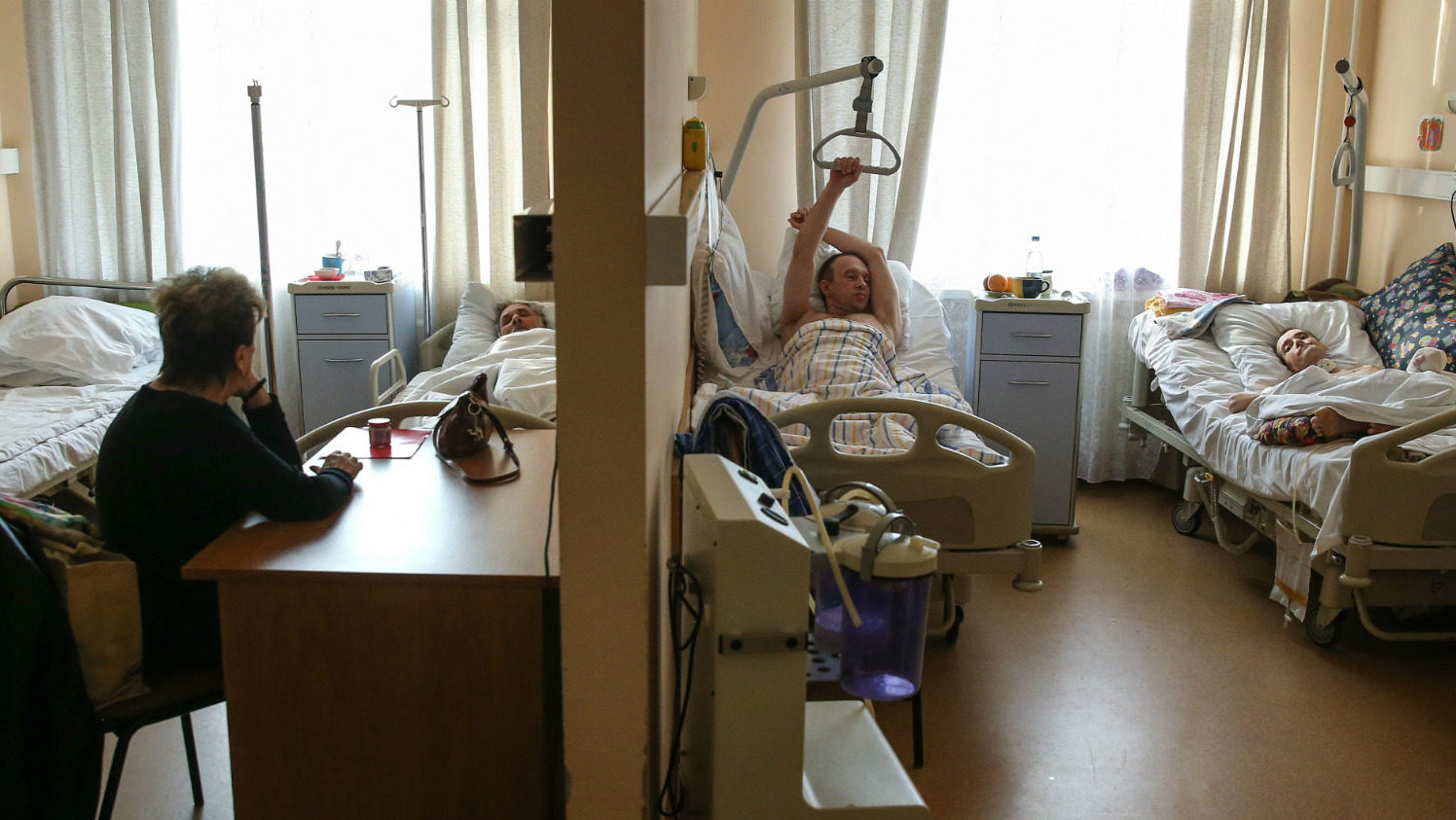
The State Duma adopted a law on palliative assistance. What is it and will the situation change?
The need for changes and creating a full -fledged system of palliative assistance has long been discussed. But in order for this problem to finally move off the dead point, it took a series of suicides of cancer patients and the active activity of public organizations, whose locomotive was the Hospice Fund “Vera”. And a year and a half ago, Vladimir Putin signed an order on the preparation of amendments to the legislation expanding the concept of palliative medical care (PMP) and establish uniform standards for its provision.
What can change? The law, adopted the other day by the State Duma, clarifies the concept of “palliative medical care” and determines the procedure for its provision on an outpatient basis and at home, as well as the procedure for social services for mentally ill people (what is usually called a hospice).
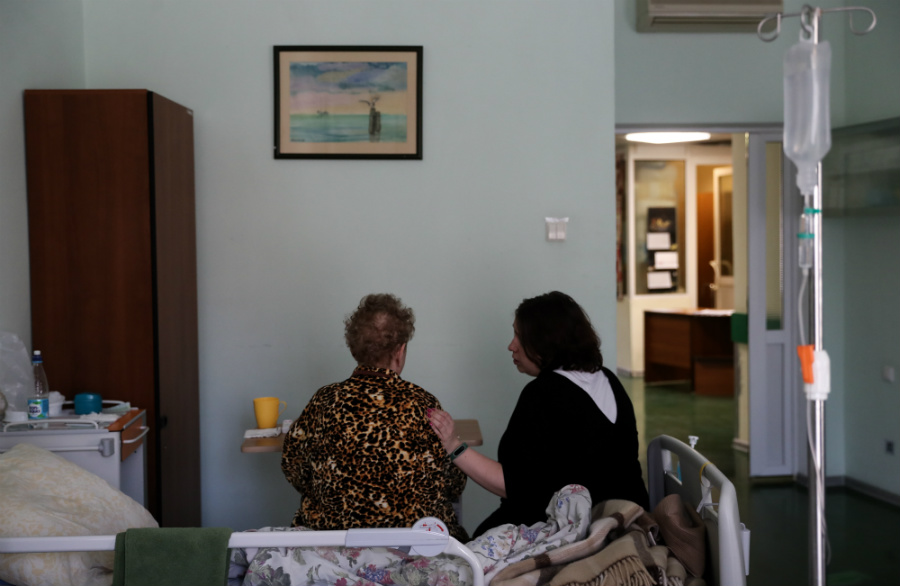
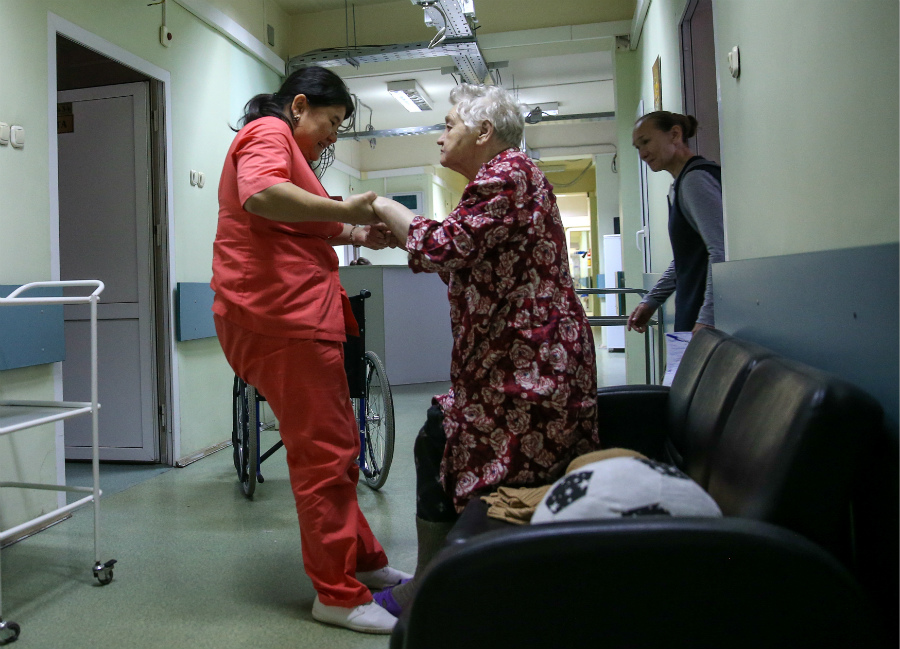 A nurse with a patient in the center of palliative care photo: Valery Sharifulin/TASS
The professional community recognizes that so far the law is framed and means (even not yet solving) not all problems. According to the head of the fund, the head of the Moscow multidisciplinary Palliative Assistance Center, Nyuta Federmeser, now the minimum level of palliative assistance is spelled out by law and approached world standards, it remains to implement it.
This is waiting for every second
Today, today there are only 12 thousand stationary beds on which palliative patients are the necessary complex of medical interventions, and 16 thousand beds in nursing departments and hospices for patients in need of medical and social care. And this, of course, is absolutely not enough for the country, in which, according to WHO, the number of people in need of palliative assistance can reach 850 thousand, the director of the Higher School of High -Health Institute Larisa Popovich told at the hearings in the State Duma.
All hospice assistance is palliative, but not all palliative help is hospice.Features of palliative medical care | Features of medical and social care (hospice) | |
Who is the help? | Patient with an incurable disease | A dying patient (the expectant life expectancy is less than six months) |
When is the help? | Always when the patient needs a complex of medical interventions | At the last stage of life, when treatment no longer gives results and a prognosis for life is an unfavorable |
Hospitalization | To the centers/hospitals of palliative medical care and department of palliative medical care as part of multidisciplinary hospitals | In hospices (medical and social assistance using opioid analgesics), nursing departments (without the use of opioids) |
Is there a special, including instrumental, treatment? | Yes. Active treatment of symptoms is performed | No, only anesthesia |
When is the help? | At any time during the disease | At the last stage of life |
How long can you be in a hospital? | The duration of hospitalization is determined by the standards of the disease | State hospice-14-21 days. Hospitalization of patients in the nursing department is possible for up to 28 days |
Optimization victims
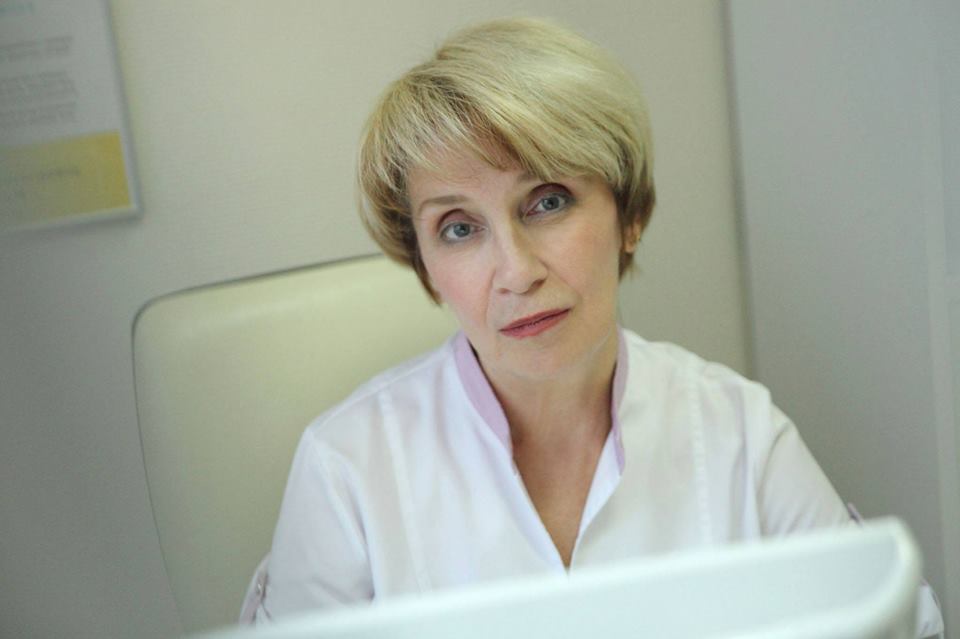 Olga Demicheva photo: from personal archive
Another feature of domestic palliative care is that it is limited mainly by accompanying dying patients. Meanwhile, there are a lot of serious illnesses with severe pain and other symptoms that lead to disability. And if in the last days of life, when people need hospice help, it is no longer important than the symptoms caused, and patients are no longer treated, but only anesthetize, then for chronic patients this approach is unacceptable, the specialist in palliative medicine, endocrinologist Olga Demicheva. A special treatment is required here, but it becomes more and more difficult to get it. “The reduction in the number of beds in the hospitals of the therapeutic profile and the strict requirements for the bed-day led to the fact that a huge number of hopelessly sick people were literally thrown into the hands of confused relatives who did not understand how to help them,” says Demicheva.
So, in Russia today, according to various estimates, from 70 to 150 thousand patients with multiple sclerosis. In Moscow, there are more than six thousand such patients and about one and a half thousand of them need PMP, said the neurologist of the GKB No. 81 named after V.V. Veresaeva Vladimir Ovcharov. However, today the compulsory medical insurance system involves in case of exacerbation of multiple sclerosis only hospitalization for six to seven days. During this time, you can relieve exacerbation, but it is almost impossible to choose the right drugs. According to Ovcharov, the city should have a department intended for the most severe contingent of patients with multiple sclerosis, where people could get not only necessary care, but also qualified medical care.
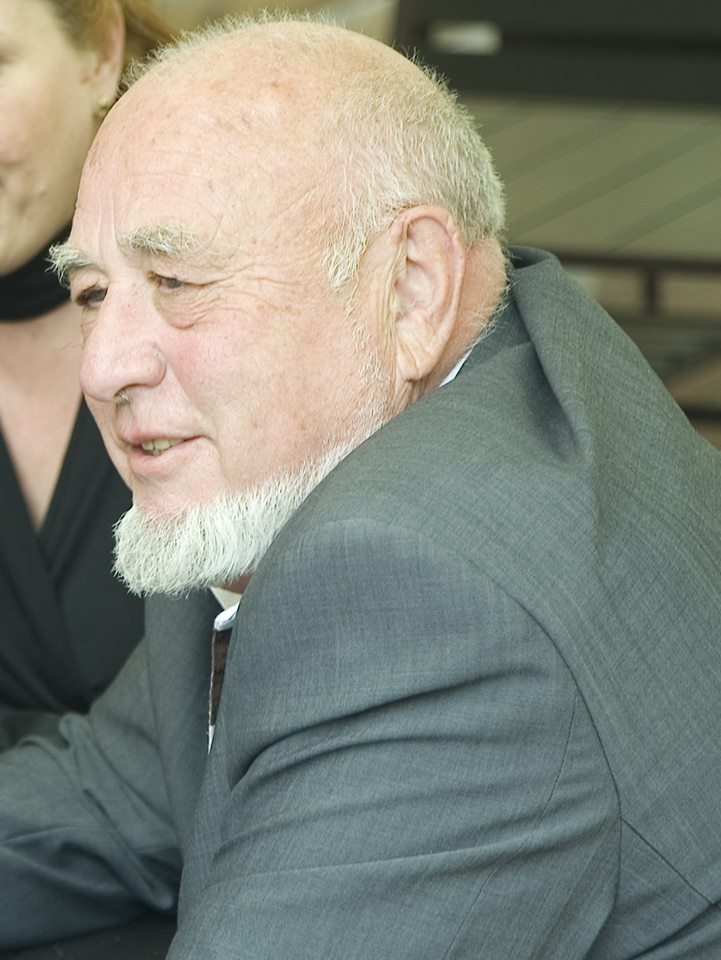 Leonid Benenson Photo: From Personal Archive
The most annoying thing is that more recently in Moscow, such a department was: the center of multiple sclerosis worked in the city hospital No. 11, under the root of the “optimized” in 2014. A year before, the head physician of the hospital Leonid Benenson became the laureate of the Incology Prize in Vita Veritas for the creation of the first oncological department of palliative treatment as part of the therapeutic hospital. The department, on the basis of which Russian palliative assistance began to develop, appeared in the country in the late 1980s, when there was not even such a thing as palliative medicine. And it was the 11th hospital that became the clinical basis for the first Russian scientific groups that shared Benenson’s belief that “that which is considered palliative methods today can become a medical process that extends life.”
This is not the end
Unfortunately, today in Russia palliative medicine is increasingly driving into the narrow gate of End of Life. According to the associate professor of the Department of Palliative Medicine MGMSU them. A.I. Evdokimova Mark Weissman, many people suffering from severe chronic diseases with proper medical support can live efficiently and long for a long time. But very often such patients are written off from accounts ahead of time, without even trying to treat.
 Mark Weisman Photo: From Personal Archive
Although it is customary to say today that “cancer is not a sentence,” and this is true, very often at cancer patients look at the doomed, and they rarely do the operation that are not related to the radical treatment, says Weissman. He gave examples when patients with inoperable stomach cancer, in which the gastric lumen has narrowed so much that the food stopped passing, sent to the hospice. “The relatives of the patients turned to us for a consultation, and the patients were hospitalized in the hospital, where they were conducted by a minimally invasive stomach stenting operation,” the expert said. - People began to eat, well -being improved. Of course, their life life is limited, but its quality will be completely different. And there are many such examples. The same situations with patients who are suffocated due to the pressure of the tumor on the trachea or bronchi, and they can also carry out minimally invasive palliative methods. This is only a small part of the possibilities that palliative medicine has today. ”
According to Weissman, many confuse the concepts of the terminal stage of the disease and the terminal state. “The terminal stage is the final stage of the disease, when it is no longer possible to treat the disease itself, but this does not mean that the patient is in a terminal state, when a sad outcome is very close,” the expert explains. “A person can continue to work, maintain physical activity.”
 In the center of palliative care photo: Sergey Savostyanov/TASS
As for the treatment of pain syndrome, it does not boil down to the thoughtless prescription of painkillers, when the doctor focuses only on its intensity and ignores other factors, Vaisman believes. “The pain is always subjective, it is impossible to measure it with kilograms and centimeters,” the expert explains. - In our practice, there are patients in whom the pain is not directly related to the disease (or can be caused, for example, constipation) and after eliminating these causes passes without painkillers. But, unfortunately, today in the PMP the clinical thinking of a doctor is pushed aside. And this is a very dangerous phenomenon. "
What to do
Whether the situation will change after the adoption of a new law is now difficult to say. But there is a chance. PMP is required for patients with a variety of diseases, so the forms and conditions of such assistance should also be different.
 George Novikov Photo: MGMSU
And in theory it is all. Regional models of organizing PMP, which with amendments to geographical, demographic and economic indicators could be taken as a basis in each subject of the Russian Federation, were developed and proposed by a group of experts under the leadership of the Chairman of the Board of the Russian Association of Palliative Medicine, head. Department of Palliative Medicine MGMSU named after A.I. Evdokimov Professor Georgy Novikov. Models include outpatient assistance in PMP offices and at home by visiting cartridges, as well as treatment in a day and round -the -clock hospital. Moreover, stationary assistance should be organized strictly according to indications. That is, patients who need PMP are sent to the centers/hospitals and departments of the PMP. And medical and social assistance to dying is provided in the hospice (using opioid analgesics), or in the departments of nursing care (without the use of opioids).
In the new law, the “green light” is finally given to day hospitals, which can become the release of incurable patients for many families, especially when it comes to sick children, Professor Novikov notes. However, so far there are still no specialized hospitals and centers that exist in a number of regions. In addition, the PMP unit is entered only in two orders of medical care - according to the profiles of “oncology” and “geriatrics”. And this is in a situation where oncological patients are only a third of all palliative patients.
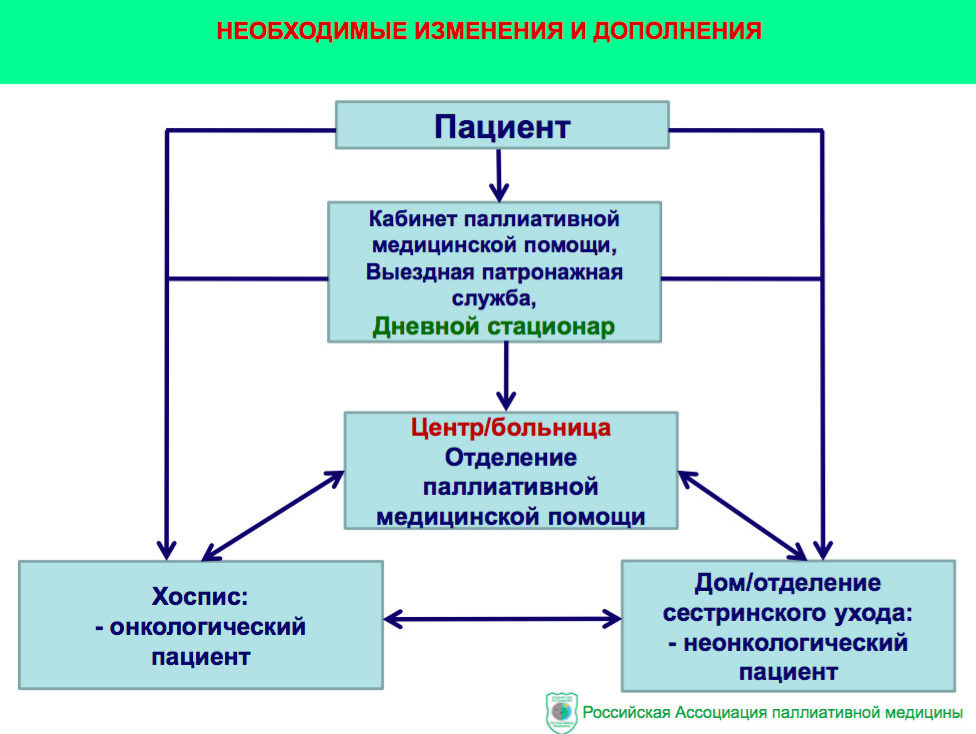 Slide from the presentation "Proposals for the development of palliative medical care to patients in the Russian Federation" Photo: MD, Professor Novikov George Andreevich/Russian Association of Palliative Medicine
Outside the competence of the Ministry of Health
According to Nyuta, Federmeser, the adopted document did not include issues that go beyond the sphere of responsibility of the Ministry of Health. First of all, it is necessary to achieve complete decriminalization of the responsibility of the doctor, who today is responsible under Article 228.2 of the Criminal Code for any errors related to drug trafficking. It is also required to derive the concepts of propaganda and informing in anti -drug legislation in order to separate the informing for medical purposes from drug promotion - today the concept of medical informing does not exist.
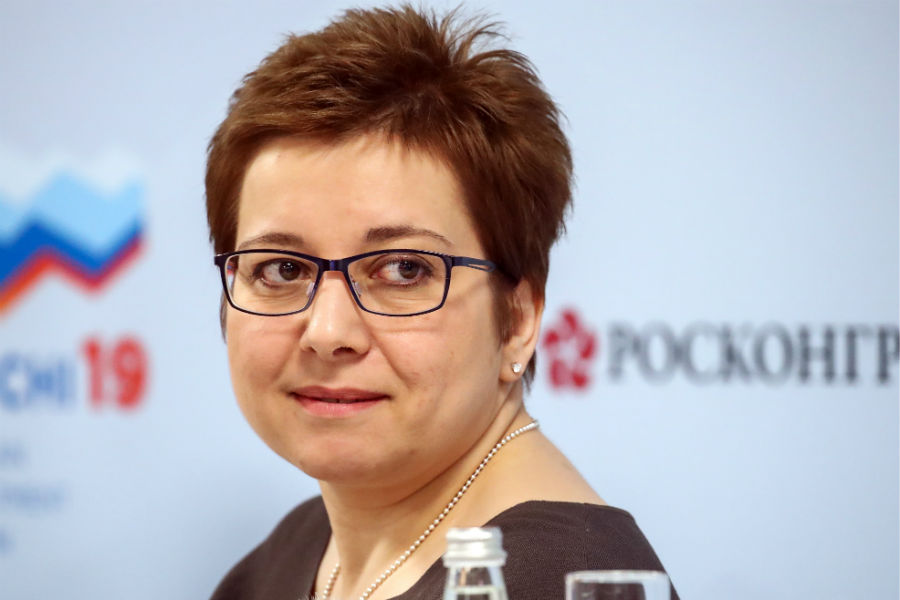 Nyuta Federmeser photo: Petr Kovalev/TASS
In addition, it resembles the head of the Vera Foundation, different departments with different financing and leadership are responsible for the provision of medical and socialist assistance in the country: “This means that we still cannot create medical and social institutions where a person can immediately get all the necessary support.” In her opinion, the work of the multidrofession team, which would include doctors, nurses, social workers, psychologist, clergyman for those who need it, and the nutritionist "must be provided in the conditions of a single organization."
And finally, they still remain inconspicuously patients who are now practically not available to qualitative help at the end of life. These are those who live in institutions of social services, places of imprisonment, neuropsychiatric boarding schools. “Each person has the right to professional and merciful help at the end of his life - exactly where he wants, surrounded by his loved ones,” said Nyuta Federmeser. - In the hospice or at home, where it will not be painful, not scary and not lonely. In the meantime, less than a third of all those in need receive such help. ”
"Additional financing is not required"
As for financing, as the Minister of Health of the Russian Federation Veronika Skvortsova, the total amount of expenses for the provision of palliative medical care in 2019, will grow to 23 billion rubles in the State Duma on February 11.
Compared to last year (21 billion rubles), the budget for palliative assistance has changed insignificantly. In 2018, it grew even faster (24% compared to 2017). And this means that additional funds for the implementation of the law are not provided. The head of the National Medical Chamber Leonid Roshal drew attention to this fact at the State Duma’s hearing: “There is a phrase on the explanatory note in the explanatory note to the bill that it is not required for its implementation of additional financing. Not true - as required! "
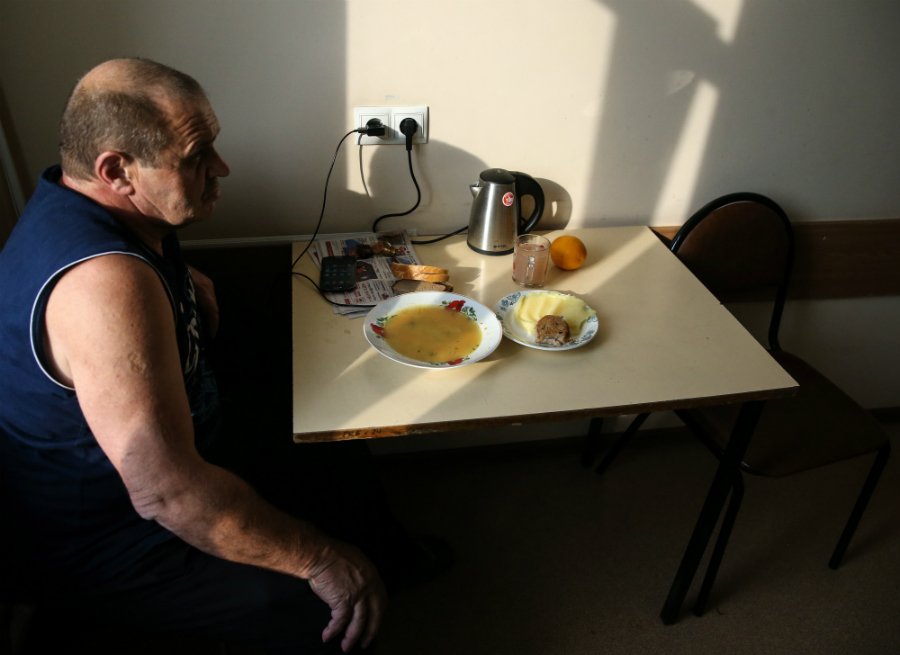 Patient during lunch in the center of palliative care photo: Valery Sharifulin/TASS
It is not planned to include the provision of PMP seriously ill patients and in the list of compulsory medical insurance. According to the Deputy Minister of Health of the Russian Federation Evgeny Kamkin, the compulsory medical insurance system is not ready to “assume additional expenditure obligations without an additional source of financing”, and there are not enough funds from the federal budget.
That is, palliative assistance will still depend on the capabilities of the regions, most of which have no “extra” money. So, according to Nyuta, Federmeser, today in almost all regions except Moscow, palliative assistance at home is not developed, visiting services exist only on paper, and if they come, they can’t help especially. The problem for the family even turns the transportation of heavy patients - to deliver the patient from the hospital home or vice versa, people have to call an ambulance.
And this means that Russian hospitals and hospices will still need private donations. And we will still collect money for the construction of hospice, because, besides ourselves, no one will help us. And the laws will be adopted.
Veronika Skvortsova Nyuta Federmeser Palliative Help Hospice