
Translated material
About scientists, believers and psychics
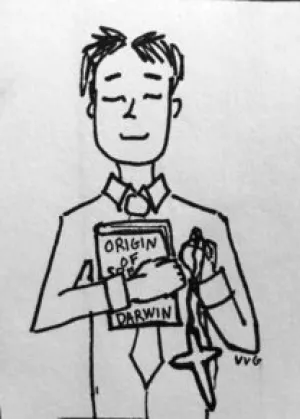 When we are talking about religion between colleagues-scientists, you usually suggest that both atheists are usually assumed. And you can see surprise and misunderstanding if suddenly someone turns out to be a believer. Indeed, the atheistic worldview clearly correlates in society with the level of education and critical thinking, that is, the features that make a scientist scientist. It is well known that with the development of society the role of religion falls and that religions evolve and replace each other. The obvious absurdity of religious myths, their contradiction from what we know from physics, biology, chemistry, geology, in the end, the obvious dependence of the following religious tradition on where and when a particular person has grown (this means that the choice of a particular religion is an unconscious), it would seem, should be understandable to any rationally thinking person. Why then do we meet religious scientists? It seems to me that it is useful to take a closer look at how some of our successful modern scientists argue, who openly talk about their faith.
For example, a physicist thinks that science and religion do not contradict each other at all and that he is engaged in science as a scientist, and not as a religious person. He believes that, as a physicist, he can study anything, but not faith and that binary logic works well in science, but in the case of religion it turns out to be insufficient. For him, physics and religion exist at completely different levels. He believes that the rarest and most valuable moments in the life of the scientist, when new ideas come, may be mystical insights akin to religious experience. He explains the commitment of a specific religious tradition (in this case) by the fact that religious experiences require arrangement, introduction into the framework, and for this the environment, which follows the same religion. It is interesting that he is not embarrassed by the issues of bodily resurrection, since he considers them infinitely more difficult than what physics studies. For him, the church is needed in fact for the sacraments and mental assistance (helping the soul, the removal of sins, strengthening faith), and since religion has nothing to do with science, then the scientist must be judged by his scientific work, and not by whether he is religious or not.
The chemist came to faith during the period of the psychological crisis. This gave him a sense of renewal and made him happy. Science and faith, in his opinion, are orthogonal, do not contradict, but, on the contrary, complement each other, describing different layers of the universe. Therefore, believers and unbelievers cannot prove anything to each other. Although he considers science the greatest achievement of mankind, it, from his point of view, cannot help in many areas. At a deeper level, questions remain unresolved for him, for example, about where the laws that this world obey are taken. Like Louis Pasteur, he thinks that little knowledge leads away from God, and he returns a big one and that the existence of God can neither be proved nor refuted by scientific methods. From his point of view, we must accept certain things on faith - whether it is scientific axioms or faith in God. He agrees that real scientists doubt and strive for knowledge, but in fact they know very little, and those who think that they know a lot are intellectually dead. From his point of view, the scientist always strives for the truth - science does not forgive dishonesty. But the scientist carries a great emotional load in himself, and faith, and especially confession, help to get rid of it. It is very important for him to be able to forgive himself for sins, but also know that God forgives.
For a biologist, freedom of will is important, which, like the concepts of good and evil, is incompatible with materialism. For him, a person is more than the totality of atoms, and he has more freedom than his ancestors-people. Since it is known how the human genome differs from the monkey genome, it suggests that some kind of combination of these changes makes a person with the body with the soul. Interestingly, he can discard the scientific method when he speaks of God, because, from his point of view, in this case we are talking about another layer of reality than the one that the scientist studies. The biologist sees the difference between altruism as an evolutionary process, aimed to a greater extent at relatives, from good, which, as he believes, carries Christianity, and this good is directed at all. He completely accepts evolution, but nevertheless believes that there is no contradiction with religion, since one truth cannot contradict the other. The mythologism of the Bible cannot be understood literally, whether it is the creation of the world or original sin. In fact, he proposes to focus on what he considers the initial postulates and religious truths, and not on the means with which these truths bring to a person (biblical myths). Nevertheless, he wonders: did God come true on earth in the form of man two thousand years ago? He considers the commitment to most of his biologists atheism to the fusion of the church and the state, which repels the intelligentsia from himself. For him, the law on protecting the feelings of believers and the policy of church hierarchs in this area is a tragedy. He understands: commitment to Orthodoxy is due to the fact that a person has grown in Russia, nevertheless, he considers Christianity the only true religion. He also believes that the task of the Church today is to change its image of the organization of bearded men in strange clothing that squeezes property.
It is obvious that each of these scientists finds some kind of its own, a concrete understanding of religion, although they all talk about the psychological, ritual assistance of the Church and about the indisputability of science and religion. In general, they do not accept religious postulates in the form in which they are generally accepted in Christianity. For example, they do not believe that the earth was six thousand years old, that there was a worldwide flood, that there were specific Adam and Eve, who lived at the same time. But this does not prevent them from accepting, for example, that Christ was a God -man. They are for separation of the church from the state and, apparently, against clericalization. In this sense, they are solid with atheists, but unlike them, these phenomena of modern Russia perceive as a threat to religion itself. Their God, although formally called the same, apparently, differs from the fact that most Russians have. But he, probably, is different for the mother of Teresa and crusaders, and indeed among modern Christians and ancient Christians.
Thus, when it comes to faith and religion, these scientists are not puzzled by the issues of correlation of reality and fiction, they reject some biblical myths, but take others, do not use their scientific skepticism and rationalism in their mental experience, including in matters of the existence of God, do not accept the possibility that their experience with God may be a mistake of the psyche. They believe that science simply cannot study certain things that are in some other plane, despite the fact that science has refuted many religious dogmas step by step. For example, the geocentric system and the divine origin of complex organisms have not recently been in doubt, but science proposed the best explanation, and where are they now?! Since believers are well acquainted with this, they remains to rely on different planes of knowledge of science and religion. But there is no evidence that something is not available to science or that there is some kind of “other plane”; We do not see any boundaries of scientific knowledge. It turns out that scientists are also people with their weaknesses, fears, the need for psychological assistance, and this is more important to them than critical thinking, or at least they need to use critical thinking in their profession.
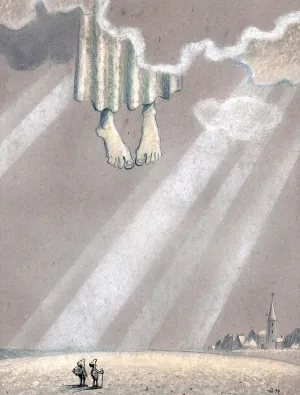
How can such an understanding of science and religion with believers can influence the development of science? What could be bad in general that they receive psychological assistance in the church? And what could be bad if this is not a church, but another organization of mystics? Recently, the film “going to hell”, to fluff, exposing psychics, was released. In this case, the rationally thinking person, of course, is already clear, as in the case of sorcerers, astrologers, clairvoyants and other occultists. But what is the difference between this mysticism and religious mysticism? It is easy to compare the miracles recognized by the Church with miracles demonstrated by psychics, and unhumened psychics (vanga) with the church (Matrona), the expulsion of demons - with the expulsion of damage, worship of the relics of the saints - with worship of amulets and skulls, church sin - with a lodging priests - with priests and witch sorcerers. Some have beards, crosses and prayers, others have magic balls and spells, some have expensive hours and cars for the money of the people, others too. At the same time, we must pay tribute to the way the mysticism is arranged in religion compared to primitive occultism, how the whip and gingerbread are combined, how the achievements of natural selection (morality, psyche, altruism) are attributed, allegations and conflicting statements are used so that they can be brought under everything, how the lack of verification and reproducibility are deducted. "Inadquired ways of the Lord" and "Other planes, layers, levels and layers."
When we have such an organization of science and such a state of society, when there is little faith in the truth, is it important whether the scientist is considered to be believers, especially if faith gives him psychological help and thereby helps in his work? What would change if most scientists would become believers or all turned into atheists? It seems to me that believers, including those described above, “substitute” science with their worldview and their statements, despite the fact that they are magnificent scientists and wonderful people. But they are also an example of how a thinking person can wander in dark, so they give us food for thought. After all, a real scientist does not accept anything on faith, questioning, including his own opinion, and extraordinary statements, as you know, require extraordinary evidence. So, the discussion of these issues is not useless. The religion of its hands in human affairs widespread, but I think that it is worth considering as a marker of the development of science and society. The better they are developed, the higher the quality of life, the less the role of religion. Psychics, sorcerers and astrologers are also a marker of the development of society, only, perhaps, more obvious.
VIM Nikolaev