
Translated material
"Stop poisoning people"
Norwegians consider Russian Arctic enterprises a source of environmental threat
At the end of January, all residents of the border Norwegian commune Ser-wranger received alarming SMS from the municipality: people were asked not to go out without unnecessary need and not to walk in the Pasvik Valley. The reason is a high concentration of sulfur dioxide in the atmosphere.
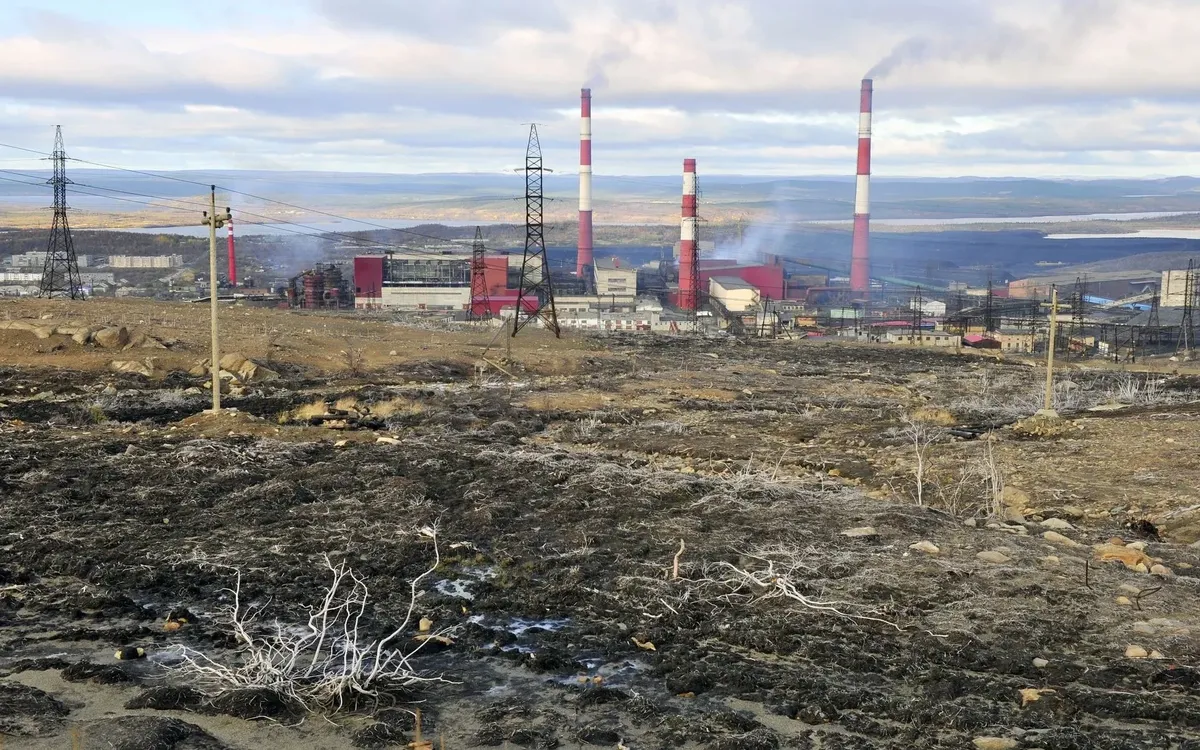
In pure Kirkenes - the capital of the commune, where the snow is always dazzling white, and only the smell of freshly brewed coffee is worn in the air, the message caused alarm - but not surprise. A city in which there is no industry suffers from emissions of sulfur dioxide for more than a decade. 36 km from Kirkenes is the Russian village of Nickel, in 45-the city of Zapolyar, in which the industrial sites of the Pechenganikel plant are located, the Kola Mining and Metallurgical Company, the "daughters" of Norilikel. Sulfide copper-nickel ores are mined and enriched at the plant. The main source of emissions is a melting workshop located in Nickel. From it to the valley of the passwind is 8 km.
Under adverse weather conditions - low cloudy, for example, the company is ordered to reduce emissions up to a complete stop of production. True, the fines for violations are relatively small - up to 50 thousand rubles for officials or up to 250 thousand for enterprises. For the KGMK - the main taxpayer of the Murmansk region - the loss is small. Losses from stopping production to improving weather conditions can be much higher. Is it because, passing Nickel, you see a lunar landscape in unchanged black and brown tones?
True, unlike the inhabitants of the Ser-waranger, Nickelcans do not receive any warning SMS and have long been used to their share.
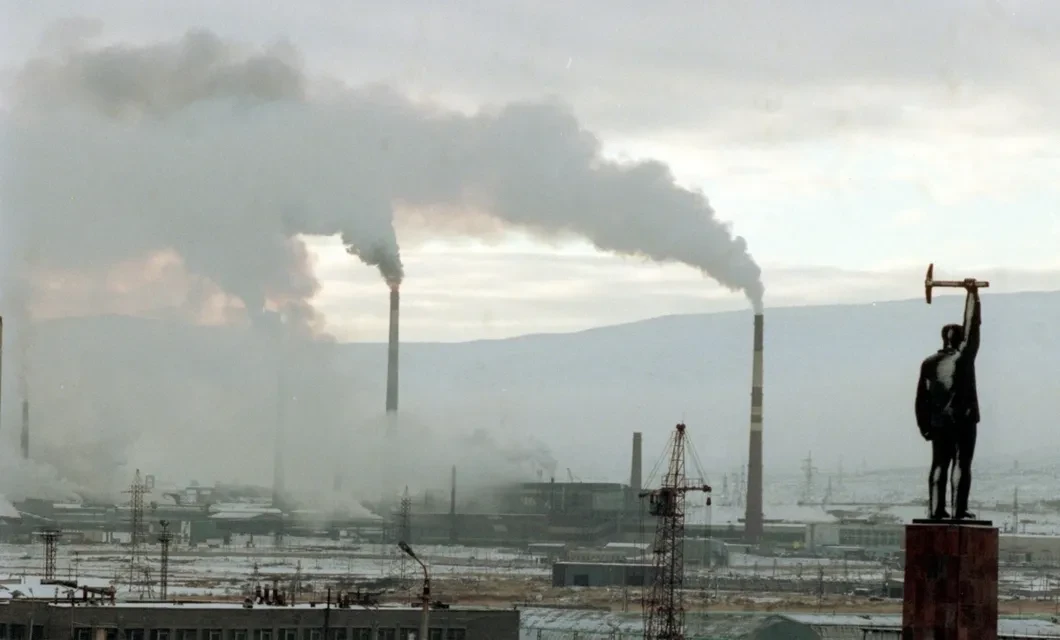
But in Kirkenes they refuse to get used to it: in the 80s in the commune there was a whole movement called "Stop the Soviet clouds of death." Its participants arranged massly street protests against the atmosphere pollution, with which the Norwegian authorities could not do anything. The winds of the winds in the area are such that nickel emissions are mainly brought to Kirkenes.
When the border with the Soviet Union became less impenetrable, the first Norwegians who received Soviet visas riveted themselves to the technological routes of the Pechenganikel, demanding environmental responsibility from the enterprise.
The Soviet Union sunk into oblivion, and smoke from the pipes of the Nickel plant is still flying to Norway. True, in fairness it must be said: it has become less. In Soviet times, emissions amounted to 370 million tons per year. Now - 100 thousand. KGMK annually reports to reduce environmental harm. But the annual volume of sulfur dioxide, which Nickel throws into the atmosphere, still three times exceeds the amount of dioxide, which is produced in total all Norway enterprises.
“The largest environmental problem of Norway is Nickel and Zapolar,” says Runa Rafaelsen, mayor of the commune Ser-Waranger.
The Northern Kingdom offered Russia to help in solving this problem. In 2001, Norkel was allocated 32 million euros in the form of a grant from the Norwegian government, as well as 10 million dollars of a loan for 10 years from the Northern Investment Bank. Everything is to modernize production from the point of view of European environmental requirements.
After 8 years, Norkel said that he was not going to fulfill the terms of the agreement - and returned the money.
The ironic Rafaelsen says, thanks to Nickel’s emissions, the commune was finally able to test the new SMS provision system, which first worked on the days when the Russian side pulled the gray. In calm Norway, there are few reasons to check if the novelty works, so, they say, thanks to Russia, now it is known for sure that it works properly.
“My father has a cottage in the valley, he also received such a message,” the mayor says. - In those days, we recorded an extremely high concentration of sulfur dioxide - up to 900 mg/cubic meter. ( The norm is 0.5 mg/cubic meter. - TB ) there was no wind, the corresponding smell was clearly felt on the street. The cores and those who have a problem with the breathing ways, of course, we advised to stay at home if possible.
At the Norwegian Institute for Atmosphere Research, The Barents Observer reported that at the end of January they observed the highest concentrations of sulfuric anhydride over the past two years. Roshydromet, in turn, reported the excess of MPC (maximum permissible concentration) of sulfur dioxide on January 25 by 4.7 times. However, on other days, the excess reached 10 times. In total, in January, MPC in Nickel was exceeded within 18 days.
The Bellona International Environmental Organization, which quickly contacted the company, said that already on the evening of January 25, when the Norwegians received alarming SMS, the plant worked in “limiting technological regimes”.
However, on February 1, Rospotrebnadzor said that there was no excess of MPC in Nickel at all. And on February 4, the government of the Murmansk region issued a press release with an expression of deep concern-no, not emissions, but by reaction to them of the Norwegian side. In the same release, cases of excess of MPC are called “short and one -time”, and Norilskel - a company that “implements an effective environmental policy”.
It would be worth telling the residents of the other territory of the company's presence on the Kola Peninsula - the city of Monchegorsk, where last year people in active emissions massively complained about a deterioration in well -being, and a car with a loudspeaker drove along the streets, from where the recommendations were rushing to close the windows and not to let children go out into the street. Sulfuric anhydride is an extremely toxic substance that in high concentrations can cause suffocation, a burn of the mucosa, liver damage, blood disease.
No wonder then at a meeting with the indignant population, officials advised Monchersians ... to buy gas masks.
Norwegians expect to solve the problem in another way. Runa Rafaelsen drew attention to the recent Norkel Agreement with BASF, which in Finland produces batteries for electric cars so popular in Norway. And he made a statement: the rune offers BASF’s products to boycott until Norilskell “stops poisoning people”. In addition, the mayor plans to contact the Norwegian Minister of Ecology in order to find ways to oblige the Russian company to solve the problem of emissions.
According to the recently published report of the Federal Ministry of Natural Resources “On the state and environmental protection in the Russian Federation in 2017”, the Murmansk region fell into the top ten regions, where the content of harmful substances in the atmosphere for a year exceeded the norm by more than 5 times. However, they decided to improve the situation in Russia in an extremely unusual way - previously established norms for the permissible content of harmful substances in the atmosphere, Rospotrebnadzor recently increased 60 times.