
Translated material
Chess with icebergs
When everything is bad, you have to hold against the wave and wind
The short Antarctic navigation of the 2018-2019 season continues in the southern south dome of the seas. The correspondent of Novye transmits from the board of the Vasily Golovnin diesel electrical engine, which now works in the sea of community.
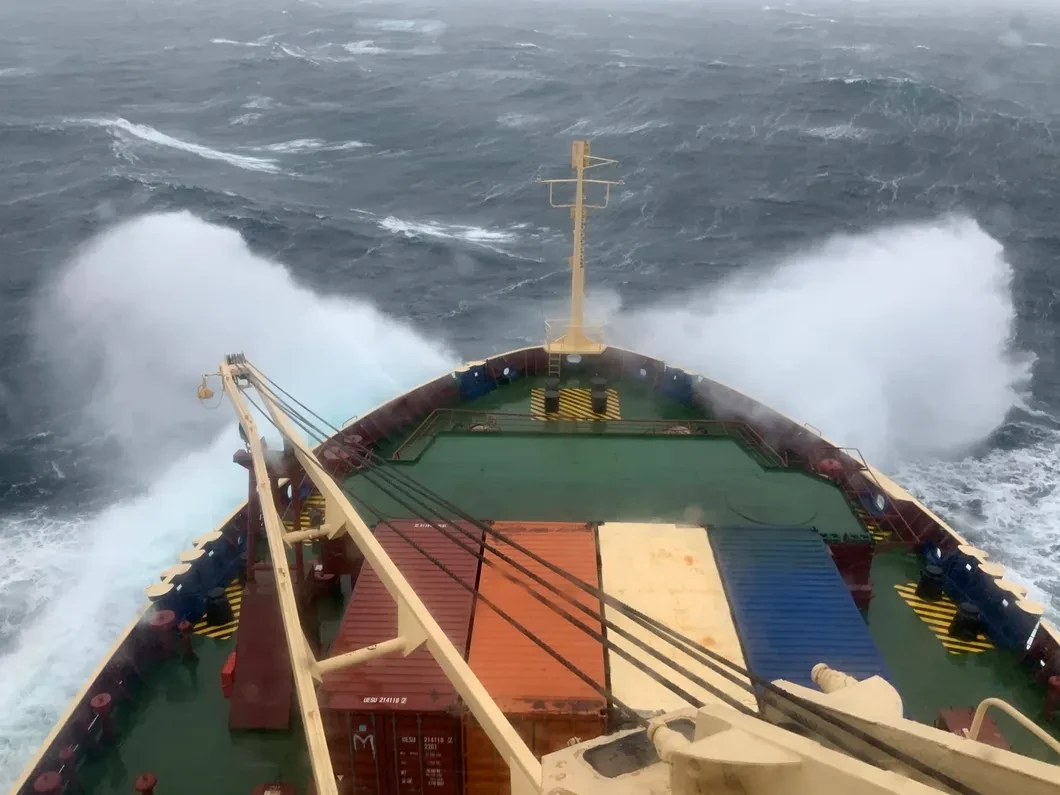
On the eve of the nearest Russian Antarctic Station, Progress, not a delighting weather forecast was transferred: by the end of the week the weather will deteriorate, on Saturday, snowfall is expected on February 16. Well, the snowfall is so snowfall - although by the standards of our northern hemisphere here is now the mid -August, you will not surprise anyone with snow charges.
Back on Friday, helicopters worked until late, throwing people and goods from the side to the shore and back, but closer to the summer polar sunset from the east, the dark swollen cloudy front began to approach from the east. At night, the wind is strong, and by morning on the crests of the waves in the bay, where the Indian station Bharati is located and stood on the anchor of Vasily Golovnin, white lambs appeared.
Even if in a narrow and short bay the wind manages to disperse the wave to the “lamb” state - do not wait for good.
At 7.20 in the morning, the crew went to breakfast, and at the same time the first snowflakes flew outside the windows of the cabin. Soon after nine in the morning, I climbed the bridge, where there was no one but the shutty second assistant captain Artem Tuboltsev; I had to check the accurate spelling of several names according to the Location. I leafed through a weighty volume, made the necessary extracts, we spread a few words, it was noticeable that the second was tense and very assembled. The whistle of the wind intensified, turning into an even rumble. At that moment, the ship somehow jerked; In such seconds, you automatically look at the clock: 9.31. Artem rushed to the phone (Captain Yusupov demands to call him at any moment), but did not have time to pick up the phone, as the captain had already appeared in the doorway.
- Does it drag us?
- It looks like yes.
- The smallest forward.
Working by a machine at low power, we are trying to help the anchor to keep us in place. But with sharp gusts of wind, jerks continue.
In 9.40. The captain decides to star with anchor and leave to storm into the sea. By this time, the Captain Stanislav Kravets, and the old man, Igor Gnusin (he stood on a shift from 4 to 8 in the morning and now, should rest), and the assistant captain in the electronic complex Nikolai Ivanov.
For a land resident, the decision is probably strange: why go to a storm from a small closed bay to go to the open sea?
But since the time of ancient sailors, it is known that at the shore you can not hold the anchor during a strong wind, and the ship will throw on stones.
Since then, the vessels have become different and navigation has been determined by satellites, but the basic principles of navigation have not changed.
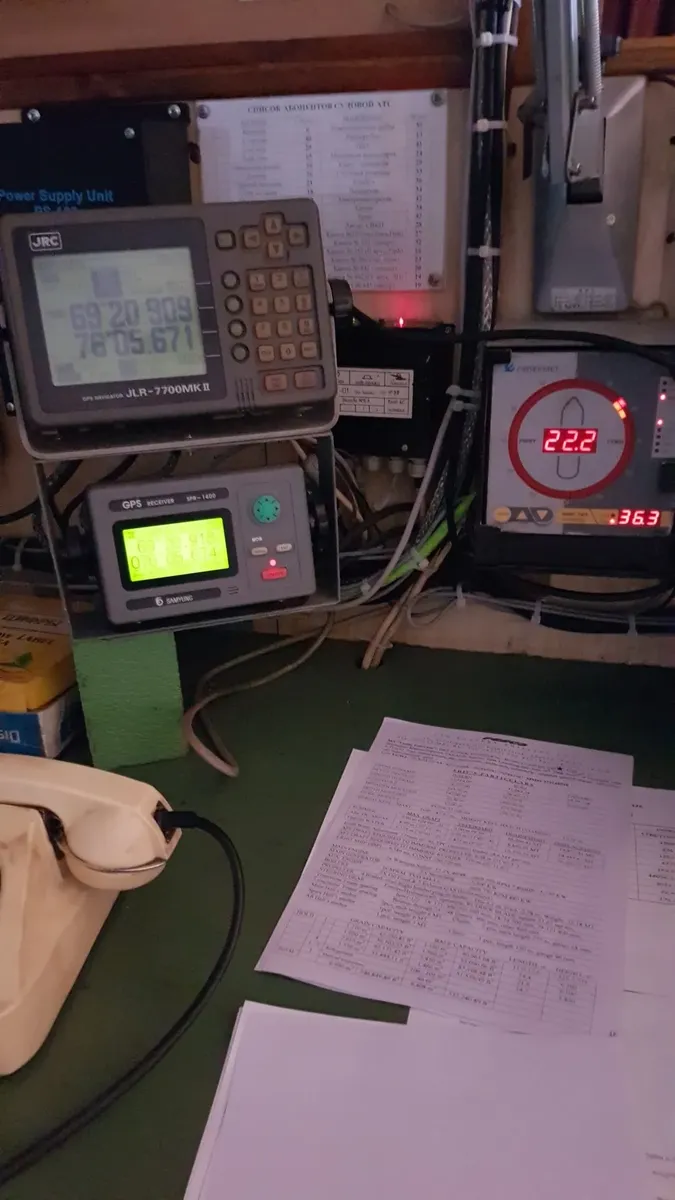
For two hours I stood on the bridge, trying not to interfere with anyone and at the same time to stengraph the commands that sound here, partly leaving the ship's broadcast, and the incoming reports and reports, partially lowering the speed and direction of the drift, the current course of the vessel, the distance to the shore, the speed and direction of the wind, about which the background, and the second assistant, rushed to the steering wheel.
- The boatswain and the third assistant to the tank! (On any vessel, during the removal or sample of the anchor, they should be on the tank, controlling the work of anchor spiers and winches and recoil of mooring).
- Prepare a second car.
- The deck command to fix the arrows of the cranes and the barge on the storm (on the “Golovnin” five cranes; the barge, ready at any second for the descent, is installed on the cover of the fourth hold).
- Buck - bridge: what about the rope? (The rope is called an anchor chain, thickness, sorry for the comparison, with my leg).
- The bridge is Baku: the rope goes easily, it seems, the anchor has broken.
- How much is lost?
- 4 bow, the end of the chain lies on the deck.
The loss of the anchor is an emergency for any skipper. Even in the conditions of force majeure. True, here to the conditions of force majeure, you can add a complete non-study of the day. What are there - stones, crevices? No one knows.
- The right of the steering wheel.
- The steering wheel is right on board, we are dragging us to the left.
- Bridge - car: the second engine is launched.
- Left on board.
- Left on board.
The display reflects the speed of the wind, which, together with the wave of the wave, turning to the exit from the bay, begins to take on the right side: 22, 25, 28, 30 meters per second - the devices are unemotional; It is known, however, that the wind is over 28 meters per second qualifies as a hurricane.
- Right the steering wheel.
- The steering wheel is straight.
At the rear views of the bridge, it can be seen how crane operators climb on the taps, how arrows drop to be tightly attained, how the sailors start fasteners on barge. Trying to make out the details, I go out to the open wing of the bridge, and it almost blows me with a hurricane wind. I hide back into the heat. How do they work there?
- How much is on the course?
- On the course 320.
- Keep it up.
- The steering wheel is directly, 330, the ship goes to the left.
- Keep 320.
- 70 meters on an echo sounder.
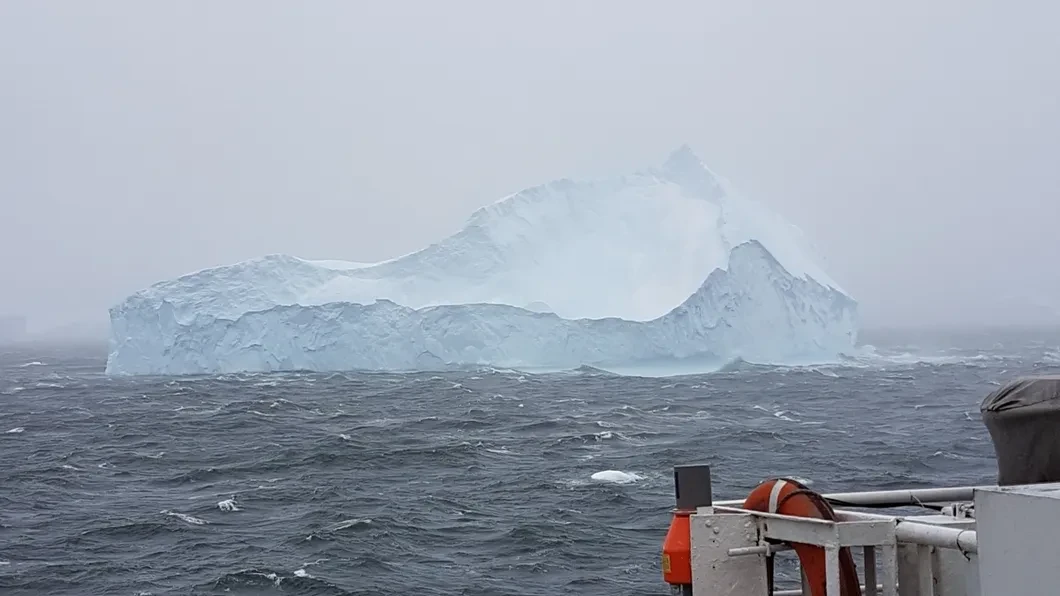
The exit from the bay is strictly north, but almost right in the alignment is a hefty iceberg, leaving a narrow passage between themselves and the rocky shore. Therefore, the course is almost pure Nord, but with constant maneuver.
- Write down the time when it became clear that the anchor was lost. Damn, how offensive!
- 9.50.
- Draff 30 degrees.
- Keep 330.
Taking a storm wind and wave into the right side, the ship carefully moves between the islands and capes to the open sea. Visibility-one and a half to two cable (300-350 meters). Through snow charges and fog, the silhouettes of several icebergs - humpbacked and flat as a table are guessed ahead.
- How much is on the course?
- 323.
- Keep 320.
-Bridge-Baku: the right anchor is fixed to the scrap, the left chain is squeezed.
- Accepted. Fix the tap on the tank.
- Keep 340.
- There are 340.
- Draff 20 degrees.
- speed of 5 knots.
Along the right side, the rocky shores of the last island slowly swim and go back.
- So, now the icebergs will cover us, it should be easier.
- We go 325, right on the iceberg.
- We’ll go through half a mile, we will go to the right.
On the bridge is intense, but the tension is not nervous, working; Similar, obviously, happens in the operating room at a peak moment.
- 16 degrees drift.
- The echo sounder does not draw a depth (which means they went to serious depths).
- Let's go 350.
- 350 on the course.
Starp, standing at the tablet with an electronic card, laughs:
- Judging by the map, we are going on the ground.
- So these are Australian cards, they have their own bindings.
To the iceberg from the left side - 200 meters, it is clear how storm waves are beating about his foot. 10.22 - left the bay to the open sea, the wave immediately intensified. In addition to the fact that at least two skipper constantly observe the screens of locators, binoculars appear in their hands - chess with icebergs begin. As you move, ice mountains emerge from the fog.
- On the right is 15 big iceberg.
- Keep 335.
The display fixes the next gust of wind - 36 meters per second.
The damned anchor does not come out of the head; Someone asks Kravets, who worked (and stormed) in this area:
“Have you lost anything here?”
He does not have time to say nothing, as, without raising his head from the locator, Captain Yusupov answers:
- Yeah, last year, Papanin was lost here.
Everyone laughs, although they know that last year Kravets was replaced by another captain, who landed “Ivan Papanin” on stones.
Yusupov philosophically remarks:
- What to do: there is no war without victims.
The locator cursor, indicating the course, fluctuates in the region of 0, pure Nord.
- How much is on the course?
- 359.
- 0 Hold.
The wave is felt more and more.
Captain Star Poom:
- Suppose that the shmurdyak is attached.
The old man includes the ship's broadcast:
- Attention of crew members! In connection with stormy weather and discrepancy with icebergs, a sharp increase in on -board pitching is possible. All crew members are fixed by personal and ship property on the scrap.
The announcement is duplicated in English - for members of the Indian expedition. With horror I recall that five decks below, in the cabin I have an open laptop on the table, an iPad is charged nearby, and above them, a bunch of stones that I picked up on the shore (you have to bring something to the editorial office).
- On the course 0.
-Well, here, after three or four hours we will go through the iceberg belt and we will calmly storm.
This means that when chess with the ice mountains stops, the ship will fall on the course strictly nose to the wave and wind and will move in an average move: keys is less dangerous than onboard.
The arrows of the ship watch meanwhile approach 11.30 - time to dinner. War war, and lunch on schedule.