
Translated material
"Crimean five -year plan"
How she hit the international interests of Russia: Review
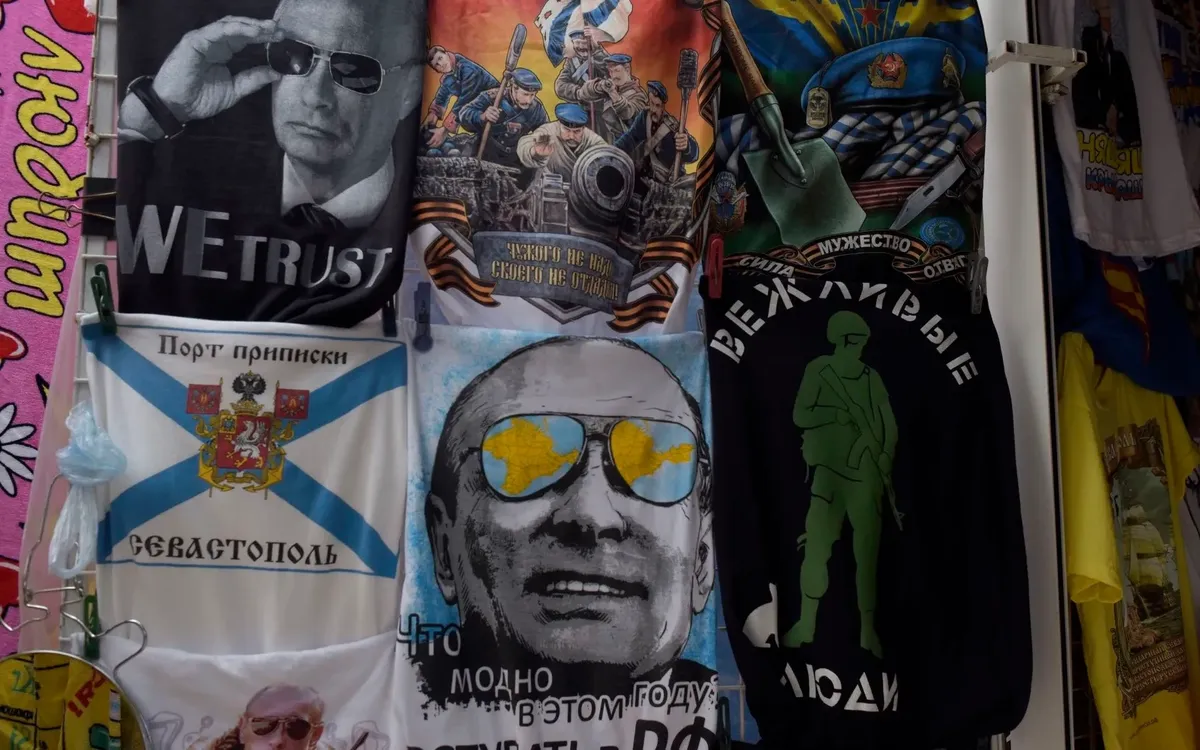
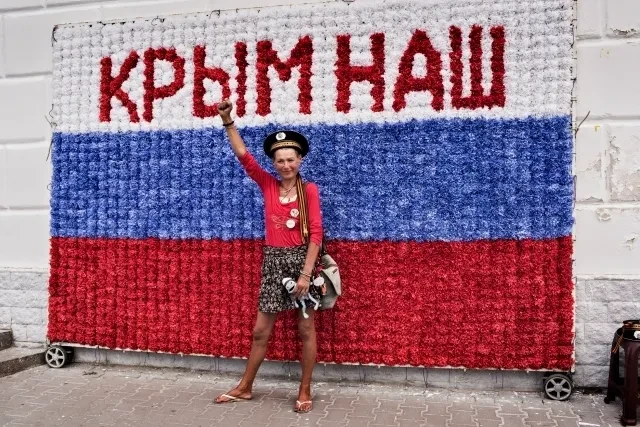
Five years ago, Russia “took” Crimea. This radically changed the country's position in the international arena, abruptly deploying its foreign policy.
True, the symptoms of such a turn appeared earlier. Even in Munich’s speech, President Putin in 2007 for the first time publicly expressed the discontent of the Russian ruling elites that have developed after the collapse of the USSR in an international order. Then these signals became more and more.
However, neither the criticism of the “unipolar world”, nor the Western accusations of ignoring the interests of Russia and the encroachment on the post-Soviet space-the zone of its “life interests”, or even the fleeting Russian-Georgian war of August 2008 with the “independence” of Abkhazia and South Ossetia could not stop the inertia of the Russian-Western partnership until March 2014.
The West (especially Europe), for all his concern, did not want this to the new Russian activity - he was afraid to break the current security architecture and did not want to lose economic benefits. Yes, and Russian leaders were not ready for the break, believing that this was not there - they say, in the West this activity will be swallowed, "they will not go anywhere." And in general, they swallowed, although reluctantly with reservations. Which, by the way, created the illusion in the Kremlin, which in the future, if necessary, can be repeated.
But the accession of Ukrainian Crimea, and then the activities of Russian “volunteers” and “vacationers” in the Donbass turned into a much more tough script.
This time the West "did not swallow",
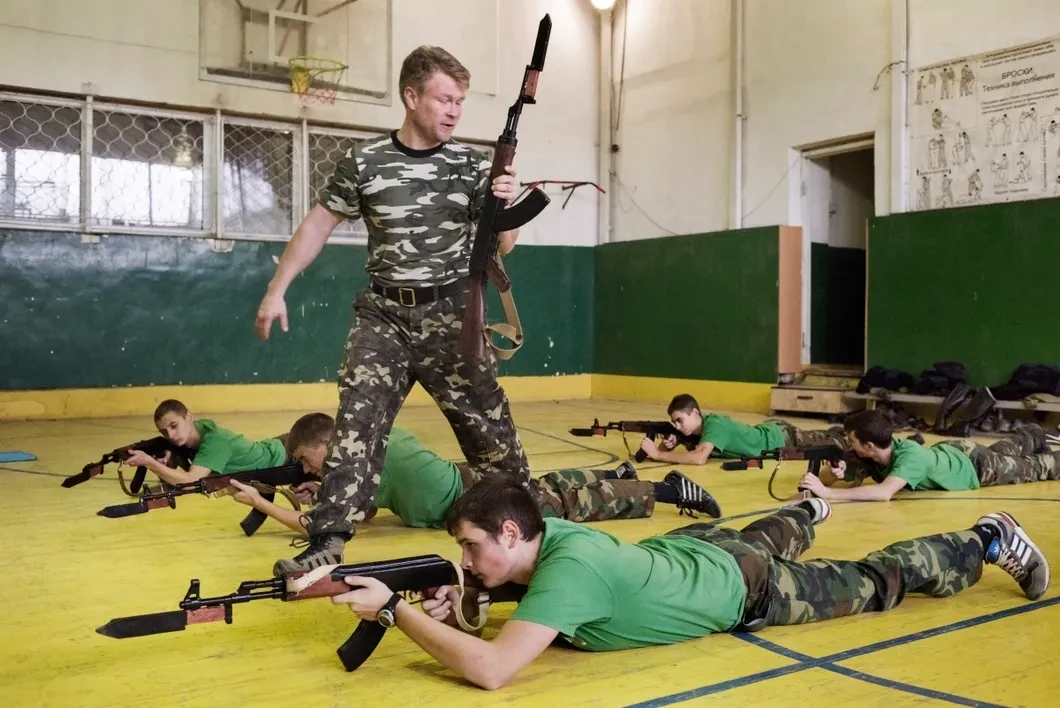
He regarded what happened as a screening of the “revisionist” Russia of the prevailing world order, as a dangerous violation of the system of international treaties and agreements, which at one time brought the line under the Cold War. It was impossible to swallow this - there were fears that the Russian Federation headed for the power revenge in the zone of its “vital interests” and that it is seriously and for a long time (especially against the background of large -scale re -equipment of the Russian army and the growth of militaristic rhetoric). That she will not stop in her “malicious activity” and can even go beyond the limits of the post -Soviet zone. That she became unpredictable, and it is impossible to believe her leaders. Therefore, it must be stopped, or at least resolutely “warned”. It has become pointless to preserve the security architecture already broken by Russia, and it is impossible to support the Business as Usual.
The sanctions and a deterrence policy began as a response to a “Russian threat”. Russia, in turn, also answered this answer. The confrontation spiral began to spin with mutual accusations of its promotion.
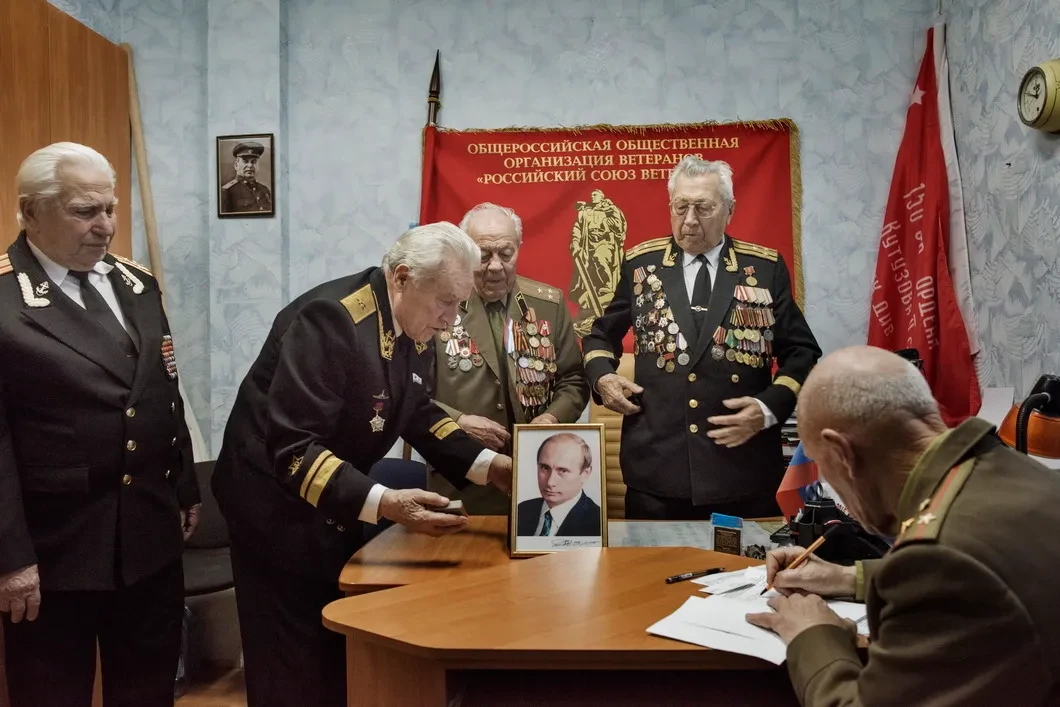
At the same time, during all five post -crib years in Russia, “propaganda success” unprecedented in terms of the scale of “promotion of success” went on and continues.
Citizens prove that finally Russia defended its foreign policy interests, strengthened its sovereignty and security. That she finally, “rising from my knees,” made the world reckon with her. That she did not allow the intersection of the insidious West, led by the United States, some dangerous “red line”.
And although there are many problems, including because of economic sanctions (which, by the way, according to the Kremlin version, the Russian economy not only interfere, but also help in some ways), the West will eventually come to their senses and, realizing the growing power of the updated Russian army and its superweapon, at least for security reasons, will be forced to return to normalizing relations with Russia. If not completely under its conditions, then at least taking into account its interests formulated by the Kremlin. And if it were not for the pressure of the United States, striving for world hegemony, the “Russophobia” not imposed by them, then the Europeans would have already come to their senses.
What is real, and not on TV, brought Russia on the International Front the post -Khrekrym five -year plan? In order to rely on a reliable methodology, and not on propaganda, motivated reasoning, we note that in the modern world the purpose of foreign policy is not at all the expansion of territorial possessions, not the acquisition of colonies, not the creation of empires and not surrounding itself with satellites. And two rather simple (according to formulation, and not by execution) of the task-how to ensure the security of the country and how to create the most favorable conditions for socio-economic development for it. There are other goals that are also important, although subordinates to the two main ones. Among them are good relations with neighbors, expanding the circle of friendly countries, strengthening the country's international prestige, participation in unions, associations and international organizations that are advantageous to the country, the attractiveness of the internal model of development as an instrument of “soft power”, etc.
Through the prism of these tasks, we take a look at the post -river Russian policy.
About security
Safety did not increase
But rather, it was diminished, despite the spells of domestic propaganda. The fact is that the strengthening of the army and its equipment with a more advanced weapon does not mean automatically strengthening security. After all, these “fortifications” and “equipment” do not occur in a computer game, but in the world space. And there are other, to put it mildly, no less strong powers with wide economic and technological capabilities - their politicians and generals are no less Russian in strengthening the security and guarantee of the interests of their countries and their unions. In a complex global system of mutual deterrence, any action to preserve the balance inevitably gives rise to opposition. And the accumulation of weapons makes the world less safe.
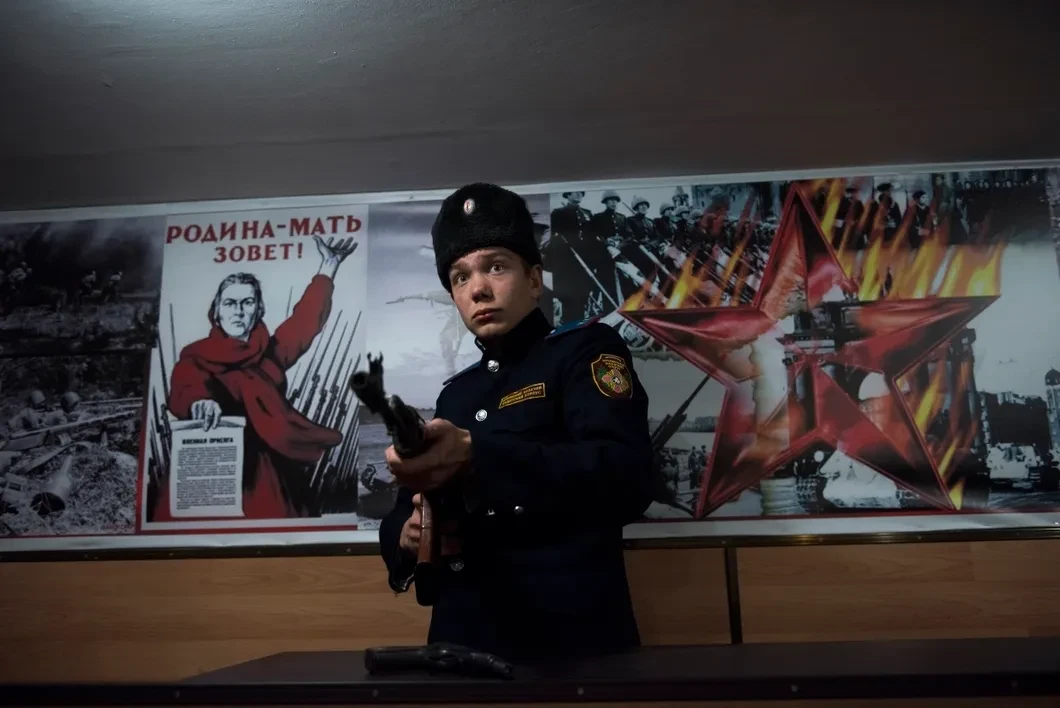
The capture of Crimea, the Russian leadership finally crossed out the project of the Russian Federation entering the Western structures.
The project, which is in different hypostases - from direct entry into the updated NATO to more vague structures of the “pan -European house” and “Big Europe from Lisbon to Vladivostok” - existed in the Russian political discourse of a quarter century. To replace these constructions, albeit unrealized, but created a peaceful atmosphere, and therefore for many years the theme of the military-political confrontation has moved to the background, an unprecedented confrontation of Russia and the United States and a sharp deterioration in Russia with European countries came. Which inevitably again put forward the confrontation in the foreground. At the same time, having intensified in the West (especially in the USA) supporters of tough military policy against Russia, neoconservatives and hawks, the influence of which was weakened during the Russian-Western Partnership.
As a result, over the past five years, we have received an unprecedented strengthening of NATO discipline under the auspices of the United States as a “answer” to Crimea, the increase in NATO members, the placement of American units and new weapons near the borders of Russia, as well as the start of a new round of arms race, which, with the deprivation of the potentials of Russia and the United West, can have catastrophic consequences for the Russian Federation.
The Russian-American arms restriction system is falling apart-
Most likely, the RSMD agreement rested in Boza, the OSV-3 extension after the end of its validity period in 2021 rested with bad prospects. Of course, not only Russia "ruined this chapel." In this, the Americans actively helped her, who had left the Crimea long before the CROM, they had long tried on the exit from the INFMD and began to be placed in the deployment of anti -missiles in European countries. However, the “Russian threat” trend that defeated in the post -commercial public opinion makes the NATO rows strengthening and counteracting the alleged Russian violations more understandable even to Europeans, traditionally more than Americans interested in maintaining normal relations with Russia.
And all this injury to tension occurs against the background of the absence of a disarmed negotiation process, a sharp reduction in bilateral contacts, turning the programs of military cooperation of the Russian Federation and NATO, a critical fall in confidence in each other. As well as the presence of real conflicts - now Ukrainian and Syrian, and who will guarantee that there will be no others - during which Russia and the West in one form or another find themselves on different sides. So, uncontrolled military excesses can occur, capable of in such an electrified atmosphere to lead to an extremely dangerous military-political escalation. Of course, no one wants a big war, but to speak in the current, much more nervous than five years ago, the situation about “strengthening security” is ridiculous and irresponsible.
About the allies
Russia has no allies
This is the radical difference between the current confrontation of the Russian Federation and the West and the Blok confrontation of the Cold War. To call the allies those post -Soviet countries that are part of the Eurasian projects around Russia is a big stretch.
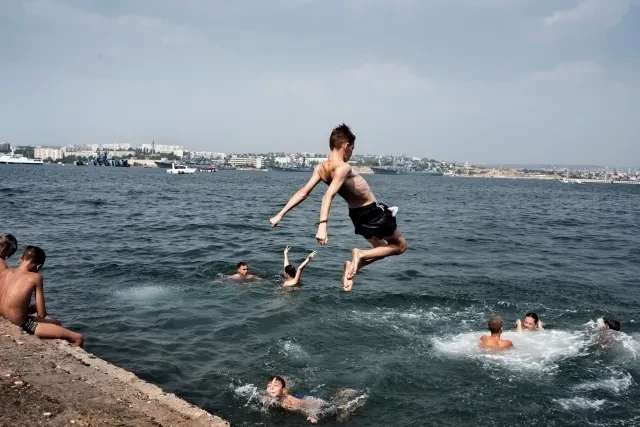
In general, the widely conceived Russian project of Eurasian integration with Ukraine will be just crossed out as the “Western” project.
Ukraine, without which he generally makes little sense, has become a hostile country. With Belarus and Kazakhstan, of course, there are elements of economic integration, but it is difficult to call them allies. The annexation of Crimea, the support of the Russian Federation of the “Russian world” in the Donbass by these countries were “conditionally”, wary of their own fate-Ukrainian experience has to try on the willy-nilly. Therefore, the Customs Union - yes, and political superstructures - categorically not. For Belarus, Lukashenko, the Union State with Russia has a purely pragmatic, “preferential” meaning. Which does not exclude gradual establishment for the counterweight of relations with the West. As for Kazakhstan, for him more and more a factor of balancing the dangerous excessiveness of Russian influence is relations with China. Armenia, which is economically dependent on Russia, after the stormy events of last year and the change of power is looking for the possibility of diversification of its external relations - both economic and political.
As for China, being at this stage the “strategic partner” of Russia, he will never become its ally (as, indeed, any other power). He will always conduct his own pragmatic policy, part of which is the use of this partnership as one of the levers of squeezing from the West more favorable conditions and opportunities for himself. Showing under such a situational partnership the desire for the role of the "senior" partner. And achieving it - for this he has more and more economic and technological grounds.
About neighbors
With most neighbors - direct and simply neighbors - Russia has a deterioration for the “Crimean five -year plan” worsened
Just look at the map. According to the western and partially southern contour, except for Belarus, they vary from tightness to hostility. Norway is a member of NATO, recently, conflict episodes associated with the military activities of the Russian Federation and NATO have been arising from her every now and then. In Finland, in modern history that always standing outside the blocks, after the “Crimea”, for the first time after the end of World War II, politicians and experts appeared, expressing so far - about the possibility of joining NATO (the same - in traditionally neutral Sweden).
The Baltic countries, as well as Poland, are today the most active fighters against the “Russian threat” in the framework of Western structures. It is not surprising, because the Crimean action of Russia revived the events of the beginning of World War II in their historical memory, when in September 1939 the Stalin USSR in accordance with the Molotov -Ribbentrop Pact was divided by “geopolitical reasons” together with Hitler Germany Poland, and in 1940 the Baltic countries deprived the Baltic countries.

The neighboring countries, which have already experienced to one degree or another, the experience of power contact with modern Russia, and therefore painfully survived Russian actions in relation to Ukraine, also include Georgia, which has lost Abkhazia and South Ossetia, and Moldova, who lost the Transnistria.
The case will not be limited to spoiled relations with these countries. After the “Crimea” and the beginning of the Donbass conflict, the factor of the Russian threat-real or imaginary-pushes not only Ukraine, but also Georgia with Moldova (and after some time it will most likely happen with Belarus) into the Western structures-NATO and the EU. This, of course, will reach the implementation soon, but it was the “Krymnash” that gave the impulse to this vector.
About international prestige
The possibilities of multilateral international dialogue in Russia have narrowed
She flew out of the informal G8. Being deprived of the right to vote, does not participate in PACA, stopped paying contributions to the Council of Europe. And there is a danger of its exit from this organization - in any case, such a scenario is discussed by Russian politicians and is being worked out just in case. In the UN, its position weakened, in the Council of People's Commissars, the right of veto has to apply more and more often.
Russia has lost an important political and modal advantage in the international arena. Indeed, throughout the post -Soviet period, it defended compliance with the norms and procedures of international law, criticizing the United States and other Western countries for their violation, advocated preserving the UN exclusive role in resolving international conflicts. Crimea crossed this advantage, dropping the prestige of Russia. It is no coincidence that the circle of countries supporting it was sharply narrowed. Yes, and the reputation of many of those who support it is doubtful-among them frankly authoritarian regimes, including "Rogi countries". We can talk about the international isolation of Russia - albeit not total, but seriously limiting its international capabilities.
On the prospects of development
The external conditions of the socio-economic development of Russia have seriously deteriorated
This is so obvious, this is said by many competent experts - Russian and foreign that it makes no sense to dwell on this in detail.
We only note that the matter is not only in Western sanctions, the number and soreness of which for the Russian economy everything is growing and will increase further and which in the vast majority are accepted in response to Crimea and Donbass. There are a number of negative impacts on the prospects of Russian socio-economic development, which are outside the borders of purely sanctional harm, but also caused by the postcrymist reversal of Russian politics.
This is an inevitable increase in the share of defense expenses, which will not be less from the fact that they will be “hidden” in closed or peaceful articles of the budget according to the still Soviet method.
This is Russia's loss from large-scale international projects and economic cooperation programs due to the loss of interest in our “acidic” country by many Western partners, the spoiled reputation of which begins to scare them away.
This is a less favorable climate within our country for Western investments and personally Western investors, which is one of the inevitable consequences of the paranoia of the “besieged fortress”, planted in Russia during the postcrymic anti -Western reversal.
This is the “pupation” of the Russian economy in itself and the gradual loss of the advantages of globalization as a result of increasing isolation and meaningless politicization of economic relations with the outside world.
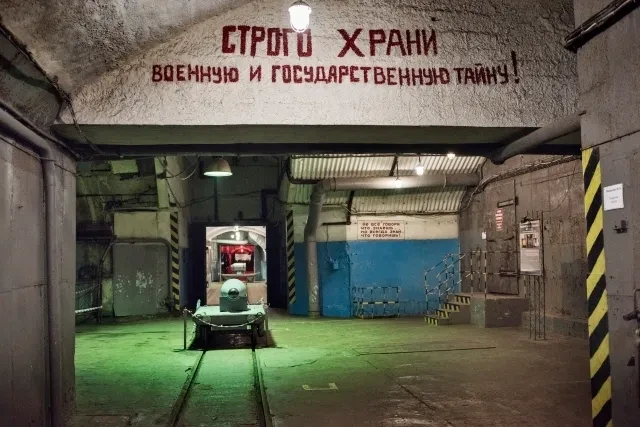
After the Crimea, Russia went into risky swimming towards geopolitical loneliness, towards isolation and Autarchy. She crossed out the “Western” and “Eurasian” projects. The “eastern turn”, which was actually “turning to China”, came out of the Kutsi and fraught with the transformation of Russia into a younger Chinese partner. The capture of Crimea unrecognized by the world community for many years has turned into a painful unintended splinter.
Without at their disposal, except for military power, other trump cards - economic, technological, soft power - losing allies, good neighbors, international support,
Russia is increasingly archaic and loses its development chances.
This path is at a dead end, it weakens and marginalizes the country, and therefore the main task for Russian society today is to look for a way out of it. Getting rid of the mythological picture of the world, from the mania of greatness, from the pose of proud and insulted loneliness. Returning to a sober assessment of their capabilities (by the way, considerable) in the modern world and on this basis - to real politics.