
Translated material
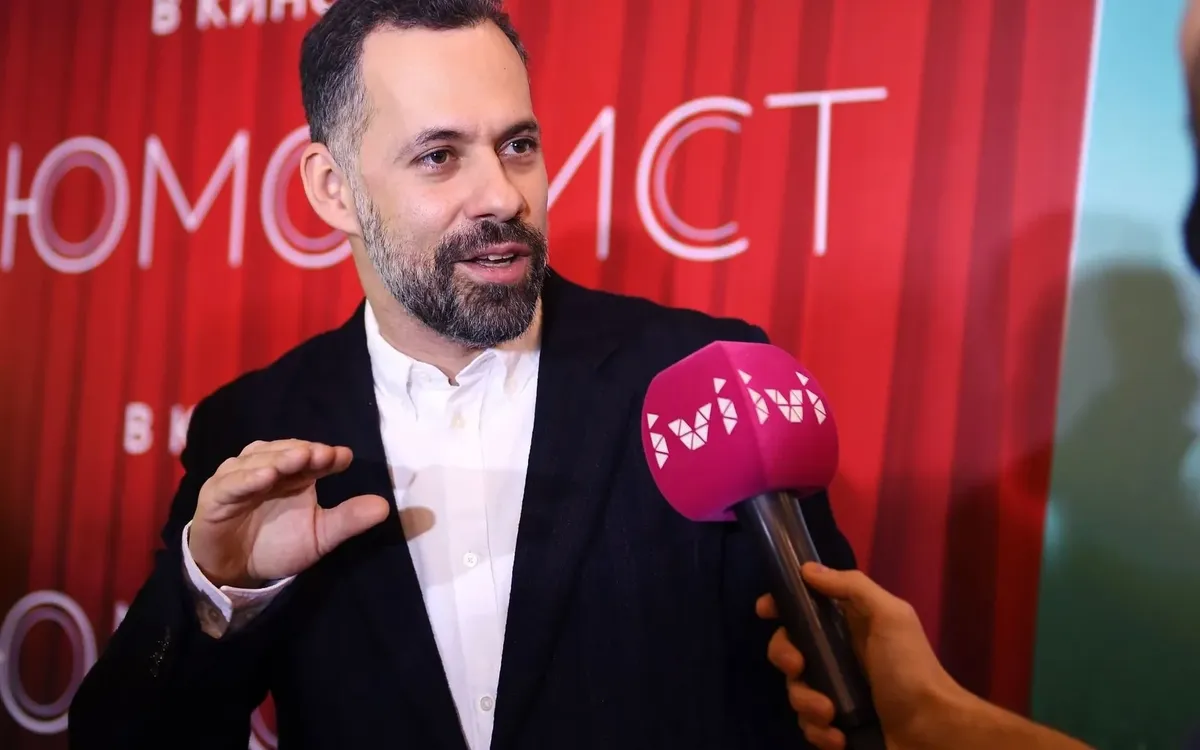
Mikhail Idov: "You cannot humiliate humor!"
Interview directed by the film "Comeror" - a comedy about the personal crisis of a professional joker in the era of stagnation
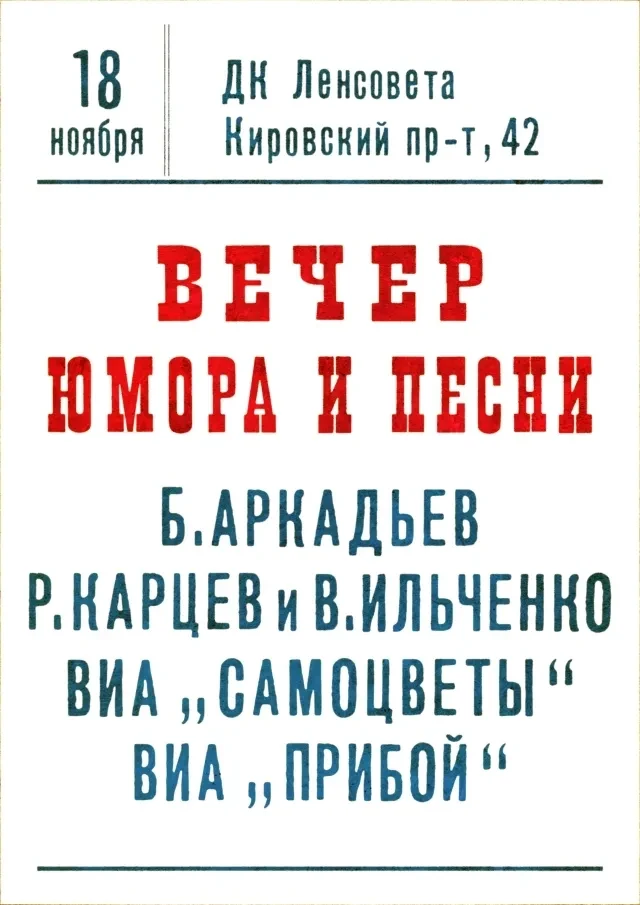
1984. Concert Hall "Dzintari" in Jurmala. On the stage, the popular favorite Boris Arkadyev (Alexei Agranovich): "Girl, do not want to take a picture with the monkey?" The “velvet season” monologue is accepted with a bang. Which year. The viewer knows this hit by heart. But again and again: “velvet season” Come on! ” The director invited Alexei Agranovich, director, producer, actor to the main role in the quiet, folding picture. Idov saw him in the Gogol Center in the play “Ordinary History”. Thanks to the accurate intonation, the method of existence in the frame, the gloomy, stooped hokhmach is among the unfading “extra people” that destroy the usual models of existence: Makarov from “flights in a dream ...”, Zilov from “Duck Hunting”, Service from “Geograph ...”, which drank the globe.
Boris Arkadyev is a fictional collective character, in which the features of almost all the famous Soviet satirists from Mishin to Arkanov, from Zhvanetsky to Altova, are guessed. Tormented by creative failure, reviewing cassettes with the "nonsense" of Eddie Murphy. Chasing life ... in a circle, but never realizing the potential. Confusing the concepts of “allowed” and “supposed”. Arkadyev - a court jester, which is grunted by the longing for a lack of freedom, still cherishes the stunted hope that the work of the literary search of Chekhov and Averchenko continues ... and entertains the nomenclature and valiant organs by bearded jokes about the monkey. True, Ilich wanted to give her sore patronymic ... And then they are not allowed. Cinema about the personal crisis, the nature of the dosed self -will in the era of the developed collapse of the empire. And about whether it is possible to die of laughter ...
- I know that the idea of the film has been ripening for a long time. What served as a catalyst for writing a script?
-The plot developed in 2014. After a large break, I arrived in Riga. He walked around Jurmala, near the Dzintari concert hall, famous back in Soviet times. And suddenly he saw posters with the same faces that he remembered since childhood.
- Now I’ll guess: Zadornov, Zhvanetsky, Izmailov, Khazanov ...
- Yes, this “figurative row”, but not only humorists: Sofia Rotaru, Lev Leshchenko and further. From a five -year -old child, I managed to turn into a graying man. Yes, and Latvia is now another country. Millennia changed. And these people continue to speak "in the same place, at the same hour." My grandmother took me into this hall. It was simply struck by the “loop of time” in which the luminaries of the Soviet period live. Representatives of not underground - a thin layer of the myth, which we, to the best of the forces, investigated in the film "Summer", but the official culture of the expired era. Representatives of this culture continue to exist equally successfully in the present time. So I had some kind of puzzle in my head. I recorded a short plot.
- Did you formulate a short plot for yourself? A person inscribed in a system where he is uncomfortable. Or trying to exist separately by virtue of talent. And he does not really succeed.
- There are many films on the topic "Artist and Power." The best of them, in my opinion, is “Mephisto” is an unsurpassed masterpiece. I periodically review it. He looked and preparing for this film. But there is also my favorite “life of others”, which, in visual terms, for me and our operator Alexander Surkal was a reference. There is an interesting view of cultural figures by organs whose representative was bred by the main character.
- In your film, too, you have a pretty sweet ordinary gesnik Major Nikonov, who takes care of the “Arkadyev artist” and even trying to demonstrate this friendship of his wife.
- But the film “The Life of others” is beautiful in that it was the younger rank of Stasi - his angle, his own life, a view of what is happening. In this story, he is the subject, and the representatives of the bohemia he followed - first of all, the liberal, the famous playwright Draiman - objects. We hardly guess what is happening in their souls. If we talk about the topic “Artist and Power”, then it would be interesting for me to make a film about a person whose problems are in himself. Still, both the Soviet Union and even humor are just entourage.
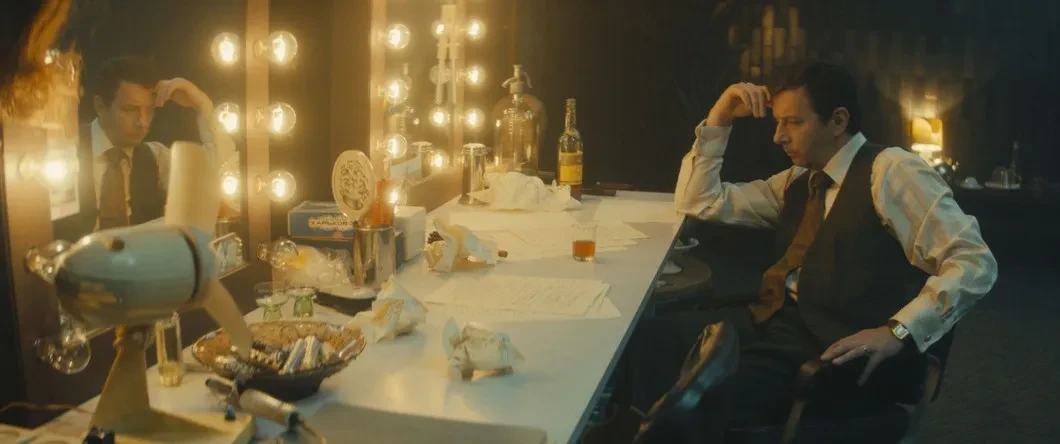
Boris Arkadyev is tormented by the fact that he is not loved for what he would like for. And then he begins to hate himself and the people who "love him incorrectly."
To hate, but not so much as to abandon the comfort of success, glory, everything that makes up its status. In this regard, the film can be considered autobiographical. And for me, and for Alexei Agranovich, who played Arkadyev. It seems to me that any viewer can sympathize with a person who realized that he was not in his place. Although, perhaps, Arkadyev’s tragedy is that he is just in his place, he simply does not admit that he is not capable of more.
- And how did you decide for yourself: is it really talented? Or suffers from the lack of genuine talent?
- Alexei and I discussed this issue for a long time. And they decided that he was not without abilities, moderately witty in everyday life ...
“But this is not a story about strangling talent.”
- Of course not. That's the point! About strangulation of a creative, reflective person of himself. This happens at any time in any mode.
-Therefore, at some point, an internal monster crawls out of it, ready to kill with a laughter.
- Including oneself.
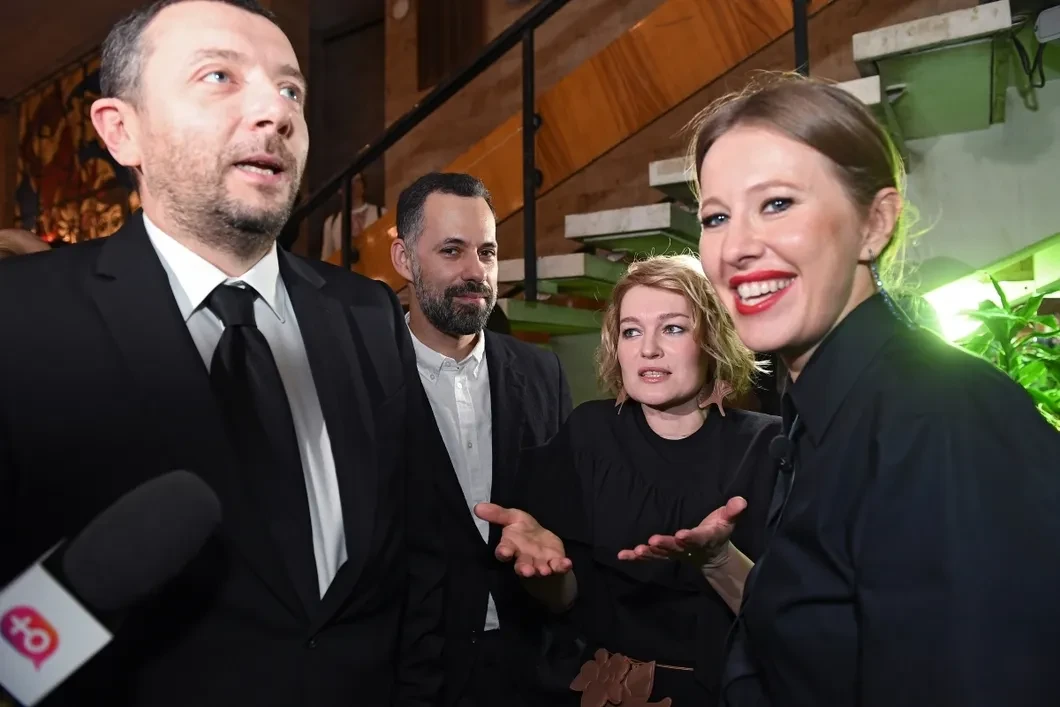
- It seems to me that it was not by chance that Agranovich reincarnated in Arkadyev - he sits on him, like a glove. Even if you did not write a script on it, the feeling that the character of the hero was adjusted under the gloomy humor and the appearance of the performer.
- It was a pure experiment. Before that, I was not personally familiar with Lesha, which is surprising, knowing his widest circle of communication. Therefore, he did not feel this "contextual train." Just seeing on the stage of the Gogol Center the magnificent artist in the role of Aduev, I realized that in this character there are fundamental style moments that I need for Boris Arkadyev. Having met him, I thought that these moments were Lesha himself. He dosedly gives out some aspects of his “I” theater, others - cinema. All I can say: I am terribly lucky that this is his first main role.
- What did he bring?
- What is indicated by the English word Gravitas can approximately be translated as personal significance, weight, persuasiveness.
He is not a Woodallene neuralsteve type, rather, the bearer of the Alfa Jewish. A kind of machism, which, unlike other aspects of the personality, is impossible to play.
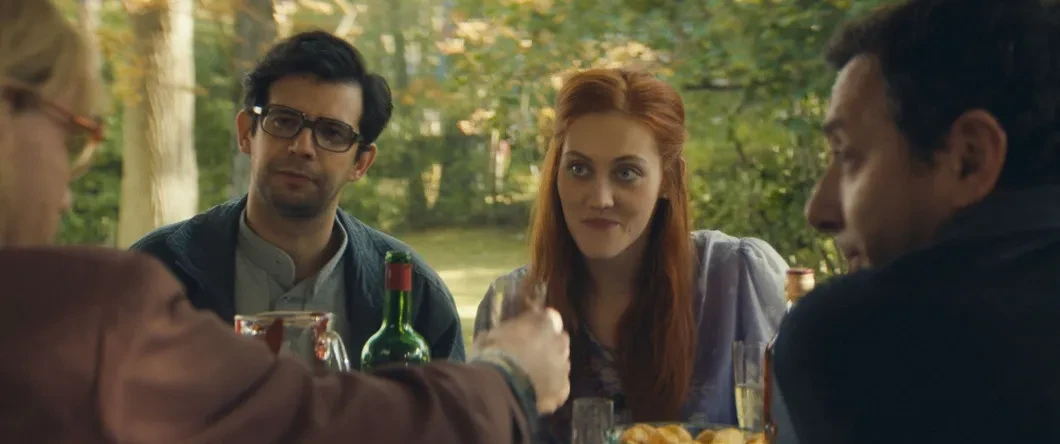
Some points of the script performed by almost any other artist would look implausible. For example, when from a party he suddenly leaves a friend's girlfriend, practically not looking for the whole evening in her direction.
- He simply says: "Let's go."
- In addition, inside him there is a nerve, and doubt, and vulnerability that go out in the main episode, which we conditionally call “conversation with God”. This difficult scene Lesha played so cool that there was practically no need to mount it. The key part of the episode was removed in two doubles with a length of 6-8 minutes.
- Almost theater.
- But the theater, filmed by the super -circular plan. In addition, this is still not visible to the eye of a simple viewer to the feat of the assistant operator on the focus. A person on such an approximation moves freely around the room, remaining all the time in the focus. I do not belittle the achievements of Lesha at all ... Just no one will ever say about it.
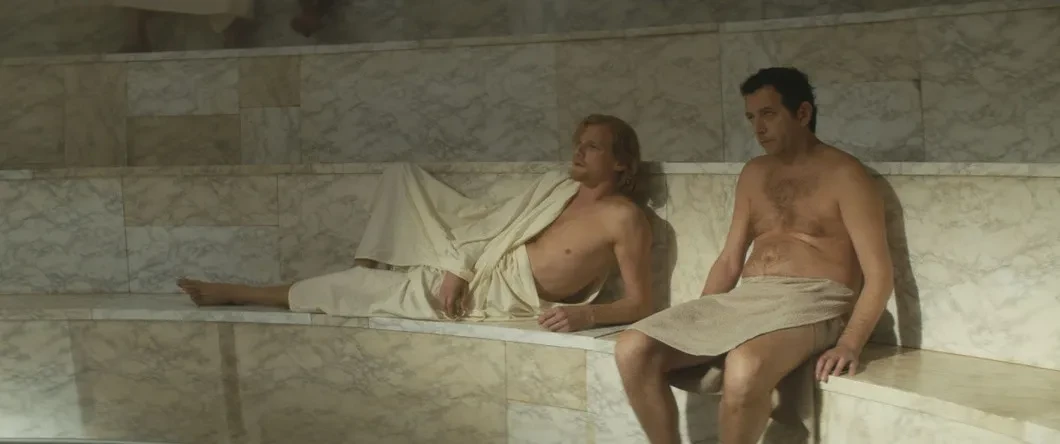
- You talked about the official satirical culture. Today she seems to have changed root. We live in the era of post -Kvna, our rashi, on the first channel in the evenings, Urgant is holding restrainedly. But we still see the same persons not only on the posters of the Dzintari hall, but also on all federal channels. For the authorities, this endless “blue light” is a symbol of stability. But after all, the audience continues to fill the halls.
- I would not like to judge anyone. Most of the country's population survived and continues to experience turbulent times. At such moments, you grab the usual one. In addition, they nostalgize in their own youth, projecting the memory of their own implies and enthusiasm throughout the era.
- But among fans of the conditional “blue light” there are representatives of new generations.
- Humor is a perishable product. Five years ago, I wrote a television seat that lay on the shelf. Reading now, he saw that he was hopelessly outdated. Many subtle moments remained yesterday. Therefore, I do not be surprised that
A person not only of a pension, but also my age prefers to reconsider the Zhvanetsky or Petrosyan than to make an effort on himself and become a fan of the video blogger Danila Transverse, for example,
Or Alexandra Dolgopolov, Idrak Mirzalizade.
- The series "Londograd" was partly "about the features of Russians abroad." Humor is also about national features. It is no accident that Umberto Eco said: “We understand the drama of the protagonist of“ Rasemon ”, but we cannot understand when and why the Japanese laugh.” Surely you are often asked: what are these features, what you wanted to pull out.
-My weak and strong side-I look at all this a little from the side. I am from Riga, lived in America, for several years in Moscow, now more in Berlin.
My preferences as a consumer of humor are very American. Only recently, I began to find people in the Russian world of people who are interested in following.
I still have not found a television comedy in the space. I understand with my mind that Boris Khlebnikov or Fizruk or Call DiCaprio, “preoccupied” by Boris Khlebnikov. But I am close to another nature humor.
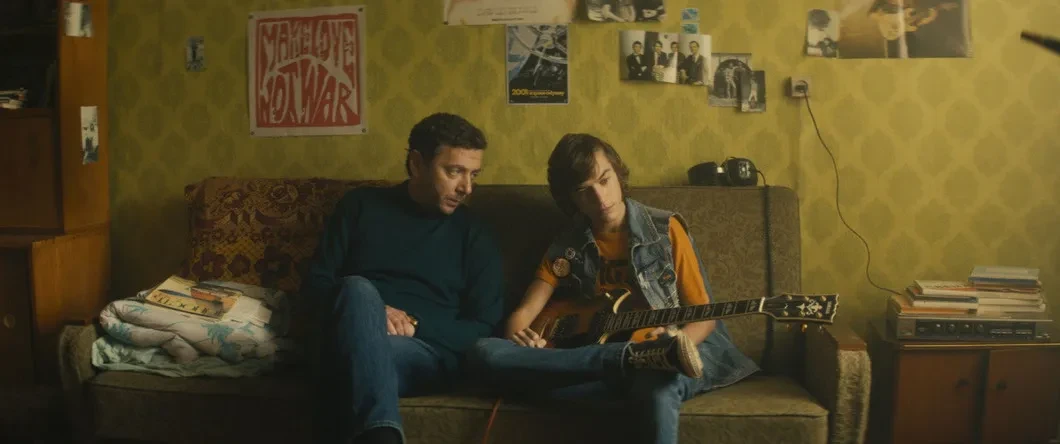
- Does the humor differ in generationally?
- Of course, humor is very mutating. The function of the joke, which practically disappeared as a folk genre, replaced the “meme” format - pictures with a signature. This is curious this: jokes in the collections die - they cannot be read, and memes can be leafed through for hours. At the same time, they play the same role in society: it is humor without an author who works on a virus principle. Did you like something? “You want to share this with others.” Mechanics of humor, tonality, it becomes more absurd, more fatalistic, is changing, that I am welcome in every way. Moreover, its function in society is the same.
Humor is always a secret code, a cipher with which a language is produced, an alternative officialdom.
This is a way to escape from the official discourse. Entire generations of Soviet people spoke quotes from Ilf and Petrov, Gaidai, just in contrast to the language that the authorities spoke. Now about the same thing happens. Only this is a network language, the language of memes and viral expressions that come from a wide variety of sources.
- The television program also works quite successfully, and, by the way, comediklabovskaya style and characters from the TV instantly pace the Internet. What is the secret of their success? What is the riddle of such authors as Semyon Slepakov?
- In the ability to create memes. He knows how to launch expressions and images into the vocabulary, accurately and capaciously characterizing the moment of reality. This is the main value of any creative person. Each cultural product today is versed in bricks that can function separately.
- For example, the phrase “Every Friday I am on shit ...” characterizes a whole layer of people - office clerks.
- Maybe. Honestly, I did not hear this meme. And this is normal, because there is no monoculture today. There are a lot of subcultures.
- Tell us about modern outstanding standers and professional world -class wit. Why are they wonderful?
- My comedy idols are not standers, but, for example, Tina Fai (actress, producer, screenwriter, creator and participant in popular series and sitcomes, seven Emmy awards, three “golden globes”), Amy Pauler (famous American actress, comedian, screenwriter, scriptwriter, laureate Movie Awards, Golden Globe and Emmy). Fey was the leading screenwriter of Saturday Night Live - the famous comedy show close to stand -up. Both fairies and Polier - originally from the improvisational comedic theater, from the sketches. If we talk about a pure stand, this is Patton Oswalt, John Mulani, Stephen Kolber. Oswalt in his concerts blows jokes with public therapy.
America is now a difficult emotional, psychological period. For many of my acquaintances and friends, it is the comedy, humor takes on the therapeutic function.
Steve Kader, who is also difficult to call a stand -uper, because he is a host of many satirical shows, is also my hero. His communication with the audience is improvisation and magic. There is such a feat of a comedy that can at any time become a receiver and translator of sincere emotions cleared of irony. This is important and necessary, especially now. In this context, Louis Xi Kei, the talented stand-up comic, producer, director cannot be mentioned. Since 2012, Louis accusations of sexual violence appeared, today it will reject progressive humanity. In general, I am a supporter of such spontaneously forming “friendly ships” that take place in the world of show business. Thanks to them, society develops the rules of conduct.
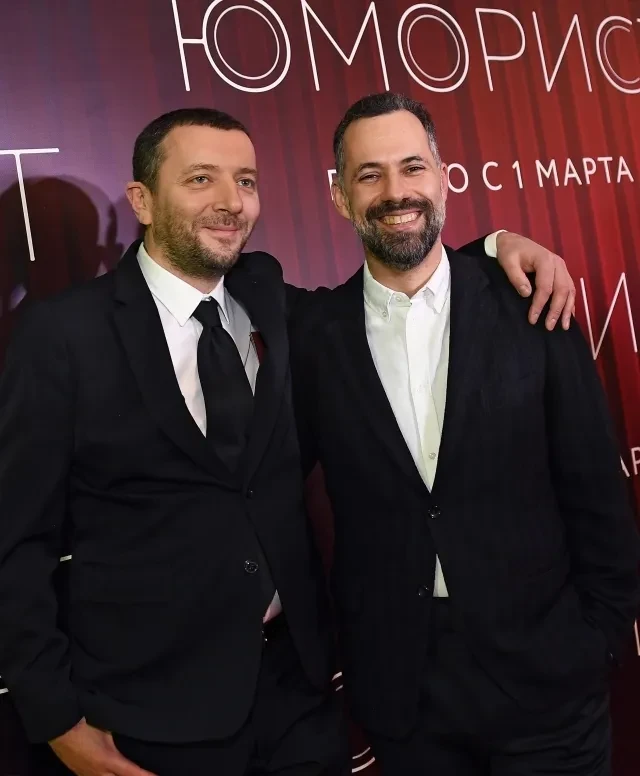
- specify the concept of "comradely court."
- When there is no official court, a public consensus arises: we will remove the mouthpiece from this person, the possibility of broadcasting any kind of speeches. Indeed, after the initiatives and shares of #Metoo, in essence, no one has yet sat down, even Weinstein is not yet sitting.
- Is it about public censure as an impact tool?
- Certainly. These are all moments of growth in society.
With any struggle for rights, the pendulum must temporarily swing towards some exaltation. Like with pride parades. Or before that with the Black Panthers. Sooner or later, everything will get tired.
But I do not like it when suddenly people begin to pretend that they have never had a non -imminent person at all. It would be a hypocrisy that Louis Xi Kay with his concerts and sitcoms did not have a huge influence on me. And instead of cowardly to remove his materials from striming services, I seem to be the opportunity to leave the opportunity to look at his work through a new optics. If people are worried that they enrich him with this, there is a simple solution: not to look.