
Translated material
Memory. Max Fasmer
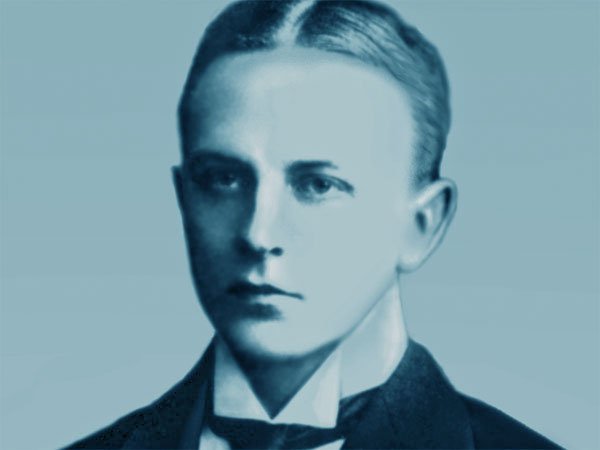
On February 28, 1886, Max Fasmer, linguist, lexicographer, author of the Etymological Dictionary of the Russian Language were born.
Personal business
Max Fasmer (1886–1962) was born in St. Petersburg in a merchant family. His full name Max Julius Friedrich, and in Russia his name was Maximilian Romanovich. He studied at the famous gymnasium of Karl May. At the age of seventeen, Fasmer became a student at St. Petersburg University, where he studied comparative historical linguistics and Slavicism. His teachers were I. A. Baudouin de Kurtena and A. A. Shakhletov . As a student, Max Fasmer began to be interested in issues of the origin of words. His first work, dedicated to Greek borrowings in Church Slavonic and Russian languages, was called "Greek-Slavic sketches." The first part of the work was light in 1906, when M. Fasmer was still a student. The next year, he graduated from the university course and published the second part of the Greek-Slavic studies.
For improvement in Greek, Fasmer made two trips to Greece in 1907 - 1908. He visited Athens and Thessalonics, investigated Greek dialects, and also studied the Albanian language. In 1909, the final third of the Greek-Slavic sketches was released, and Fasmer defended her as a master's thesis. The work received the Academy of Sciences. Fasmer later recalled that the plan to create an etymological dictionary of the Russian language arose already while working on the Greek Slavic sketches. Having caught in Greece by malaria, Fasmer went to Finland for treatment. There he began to study the Finnish language and explore the Finnish borrowings in Russian. In the same years, he writes articles about lexical relations between Slavic languages and Romanian, about the history of some Turkish words. Here, a noticeable difference in many other Slavists is manifested in the scientific - interest not only in the language of the Slavs, but also in the languages of the peoples around them. This knowledge has repeatedly allowed the Fasmer to respond to the seemingly unresolved riddles that come across in the history of Russian words.
In 1908 - 1910, Fasmer visited the universities of Krakow, Vienna and Graets, continues to study comparative linguistics, and was engaged in Slavic languages. Having returned, he passed exams for the right to give lectures and received the position of Privat-Tochend at St. Petersburg University. Two years later, Fasmer also became a professor of Slavic philology and Indo -European linguistics in the highest female Bestuzhev courses. In these years, he publishes a number of articles on Slavic etymology, where he examines the existing etymological dictionaries of the Slavic languages (E. Berneker and A. Preobrazhensky), describes the etymology of many words, relying not only on the languages of the Slavs, but given the languages of neighboring peoples. Fasmer made a second scientific trip to Europe, visiting Vienna, Krakow, Lyubabyana, Dubrovnik, where he worked in libraries, met with scientists, improved his knowledge of Slavic languages. Then he visited the island of Corfu and Athena, where Fasmer participated in the XVI Congress of Orientalists. In Greece, Fasmer continues to study the Albanian language and its dialects. In 1914, Max Fasmer wrote the dissertation "Research in the field of ancient Greek phonetics." For this study, he received the degree of a doctor of philological sciences.
In 1917, Fasmer heads the department of comparative linguistics and Slavicism in Saratov. There he met the Kalmyk language, studied the Russian dialects of the Saratov province and the dialects of the Volga Germans. During the 1917 revolution, Fasmer was in Finland. From there, he gets to Derpt (Tartu) and enters the famous Derpt University. Fasmer quickly learned the Estonian language (the knowledge of Finnish helped) and began to give lectures on it.
In 1921, Fasmer became a professor of Slavic philology in Leipzig. At the same time, in 1921, he became the co-director of the Indo-German Institute, the Institute of Southeast Europe and Islam and the State Scientific Research Institute of Indo-Germanistics.
In 1923, Fasmer became an ordinary member of the philological and historical class of the Saxon Academy of Sciences. In the same year, he publishes the work “Iranians in the south of Russia”, which determines the northern boundaries of the resettlement of the Scythian and Sarmatian tribes, as well as containing an analysis of small and therefore very valuable data on the languages of these tribes. Fasmer was able to establish all these facts, studying the origin of the geographical names of present -day Ukraine. So, in particular, he discovered the Iranian -speaking roots of the names of the Don, Dnieper, Dniester.
The next year, Fasmer founded Zeitschrift Fur Slavische Philologie, and a year later he became a professor in Berlin. In many ways, the efforts of Fasmer Slavic in Germany reaches its heyday. Fasmer becomes one of the editors of the fundamental publication “Essays on Slavic Philology and the History of Culture” (before the Second World War managed to publish 12 volumes from the expected eighty). On January 14, 1928, Fasmer was elected a corresponding member of the USSR Academy of Sciences.
The next major work of the Fasmer “Essays on the Historical Ethnology of Eastern Europe” is published in 1932 - 1936. He studies the resettlement of the Baltic, Finnish, Slavic tribes according to linguistic data, mainly in toponyms. Scientists praised this work, but there were sharply negative responses.
In an atmosphere of nationalism developing in Germany, a book, which indicated many geographical names of Slavic origin in Germany, was unlikely to cause ubiquitous delight. However, Fasmer never changed the scientific truth for the sake of ideology. He selected for the publication of articles of scientists in his journal, focusing not on their nationality, but on the scientific value of work. Due to the publications of the articles of “authors of Jewish origin”, the magazine repeatedly threatened the closure. He was engaged in such little and even dangerous and even dangerous in Germany of the thirties, as Polish dialects in Silesia or Luzhitsky Slavic languages. In 1937-1938, Fasmer, as an invited professor, gave lectures at Columbia University in New York. He also made lectures in 1930 - 1931 in Lund, Uppsale, Stockholm, in 1937 - 1941 - in Sofia, Budapest, Bucharest and Helsinki.
During the war, Fasmer is trying to get the release of his Polish colleagues from the concentration camps, but almost gets into the concentration camp itself. He continues scientific work, publishes the research “Slavs in Greece” (1941), “Greek borrowings in the Serbokhorvat language” (1944).
In 1944, an event terrible for Fasmer happened - his Berlin apartment was destroyed during the bombing. His library, manuscripts and a complete file cabinet of the preparing etymological dictionary of the Russian language were killed. The work on which for many years had been spent, it was necessary to start over again. Later, Fasmer will write in the preface to the dictionary: “In these conditions, the work could not work as I imagined it in my youth. It is based on the extracts that I collected in the hungry 1945-1947. In the descending Berlin libraries and later, during my two-year classes in the libraries of Stockholm (1947-1949). ”
Over the years in Stockholm, Fasmer restored his destroyed file cabinet. After the separation of Berlin, Max Fasmer began to work at the Free University of West Berlin. Finally, in 1950, the publication of the Etymological Dictionary of the Russian Language began, which lasted until 1958.
After the war, Fasmer twice - in 1956 and 1958 - came to Moscow.
Max Fasmer died on November 30, 1962 in West Berlin.
What is famous
 Max Fasmer
The main work of Fasmer - the “etymological dictionary of the Russian language” - to this day remains unsurpassed by the girth of Russian vocabulary of the code of etymologies.
In 1950, the first issue of the dictionary, the publication of which was completed in 1958, was published at the Heidelberg Publishing House. All issues made up three volumes.
During the arrival of Fasmer to Moscow in 1958, at the IV International Congress of Slavists, the finished dictionary was represented by a scientist. Then the plan for the translation of the dictionary of Fasmer into Russian arose. Earlier, etymological dictionaries were extremely rare. Usually, experts used etymological dictionaries in the language of publication (most often in German). Only in the second half of the 20th century, English versions of some classical etymological dictionaries of Indo -European languages were created. The initiator and executor of the work on the translation of the Fasmer dictionary was O. N. Trubachev - at that time a candidate of sciences, and later a prominent Russian scientist, academician, editor of the multi -volume "etymological dictionary of Slavic languages". Working on the translation, O. N. Trubachev retained the text of Fasmer into inviolability, but supplemented it with numerous comments and clarifications based on new works in etymology. The reader can easily find out these notes: they are always enclosed in square brackets. As a result, the text of the dictionary in the Russian translation has grown significantly and took not three, but four volumes.
In 1964, the first volume of the “Russian Fasmer” was released. The book deservedly became popular, turned into a valuable reference book in Russian etymology. The dictionary was reprinted in 1986-1987, 1996, and the latest editions were already in the 21st century.
What you need to know about
Due to the large volume of scientific and organizational work from 1923 to 1932, Fasmer did not write major studies, but published many small articles and notes on the etymology of individual words, names and geographical names. The scientist filled them with free space in the journal of Zeitschrift Fur Slavische Philologie. Often they occupied only half or a quarter of the page. Fasmer considered these publications insignificant, calling “Randbemerkungen notes”, but in fact they brought a lot of new things into the study of the Russian language.
In particular, in one of these notes, he described as the names of the Horde nobles became the names of the heroes of Russian epics. The most famous of such epic characters is Schelkan Dudentevich. His real prototype was the Tatar Baskak (tax collector) Chol Khan, who was killed in 1372 in Tver during the uprising caused by his abuses.
Direct speech
I dreamed about the compilation of the “etymological dictionary of the Russian language” as the main goal of my scientific activity during the first studies on the influence of the Greek language on the Slavic (1906-1909). Many wishes expressed in the reviews of my dictionary will undoubtedly be useful for the subsequent Russian etymological dictionary, in which special attention should be paid to the numerous words, named here unclear. If I had to start work again, I would pay more attention to tracing paper and the semacoological side.
Max Fasmer
By birth, by culture acquired in childhood, by education, he was a Russian person, a scientist who retained the fidelity of the Russian theme until the end of his life. He was a philologist of the Russian school; Expand his dictionary, and you will see how much space is allocated there a dialogue with its luminaries - with Shakhmatov (with whom he more often diverges in interpretations), with Ilyinsky (to which is critical), with Sobolevsky (many specific judgments of which often accepts).
O. N. Trubachev
10 facts about Max Fasmer
- As a student, Fasmer was immersed in science. According to the memoirs of classmates, in 1905 he asked others to “make your Russian revolution not so loudly,” as this interferes with his work.
- In the third part of the Greco-Slavic sketches, Fasmer established the Greek origin of a number of words from the secret language of Russian-Offen Russian merchants.
- The first wife of Fasmer was the daughter of I. A. Baudouin de Curtene Caesaria, but the couple parted pretty soon. In 1914, Fasmer married again, this time the marriage was happy. Max Fasmer and his wife Elsa Nippa lived together all his life.
- While working in Dorpt, Fasmer proposed starting work on compiling a colloquial Baltic-German language, but the project was not implemented due to the scientist's departure to Leipzig.
- Max Fasmer was not the only outstanding scientist in the family. His brother Richard (Roman) Fasmer became a historian, a specialist in numismatics and the keeper of the numismatic cabinet of the Hermitage. In 1934, he was arrested in the fabricated GPU of the Russian National Party and died in the camp.
- When Fasmer was once asked why the Fuhrer’s portrait was not hanging in his office in the 1930s, he replied that he preferred not to keep anything superfluous in himself.
- Slavist Valentin Kiparsky recalls a meeting with Fasmer in Stockholm: “I will never forget the sight, which was introduced when I first asked the Russian Institute about the facer. “Do you want to see him? There is nothing easier. Please". The director of the institute Nilsson opened the door to the next room: a huge completely empty space, where in the middle there was a small table and heavy chair. There were a thick dictionary and a cardboard box on the table, a great scientist sat on a chair and wrote cards. ”
- Sometimes in the "etymological dictionary of the Russian language" there are unexpected words that usually do not include in etymological dictionaries. For example, there is an abbreviation "GPU".
- Fasmer led the publication of one of the first reverse dictionaries of the Russian language (Greva R., who is stronger than the city of the reverse dictionary of the Russian language / Ed. M. Fasmer. Visbaden, 1958 -1959).
- Fasmer also headed the groups of Slavists who worked on large -scale projects that ended after his death. This is the “Dictionary of Russian Water Names” (Wörterbuch Der Russian Gewässernamen, 1961-1973, five volumes) and the fundamental reference “Russian geographical names” (Russisches Geographisches Namenbuch, 11 volumes, 1964-1988).
Materials about Max Fasmer
Article about Max Fasmer in Russian Wikipedia
M.I. Chernysheva Max Fasmer. Essay on life and activity
Fasmer dictionary in the form of an electronic database
Fasmer Dictionary on the website "Etymology and history of the words of the Russian language"