
Translated material
Memory. Lev Shcherba
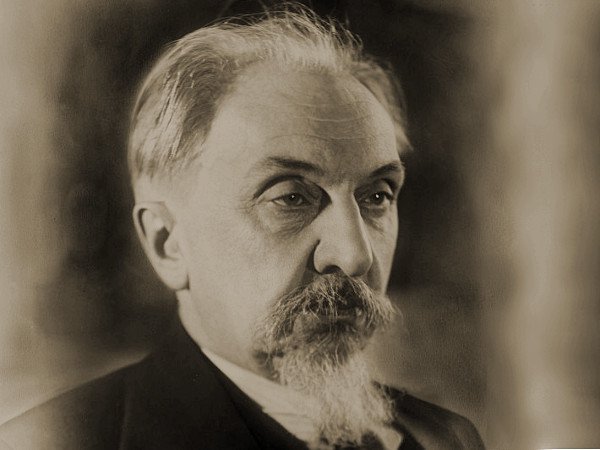
On March 3, 1880, the outstanding philologist Lev Shcherba was born.
Personal business
Lev Vladimirovich Shcherba (1880-1944) was born in the city of Hegumen of the Minsk province, where his parents moved shortly before his birth. He grew up in Kyiv, he also graduated from a gymnasium with a gold medal.
In 1898 he entered the natural faculty of Kyiv University. In 1899, after his parents moved to St. Petersburg, he transferred to the historical and philological faculty of St. Petersburg University. He studied with Professor I. A. Baudouin de Curtene - one of the most brilliant philologists of the XIX -XX centuries.
He graduated from the university in 1903, having received a gold medal for the composition "Mental element in phonetics." Baudouin de-Kurtene leaves him at the department of comparative grammar and Sanskrit.
 Lev Shcherba with his wife
Photo from the archive T. D. Kolomiytsova
In 1906, the university sent Leo Shcherba abroad. He spends a year in Northern Italy, independently studying living Tuscan dialects. In 1907 he moved to Paris, where in the laboratory of experimental phonetics of J.-P. Rusel in college de France gets acquainted with equipment, studies English and French pronunciation by the phonetic method and works independently, accumulating experimental material. The autumn holidays of 1907 and 1908 spends in Germany, studying the manakovsky dialect of the Luzhitsky language in the vicinity of the city of Muskau (GUSKAYAKOV).
The study of this, lost in the German language environment of the Slavic language of the peasants, was prompted to him by Baudouin de-Kurtena in order to develop the theory of mixing languages. In addition, Lev Vladimirovich sought to comprehensively study some living, completely unfamiliar, unequal language, which he considered especially important in order not to impose on the language of any biased categories, not to put his tongue into finished schemes. He settles in the village in the vicinity of the city of Menakov, not understanding the half -word in the studied dialect. He teaches the language, living one life with the family who accepted it, participating in field work, sharing Sunday entertainment. The collected materials became the basis of the doctoral dissertation of Shcherba. He conducts the end of his foreign business trip in Prague, studying the Czech language.
In 1909, Shcherba was returning to St. Petersburg, elected by a Privat-Tocent of St. Petersburg University, and at the same time becomes the guardian of the cabinet of experimental phonetics, founded in 1899 by professor S.K. Bulich, but in a neglected state. He actively begins to engage in the development of the office and achieves a significant subsidy to purchase the necessary equipment and books. Having transformed the cabinet into the laboratory of experimental phonetics, Leo Shcherba until the end of his life, for more than thirty years, developed the work of the laboratory, which was his beloved brainchild.
Simultaneously with work at the university, Shcherba taught at the highest women's courses, at the neuropsychiatric institute, at courses for teachers of deaf -mute and teachers of foreign languages. He read courses on the introduction of linguistics, comparative grammar, phonetics, Russian and old -Slavonic languages, Latin, ancient Greek, taught the pronunciation of French, English and German.
In 1912, he defended the master's thesis on the topic “Russian vowels in qualitative and quantitative”, and three years later - a doctoral dissertation (“East Luzhitsky Administration”).
Since 1916 he served as professor at the Department of Comparative Linguistics of Petrograd University.
During the 1920s, Leo Shcherba, in addition to scientific activity, was also engaged in organizational work, being the organizer and head of various courses of foreign languages, in particular the phonetic institution of practical learning of languages, etc. He intended to organize in this institute along with the teaching of Western European and Eastern languages also teaching the Russian language for non-Russian language. He introduced there the teaching of foreign languages according to the phonetic method, developing his original system.
Since the 1920s, Shcherba was the permanent chairman of the linguistic society (natural continuation of the linguistic department of the neofilological society), grouping linguists of various specialties around him.
From 1923 to 1928, the editors were released by four issues of the Russian Speech collection, the task of which was to popularize linguistics. They were participated in their creation as scientists of the older generation, for example, D. N. Ushakov, V. I. Chernyshev and others, and the young - S. G. Barkhudarov, S. I. Bernstein, V.V. Vinogradov, B. A. Larin and others.
In 1924, Shcherba was elected a corresponding member of the Academy of Sciences of the USSR, and from that time on his fruitful activity in the field of the theory of dictionaries, the result of which was the spelling of labor “Experience of the General Theory of Lexicography” in 1940.
Around 1930, Shcherba took up the revision of his voltings provisions, and the result was the article “On the Troyak aspect of language phenomena and about the experiment in linguistics”, which he attached great importance.
In the 30s, he continues to engage in vocabulary, writes the textbook “Phonetics of the French language”, pays great attention to the study of various grammar issues, mainly syntactic, Russian language.
Among his scientific interests, in addition to the already named, were also grammar, issues of interaction between languages, issues of teaching Russian and foreign languages, issues of the language norm, spelling and orthoepy.
He participates in widely launched work on standardization and resolution of spelling and the grammar of the Russian language. Lev Vladimirovich is part of the collegium editing the school textbook on the grammar of the Russian language S. G. Barkhudarov, participates in the preparation of the “draft rules of unified spelling and punctuation”, published in 1940
At Leningrad University, Shcherba taught until 1941. After the start of the war, he was evacuated along with all the institutions of the People's Commissariat of People's Commissariat for Nolinsk, where he spent two years. In Nolinsk, he writes the work “Theory of Russian Letter”, which remained unfinished, then the book “Fundamentals of the Methods of Teaching Foreign Languages” according to the plan of the Institute, articles on the methodology of teaching languages and others.
The last years of his life after re -evacuation spent in Moscow.
In 1943 he was elected academician of the USSR Academy of Sciences, a member of the Paris Institute for the Study of Slavic Languages, the Paris Linguistic Society. In March 1944-a real member of the newly created Academy of Pedagogical Sciences of the USSR, in which it becomes the head of the historical and philological department.
In August 1944, Shcherba was seriously ill. Preparing for a difficult operation, he outlined his views on many scientific problems in the article “The next problems of linguistics” (“Linguistics”). This work has become a kind of testament of Leo Vladimirovich. The scientist has not carried out the operation.
Lev Shcherba died on December 26, 1944. He was buried in the Vagankovsky cemetery.
What is famous
The outstanding Russian linguist Leo Shcherba went down in the history of linguistics primarily as a specialist in phonetics and phonology. Having developed the concept of phoneme developed by Baudouin, he gave the term “phoneme” its modern significance. He owns the first special analysis of the concept of phonemes in the history of science as a wordblasting and morphemist -facelic unit, contrasted with a shade (variant) as a unit that does not have such a distinrative function.
Having created the original “Leningrad” phonological concept, he became the founder of the Leningrad phonological school. Back in the pre -revolutionary years, Shcherba founded a phonetic laboratory at St. Petersburg University, the oldest of the currently existing in Russia; She is currently bearing his name.
Shcherboy posed the problem of building active grammar, which goes from values to these values expressing these values (unlike more traditional passive grammar, which goes from forms to values). When engaged in lexicology and lexicography, he clearly formulated the importance of distinguishing between the scientific and “naive” meaning of the word, proposed the first scientific typology of dictionaries in domestic linguistics. As a lexicographer, he (together with M.I. Matusevich) was the author of a large Russian-French dictionary.
Shcherba introduced the concepts of negative language material and linguistic experiment. During the experiment, he believed, it is important to use not only examples of how to say, but also consider negative material - that is, how they do not say. In this regard, he wrote: “... in the“ texts ”of linguists there are usually no unsuccessful statements, while the very important part of the“ language material ”forms exactly unsuccessful statements with the mark“ so do not say ”, which I will call“ negative linguistic material ”. The role of this negative material is huge and has not yet been appreciated in linguistics, as far as I know. ”
He wrote the books “Russian vowels in qualitative and quantitatively” (1912), “Eastern Lyuzhitsky Adverb” (1915), “Phonetics of the French language” (1963).
What you need to know about
Leo Shcherba is the author of the famous phrase "Glokai Kudra Shteco Brara Bocra and Kurdyachit Bocryunka."
This artificial phrase based on the Russian language, in which all root morphemes are replaced by meaningless combinations of sounds, was created by a philologist to illustrate that many semantic signs of the word can be understood from his morphology. Morphological signs (endings, suffixes and official words) allow the native speaker to get a certain idea of the content of this sentence from non -existent words - "such and such/someone has some kind of action and performs a certain action."
The phrase was invented in the late 1920s and was used by a scherboy at introductory lectures to the course “Fundamentals of Linguistics”. According to the story of Irakli Andronikov, it sounded initially: "Kudmataya Bocra Slako boiled a toucastenic box."
The exact sound of the phrase is still unknown. Shcherba himself pronounced her at different times in different ways.
The phrase acquired wide fame after its mention in the popular science book of Leo Uspensky “The Word of Words”.
Direct speech
On the origins of illiteracy : “For the lower layers of competent people, this very literacy was generally the limit of science; To be able to properly arrange Yati was to be a "scientist." For the highest layers of competent people, the requirements of spelling were justified by science, and violating these requirements meant to destroy science, meant destroying their native language, renouncing its history. In order to clearly imagine these previous minds, it is enough to recall those hot disputes that were conducted on how to write: Lychebnitsa or History, Break or Star, Vetshchina or Vyadchina, etc.
The reform of spelling is clearly, and therefore irrevocably, destroyed all these illusions. It turned out that it was possible to write bread, snow, causeless, etc., etc., for which they used to put a deuce, deprived the diploma or did not accept the service with a scribe. A practical conclusion that was made from here by the broad masses, and not only by them, but also by teaching, and not only lower, but also medium, in general, in general, almost the whole society, was the one that spelling is an unimportant thing, write, they say, not in that power. I affirm this not as my own speculation, but as a constantly confirmed observation of life and school. This new evaluation of spelling was supported by the characteristic of all revolutionary eras by contempt for “form” and pursuit of “creature”. As a result, the underestimation of the meaning of spelling, which, in my deep conviction, is the indigenous cause of modern illiteracy. ”
The language and speech, as a single whole: “It is obvious that the language system and linguistic material are only different aspects of the only one given in the experience of speech activity, and since it is no less obvious that the language material outside the understanding process will be dead, but the very understanding of the somehow organized linguistic material (i.e., the language system) is impossible.”
About the semantic component of speech : "If our linguistic experience were not ordered in our form of some system, which we call grammar, then we would simply understand the parrots that can repeat, and understand only the heard."
Larin B.A. About Leo Shcherbe : “Until the last days of his life, he was a knight of philology, who did not change her during the years of the largest losses, humiliations and attacks on philological education. Subsequently, he was already seriously ill, he continued wherever it was advisable to seek the restoration of philology in high school and its rise in higher education. These efforts of L.V. Shcherby were not unsuccessful, although many of his ideas, plans and suggestions remained the covenant for the bright future of the Russian school. ”
5 facts about Leo Shcherbe
- In 1921, Lev Shcherba helped the creation of the written language of the Komi language.
- Since 1924, Shcherba has been an honorary member of the International Association of Phonetists.
- In 1929, Shcherby’s brochure “How to study foreign languages” was released, where he posed a number of issues regarding the study of foreign languages by adults.
- In the late 30s, Shcherba was engaged in translations of graphics of various languages from Latin into Russian alphabet, in particular, the project of the creation of the Kabardian alphabet based on Russian graphics.
- The laboratory of experimental phonetics created by Leo Shcherbo is now bearing his name.
Materials about Leo Shcherbe
Outstanding Russian linguist Lev Vladimirovich Shcherba
L.V. Shcherba. The main milestones of his life and scientific creativity.
Article about Leo Shcherbe in the "Circularity"
Article about Leo Shcherbe on Wikipedia