
Translated material
Theodore Adorno's room
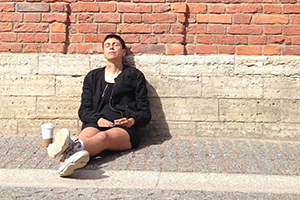
On March 9, at 17:00, in the Vintage Hall of the Vinzavod, an open evening of memory of Alexandra Novozhenova, a regular author of Kolta, an art historian and art critic, who passed away on January 29 in Chicago, will be held. The event will begin with the performances of colleagues organized by the laboratory of artistic criticism. Among the speakers are the historian and social theoretician Ilya Budraitskis, the critic and curator Valentin Dyakonov, the philosopher and theoretician of art Boris Klyushnikov, art historian Angelina Lucento, psychoanalyst and art critic Gleb Napenko, artist and rector of the Base Institute Anatoly Osmolovsky. The evening will continue with a free microphone with the opportunity to perform for everyone.
On the eve of this event, Colta.ru publishes several personal memories.
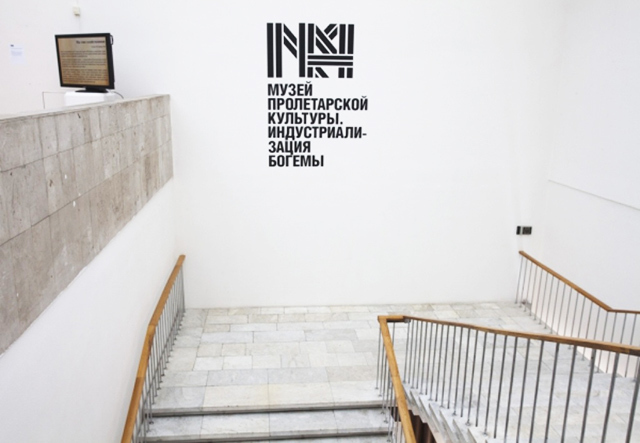 Logo “Museum of Proletarian Culture”, which was developed by Alexander Novozhenov Arseny Zhilyaev
We met Sasha, probably at the beginning of the zero. She then worked as an observer of art in the Afisha and called to clarify a number of details for her article. As a result, we talked much longer than the laid, and then began to communicate. Sasha suddenly arose and also suddenly disappeared. Many of our conversations remained unfinished. She was always a little as a bare wire - cutting, spontaneous, risky and sometimes radical in her judgments. It always seemed to me that this is what gives the depth to its texts and at the same time the “instability” determines their “instability”. It was always interesting with her, as with her texts, but often there were more questions after that it was at the beginning. However, this is not the worst quality for the intellectual product.
It so happened that in the case of Sashin texts I was a simple consumer. However, I had experience of creative interaction with her in the plane of art. Probably not everyone knows, but she not only painted well, but also had a design education. Soon after our acquaintance, I invited her to help me with the project for the Tretyakov Gallery "Museum of Proletarian Culture". It was a free interpretation of the Marxist exposition of Alexei Fedorov-Davydov, a student of sociologist Frice and at some point in one of the most radical experimenters from art in the first third of the 20th century.
The exhibition was placed in an imaginary future after a successful proletarian revolution. As an exposition form, I tried to realize something like a self-critical version of museum design for the future. Futurology always speaks more about the present, is always limited by the images of the past, but the awareness of this fact gives a conditional reflexive frame, which opens the opportunity to work without regard to the curbs of human imagination regarding the future.
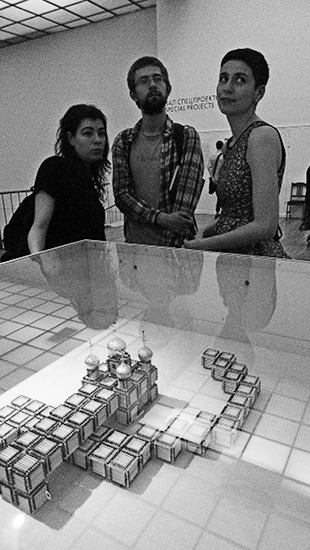 At the opening of the "Museum of Proletarian Culture"
The task was not simple, and Sasha took on an important role in its implementation. In fact, she made the entire 2D design that included the logo (which we decided to place on the cover of the catalog), layout, the choice of font, etc. I remember how she promoted Helvetetics and, in general, modernist design as the best solution for work. Her contribution to the creation of a retro-futuristic atmosphere of the exposition of the 60s and 70s was significant. At the same time, we argued a lot both on formal issues and in the structure of the production process. Our relations within the project were not equal, the last word remained behind me. Sasha was looking for the possibilities of equal co -creation in the team.
It turned out a little better in the case of a “pedagogical poem”, a project that we initiated with Ilya Budraitskis in the former Museum of the Revolution on Presnya at about the same time. We wanted to create a work of art in the form of an educational program with the possibility of rethinking the heritage of the Museum of Revolution. Sasha was our active listener and work colleague. Although here it was not without disputes.
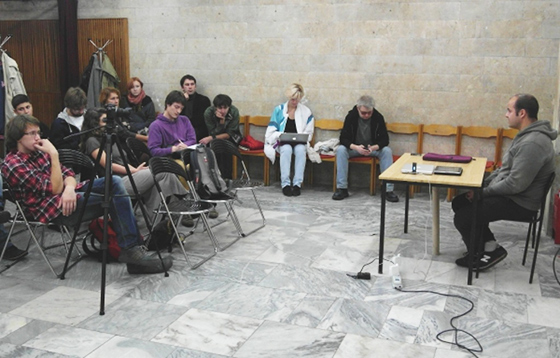 At the lecture of Ilya Budraitkis in the framework of the "Pedagogical Poem"
As planned, the project was supposed to have a final exhibition - intervention in the museum exposition. But the times were not very calm then. We started work in 2011, seeing the project as an analytical initiative to rethink the museum display and the possibilities of reactionation of it as a tool for discussing political history, and ended in 2012-when the political context of time has significantly added the project of acuity. In general, we were not allowed into the exposition, in the course of accusing the entrism of the Museum of the Revolution for the propaganda of the revolution of entrism.
The ultimatum from the leadership was this: either a folding of the project in general, or an exhibition in a non -operational space. After consulting with all the participants, we came to a compromise, choosing the second option. Sasha was one of the few who not only resisted this decision, but also criticized the possibility of working in this situation in the “exhibition” mode. We argued for hours about this. Her position was quite radical: politicized art should look for new ways of existence outside the exhibition space and turn to the understanding of the heritage of the historical avant -garde in this matter, especially when it comes to a situation of political mobilization! Be that as it may, Sasha participated in the creation of the final exposition. The cobblestones with the bridge near the Barrikadnaya metro station, which she saved during the repair of the road, are in the VAC Foundation collection.
But my position at that time was not too different. Conscious, socially responsible art should be prepared for death in a political event. Without the death of aesthetic ambitions, it is difficult to hope for political achievements. Looking for the possibility of a response to the situation, we made several meetings of the “pedagogical poem” within the Moscow OCCUPY Moscow camp, and then together with activists from the Russian socialist movement joined the organization of street activity. Needless to say, Sasha was very involved in what was happening, becoming the main artist-former of protest of the left forces. Her idea of free politicized creativity was fully embodied here.
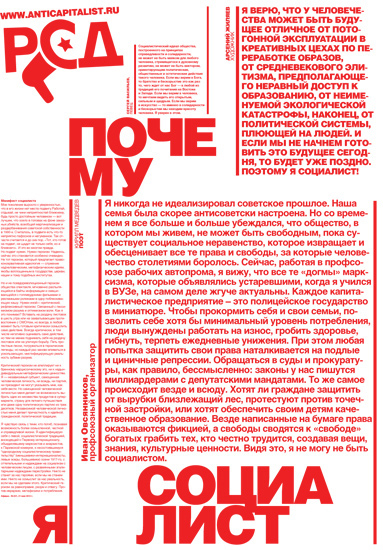 The author of the leaflet design is Alexander Novozhenova
We made a workshop of a protest poster together. First, at Poser, and then on the street during rallies. But in addition to the visual design of posters and leaflets, there was active work with the word. For example, among other things, Sasha came up with a hit slogan “not a shame”. For one of the rallies, we placed this slogan on a white flag with sewn red letters made of fabric. He, like a lot of other material related to her protest creativity, was stored until some time in my workshop, until several years ago I gave everything to the archive of the Garage.
After the failure of the protest movement, we often saw each other in a plastic cup of coffee from a machine gun in Moscow archives than at exhibitions or rallies. I was engaged in the work of a monograph on avant-garde museology, and Sasha investigated materials on a sociological turn in the 1920s and 1930s. She once one time helped me with a selection of text materials for the installation of "Cobblestone - weapons of the proletariat." We did not have time to do anything else together.
We saw each other for the last time almost on the eve of its departure in the United States. It so happened that they met at the Kazan station in front of my train to Voronezh. Sasha was crowded with plans. There was a feeling that this is what she had long wanted (conversations about moving and the opportunity to study/develop abroad I heard from her many times and before). We discussed her touching fascination with basketball. She played in the yards, often with strangers, as a kind of experience of socialization. It seemed that from this point of view, Chicago was an ideal city for moving and street training. I was also fond of basketball in my youth and after our conversation I bought a ball for myself, holding our possible match in my head in the future.
After we saw only in a dream-in March 2018. The details have not been preserved. Only two points: 1) she constantly bifurcated on herself and her daughter; 2) She wrote a brilliant article for the American October . At the end of the dream, I decided that I must remember what I saw and inform Sasha. So it happened. She joked, they say, it is a pity that it was only a dream. Now Sasha is not. And I no longer know if I can tell her when her brilliant article will again be released in the American October . And if it turns out, I don’t know when it happens.