
Translated material
Man from the boulevard of philosophers
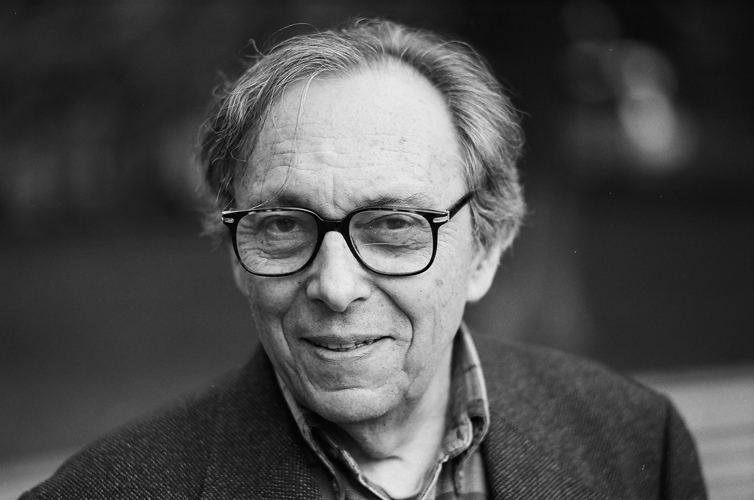
The Boulevard of Philosophers is one of the streets of Geneva in the university quarter. Now it is impossible to imagine that Jean Starobinsky will not pass along this street, thinking, for example, about the walks of philosophers - from ancient peripatics to the flankers of Baudler and Benyamin. The reader's fate of Starobinsky in Russia was quite happy: at first his interpretations of Paul Tselan and Henri Misho came here, whom the unusual reader perceived as minimalists, not really understanding that there was minimalism. Starobinsky explained that minimalism consists of defenselessness, and defenselessness - of the equanimity of the voice. The Russian reader, who remembered only sixties sincerity, gradually got used to another, deeper sincerity, revealing in the courage and reverent trepy.
Then, in 2002, two volumes of articles appeared under the general name “Poetry and Knowledge” in the translation of leading domestic cultural historians. For our experts on Bart and Foucault, this book was both expected and unexpected: it was difficult for the post -Soviet reader to collect the problems of French theory, issues of television, text, power, and something one. Starobinsky’s book showed how you can see all these things with different eyes after meetings with Rasin and Rousseau. Bart, who read on the university bench on the Rasinovsky man, easily picked up a critical pathos, but not critical responsibility, but Starobinsky taught that one cannot irresponsibly talk about writers more than responsible for his time - although the limitations of this responsibility is the subject of cultural research.
The book of the articles of Starobinsky struck with his respect for the reader's ability to reason. Starobinsky, based on how “common sense” was invented in the Enlightenment, did not at all consider it the original readership, in relation to which any fantasies or reasoning is built up with the second floor and an alternative of which can only be a documentary naive reading. On the contrary, the reader's experience for Starobinsky always begins with the experience of checking his own capabilities, the ability to hear or retell, share what has been read or melt, and “common sense” is only one of the possible add -ons. Starobinsky is a qualified doctor, and it is clear to him that the symptoms of the disease may not appear immediately, or are atypical, or should be reconstructed from the patient's complaints. So the “sane” reading is only one of the types of reading - like the achievements of modern scientific medicine are in no way to boil to paramedic medicine.
Starobinsky was always faithful to the intellectual philological movement, which is customary to call the Geneva school. The informal head of the Geneva school can be considered Jean Russa, who was only 10 years older than Starobinsky. The main merit of Russa - Baroque in his writings ceased to be the subject of formal analysis as an apotheosis of unusual forms and experiments, but was understood from the inside as the limit of metamorphosis. According to RUSS, a set of common places dating back to antiquity included imitation, metamorphosis, and different forms of representing oneself to others. But it is in the Baroque era that it turns out that it turns out that metamorphoses can be dangerous, not at all to gain themselves in culture, but, on the contrary, to frustration, to split and bewilderment. This approach will remind the Russian reader, say, the reasoning of A.F. Losev about the Renaissance crisis as an era that allowed himself too much, about "the opposite (note, not" reverse ", Losev thinks structurally, not sentimentally!) The side of titanism." But if Losev invariably began with the interpretation of fine arts, then Russa raised the question of how the social “I” and the personal “I”, the experience and justification of the action correlate.
The Geneva School is largely based on psychoanalysis as a study of the problematicity of the “I” of a person. But for psychoanalysis, imagination is a world of obviously closed, the world of fantasies and impressions that only the analyst can bring to the light. For the Geneva School, which has experienced a significant influence of the philosophy of Gaston Bashlyar, imagination is energy, constant action, a constantly replenished supply of impressions, and literature, including protects the psyche from overloads.
In an interview with Sergey Zenkin , who made an incredibly a lot to the appearance of the Russian Starobinsky, the scientist spoke about the place of Geneva in the history of philosophy. He calls the creator of modern linguistics Ferdinand de Saussure, comparing preparatory materials to his “General Linguistics Course” with the morning notes of the Valerie field: Neologisms and gaps, in which it is not an attempt to catch the idea, as usual in notebooks, but an enhanced and invisible work on it.
Starobinsky was a publisher of the work of Ferdinand de Saussure about the anagrams, the sound of the oldest hymns encrypting the name of the deity. This thought was very bold for his time: we are used to connecting ciphers with letters, their combinations, fortune -telling, in a word, with esotericism, which in the twentieth century became the subject of attention of researchers such as Francis Amelia Yates. In philosophers such as Leibniz, this combinatorika, who previously inaccessible superput, has become part of the mathematical and logical knowledge that anticipated modern cybernetics. But the discovery of a saleser showed a deep rootedness of such a search for great meaning in the very human nature, more precisely, in the initial cultural classes of man. When Starobinsky published sketches of Saussure, French psychoanalysis received a new incentive for development: the lacan’s motto “Unconscious is structured as a language” from now on and forever has a historical and cultural dimension.
Probably, there was not a single Russian reader who was not struck by the structuring of the “action” and “reaction” as a language of culture in the book “Action and Reaction: the Life and Adventures of one couple”, published in our 2008: In this book, Starobinsky showed that the reaction to chemistry, neuromuscular reaction and political reaction are not evaluated by the external similarity, but an amateur psychoanalysis of the unconscious European culture, which is trying to cope with its own immense activity. The Russian reader, accustomed to Spengler's discussions about the “Faustic culture”, more precisely, assimilated them as ideas worn in the air, with amazement learned that there was no predatorycy in culture, because there are always more hunters in culture.
Which, probably, is most amazed at now in the books of Starobinsky-that for him the writer’s behavior is no less important than his literary innovations: Rousseau-traveler has no less affected by culture than Russo of the New Eloise, like Russo-Scandal, no less than Russo Confessions. I think that the analytical comparison of Starobinsky’s approach with the sociological searches of Eichenbaum (“Literary Life”) or Lydia Ginzburg in the study of literary behavior, which have not always found a worldwide expression, is still waiting for its world researcher.
If the Geneva school was limited only to the cultural interpretation of psychology and psychoanalysis, it would simply not be. She inherits the French surrealism, and the college of sociology of Batay, and the hot disputes of post -war Marxism. If a collegium of sociology proved that there are no cultural universals that love, friendship or nobility invented by specific philosophers, then the Geneva school insists that emotions, such as melancholy or nostalgia, are also invented. The book “Chernila Melancholy” available in Russian, in fact, expands the Freudian concept of wit, which turns out to be not only the disclosure of the structures of the unconscious, but also with a medicine against depression, which writers are prepared in different eras. You just need to understand the invention not as surrealists - as a simple breakthrough of the unconscious into the structure of social experience - but, on the contrary, as the only way to come to terms for social experience.
Why, the very concept of “nostalgia” is connected with Switzerland: the mercenaries who Switzerland supplied the European powers since the time of religious wars, only having heard the sounds of the Swiss roof, immediately left their weapons, and therefore it was forbidden to store any folk musical instruments in the troops strictly. And what is just a craving for the mountain landscapes of Switzerland or, as any femaleman says, something more serious, inability to reconcile with how you are used in the war when music sounds free and without any benefit? A pinch of anarchism, a degree of critical Marxism and at the same time plentiful psychoanalysis of not only individual, but also collective psychology - a recipe for the Geneva school. And the request for the study of collective psychology, which does not reduce it to social reactions, remains, as the continuing demand in the West of the Heritage of L.S. Vygotsky - Soviet School of Psychology of Development.
You can read the works of Starobinsky as experiments of vision of the hundred -eyed Argus, allowing a philologist or historian of culture to look at well -known and little -known facts. You can read them as a reflection on the significance of literature in the modern world, even if we are talking about Homer, Rabelais or Stendhal; In other words, about literature as the main resource of creating “modernity”. And it is possible - and it will be much better - to read Starobinsky as a philosopher, who thought intensely, why, although longing or joy is created as a modernity without our modernity, there will be no longing for us and joy will not cease to disturb us to our death.
Subscribe to the COLTA.RU channel in Yandex.Zen to miss nothing