
Translated material
Abramovich sold the last asset of Berezovsky - shares of "Channel One"
Abramovich remained 20% of the “Channel One” was bought by VTB Capital, a financial partner of the “National Media Group” structures of Yuri Kovalchuk and his partners in the media market. The deal was announced on Thursday.
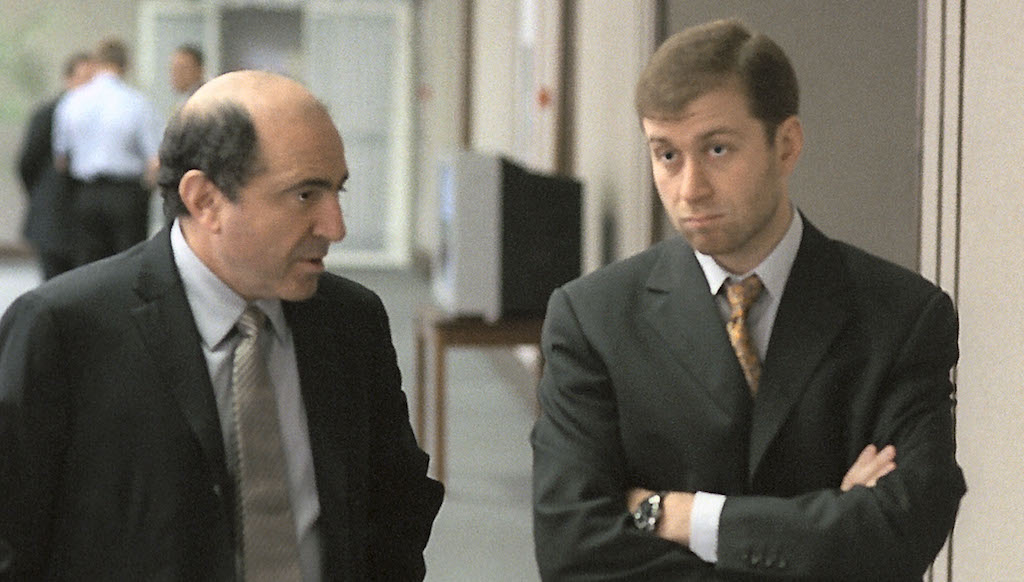
Photo: Musaelian Vladimir / ITAR-TASS
The history of the issue. The share in the “first” is the last asset that was left by Abramovich from Berezovsky: the businessman sold banker Alexander Lebedev back in 2003 in Aeroflot, and his main asset Sibneft-Gazprom in 2005. However, in the famous court between the oligarchs in London, Berezovsky was not able to prove that in the case of Sibneft, he was not just a “roof”, but a co -owner of the company.
Quote: “If the president of the country or [the former head of the administration] Mr. Voloshin told me not to buy ORT shares, I would not buy them. This is a fairly explosive product, these shares, ”Abramovich admitted in the same trial with Berezovsky in London.
Money. Buying ORT, according to Abramovich, he "saved his other business and helped Badri [Patarkatsishvili] and Berezovsky." For 49% of the shares of the Abramovich television company in 2001, he was supposed to pay partners $ 150 million, but in the end it turned out even more - $ 164 million, taking into account the costs of legalizing transactions through one of the Latvian banks. For how long, Abramovich sold the asset to the structures of the NMG and VTB is unknown.
- Berezovsky at the trial insisted that he did not want to part with a share in the television channel , but the Kremlin and Abramovich threatened him with the fate of Vladimir Gusinsky. However, of all the testimonies of the oligarch, in the end, only the personal meeting of Berezovsky with Vladimir Putin was confirmed , on which the president directly demanded that he move away from the ORT department.
- Abramovich remained a co -owner of Channel One Long for 18 years , but since 2010 he sold part of his package of the National Media Group (NMG), which is controlled by the structures of Yuri Kovalchuk and his partners. Control in the "first" belongs to the state and its structures.
What next? Since last year, VTB has become a full -fledged financial partner of the NMG in the media business. On New Year's Eve, under their joint control, the STS Media holding was transferred , which was one of the largest private media holdings in Russia (controls five television channels). After this transaction, the television channels under the control of the NMG together were to take first place in the TV audience. And in January, VTB bought Anatoly Karachinsky from IBS and the control package of “Mediaology”, the largest media analysts and social networks in Russia.
- For the VTB group, a transaction for the purchase of a share in the “First Channel” is part of the “successful business investment business”, including in the media segment. The share in the television channel is an attractive asset, it has a tremendous position in the market, and digitalization opens up new opportunities for him, said the first deputy Andrei Kostin Yuri Soloviev. According to Spark, the revenue of the channel in 2017 amounted to 31 billion rubles, a net loss - 1.55 billion rubles, and payables - 12.8 billion rubles (the channel itself has not published reports since 2016).
What am I to me?
It is useful to recall the story with Russian television channels: it’s easier to explain the increased attention that the authorities now pay the rune. In 2016, Internet projects, led by Yandex, went around the largest Russian television channels to cover the audience, and the next year the Internet was the first to advertise.
Irina Malkova